Modular Educational Furniture: What to Check Before Planning Flexible Classrooms
Why does modular educational furniture matter before a classroom plan is even drawn?
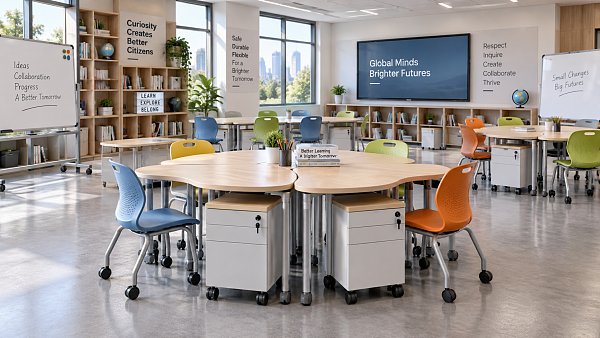
Flexible classrooms rarely succeed because of layout alone. The better starting point is modular educational furniture, since furniture defines movement, storage, visibility, and how quickly a room can change.
That is why early planning should focus on use patterns, not only appearance. A table that looks adaptable on paper may still fail if it is heavy, unstable, or difficult to reconfigure.
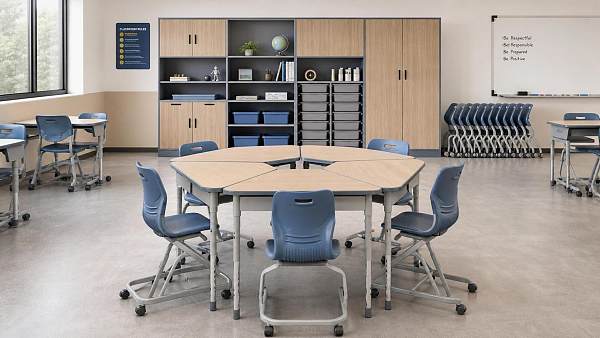
In practical terms, modular educational furniture should support individual study, group work, presentations, and testing without forcing major room resets between sessions.
For commercial sourcing platforms such as Global Commercial Trade, this topic sits inside a broader decision framework. Smart campus equipment now has to balance design quality, compliance, and long-term supply reliability.
So the first question is not, “Which shape looks modern?” It is, “What classroom behaviors must this furniture support over the next several years?”
What actually makes furniture modular in an education setting?
Not every movable desk qualifies. Modular educational furniture usually combines reconfiguration, compatibility, and repeatable use across different learning formats.
The modular part often shows up in a few specific ways. Units connect easily, separate cleanly, stack or nest efficiently, and fit multiple room arrangements without custom tools.
A useful test is simple. Can the same furniture set support lecture mode in the morning, teamwork in the afternoon, and exams later that week?
If the answer is yes, the furniture is doing real planning work. If the answer depends on extra storage rooms, maintenance staff, or frequent replacement parts, flexibility is weaker than it appears.
Another point is system logic. Good modular educational furniture behaves like a coordinated kit, not a collection of unrelated pieces bought over time.
A quick way to separate real flexibility from marketing language
This kind of comparison helps narrow choices early. It also keeps modular educational furniture tied to daily use instead of abstract product claims.
Which checks should come first: safety, durability, or ergonomics?
All three matter, but they do not serve the same purpose. Safety is the non-negotiable baseline. Durability protects lifecycle value. Ergonomics shapes comfort and learning performance.
Start with compliance and physical risk. Rounded edges, anti-tip stability, controlled caster movement, fire performance, and material safety should be verified before style discussions begin.
Then examine how the furniture ages. Modular educational furniture is moved more often than fixed classroom sets, so stress points deserve extra attention.
- Check frame joints, weld quality, and connector strength.
- Review surface resistance to scratching, staining, and cleaning chemicals.
- Confirm spare part availability for casters, glides, and hinges.
- Look for test evidence, not just catalog claims.
Ergonomics comes next, but it should not be treated as a soft feature. Seat height, desk depth, leg clearance, and posture support affect concentration and room usability.
The stronger approach is to compare dimensions with actual age groups and teaching activities. A collaboration table for short sessions is not judged the same way as an all-day classroom desk.
In GCT-style sourcing analysis, the most reliable decisions usually come from balancing these three checks together. A visually refined product still underperforms if maintenance cycles become too frequent.
How do you know whether modular educational furniture fits the teaching model?
This is where many planning mistakes begin. Furniture gets selected for a “flexible classroom” concept, but the actual teaching model stays vague.
A room built for project-based learning needs fast grouping and shared surfaces. A room used for hybrid instruction may need better cable routing, screen visibility, and quieter movement.
That means modular educational furniture should be matched to behaviors, not trends. A few practical questions usually reveal the right direction.
- How often will the room shift between lecture and collaboration?
- Will users move furniture independently or only with staff support?
- Is storage inside the room necessary between activities?
- Does the layout need to support devices, displays, or charging?
In real projects, the best fit often comes from zoning. One room may combine mobile desks, semi-fixed instructor stations, and compact storage instead of making every piece fully movable.
That mixed approach can improve performance and reduce unnecessary cost. Flexibility should be targeted, not universal for its own sake.
Where do buyers misjudge cost and long-term value?
The most common mistake is treating price per unit as the main comparison point. With modular educational furniture, operating value usually matters more than initial purchase price.
A lower-cost product may require earlier replacement, higher maintenance, or more storage space. Those hidden costs quietly change the economics of a classroom program.
It helps to compare furniture across a wider checklist.
Lead time also deserves attention. Modular educational furniture programs often involve finish choices, phased delivery, and installation coordination, which can affect opening schedules.
For internationally sourced projects, supply stability matters as much as design intent. This is one reason trade intelligence platforms emphasize verified capability, compliance records, and sourcing transparency.
What are the red flags when comparing suppliers or specifications?
A polished brochure is not enough. The stronger comparison comes from evidence that the supplier can repeat quality across volume, timelines, and multiple classroom configurations.
One red flag is vague testing language. If performance claims appear without reference standards, sample data, or material details, risk is higher than it seems.
Another issue is overdesigned flexibility. Some modular educational furniture includes too many moving parts, which increases failure points and slows everyday use.
It is also worth checking whether aesthetic customization affects delivery or maintenance. Special laminates, imported hardware, or nonstandard mechanisms may extend lead time or complicate repairs.
A more reliable review process usually includes these checks:
- Request compliance documents and test references.
- Review finish samples under real cleaning conditions.
- Confirm packaging, assembly method, and spare part policy.
- Ask how product consistency is managed across repeat orders.
This is especially relevant in global sourcing. The strongest supplier relationship is built on documentation, production control, and after-delivery support, not only visual appeal.
So what should be decided before moving into layout drawings and quotations?
Before requesting final layouts, define the non-negotiables for modular educational furniture. That keeps planning grounded and prevents attractive but unsuitable options from dominating the process.
A practical shortlist usually includes safety benchmarks, target teaching modes, storage limits, durability expectations, maintenance strategy, and acceptable lead time.
Once those points are clear, room planning becomes much more accurate. Quotations can be compared on real performance criteria, not just dimensions and finishes.
Modular educational furniture works best when flexibility is defined in measurable terms. How fast should a room reset? How many layouts are required? Which components must last the longest?
Those answers shape better sourcing decisions and reduce surprises later. They also align with the more disciplined, evidence-led approach now expected across commercial interiors and educational supply chains.
The next step is straightforward: map the classroom activities, rank the must-have performance criteria, and compare modular educational furniture against those standards before approving any final plan.
Search News
Hot Articles
- Fashion & Gem JewelryThermal Diamond Testers: How They Work and When They Can Misidentify StonesOct 07, 2026
- Commercial KitchenWhat Is Driving Demand for Commercial Hospitality Projects Across the GCC?Oct 06, 2026
- Hotel Room AmenitiesHow to Select Hotel Hair Dryers That Balance Guest Safety, Durability, and CostOct 05, 2026
Popular Tags
Need ExpertConsultation?
Connect with our specialized leisureengineering team for procurementstrategies.
Recommended News
 Sep 28, 2026How U.S. Schools Can Choose Laboratory Equipment for Safe, Compliant Science LabsSchool laboratory equipment USA: learn how to select safe, compliant lab furniture, ventilation, emergency systems, and durable tools for K–12 science labs.● Institutional Buyer
 Sep 16, 2026How to Source Educational Furniture Worldwide for Safe, Flexible Learning SpacesEducational furniture worldwide: learn how to source safe, flexible, durable learning-space solutions while controlling compliance, logistics, and lifecycle costs.● Institutional Buyer
 Aug 31, 2026How to Plan Smart Classroom Solutions That Improve Learning and IT ManageabilitySmart classroom solutions: learn how to plan secure, scalable teaching spaces that improve learning, simplify IT management, and reduce lifecycle costs.● Institutional Buyer
 Aug 01, 2026How to Specify an EN54 School PA System for Safe, Compliant Campus Voice EvacuationEN54 school PA system specification guide for safer, compliant campus voice evacuation. Learn zoning, intelligibility, monitoring, tender tips, and handover checks.● Institutional Buyer
 Jul 15, 2026Vietnam Tightens Import Rules for Smart Campus TechVietnam Tightens Import Rules for Smart Campus Tech: learn how MOIT’s 2026 data hosting and NEP connection rules may reshape import approval, sourcing timelines, and delivery planning.● Institutional Buyer
 Jul 14, 2026Thailand TISI Tightens Rules for Smart Campus TerminalsThailand TISI tightens rules for smart campus terminals, requiring Thai speech recognition and local biometric data storage. Learn the compliance impact, timeline risks, and what exporters must do now.● Institutional Buyer
 Jul 13, 2026Red Sea Rerouting Lifts Smart Campus Tech Shipping CostsRed Sea rerouting lifts Smart Campus Tech shipping costs, extends Asia-Europe booking lead times, and delays delivery. See what exporters, buyers, and logistics teams should do now.● Institutional Buyer
 Jul 12, 2026Event Technology for Live Venues: What Systems Matter Most for Seamless Operations?Event technology defines how live venues handle ticketing, AV, access, and monitoring. Discover which systems matter most for seamless operations, higher uptime, and better guest experiences.● Institutional Buyer
 Jul 11, 2026What Is a Campus Procurement Platform and How Does It Improve School Purchasing Workflows?Campus procurement platform explained: learn how it streamlines school purchasing workflows, improves approval control, boosts spend visibility, and reduces delays across campus buying.● Institutional Buyer
 Jul 10, 2026Vietnam Raises Smart Campus Tech Import Tariff to 12%Vietnam Raises Smart Campus Tech Import Tariff to 12%: explore how the new Vietnam smart campus tech tariff impacts pricing, sourcing, and local assembly strategies across Southeast Asia.● Institutional Buyer
 Jul 10, 2026Interactive Document Camera vs Webcam: Which Works Better for Smart Classrooms?Interactive document camera vs webcam: discover which delivers clearer content sharing, faster lesson flow, and better hybrid teaching performance for smart classrooms.● Institutional Buyer
 Jul 09, 2026RCEP Rule Adds Carbon Footprint Filings for Smart Campus Tech ExportsRCEP Rule reshapes Smart Campus Tech exports: learn how new carbon footprint filings for Singapore, Thailand, and Vietnam affect customs clearance, lead times, and compliance planning before October 1, 2026.● Institutional Buyer
 Jul 09, 2026Basketball Hoops for Campuses: Which Backboard, Rim, and Mounting Type Fits Your Site?Basketball hoops for campuses: compare backboard, rim, and mounting options by site needs. Learn how to choose safer, longer-lasting systems for outdoor courts, gyms, and multipurpose halls.● Institutional Buyer
 Jul 09, 2026Modular Educational Furniture: What to Check Before Planning Flexible ClassroomsModular educational furniture: learn what to check before planning flexible classrooms, from safety and durability to teaching fit, supplier quality, and long-term value.● Institutional Buyer
 Jul 08, 2026Shenzhen-Yokohama Port Delays Fall to 2.1 DaysShenzhen-Yokohama Port Delays fall to 2.1 days, cutting shipment cycles by 5–7 days for smart campus equipment. See how faster port efficiency can ease Q3 school delivery pressure.● Institutional Buyer
 Jul 07, 2026FBX Slide Pushes Smart Campus Freight Below $980/FEUFBX Slide Pushes Smart Campus Freight Below $980/FEU as Asia-Europe rates tumble. Discover what this means for smart campus shipments, booking risks, and cost-saving opportunities.● Institutional Buyer
 Jul 07, 2026Math Manipulatives Bulk Price Guide: Cost Drivers, Pack Sizes, and School Budget PlanningMath manipulatives bulk price explained: compare cost drivers, pack sizes, landed costs, and school budget planning tips to source smarter and avoid hidden expenses.● Institutional Buyer
 Jul 04, 2026RCEP Update Expands Indonesia Duty-Free Quota for Edu DevicesRCEP Update Expands Indonesia Duty-Free Quota for Edu Devices: learn how the new 80,000-unit quota reshapes export costs, compliance, and school procurement opportunities in Indonesia.● Institutional Buyer
 Jul 03, 2026Indonesia Enforces ID-SNI Labels on Smart Campus ImportsIndonesia Enforces ID-SNI Labels on Smart Campus Imports: learn how the new rule affects labeling, customs clearance, certification, and delivery readiness for compliant market entry.● Institutional Buyer
 Jul 03, 2026How to Choose Indoor School Sports Equipment for Age Groups, Space, and Safety NeedsIndoor school sports equipment buying guide for schools: learn how to match age groups, space limits, and safety standards to choose durable, efficient solutions.● Institutional Buyer
 Jul 02, 2026Chromebook Charging Stations for Schools: Cart vs Cabinet vs Wall-Mount OptionsChromebook charging stations for schools compared: cart, cabinet, and wall-mount options. Discover the best fit for security, space, mobility, and budget before you buy.● Institutional Buyer
 Jul 01, 2026Indonesia Opens RCEP Fast Track for Smart Campus IoTIndonesia opens an RCEP fast track for Smart Campus IoT, cutting Jakarta customs clearance to 12 hours for eligible HS 8517.62 devices. See who qualifies and how to prepare.● Institutional Buyer
 Jun 30, 2026Flexible Learning Spaces for K-12 and Higher Ed: Layout Ideas, Furniture, and Tech NeedsFlexible learning spaces for K-12 and higher ed: explore practical layout ideas, durable furniture, and smart tech strategies that improve teaching, flexibility, and long-term campus value.● Institutional Buyer
 Jun 30, 2026Campus Equipment Procurement Checklist: How to Compare Specs, Warranties, and Total CostCampus equipment procurement made practical: compare specs, warranty terms, supplier reliability, and total cost to avoid hidden expenses and make smarter campus buying decisions.● Institutional Buyer