How to Plan AV Integration for Schools: Classroom, Auditorium, and Campus-Wide Needs
How to Plan AV Integration for Schools Across Classrooms, Auditoriums, and Campus Operations
Planning AV integration for schools starts with a bigger question than equipment selection.
It asks how teaching, events, safety, and communication should work together every day.
A classroom display, an auditorium sound system, and campus messaging tools cannot be planned in isolation.
They share networks, budgets, support teams, and long-term expectations.
That is why AV integration for schools needs a phased, standards-driven approach from the start.
Done well, it improves lesson delivery, event quality, operational efficiency, and future upgrade flexibility.
Done poorly, it creates compatibility issues, uneven user experiences, and avoidable maintenance costs.
In practical terms, school AV planning should balance pedagogy, infrastructure, user behavior, and total lifecycle value.
Start with Educational and Operational Use Cases
The first step in AV integration for schools is defining real use cases, not building a shopping list.
Schools usually need different AV outcomes in different spaces.
A science classroom may prioritize screen sharing and lecture capture.
A language room may need better microphones and playback clarity.
An auditorium may support assemblies, performances, guest talks, and hybrid broadcasts.
Campus-wide systems may focus on announcements, emergency messaging, and digital signage.
When these needs are documented early, scope decisions become easier and procurement becomes more defensible.
Use a simple discovery framework:
- List each space type and its primary teaching or event function.
- Identify the daily users, support staff, and decision owners.
- Define critical workflows, including presentation, collaboration, recording, and control.
- Rank what must work every day versus what is optional.
- Map these needs against budget, network readiness, and future expansion.
This process makes AV integration for schools more strategic and less reactive.
It also helps avoid a common mistake.
Many campuses standardize around hardware only, while the real gap is workflow consistency.
Plan Classroom AV Around Simplicity and Repeatability
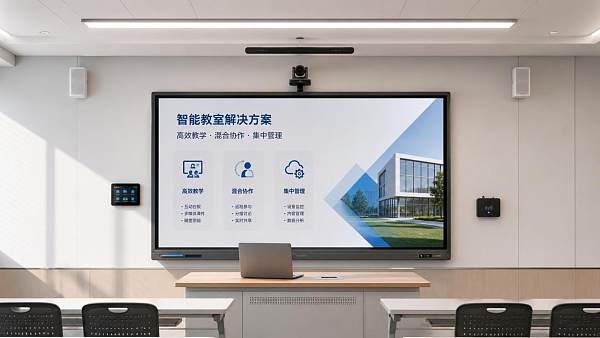
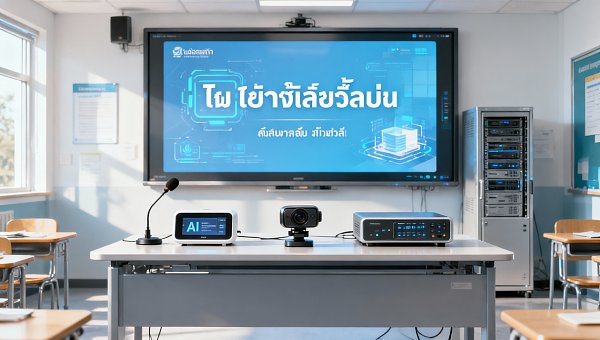
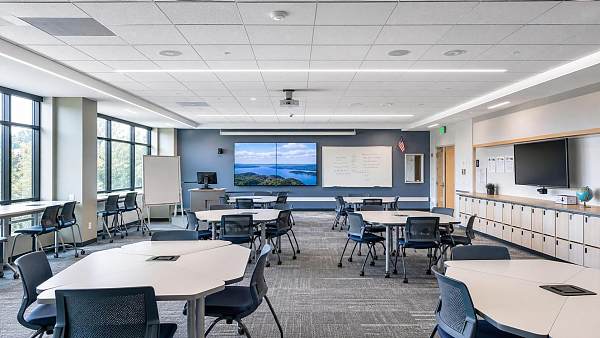
Classrooms usually represent the largest part of AV integration for schools by quantity.
That means small design inefficiencies multiply quickly across the campus.
The best classroom AV systems are not necessarily the most advanced.
They are the easiest to use, easiest to support, and easiest to scale.
For most teaching spaces, core design priorities include:
- Clear visual coverage for every seat.
- Consistent audio reinforcement where room acoustics demand it.
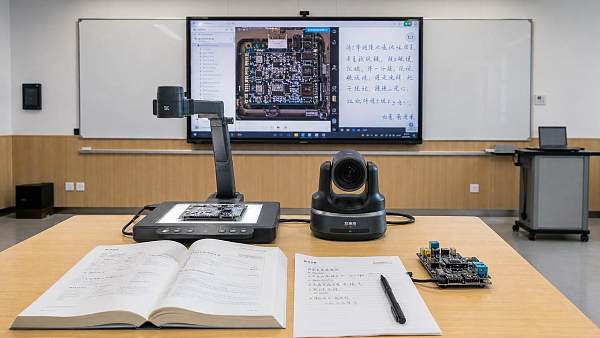
- Simple source switching for laptops, document cameras, and wireless presentation.
- Reliable control interfaces with minimal steps.
- Remote monitoring for uptime and faster support response.
From recent school upgrades, one trend is clear.
Teachers prefer AV environments that disappear into the lesson flow.
If users need too many taps, adapters, or troubleshooting habits, adoption drops fast.
This is why AV integration for schools should standardize user experience across similar rooms.
A teacher moving between buildings should not face a different control logic in every space.
Repeatability also supports maintenance planning.
Shared device platforms, mounting standards, and cable paths reduce support burden over time.
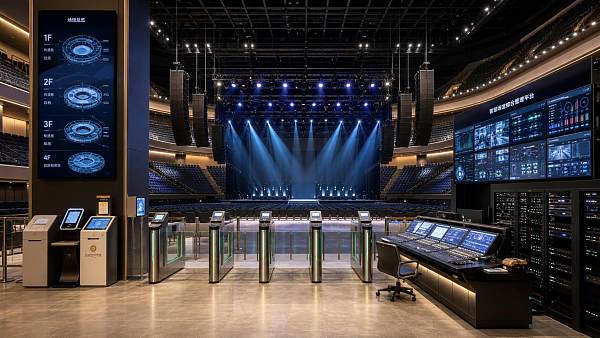
Design Auditorium Systems for Performance, Flexibility, and Event Control
Auditoriums need a different planning mindset.
In this part of AV integration for schools, the challenge is not only coverage.
It is performance under changing conditions.
One week may involve a morning assembly.
The next may require a music recital, graduation ceremony, or streamed keynote.
A strong auditorium AV plan should define:
- Speech intelligibility targets for spoken events.
- Sound reinforcement needs for live performances.
- Projection or LED display requirements by audience size and lighting conditions.
- Stage connectivity for microphones, playback, recording, and assistive listening.
- Control modes for technical staff, faculty users, and event presets.
This is where acoustic coordination becomes critical.
Even premium loudspeakers cannot compensate for reflective surfaces and poor room treatment.
In actual projects, auditorium success often depends on early alignment between AV, architecture, electrical, and IT teams.
That coordination reduces costly late-stage changes to rigging, power, conduit, and network access.
For AV integration for schools, the auditorium should also support nontechnical users without losing professional control depth.
Connect Campus-Wide AV to Communication and Safety Goals
Campus-wide AV often receives attention late, but it should not.
This layer connects AV integration for schools with operations, security, and institutional messaging.
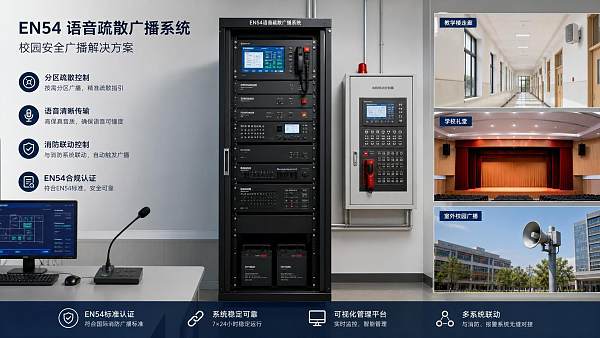
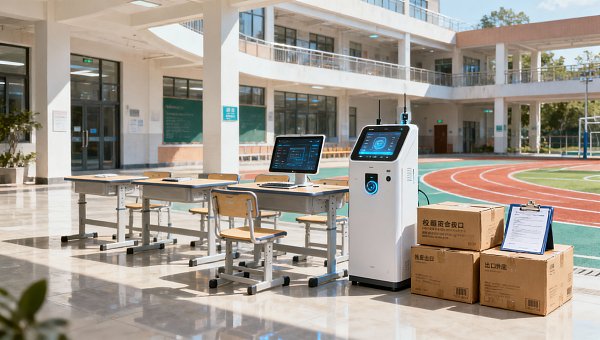
Typical elements include digital signage, paging, bell systems, emergency notification, and shared content distribution.
These systems must work reliably across buildings, not just inside a single room.
Key planning questions include:
- Which messages are informational, scheduled, or emergency-related?
- What systems need to integrate with fire, security, or mass notification platforms?
- Who controls content, permissions, and escalation workflows?
- How will the network support bandwidth, segmentation, and cybersecurity requirements?
- Where is redundancy needed to protect continuity?
A more visible signal in the market is the demand for centralized management.
Schools want to push messages, monitor endpoints, and diagnose failures from a single interface.
That also means AV integration for schools now overlaps more directly with IT governance.
If ownership boundaries are unclear, campus systems become harder to manage after handover.
Build the Technical Foundation Before Final Procurement
Many project delays happen because infrastructure decisions are left too late.
Effective AV integration for schools depends on power, pathways, rack space, cooling, network policy, and service access.
Without these basics, even well-selected hardware underperforms.
Before issuing final procurement packages, confirm:
- Structured cabling routes are documented and protected.
- Power quality and backup needs are defined.
- Network switches, VLANs, and QoS policies support AV traffic.
- Equipment rooms have proper ventilation and access control.
- Open standards and interoperability requirements are written into specifications.
This stage is also the right time to address lifecycle planning.
Ask which components are likely to age first.
Displays, control processors, wireless collaboration tools, and firmware-managed endpoints often follow different replacement cycles.
A future-ready AV integration for schools plan should support phased upgrades without redesigning the whole system.
Reduce Risk with Standards, Training, and Acceptance Testing
The final value of AV integration for schools is proven after installation, not at purchase order stage.
This is where governance matters.
Clear standards reduce variation, while training improves adoption and lowers support calls.
A practical handover checklist should cover:
- Room-by-room acceptance testing against defined performance criteria.
- As-built documentation, signal flow diagrams, and asset records.
- User training for teachers, administrators, and technical operators.
- Remote support procedures and escalation paths.
- Preventive maintenance schedules and warranty tracking.
In real school environments, adoption risk is often underestimated.
If systems are powerful but confusing, staff will bypass features or stop using them.
That weakens the return on the entire AV integration for schools investment.
Well-planned training and measured commissioning protect both performance and credibility.
A Practical Way to Move Forward
AV integration for schools works best when classrooms, auditoriums, and campus systems are planned as one connected ecosystem.
The goal is not to install more technology.
The goal is to create dependable teaching spaces, stronger event experiences, and clearer communication across the institution.
A practical roadmap starts with use cases, then aligns infrastructure, standards, procurement, and support.
That approach keeps budgets tied to outcomes and keeps future expansion realistic.
For teams planning AV integration for schools, the smartest next step is a structured audit of room types, workflows, network readiness, and lifecycle priorities.
Once that baseline is clear, design decisions become faster, risks become easier to control, and the final system becomes far more sustainable.
Search News
Hot Articles
- Commercial KitchenCommercial Kitchen Design Price: Budgeting by Layout, Equipment, and MEP ScopeSep 22, 2026
- Stationery & UniformsHow Schools Can Cut Printing Costs When Buying Ink Cartridges in BulkSep 21, 2026
- Jewelry Packaging & DisplayHow to Evaluate a Luxury Retail Packaging Supplier for Premium Brand ConsistencySep 20, 2026
Popular Tags
Need ExpertConsultation?
Connect with our specialized leisureengineering team for procurementstrategies.
Recommended News
 Sep 16, 2026How to Source Educational Furniture Worldwide for Safe, Flexible Learning SpacesEducational furniture worldwide: learn how to source safe, flexible, durable learning-space solutions while controlling compliance, logistics, and lifecycle costs.● Institutional Buyer
 Aug 31, 2026How to Plan Smart Classroom Solutions That Improve Learning and IT ManageabilitySmart classroom solutions: learn how to plan secure, scalable teaching spaces that improve learning, simplify IT management, and reduce lifecycle costs.● Institutional Buyer
 Aug 01, 2026How to Specify an EN54 School PA System for Safe, Compliant Campus Voice EvacuationEN54 school PA system specification guide for safer, compliant campus voice evacuation. Learn zoning, intelligibility, monitoring, tender tips, and handover checks.● Institutional Buyer
 Jul 15, 2026Vietnam Tightens Import Rules for Smart Campus TechVietnam Tightens Import Rules for Smart Campus Tech: learn how MOIT’s 2026 data hosting and NEP connection rules may reshape import approval, sourcing timelines, and delivery planning.● Institutional Buyer
 Jul 14, 2026Thailand TISI Tightens Rules for Smart Campus TerminalsThailand TISI tightens rules for smart campus terminals, requiring Thai speech recognition and local biometric data storage. Learn the compliance impact, timeline risks, and what exporters must do now.● Institutional Buyer
 Jul 13, 2026Red Sea Rerouting Lifts Smart Campus Tech Shipping CostsRed Sea rerouting lifts Smart Campus Tech shipping costs, extends Asia-Europe booking lead times, and delays delivery. See what exporters, buyers, and logistics teams should do now.● Institutional Buyer
 Jul 12, 2026Event Technology for Live Venues: What Systems Matter Most for Seamless Operations?Event technology defines how live venues handle ticketing, AV, access, and monitoring. Discover which systems matter most for seamless operations, higher uptime, and better guest experiences.● Institutional Buyer
 Jul 11, 2026What Is a Campus Procurement Platform and How Does It Improve School Purchasing Workflows?Campus procurement platform explained: learn how it streamlines school purchasing workflows, improves approval control, boosts spend visibility, and reduces delays across campus buying.● Institutional Buyer
 Jul 10, 2026Vietnam Raises Smart Campus Tech Import Tariff to 12%Vietnam Raises Smart Campus Tech Import Tariff to 12%: explore how the new Vietnam smart campus tech tariff impacts pricing, sourcing, and local assembly strategies across Southeast Asia.● Institutional Buyer
 Jul 10, 2026Interactive Document Camera vs Webcam: Which Works Better for Smart Classrooms?Interactive document camera vs webcam: discover which delivers clearer content sharing, faster lesson flow, and better hybrid teaching performance for smart classrooms.● Institutional Buyer
 Jul 09, 2026RCEP Rule Adds Carbon Footprint Filings for Smart Campus Tech ExportsRCEP Rule reshapes Smart Campus Tech exports: learn how new carbon footprint filings for Singapore, Thailand, and Vietnam affect customs clearance, lead times, and compliance planning before October 1, 2026.● Institutional Buyer
 Jul 09, 2026Basketball Hoops for Campuses: Which Backboard, Rim, and Mounting Type Fits Your Site?Basketball hoops for campuses: compare backboard, rim, and mounting options by site needs. Learn how to choose safer, longer-lasting systems for outdoor courts, gyms, and multipurpose halls.● Institutional Buyer
 Jul 09, 2026Modular Educational Furniture: What to Check Before Planning Flexible ClassroomsModular educational furniture: learn what to check before planning flexible classrooms, from safety and durability to teaching fit, supplier quality, and long-term value.● Institutional Buyer
 Jul 08, 2026Shenzhen-Yokohama Port Delays Fall to 2.1 DaysShenzhen-Yokohama Port Delays fall to 2.1 days, cutting shipment cycles by 5–7 days for smart campus equipment. See how faster port efficiency can ease Q3 school delivery pressure.● Institutional Buyer
 Jul 07, 2026FBX Slide Pushes Smart Campus Freight Below $980/FEUFBX Slide Pushes Smart Campus Freight Below $980/FEU as Asia-Europe rates tumble. Discover what this means for smart campus shipments, booking risks, and cost-saving opportunities.● Institutional Buyer
 Jul 07, 2026Math Manipulatives Bulk Price Guide: Cost Drivers, Pack Sizes, and School Budget PlanningMath manipulatives bulk price explained: compare cost drivers, pack sizes, landed costs, and school budget planning tips to source smarter and avoid hidden expenses.● Institutional Buyer
 Jul 04, 2026RCEP Update Expands Indonesia Duty-Free Quota for Edu DevicesRCEP Update Expands Indonesia Duty-Free Quota for Edu Devices: learn how the new 80,000-unit quota reshapes export costs, compliance, and school procurement opportunities in Indonesia.● Institutional Buyer
 Jul 03, 2026Indonesia Enforces ID-SNI Labels on Smart Campus ImportsIndonesia Enforces ID-SNI Labels on Smart Campus Imports: learn how the new rule affects labeling, customs clearance, certification, and delivery readiness for compliant market entry.● Institutional Buyer
 Jul 03, 2026How to Choose Indoor School Sports Equipment for Age Groups, Space, and Safety NeedsIndoor school sports equipment buying guide for schools: learn how to match age groups, space limits, and safety standards to choose durable, efficient solutions.● Institutional Buyer
 Jul 02, 2026Chromebook Charging Stations for Schools: Cart vs Cabinet vs Wall-Mount OptionsChromebook charging stations for schools compared: cart, cabinet, and wall-mount options. Discover the best fit for security, space, mobility, and budget before you buy.● Institutional Buyer
 Jul 01, 2026Indonesia Opens RCEP Fast Track for Smart Campus IoTIndonesia opens an RCEP fast track for Smart Campus IoT, cutting Jakarta customs clearance to 12 hours for eligible HS 8517.62 devices. See who qualifies and how to prepare.● Institutional Buyer
 Jun 30, 2026Flexible Learning Spaces for K-12 and Higher Ed: Layout Ideas, Furniture, and Tech NeedsFlexible learning spaces for K-12 and higher ed: explore practical layout ideas, durable furniture, and smart tech strategies that improve teaching, flexibility, and long-term campus value.● Institutional Buyer
 Jun 30, 2026Campus Equipment Procurement Checklist: How to Compare Specs, Warranties, and Total CostCampus equipment procurement made practical: compare specs, warranty terms, supplier reliability, and total cost to avoid hidden expenses and make smarter campus buying decisions.● Institutional Buyer
 Jun 26, 2026Learning Environments: What Design Elements Improve Focus and Engagement?Learning environments shape focus and engagement through smarter layout, acoustics, lighting, and furniture. Discover practical design elements that improve performance and create better learning outcomes.● Institutional Buyer