How to Choose Smart Classroom Equipment for Hybrid Teaching and Campus IT
Choosing smart classroom equipment for hybrid teaching has moved far beyond a room upgrade. It now sits at the intersection of AV design, network architecture, cybersecurity, user support, and long-term campus planning. For institutions balancing in-person instruction with remote participation, the right equipment must do more than look modern. It must deliver stable performance, connect with existing platforms, and remain manageable at scale. In that sense, smart classroom equipment is not only a teaching tool, but also a strategic infrastructure decision.
This shift matters across the broader commercial environment as well. Global Commercial Trade, with its focus on office and educational supplies within complex commercial spaces, reflects a market reality: buyers increasingly expect sourcing decisions to align with compliance, reliability, design quality, and operational intelligence. A smart campus project is judged not just by features, but by how well technology supports everyday use, procurement consistency, and future expansion.
What smart classroom equipment really includes
The phrase smart classroom equipment often gets reduced to interactive displays or cameras. In practice, it refers to an integrated teaching environment built from several connected layers.
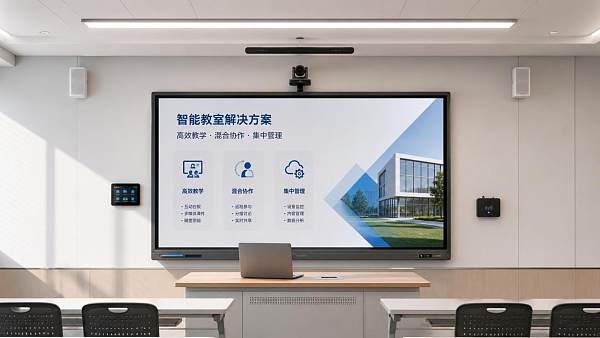
These usually include presentation devices, microphones, speakers, lecture capture tools, control panels, classroom PCs, wireless sharing systems, sensors, and network-linked management software. The value comes from how these parts work together.
For hybrid teaching, the classroom must serve two audiences at once. Students in the room need clear sightlines, reliable audio, and intuitive controls. Remote participants need consistent camera framing, speech intelligibility, and stable access through collaboration platforms.
That is why smart classroom equipment should be evaluated as a system, not as a list of standalone devices. A high-spec display cannot compensate for poor microphone pickup. A premium camera adds little if the network cannot support low-latency video.
Why hybrid teaching changes the evaluation standard
Traditional classroom procurement focused on local presentation and room utilization. Hybrid learning changes that baseline by making every teaching space a potential broadcast environment.
This raises the technical bar in several ways. Audio quality becomes mission-critical. Device interoperability becomes more important than isolated feature depth. Central monitoring becomes essential because support teams cannot troubleshoot each room manually.
It also changes how institutions measure failure. In a conventional room, a cable issue affects one class. In a hybrid room, the same issue can disrupt recording, live streaming, remote attendance, and post-class content distribution.
From an IT perspective, smart classroom equipment now belongs in the same conversation as endpoint governance, identity access, patching policy, and network segmentation.
Core criteria that matter most during selection
Interoperability before feature overload
A common mistake is choosing equipment with impressive individual specifications but weak ecosystem compatibility. The better approach is to verify whether devices integrate with learning platforms, campus identity systems, scheduling tools, and room control software.
Support for open standards, API availability, and certified compatibility with collaboration platforms usually matters more than niche features used only in demonstrations.
Audio as the first quality benchmark
In hybrid teaching, users often tolerate average video longer than poor sound. Smart classroom equipment should therefore be assessed with close attention to microphone coverage, echo cancellation, DSP performance, and speaker placement.
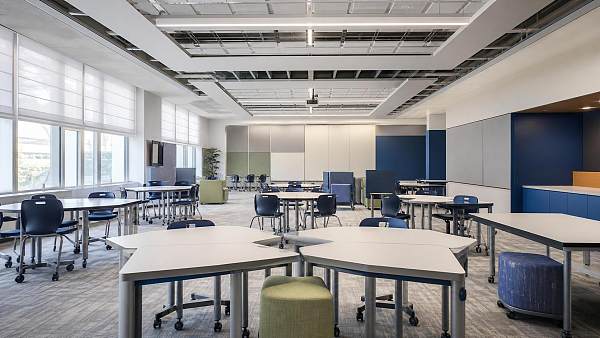
Rooms with glass walls, high ceilings, or flexible furniture layouts need acoustic planning, not only device upgrades. Good equipment performs differently in untreated and treated spaces.
Security and manageability
Every connected display, camera, controller, and wireless sharing unit expands the attack surface. Smart classroom equipment should support secure onboarding, firmware updates, role-based access, audit logs, and remote disable functions.
Management tools also matter. Central dashboards, alerting, device health reporting, and configuration templates reduce support effort across dozens or hundreds of rooms.
Scalability across room types
Campuses rarely operate one classroom format. They manage lecture halls, seminar rooms, labs, executive training spaces, and informal learning zones. A scalable smart classroom equipment strategy uses repeatable design standards with room-specific adjustments.
That creates easier support, more predictable procurement, and cleaner lifecycle planning.
How to map equipment choices to real campus scenarios
The right specification depends heavily on teaching format and room behavior. A useful way to compare options is to start from use patterns rather than from product categories.
This scenario-based view helps prevent overspending in simple rooms and underbuilding in high-visibility spaces. It also supports a sourcing model that fits broader commercial planning, where consistency and lifecycle cost are as important as unit price.
Procurement signals that deserve closer attention
In many projects, the technical decision is sound but the sourcing decision is weak. That gap often appears later as delayed deployment, inconsistent firmware versions, missing certifications, or poor post-sale support.
When assessing smart classroom equipment suppliers, several signals are worth checking early.
- Documented compliance with relevant safety, electromagnetic, and regional certification requirements.
- Evidence of stable OEM or ODM capability when customization is required.
- Spare parts policy, warranty structure, and service response across target regions.
- Clear product roadmaps that reduce the risk of early obsolescence.
- Reference projects in education or adjacent commercial environments.
This is where curated B2B intelligence becomes valuable. In the GCT context, sourcing is treated as a strategic discipline shaped by supply chain resilience, verified expertise, and commercial suitability, not just catalog comparison.
Common mistakes that weaken long-term performance
Even well-funded projects can struggle if early assumptions are wrong. Several patterns appear repeatedly in hybrid classroom rollouts.
- Selecting smart classroom equipment room by room without a campus standard.
- Overemphasizing display size while neglecting microphones and acoustics.
- Ignoring cable paths, power design, ventilation, and maintenance access.
- Treating collaboration software compatibility as a later integration task.
- Failing to define ownership between IT, facilities, AV, and academic operations.
Usually, these issues do not appear during procurement presentations. They appear during semester turnover, mass updates, and peak support periods.
A practical framework for final evaluation
A useful decision framework combines technical fit, operational fit, and sourcing fit. All three are necessary for sustainable adoption.
Technical fit
Verify platform compatibility, network behavior, device security, API support, and audio-video performance under realistic classroom conditions.
Operational fit
Check ease of use, remote management, replacement workflow, training burden, and support visibility for non-specialist room users.
Sourcing fit
Review supplier stability, compliance documentation, lead times, regional service capacity, and the likelihood of consistent supply across rollout phases.
Pilots are still important, but they should be structured. Test the smart classroom equipment in different room types, under actual teaching schedules, with normal support staffing and real collaboration platforms.
Where to focus next
The strongest smart classroom equipment strategy starts with a campus-wide baseline, then adapts it to room function, instructional style, and support capacity. That keeps hybrid teaching reliable without turning every classroom into a one-off integration project.
A sensible next step is to document the current classroom estate, identify recurring failure points, and group spaces by teaching pattern. From there, equipment evaluation becomes clearer because performance, interoperability, and sourcing priorities can be measured against actual use.
In a market where educational spaces increasingly resemble mission-critical commercial environments, better decisions come from linking technology review with procurement intelligence. That is the practical route to choosing smart classroom equipment that works well now and remains supportable later.
Search News
Hot Articles
- Commercial KitchenCommercial Kitchen Design Price: Budgeting by Layout, Equipment, and MEP ScopeSep 22, 2026
- Stationery & UniformsHow Schools Can Cut Printing Costs When Buying Ink Cartridges in BulkSep 21, 2026
- Jewelry Packaging & DisplayHow to Evaluate a Luxury Retail Packaging Supplier for Premium Brand ConsistencySep 20, 2026
Popular Tags
Need ExpertConsultation?
Connect with our specialized leisureengineering team for procurementstrategies.
Recommended News
 Sep 16, 2026How to Source Educational Furniture Worldwide for Safe, Flexible Learning SpacesEducational furniture worldwide: learn how to source safe, flexible, durable learning-space solutions while controlling compliance, logistics, and lifecycle costs.● Institutional Buyer
 Aug 31, 2026How to Plan Smart Classroom Solutions That Improve Learning and IT ManageabilitySmart classroom solutions: learn how to plan secure, scalable teaching spaces that improve learning, simplify IT management, and reduce lifecycle costs.● Institutional Buyer
 Aug 01, 2026How to Specify an EN54 School PA System for Safe, Compliant Campus Voice EvacuationEN54 school PA system specification guide for safer, compliant campus voice evacuation. Learn zoning, intelligibility, monitoring, tender tips, and handover checks.● Institutional Buyer
 Jul 15, 2026Vietnam Tightens Import Rules for Smart Campus TechVietnam Tightens Import Rules for Smart Campus Tech: learn how MOIT’s 2026 data hosting and NEP connection rules may reshape import approval, sourcing timelines, and delivery planning.● Institutional Buyer
 Jul 14, 2026Thailand TISI Tightens Rules for Smart Campus TerminalsThailand TISI tightens rules for smart campus terminals, requiring Thai speech recognition and local biometric data storage. Learn the compliance impact, timeline risks, and what exporters must do now.● Institutional Buyer
 Jul 13, 2026Red Sea Rerouting Lifts Smart Campus Tech Shipping CostsRed Sea rerouting lifts Smart Campus Tech shipping costs, extends Asia-Europe booking lead times, and delays delivery. See what exporters, buyers, and logistics teams should do now.● Institutional Buyer
 Jul 12, 2026Event Technology for Live Venues: What Systems Matter Most for Seamless Operations?Event technology defines how live venues handle ticketing, AV, access, and monitoring. Discover which systems matter most for seamless operations, higher uptime, and better guest experiences.● Institutional Buyer
 Jul 11, 2026What Is a Campus Procurement Platform and How Does It Improve School Purchasing Workflows?Campus procurement platform explained: learn how it streamlines school purchasing workflows, improves approval control, boosts spend visibility, and reduces delays across campus buying.● Institutional Buyer
 Jul 10, 2026Vietnam Raises Smart Campus Tech Import Tariff to 12%Vietnam Raises Smart Campus Tech Import Tariff to 12%: explore how the new Vietnam smart campus tech tariff impacts pricing, sourcing, and local assembly strategies across Southeast Asia.● Institutional Buyer
 Jul 10, 2026Interactive Document Camera vs Webcam: Which Works Better for Smart Classrooms?Interactive document camera vs webcam: discover which delivers clearer content sharing, faster lesson flow, and better hybrid teaching performance for smart classrooms.● Institutional Buyer
 Jul 09, 2026RCEP Rule Adds Carbon Footprint Filings for Smart Campus Tech ExportsRCEP Rule reshapes Smart Campus Tech exports: learn how new carbon footprint filings for Singapore, Thailand, and Vietnam affect customs clearance, lead times, and compliance planning before October 1, 2026.● Institutional Buyer
 Jul 09, 2026Basketball Hoops for Campuses: Which Backboard, Rim, and Mounting Type Fits Your Site?Basketball hoops for campuses: compare backboard, rim, and mounting options by site needs. Learn how to choose safer, longer-lasting systems for outdoor courts, gyms, and multipurpose halls.● Institutional Buyer
 Jul 09, 2026Modular Educational Furniture: What to Check Before Planning Flexible ClassroomsModular educational furniture: learn what to check before planning flexible classrooms, from safety and durability to teaching fit, supplier quality, and long-term value.● Institutional Buyer
 Jul 08, 2026Shenzhen-Yokohama Port Delays Fall to 2.1 DaysShenzhen-Yokohama Port Delays fall to 2.1 days, cutting shipment cycles by 5–7 days for smart campus equipment. See how faster port efficiency can ease Q3 school delivery pressure.● Institutional Buyer
 Jul 07, 2026FBX Slide Pushes Smart Campus Freight Below $980/FEUFBX Slide Pushes Smart Campus Freight Below $980/FEU as Asia-Europe rates tumble. Discover what this means for smart campus shipments, booking risks, and cost-saving opportunities.● Institutional Buyer
 Jul 07, 2026Math Manipulatives Bulk Price Guide: Cost Drivers, Pack Sizes, and School Budget PlanningMath manipulatives bulk price explained: compare cost drivers, pack sizes, landed costs, and school budget planning tips to source smarter and avoid hidden expenses.● Institutional Buyer
 Jul 04, 2026RCEP Update Expands Indonesia Duty-Free Quota for Edu DevicesRCEP Update Expands Indonesia Duty-Free Quota for Edu Devices: learn how the new 80,000-unit quota reshapes export costs, compliance, and school procurement opportunities in Indonesia.● Institutional Buyer
 Jul 03, 2026Indonesia Enforces ID-SNI Labels on Smart Campus ImportsIndonesia Enforces ID-SNI Labels on Smart Campus Imports: learn how the new rule affects labeling, customs clearance, certification, and delivery readiness for compliant market entry.● Institutional Buyer
 Jul 03, 2026How to Choose Indoor School Sports Equipment for Age Groups, Space, and Safety NeedsIndoor school sports equipment buying guide for schools: learn how to match age groups, space limits, and safety standards to choose durable, efficient solutions.● Institutional Buyer
 Jul 02, 2026Chromebook Charging Stations for Schools: Cart vs Cabinet vs Wall-Mount OptionsChromebook charging stations for schools compared: cart, cabinet, and wall-mount options. Discover the best fit for security, space, mobility, and budget before you buy.● Institutional Buyer
 Jul 01, 2026Indonesia Opens RCEP Fast Track for Smart Campus IoTIndonesia opens an RCEP fast track for Smart Campus IoT, cutting Jakarta customs clearance to 12 hours for eligible HS 8517.62 devices. See who qualifies and how to prepare.● Institutional Buyer
 Jun 30, 2026Flexible Learning Spaces for K-12 and Higher Ed: Layout Ideas, Furniture, and Tech NeedsFlexible learning spaces for K-12 and higher ed: explore practical layout ideas, durable furniture, and smart tech strategies that improve teaching, flexibility, and long-term campus value.● Institutional Buyer
 Jun 30, 2026Campus Equipment Procurement Checklist: How to Compare Specs, Warranties, and Total CostCampus equipment procurement made practical: compare specs, warranty terms, supplier reliability, and total cost to avoid hidden expenses and make smarter campus buying decisions.● Institutional Buyer
 Jun 26, 2026Learning Environments: What Design Elements Improve Focus and Engagement?Learning environments shape focus and engagement through smarter layout, acoustics, lighting, and furniture. Discover practical design elements that improve performance and create better learning outcomes.● Institutional Buyer