Luxury Retail Merchandising: What Sets It Apart From Mass-Market Retail?
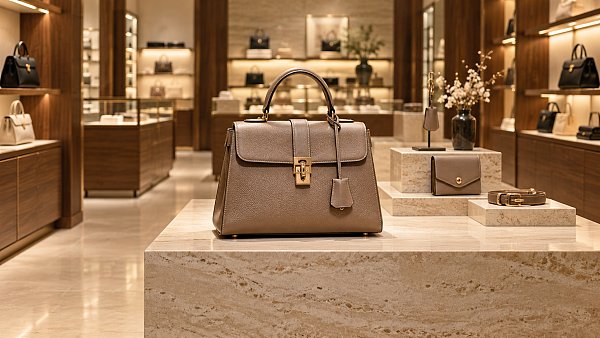
A nearly empty boutique can feel compelling because every visible product receives attention, space, and a clear role in the brand’s story. Luxury retail merchandising organizes products, presentation, and service to sustain perceived value and desirability. Mass-market merchandising generally emphasizes convenient discovery, broad availability, and efficient sales across a larger volume of transactions.
The distinction extends beyond expensive fixtures or minimal displays. It affects which products appear together, how customers encounter prices, where stock is stored, and how an item moves from display to personal presentation. Both approaches require commercial discipline; they prioritize different aspects of the shopping experience.
The commercial priorities behind the presentation
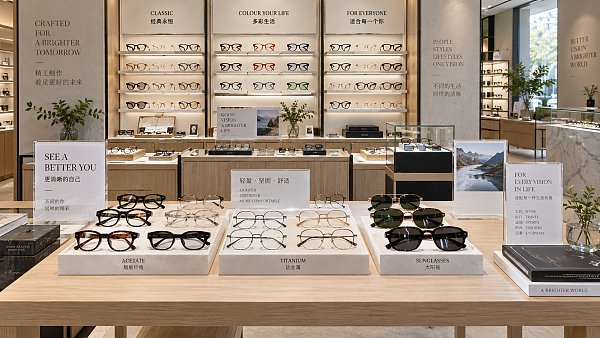
Mass-market stores often help shoppers answer practical questions quickly: What is available? Which version fits my needs? Is the price competitive? Clear category signage, visible pricing, repeated product arrangements, and accessible stock support those decisions. Dense presentation can be effective when it makes comparison easier and communicates choice.
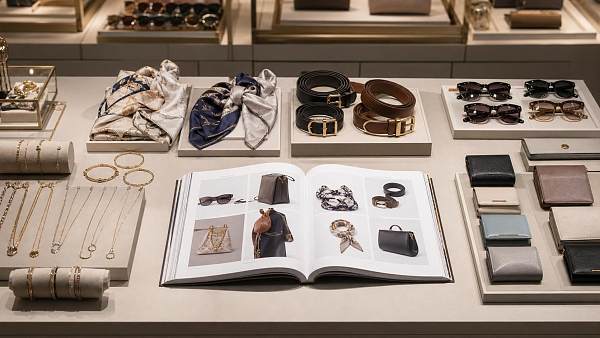
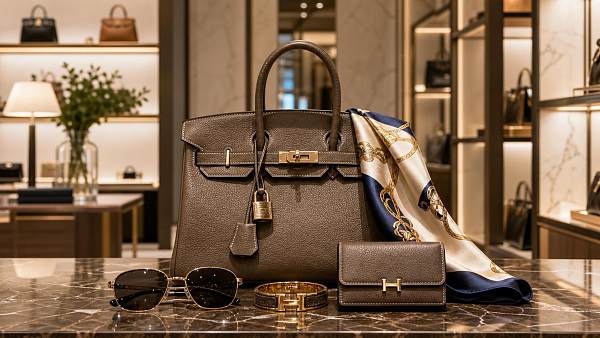
Luxury stores also need clarity, but they devote more attention to why an object deserves consideration. Design identity, craftsmanship, provenance, and personal relevance become part of the merchandise presentation. A display might give a single handbag enough space to reveal its silhouette, or place a necklace against a carefully selected background so its construction remains visible.
These are tendencies rather than rigid categories. A luxury fragrance counter can support quick purchases, while a mass-market flagship can offer elaborate storytelling and appointments. The useful distinction is the priority guiding the merchandise decisions.
Curated assortments create a hierarchy
Luxury retail merchandising distinguishes between the full assortment and the assortment visible at any moment. A boutique might carry several variations of a design while displaying only those that communicate a coherent collection. Additional colors, sizes, or related pieces can enter the conversation after a customer expresses interest.
This approach gives products different jobs. An established signature design communicates continuity. A new collection introduces a current creative direction. An exceptional piece attracts attention and demonstrates the brand’s capabilities, even when it sells less frequently than smaller accessories.
That hierarchy should remain understandable. If every item receives identical placement and emphasis, the customer has little guidance about what distinguishes the collection. If only exceptional pieces are visible, the store can obscure its more accessible assortment and make exploration unnecessarily difficult.
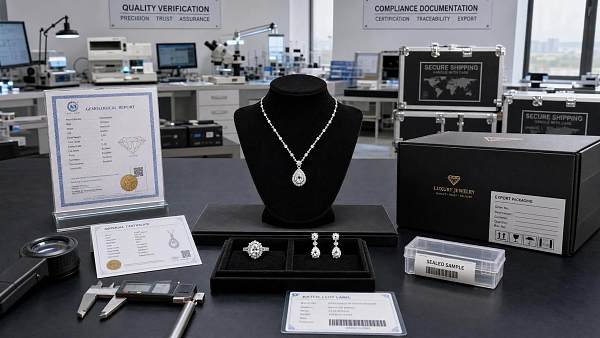
Consider a jewelry showcase containing a statement necklace, coordinating earrings, and several rings. Grouping everything tightly by price would encourage direct comparison. Separating the necklace as the focal point and presenting related pieces nearby creates a design relationship. Neither arrangement is inherently correct; the choice depends on whether the immediate purpose is comparison, collection storytelling, or a particular purchase occasion.
A sparse display is effective only when the selection feels intentional. Empty shelves caused by stock gaps communicate something different from a balanced presentation with products available for consultation. Reliable replenishment and accurate stock information support the impression of controlled choice.
Space and materials must serve the merchandise
Space around an object reduces visual competition and makes its proportions easier to read. It also makes imperfections more noticeable. An isolated watch stand with a worn edge or a showcase with visible fingerprints receives attention that a busy display might conceal.
Luxury environments therefore place considerable demands on finishes, joins, lighting integration, and maintenance. A stone surface should have an edge profile appropriate to its use. Metal trim needs consistent alignment. Upholstered presentation areas must withstand repeated contact without quickly looking tired. The specification matters as much as the material name.
Expensive finishes alone do not establish a convincing environment. Highly reflective surfaces can create glare around polished jewelry. Strongly patterned stone can compete with small accessories. A rough display base can damage delicate leather or snag textiles. Material selection works best when tested with the actual merchandise, including its packaging and handling accessories.
Lighting changes what the product appears to be
Lighting should reveal form, surface texture, and color without creating discomfort. Jewelry needs controlled highlights to show facets and polished surfaces, while leather goods benefit from light that reveals grain and construction. Excessively narrow beams can create bright spots and deep shadows that hide important details.
Color temperature alone is an incomplete specification. Color rendering, beam distribution, fixture position, and surrounding finishes also affect appearance. A gemstone or fabric can look different under showcase lighting and at a consultation table. Evaluating both locations together helps prevent a visually impressive display from producing an inconsistent viewing experience.
Maintenance access matters here. Replacing a light source or adjusting a fixture should not require unnecessary disturbance of valuable merchandise. Display lighting, security hardware, and removable interior panels need coordination before fabrication.
Service is part of the merchandise presentation
In many mass-market settings, the display must communicate enough information for an independent purchase. Luxury merchandising frequently shares that work with a sales associate. The fixture creates initial interest; a conversation introduces details, alternatives, and opportunities to handle the product.
This changes the layout. A consultation surface needs room for a presentation tray and comfortable viewing. Seating should allow someone to try a watch or examine a fastening without awkward movement. Nearby storage reduces interruptions when retrieving another size or finish.
Assisted access also creates friction if handled poorly. A locked showcase with no available assistance makes a product difficult to explore. An appointment area that feels hidden or intimidating can discourage entry. The service model needs to match the physical environment: controlled access works when attention arrives promptly and handling feels natural.
Security is especially visible in this relationship. Locks, alarms, and controlled stock access protect valuable products, but their placement influences the presentation. Repeated interruptions to unlock storage or clear a crowded counter break concentration. Integrating security into the display and retrieval process preserves both protection and a comfortable interaction.
Personalization adds value when it responds to expressed preferences. Remembering a preferred material or presenting a relevant coordinating piece can make the assortment easier to navigate. An elaborate presentation that ignores the customer’s interest simply extends the transaction.
Discreet pricing still needs clarity
Luxury presentation often reduces the visual prominence of prices so that promotional graphics do not dominate the merchandise. Small labels, considered typography, and digital product information can preserve the display’s composition. However, discretion should not make essential information difficult to obtain.
A customer comparing two pieces needs to understand their prices and the reasons for the difference. Material, construction, stone characteristics, dimensions, or included services may explain that difference. Vague language about exclusivity does little to clarify a meaningful product comparison.
Price visibility also depends on the setting. An open accessories display, a watch consultation, and a private presentation involve different patterns of browsing. The presentation should provide a straightforward route to accurate pricing in each setting, while meeting any applicable local disclosure requirements.
Promotions introduce another distinction. Mass-market retail often uses repeated price messages to accelerate purchase. In luxury retail, frequent discount-led displays can train customers to wait for reductions and weaken confidence in regular pricing. Where markdowns are part of the business model, their timing, location, and presentation need to fit the store’s positioning. An outlet and a full-price boutique can legitimately use different approaches.
Changing the display without losing recognition
Mass-market merchandising frequently follows promotional calendars, seasonal demand, and rapid stock movement. Luxury stores also change regularly, but continuity carries particular weight. Recognizable materials, display proportions, and product groupings help a collection remain identifiable across locations and selling periods.
A window installation can introduce a dramatic theme while the interior maintains a calmer environment for examining products. Problems arise when the installation overwhelms the merchandise or promises an experience the store cannot support. A visually complex window may attract attention yet leave the featured item difficult to identify or unavailable inside.
Modular fixtures help accommodate collection changes, provided their flexibility preserves a considered appearance. Adjustable shelves need suitable spacing, secure supports, and discreet fixing details. Replaceable display pads should fit accurately and maintain consistent finishes. Visible unused holes, mismatched inserts, and improvised risers undermine the precision the setting is intended to communicate.
For custom fixtures, a full-size mock-up with representative merchandise can reveal issues that drawings miss: reflections at normal viewing height, difficult reach into a showcase, insufficient room for a presentation tray, or a drawer that conflicts with seating. These details directly affect how convincingly the product is presented.
Commercial performance needs context
A luxury display cannot be judged by appearance alone. Sales, conversion, stock movement, and product availability remain relevant. Their interpretation needs to reflect the role of the product and the way the purchase develops.
A high-value item might receive repeated consideration before purchase. An appointment can lead to a later transaction through another channel. A prominent piece might generate interest in a collection while a related item becomes the eventual sale. Looking only at immediate sales from the displayed object can miss these relationships.
Equally, storytelling should not become an excuse for ineffective presentation. If customers repeatedly overlook a category, cannot distinguish adjacent products, or abandon browsing while waiting for assistance, the environment needs adjustment. Observation can identify whether the obstacle is product selection, visibility, information, or service availability.
The most revealing test is whether each presentation choice makes the merchandise easier to appreciate. Empty space should reveal something. Materials should support close inspection. Service should make exploration comfortable. That connection between the physical setting and the product’s perceived worth gives luxury retail merchandising its distinctive character.
Search News
Hot Articles
Popular Tags
Need ExpertConsultation?
Connect with our specialized leisureengineering team for procurementstrategies.
Recommended News
 Oct 27, 2026Luxury Retail Merchandising: What Sets It Apart From Mass-Market Retail?Discover how luxury retail merchandising differs from mass-market retail, with curated displays, refined spaces, and personalized service that elevate perceived value and inspire purchases.● Luxury Retail Analyst
 Oct 12, 2026How to Choose Designer Eyewear That Fits Your Store’s Customer ProfileDesigner eyewear buying guide for retailers: match frames, price points, brand appeal, fit, and supplier support to your store’s customer profile for stronger sales.● Luxury Retail Analyst
 Oct 07, 2026Thermal Diamond Testers: How They Work and When They Can Misidentify StonesThermal diamond tester guide: learn how it works, spot false positives from moissanite, and choose reliable verification methods for jewelry trade and retail.● Luxury Retail Analyst
 Oct 02, 2026Diamond Tester Wholesale: How to Vet Accuracy, Calibration, and MOQ Before OrderingDiamond tester wholesale guide: verify accuracy, calibration records, supplier quality controls, and MOQ terms before ordering. Source reliable testers with confidence.● Luxury Retail Analyst
 Sep 09, 2026Wholesale Coral Earrings: How Buyers Can Assess Quality, Treatments, and Supply RiskCoral jewelry earrings wholesale guide for buyers: assess quality, treatments, secure settings, documentation, and supply risks before ordering.● Luxury Retail Analyst
 Sep 01, 2026How to Choose a Jewelry Laser Engraving Machine Manufacturer for Custom ProductionChoose a jewelry laser engraving machine manufacturer with proven sample testing, precision fixtures, workflow-ready software, and reliable support for custom production.● Luxury Retail Analyst
 Aug 27, 2026Evaluating Luxury Retail Accessories Suppliers: Quality, Lead Times, and Brand FitLuxury retail accessories supplier selection made clearer: assess quality, lead times, compliance, costs, and brand fit to protect premium launches and margins.● Luxury Retail Analyst
 Jul 29, 2026Fine Jewelry Price Guide: What Affects Cost and How to Judge Real ValueFine jewelry price guide for buyers: learn what drives cost in metals, gemstones, craftsmanship, certification, and branding so you can judge real value, reduce sourcing risk, and buy with confidence.● Luxury Retail Analyst
 Jul 14, 2026What to Ask an Enamel Jewelry Manufacturer Before Sampling and Mass ProductionEnamel jewelry manufacturer selection starts with the right questions. Learn what to ask about materials, color matching, MOQ, QC, compliance, and lead times before sampling and mass production.● Luxury Retail Analyst
 Jul 12, 2026Surgical Steel Belly Rings vs Titanium: Material Differences, Safety, and CostSurgical steel belly rings vs titanium: compare safety, nickel exposure, comfort, durability, and cost to choose the best option for sensitive skin or budget-friendly style.● Luxury Retail Analyst
 Jul 12, 2026Natural Coral Jewelry Guide: How to Identify Real Coral, Treatments, and QualityNatural coral jewelry guide covering how to identify real coral, spot treatments, assess quality, and buy with confidence. Learn the key signs before you choose.● Luxury Retail Analyst
 Jul 11, 2026Braided Leather Bracelets OEM: Material, Clasp, and MOQ Factors Before SamplingBraided leather bracelets OEM guide covering material grades, clasp options, and MOQ factors before sampling. Learn how to reduce sourcing risk, control cost, and choose the right supplier.● Luxury Retail Analyst
 Jul 09, 2026Jewelry Craftsmanship Gemstone Setting Methods Explained: Prong, Bezel, Pave, and MoreJewelry craftsmanship gemstone setting explained clearly: compare prong, bezel, pavé, channel, and more to choose secure, beautiful, and commercially smart jewelry designs.● Luxury Retail Analyst
 Jul 06, 2026Photo Locket Necklace Manufacturer Selection Guide: Materials, MOQ, and Custom OptionsPhoto locket necklace manufacturer selection guide covering materials, MOQ, custom options, compliance, and quality checks to help buyers source smarter and build stronger jewelry lines.● Luxury Retail Analyst
 Jul 05, 2026What to Check When Comparing a Sterling Silver Clasp ManufacturerChoosing a sterling silver clasp manufacturer? Learn what to check first: 925 silver claims, finish quality, testing, compliance, lead times, and hidden sourcing costs.● Luxury Retail Analyst
 Jul 02, 2026Jewelry Craftsmanship Techniques Explained: Casting, Stone Setting, Engraving, and PolishingJewelry craftsmanship techniques explained: discover how casting, stone setting, engraving, and polishing shape quality, durability, and sourcing confidence.● Luxury Retail Analyst
 Jul 01, 2026Lost Wax Casting Machines Explained: Types, Capacity, and Metal CompatibilityLost wax casting machines explained: compare types, real capacity, and metal compatibility to choose the right system for precision casting, higher quality, and smarter sourcing.● Luxury Retail Analyst
 Jun 29, 2026How to Evaluate a Luxury Accessories Online Store Before You BuyLuxury accessories online store buying guide: learn how to verify authenticity, compare policies, check reviews, and avoid costly mistakes before you place an order.● Luxury Retail Analyst
 Jun 22, 2026Matching Couple Rings: Popular Materials, Fit Differences, and How to ChooseMatching couple rings guide: compare popular materials, fit differences, comfort, durability, and resizing options to choose a stylish pair that truly lasts.● Luxury Retail Analyst
 Jun 19, 2026How to Build a Fashion Accessories Catalog That Improves Product Discovery and SalesFashion accessories catalog strategies that improve product discovery, filtering, and conversions. Learn how to structure pages, categories, and data to drive more qualified sales.● Luxury Retail Analyst
 Jun 19, 2026How to Choose Luxury Accessories for Women by Material, Style, and Price PointLuxury accessories for women: learn how to choose the right pieces by material, style, and price point for better value, timeless appeal, and smarter buying decisions.● Luxury Retail Analyst
 Jun 18, 2026Stainless Steel Rings Bulk: 304 vs 316L, Finishes, and Custom Order FactorsStainless steel rings bulk guide: compare 304 vs 316L, explore finish options, and learn key custom order factors to reduce sourcing risk and improve product value.● Luxury Retail Analyst
 Jun 18, 2026Body Piercing Jewelry Bulk Buying Guide: Materials, Sizes, and MOQ QuestionsBody piercing jewelry bulk buying guide covering safe materials, size checks, MOQ strategy, supplier screening, and compliance tips to reduce risk and source with confidence.● Luxury Retail Analyst
 Jun 18, 2026How to Evaluate a Luxury Jewelry Exporter for Quality, Compliance, and DeliveryLuxury jewelry exporter evaluation starts with more than design. Learn how to verify quality, compliance, and delivery control to source premium jewelry with less risk.● Luxury Retail Analyst