Global Sea Freight Index Surges: China-to-Middle East Outdoor Rides Container Rates Up 37% Weekly
On May 27, 2026, container freight rates from major Chinese ports to Saudi Arabia and the UAE for 40HQ containers surged 37% week-on-week to $4,850/TEU—the highest level of 2026—according to data from the Shanghai Shipping Exchange. This development directly affects exporters of outdoor recreational rides (e.g., amusement park equipment, playground structures, and mobile ride units), logistics service providers, and Middle Eastern importers engaged in infrastructure-led demand. The spike signals tightening capacity and extended lead times across a critical export corridor, warranting close attention from manufacturers, trade compliance teams, and supply chain planners.
Event Overview
On May 27, 2026, the Shanghai Shipping Exchange reported that 40HQ container freight rates from major Chinese ports to Saudi Arabia and the United Arab Emirates rose by 37% week-on-week, reaching $4,850 per TEU—a 2026 high. The increase is attributed to two concurrent factors: ongoing vessel rerouting around the Red Sea and peak construction activity for summer-themed parks and entertainment venues across the Middle East. Multiple Middle Eastern importers confirmed order lead times have extended to 12–14 weeks, prompting urgent inquiries into localized assembly partnerships.
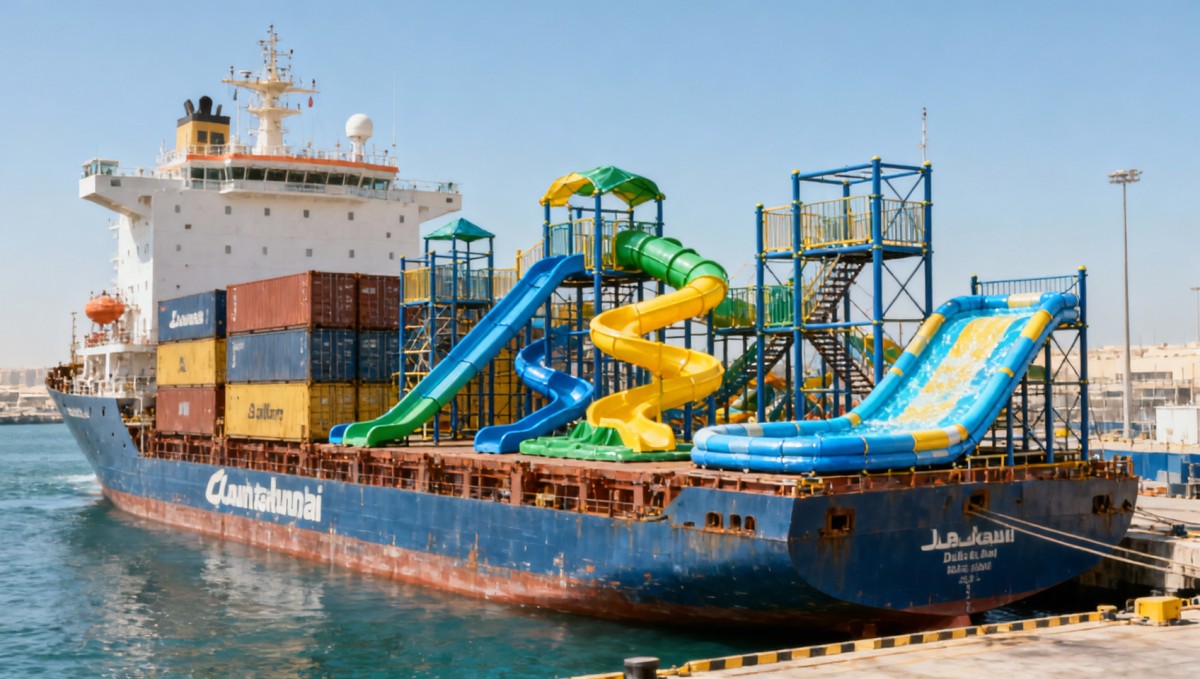
Industries Affected by Segment
Direct Exporters of Outdoor Rides
Manufacturers exporting outdoor amusement equipment—including modular rides, climbing structures, and water-based play systems—are directly exposed to both cost inflation and delivery uncertainty. The 37% freight surge compresses export margins unless repriced, while the 12–14-week lead time extension challenges contractual delivery commitments and seasonal sales windows (e.g., pre-summer installations).
Importers and Distributors in the Middle East
Regional importers responsible for sourcing, customs clearance, and last-mile installation face cascading delays. With transit times now exceeding three months, inventory planning, project scheduling, and client communication are under pressure. Several importers are actively exploring local assembly options—not as long-term strategy but as short-term mitigation for 2026 delivery cycles.
Contract Manufacturers & Component Suppliers
Suppliers of structural steel frames, control panels, safety harness systems, and themed cladding used in outdoor ride production may see downstream order volatility. While not bearing freight costs directly, they face tighter production schedules from OEMs seeking to front-load shipments before further rate hikes—or conversely, delayed orders if OEMs pause new tenders amid pricing uncertainty.
Freight Forwarders and NVOCCs Serving This Lane
Logistics intermediaries operating on the China–GCC route report reduced booking certainty and heightened customer negotiation pressure. Spot-rate volatility limits forward capacity booking, and increased documentation complexity (e.g., Red Sea routing affidavits, transshipment port disclosures) raises operational overhead per shipment.
What Relevant Businesses Should Monitor and Do Now
Track official updates from shipping lines and port authorities
Monitor announcements from carriers serving the Asia–Middle East corridor—particularly regarding scheduled sailings, blank sailings, and surcharge adjustments beyond BAF (Bunker Adjustment Factor). The current 37% jump reflects spot-market response; sustained increases would require confirmation via carrier tariff notices or alliance schedule revisions.
Review exposure by product category and destination sub-region
Not all Middle Eastern markets are equally impacted. Rates to Jebel Ali (UAE) and Dammam (Saudi Arabia) are currently elevated—but secondary ports such as Sohar (Oman) or Hamad (Qatar) may offer alternative routing or lower congestion risk. Exporters should assess whether specific ride models (e.g., fully assembled vs. knock-down kits) can be re-routed or repackaged to reduce TEU demand.
Assess feasibility of partial local assembly—not full localization
Given importers’ urgent requests for local assembly partnerships, manufacturers should evaluate low-risk, modular components (e.g., non-certified structural subassemblies, painted panels, or non-electrical enclosures) that can be shipped as flat-pack and finalized regionally. This avoids full investment in overseas facilities while addressing near-term delivery gaps.
Update quotation terms and Incoterms usage
Exporters quoting CIF or CFR terms must reassess freight cost assumptions. Shifting to FOB or EXW—where buyers assume main ocean freight responsibility—may improve pricing clarity and reduce margin erosion. Any revised terms should be documented clearly in pro forma invoices and aligned with updated Incoterms® 2020 definitions.
Editorial Perspective / Industry Observation
Observably, this freight surge is less a structural shift and more a confluence of temporary constraints: Red Sea detours remain operationally necessary but are not expected to persist indefinitely, and Middle Eastern theme park construction peaks seasonally through Q2–Q3. Analysis shows the $4,850/TEU rate reflects acute spot-market tension—not yet a revised baseline. From an industry perspective, the key signal is not just cost inflation, but eroding predictability: 12–14-week lead times undermine traditional quarterly procurement cycles and challenge ERP-driven planning. Current volatility is better understood as a stress test for supply chain agility rather than a permanent recalibration of trade economics.
This event underscores how regional infrastructure demand—when intersecting with maritime disruption—can rapidly reshape logistics economics for niche industrial exports. It does not indicate broad-based trade deterioration, but highlights vulnerability in highly engineered, low-volume, high-value physical goods where timing and certification alignment are non-negotiable.
Conclusion
The 37% weekly rise in China-to-Middle East container rates for outdoor rides is a timely reminder that logistics cost and lead time stability cannot be assumed—even for specialized export categories. It reflects acute, time-bound pressures rather than systemic change. For affected stakeholders, the priority is not forecasting long-term trends, but managing near-term execution risk: adjusting quotations, validating alternate routing, and clarifying responsibilities across the shipment lifecycle. This development is best interpreted as an operational inflection point—not a strategic pivot.
Source Attribution
Main source: Shanghai Shipping Exchange (May 27, 2026 data release).
Points requiring ongoing observation: carrier-specific surcharge announcements, Red Sea navigation advisories from IMO and UKMTO, and Middle Eastern public-sector construction tender updates (e.g., Saudi Vision 2030 leisure projects).
Search News
Hot Articles
- Musical InstrumentsA Practical Guide to Identifying Wooden Orchestral Instruments by Family and ToneOct 10, 2026
- Indoor PlaygroundHow to Choose Animatronic Haunted House Props for High-Throughput AttractionsOct 08, 2026
- Fashion & Gem JewelryThermal Diamond Testers: How They Work and When They Can Misidentify StonesOct 07, 2026
Popular Tags
Need ExpertConsultation?
Connect with our specialized leisureengineering team for procurementstrategies.
Recommended News
 Oct 10, 2026A Practical Guide to Identifying Wooden Orchestral Instruments by Family and ToneWooden orchestral instruments made simple: identify strings, flutes, clarinets, oboes, and bassoons by sound source, design, and tone.● Pro Audio Engineer
 Oct 08, 2026How to Choose Animatronic Haunted House Props for High-Throughput AttractionsAnimatronic haunted house props for high-throughput attractions: compare motion, triggers, safety, and maintenance to create reliable scares that keep guests moving.● Theme Park Strategist
 Oct 07, 2026Thermal Diamond Testers: How They Work and When They Can Misidentify StonesThermal diamond tester guide: learn how it works, spot false positives from moissanite, and choose reliable verification methods for jewelry trade and retail.● Luxury Retail Analyst
 Oct 06, 2026What Is Driving Demand for Commercial Hospitality Projects Across the GCC?Commercial hospitality GCC demand is rising through destination-led tourism, mixed-use development, and premium operational standards. Explore the procurement strategies shaping resilient projects.● Hospitality Sourcing Dir
 Oct 05, 2026How to Select Hotel Hair Dryers That Balance Guest Safety, Durability, and CostHair dryer for hotels: learn how to select safe, durable, cost-efficient models with the right certifications, performance, maintenance, and supplier support.● Hospitality Sourcing Dir
 Oct 04, 2026Fast-Casual Restaurant Interiors: Design Choices That Improve Speed and Guest FlowRestaurant interiors for fast casual brands: discover design choices that improve guest flow, speed service, streamline pickup, and elevate every visit.● Hospitality Sourcing Dir
 Oct 03, 2026How to Select Leisure Park Equipment for Safe, High-Throughput Visitor AreasLeisure park equipment selection guide for safe, high-throughput venues—explore capacity, supervision, durability, accessibility, and supplier criteria.● Theme Park Strategist
 Oct 02, 2026Diamond Tester Wholesale: How to Vet Accuracy, Calibration, and MOQ Before OrderingDiamond tester wholesale guide: verify accuracy, calibration records, supplier quality controls, and MOQ terms before ordering. Source reliable testers with confidence.● Luxury Retail Analyst
 Oct 01, 2026How Hotels Can Choose Amenity Bottles That Balance Brand Image and Refill CostsHotel amenity bottles: learn how to balance premium brand presentation, refill costs, hygiene, durability, and efficient housekeeping workflows.● Hospitality Sourcing Dir
 Sep 30, 2026How to Choose an Aluminum Projector Ceiling Mount for Load, Drop, and Ceiling TypeChoose an aluminum projector ceiling mount with confidence. Learn how load capacity, drop length, ceiling structure, safety retention, and service access shape a reliable commercial AV installation.● Pro Audio Engineer
 Sep 29, 2026Poured Playground Safety Surfacing: How to Specify Thickness for Fall HeightsPoured playground safety surfacing: learn how to specify tested thickness by fall height, ASTM standards, substrate conditions, accessibility, and field verification.● Theme Park Strategist
 Sep 28, 2026How U.S. Schools Can Choose Laboratory Equipment for Safe, Compliant Science LabsSchool laboratory equipment USA: learn how to select safe, compliant lab furniture, ventilation, emergency systems, and durable tools for K–12 science labs.● Institutional Buyer
 Sep 27, 2026Custom Trampoline Park Equipment: Planning Capacity, Safety, and LayoutCustom trampoline park equipment for safer capacity, smooth guest flow, and efficient layouts. Explore practical planning insights for a high-performing park.● Theme Park Strategist
 Sep 26, 2026How to Choose Dynamic Microphones for Vocals in Live Stage SettingsDynamic microphones for vocals: learn how to match polar patterns, feedback control, durability, and clarity to live stage needs for reliable, professional sound.● Pro Audio Engineer
 Sep 25, 2026How to Evaluate a Wall-Mounted Hotel Hair Dryer Manufacturer for Bulk ProjectsHotel hair dryers wall mounted manufacturer evaluation guide: compare safety, durability, installation fit, OEM options, total cost, and reliable bulk-project support.● Hospitality Sourcing Dir
 Sep 24, 2026Conveyor Pizza Oven Price: What Buyers Should Budget for Capacity and FeaturesConveyor pizza oven price guide: compare capacity, features, installation costs, and quote factors to choose the right commercial oven for your operation.● Hospitality Sourcing Dir
 Sep 23, 2026How Restaurant Buyers Can Source Hospitality Supplies Without OverorderingHospitality supplies for restaurants: learn practical sourcing strategies to cut excess inventory, protect cash flow, improve supplier reliability, and keep every service running smoothly.● Hospitality Sourcing Dir
 Sep 22, 2026Commercial Kitchen Design Price: Budgeting by Layout, Equipment, and MEP ScopeCommercial kitchen design price explained: budget smarter for layout, equipment, MEP scope, compliance, installation, and long-term operational performance.● Hospitality Sourcing Dir
 Sep 21, 2026How Schools Can Cut Printing Costs When Buying Ink Cartridges in BulkSchool ink cartridges wholesale made smarter: cut printing costs with fleet planning, cost-per-page comparisons, reliable suppliers, and inventory controls.● Institutional Buyer
 Sep 20, 2026How to Evaluate a Luxury Retail Packaging Supplier for Premium Brand ConsistencyLuxury retail packaging supplier evaluation guide: protect premium brand consistency with proven quality control, material expertise, scalable production, and supply reliability.● Luxury Retail Analyst
 Sep 19, 2026How to Select a Spiral Dough Mixer for Bakery Batch Size and Dough HydrationSpiral dough mixer bakery guide: match batch size, flour load, and hydration to select reliable torque, temperature control, and consistent dough results.● Hospitality Sourcing Dir
 Sep 18, 2026What Drives Animatronic Dinosaur Manufacturer Prices for Theme Park Projects?Animatronic dinosaurs manufacturer price guide: compare motion, materials, controls, installation, and lifecycle costs to plan a durable theme park attraction.● Theme Park Strategist
 Sep 17, 2026How to Source Wholesale Packing Tape Without Compromising Carton Seal StrengthWholesale packing tape sourcing guide: compare adhesive, backing, carton conditions, and real-world trials to reduce costs while maintaining reliable carton seal strength.● Institutional Buyer
 Sep 16, 2026How to Source Educational Furniture Worldwide for Safe, Flexible Learning SpacesEducational furniture worldwide: learn how to source safe, flexible, durable learning-space solutions while controlling compliance, logistics, and lifecycle costs.● Institutional Buyer