Are 3d wax printers for jewelry Worth the Upgrade?
Are 3d wax printers for jewelry Worth the Upgrade?
For technical evaluators comparing traditional casting workflows with digital production, the question is no longer whether additive manufacturing can support fine jewelry.
It is whether 3d wax printers for jewelry deliver measurable gains in precision, throughput, and cost control.
As customization rises, upgrading requires clarity on accuracy, materials, post-processing, casting behavior, and total ownership cost.
This guide examines the practical value behind the upgrade decision for commercial jewelry production and specialty retail supply chains.
What Do 3d Wax Printers for Jewelry Actually Change?
3d wax printers for jewelry create castable patterns directly from digital models, replacing many manual wax carving and mold preparation steps.
The main change is workflow control. Design revisions become digital adjustments instead of repeated bench work.
This matters in rings, pendants, earrings, charms, and high-detail luxury accessories where symmetry and repeatability influence perceived value.
Traditional wax work remains valuable for artistry. However, digital wax printing improves consistency when designs require repeated production.
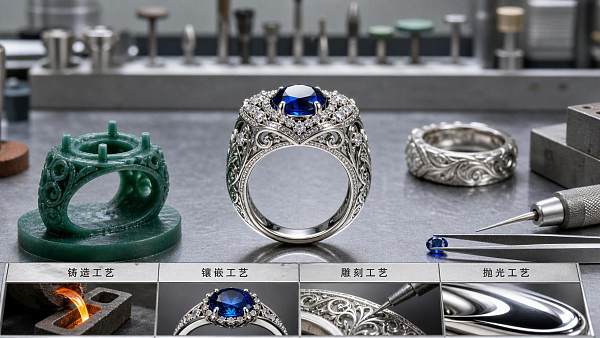
Modern 3d wax printers for jewelry also support complex geometries that are difficult to carve by hand.
These include filigree, micro-textures, undercuts, lattice details, hollow forms, and multi-stone settings.
The upgrade is not only about speed. It is about reducing variation between approved design and final casting.
- Faster design iteration for custom orders.
- Better repeatability across production batches.
- Reduced dependence on manual wax carving capacity.
- Improved detail control for premium collections.
The strongest results appear when digital modeling, printing, investing, burnout, casting, and finishing are treated as one connected process.
When Are 3d Wax Printers for Jewelry the Right Fit?
3d wax printers for jewelry are most useful when product variety is high and lead time matters.
They suit workshops producing custom engagement rings, limited-edition collections, personalized charms, and sample lines for approval.
They also help commercial jewelry brands testing new designs before committing to large-scale tooling or mold inventories.
The fit becomes stronger when many orders have similar design logic but different sizes, initials, stones, or decorative elements.
For mass production of unchanged items, the advantage depends on volume, material cost, and mold strategy.
In that scenario, printed wax patterns may support prototyping, master patterns, and short runs rather than every production piece.
3d wax printers for jewelry are less compelling when designs are simple, volumes are stable, and existing tooling is already optimized.
The best upgrade case appears when customization, detail, and delivery speed directly influence order conversion.
Useful application scenarios
- Bridal jewelry with variable ring sizes and stone layouts.
- Luxury accessories requiring branded motifs or engraved textures.
- Small batch capsule collections for seasonal retail launches.
- High-detail samples used for buyer approval and showroom display.
- Repair or remake projects requiring accurate digital reconstruction.
In global sourcing, these scenarios often create stronger supplier differentiation than basic price competition.
How Do 3d Wax Printers for Jewelry Compare with Traditional Wax Work?
Traditional wax work offers tactile control, fast adjustments, and deep craft knowledge.
3d wax printers for jewelry offer digital repeatability, file-based scaling, and accurate reproduction of fine details.
The better option depends on the design type, production rhythm, and tolerance requirements.
For one-off artistic pieces, manual wax can remain efficient. For repeatable commercial lines, digital wax printing often wins.
The comparison should not become a craft-versus-technology debate.
Many efficient operations use both methods. Manual finishing still determines final jewelry quality after casting.
The upgrade works best when digital printing removes repetitive steps without weakening craftsmanship.
What Specifications Matter Before Buying?
Not all 3d wax printers for jewelry are equal. Specification sheets require careful interpretation.
Resolution is important, but real casting performance depends on the full chain from model orientation to burnout.
Layer thickness, XY accuracy, surface quality, support strategy, and wax material formulation should be reviewed together.
A machine may advertise fine layers but still require heavy support removal on delicate prongs.
Another machine may print slightly slower but deliver cleaner patterns and fewer casting defects.
Key evaluation points
- Accuracy across ring sizes, not only on test cubes.
- Surface finish on visible curves and micro-details.
- Wax burnout behavior with common investment materials.
- Support placement on prongs, channels, and engraving.
- Material availability, shelf life, and storage requirements.
- Software usability for nesting, orientation, and scaling.
- Service response, spare parts, and calibration support.
Before choosing 3d wax printers for jewelry, request sample prints using actual production files.
Generic demo parts can hide weak performance on thin walls, stone seats, and complex organic surfaces.
A practical test should include casting, not only printed wax inspection.
Final metal results reveal shrinkage behavior, ash residue issues, porosity risk, and surface finishing workload.
What Costs and Payback Factors Should Be Calculated?
The purchase price is only one part of the upgrade decision.
3d wax printers for jewelry create value through labor savings, faster approvals, reduced remakes, and broader customization capacity.
However, ownership cost includes materials, maintenance, operator training, failed prints, cleaning tools, and environmental controls.
Payback improves when machine utilization is steady and print batches are planned intelligently.
A printer used only occasionally may become an expensive convenience rather than a production advantage.
Cost elements to include
- Machine purchase or leasing cost.
- Castable wax or resin consumption.
- Support material and cleaning supplies.
- Software licenses or workflow subscriptions.
- Operator training and process documentation.
- Maintenance, calibration, and spare components.
- Potential rework from print or casting failures.
The financial question is not simply, “Is the machine affordable?”
A better question is, “How many saleable pieces, approvals, or saved labor hours will it produce each month?”
3d wax printers for jewelry often justify themselves when custom work is frequent and design approval cycles are costly.
They can also reduce opportunity loss when slow sample development delays launches or buyer presentations.
What Risks Can Reduce the Value of the Upgrade?
The biggest mistake is treating 3d wax printers for jewelry as plug-and-play replacements for production discipline.
Digital printing introduces new variables. Poor file design can still produce fragile, uncastable, or difficult-to-finish pieces.
Models must account for wall thickness, stone tolerances, polishing allowance, shrinkage, and metal flow.
Another risk is underestimating post-processing. Supports, cleaning, curing, inspection, and handling affect final results.
A smooth upgrade requires written parameters for orientation, support removal, burnout cycles, and quality checks.
Supplier qualification is also important. Service quality can determine whether downtime becomes minor or commercially damaging.
For international sourcing, verify warranty terms, consumable supply stability, documentation, and technical support availability.
FAQ: How Should the Upgrade Decision Be Made?
A sound decision should combine technical trials with commercial modeling.
If the printer improves delivery reliability and expands profitable customization, the upgrade becomes strategically meaningful.
If utilization is uncertain, begin with outsourced test prints or a smaller pilot workflow.
Final Verdict: Are 3d Wax Printers for Jewelry Worth It?
3d wax printers for jewelry are worth the upgrade when precision, customization, and shorter development cycles affect commercial performance.
They are especially valuable for complex designs, frequent revisions, limited runs, and premium collections requiring repeatable detail.
The upgrade is weaker when existing tooling is efficient, product variation is low, or print volume cannot support ownership cost.
The practical next step is to map current workflow delays, remake rates, sample approval time, and monthly custom order volume.
Then test several 3d wax printers for jewelry with real files, complete castings, and documented finishing time.
For global sourcing and supplier comparison, platforms such as GCT help connect technical capability with verified commercial context.
The right decision is not the most advanced machine. It is the system that improves quality, speed, and profitability together.
Search News
Hot Articles
- Fashion & Gem JewelryHow to Choose Designer Eyewear That Fits Your Store’s Customer ProfileOct 12, 2026
- Musical InstrumentsA Practical Guide to Identifying Wooden Orchestral Instruments by Family and ToneOct 10, 2026
- Indoor PlaygroundHow to Choose Animatronic Haunted House Props for High-Throughput AttractionsOct 08, 2026
Popular Tags
Need ExpertConsultation?
Connect with our specialized leisureengineering team for procurementstrategies.
Recommended News
 Oct 12, 2026How to Choose Designer Eyewear That Fits Your Store’s Customer ProfileDesigner eyewear buying guide for retailers: match frames, price points, brand appeal, fit, and supplier support to your store’s customer profile for stronger sales.● Luxury Retail Analyst
 Oct 07, 2026Thermal Diamond Testers: How They Work and When They Can Misidentify StonesThermal diamond tester guide: learn how it works, spot false positives from moissanite, and choose reliable verification methods for jewelry trade and retail.● Luxury Retail Analyst
 Oct 02, 2026Diamond Tester Wholesale: How to Vet Accuracy, Calibration, and MOQ Before OrderingDiamond tester wholesale guide: verify accuracy, calibration records, supplier quality controls, and MOQ terms before ordering. Source reliable testers with confidence.● Luxury Retail Analyst
 Sep 09, 2026Wholesale Coral Earrings: How Buyers Can Assess Quality, Treatments, and Supply RiskCoral jewelry earrings wholesale guide for buyers: assess quality, treatments, secure settings, documentation, and supply risks before ordering.● Luxury Retail Analyst
 Sep 01, 2026How to Choose a Jewelry Laser Engraving Machine Manufacturer for Custom ProductionChoose a jewelry laser engraving machine manufacturer with proven sample testing, precision fixtures, workflow-ready software, and reliable support for custom production.● Luxury Retail Analyst
 Aug 27, 2026Evaluating Luxury Retail Accessories Suppliers: Quality, Lead Times, and Brand FitLuxury retail accessories supplier selection made clearer: assess quality, lead times, compliance, costs, and brand fit to protect premium launches and margins.● Luxury Retail Analyst
 Jul 29, 2026Fine Jewelry Price Guide: What Affects Cost and How to Judge Real ValueFine jewelry price guide for buyers: learn what drives cost in metals, gemstones, craftsmanship, certification, and branding so you can judge real value, reduce sourcing risk, and buy with confidence.● Luxury Retail Analyst
 Jul 14, 2026What to Ask an Enamel Jewelry Manufacturer Before Sampling and Mass ProductionEnamel jewelry manufacturer selection starts with the right questions. Learn what to ask about materials, color matching, MOQ, QC, compliance, and lead times before sampling and mass production.● Luxury Retail Analyst
 Jul 12, 2026Surgical Steel Belly Rings vs Titanium: Material Differences, Safety, and CostSurgical steel belly rings vs titanium: compare safety, nickel exposure, comfort, durability, and cost to choose the best option for sensitive skin or budget-friendly style.● Luxury Retail Analyst
 Jul 12, 2026Natural Coral Jewelry Guide: How to Identify Real Coral, Treatments, and QualityNatural coral jewelry guide covering how to identify real coral, spot treatments, assess quality, and buy with confidence. Learn the key signs before you choose.● Luxury Retail Analyst
 Jul 11, 2026Braided Leather Bracelets OEM: Material, Clasp, and MOQ Factors Before SamplingBraided leather bracelets OEM guide covering material grades, clasp options, and MOQ factors before sampling. Learn how to reduce sourcing risk, control cost, and choose the right supplier.● Luxury Retail Analyst
 Jul 09, 2026Jewelry Craftsmanship Gemstone Setting Methods Explained: Prong, Bezel, Pave, and MoreJewelry craftsmanship gemstone setting explained clearly: compare prong, bezel, pavé, channel, and more to choose secure, beautiful, and commercially smart jewelry designs.● Luxury Retail Analyst
 Jul 06, 2026Photo Locket Necklace Manufacturer Selection Guide: Materials, MOQ, and Custom OptionsPhoto locket necklace manufacturer selection guide covering materials, MOQ, custom options, compliance, and quality checks to help buyers source smarter and build stronger jewelry lines.● Luxury Retail Analyst
 Jul 05, 2026What to Check When Comparing a Sterling Silver Clasp ManufacturerChoosing a sterling silver clasp manufacturer? Learn what to check first: 925 silver claims, finish quality, testing, compliance, lead times, and hidden sourcing costs.● Luxury Retail Analyst
 Jul 02, 2026Jewelry Craftsmanship Techniques Explained: Casting, Stone Setting, Engraving, and PolishingJewelry craftsmanship techniques explained: discover how casting, stone setting, engraving, and polishing shape quality, durability, and sourcing confidence.● Luxury Retail Analyst
 Jul 01, 2026Lost Wax Casting Machines Explained: Types, Capacity, and Metal CompatibilityLost wax casting machines explained: compare types, real capacity, and metal compatibility to choose the right system for precision casting, higher quality, and smarter sourcing.● Luxury Retail Analyst
 Jun 29, 2026How to Evaluate a Luxury Accessories Online Store Before You BuyLuxury accessories online store buying guide: learn how to verify authenticity, compare policies, check reviews, and avoid costly mistakes before you place an order.● Luxury Retail Analyst
 Jun 22, 2026Matching Couple Rings: Popular Materials, Fit Differences, and How to ChooseMatching couple rings guide: compare popular materials, fit differences, comfort, durability, and resizing options to choose a stylish pair that truly lasts.● Luxury Retail Analyst
 Jun 19, 2026How to Build a Fashion Accessories Catalog That Improves Product Discovery and SalesFashion accessories catalog strategies that improve product discovery, filtering, and conversions. Learn how to structure pages, categories, and data to drive more qualified sales.● Luxury Retail Analyst
 Jun 19, 2026How to Choose Luxury Accessories for Women by Material, Style, and Price PointLuxury accessories for women: learn how to choose the right pieces by material, style, and price point for better value, timeless appeal, and smarter buying decisions.● Luxury Retail Analyst
 Jun 18, 2026Stainless Steel Rings Bulk: 304 vs 316L, Finishes, and Custom Order FactorsStainless steel rings bulk guide: compare 304 vs 316L, explore finish options, and learn key custom order factors to reduce sourcing risk and improve product value.● Luxury Retail Analyst
 Jun 18, 2026Body Piercing Jewelry Bulk Buying Guide: Materials, Sizes, and MOQ QuestionsBody piercing jewelry bulk buying guide covering safe materials, size checks, MOQ strategy, supplier screening, and compliance tips to reduce risk and source with confidence.● Luxury Retail Analyst
 Jun 18, 2026How to Evaluate a Luxury Jewelry Exporter for Quality, Compliance, and DeliveryLuxury jewelry exporter evaluation starts with more than design. Learn how to verify quality, compliance, and delivery control to source premium jewelry with less risk.● Luxury Retail Analyst
 Jun 17, 2026Iced Out Watches Wholesale: How to Compare MOQ, Stone Quality, and MarginsIced out watches wholesale guide: compare MOQ, stone quality, and real margins to choose reliable suppliers, reduce risk, and grow resale profits with smarter sourcing.● Luxury Retail Analyst