France and Belgium Extend EPR to Jewelry Display Packaging
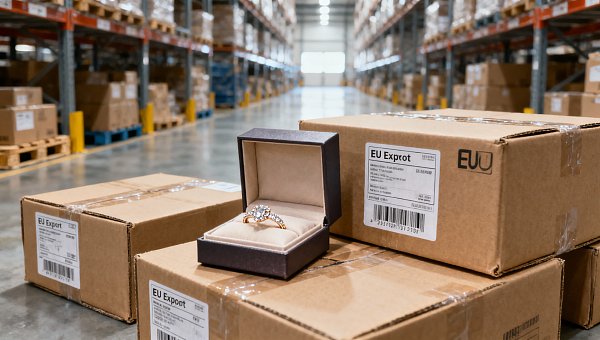
Effective on October 1, 2026, a new compliance requirement will apply to Chinese manufacturers exporting jewelry packaging and display products to France and Belgium. Based on a joint notice issued by France's ADEME and Belgium's Recupel on July 12, 2026, products such as jewelry boxes, display trays, and acrylic display stands must be registered with local EPR producer responsibility organizations and pay an annual recycling fee. For the trade, sourcing, and delivery chain, this is worth close attention because the requirement is tied directly to market access, with non-registered products facing platform delisting and customs detention.
What the Notice Confirms
The confirmed facts are limited but commercially significant. The notice states that from October 1, 2026, Chinese manufacturers exporting Jewelry Packaging & Display products to France and Belgium must complete local EPR registration and pay an annual recycling fee.
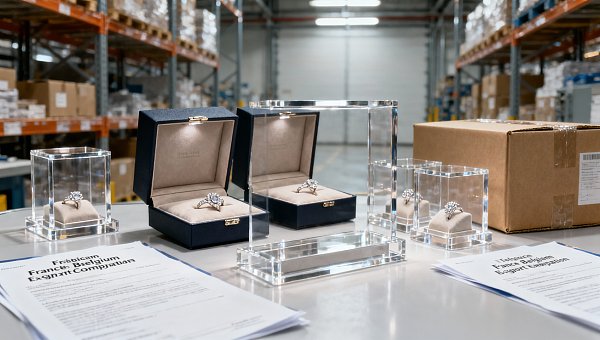
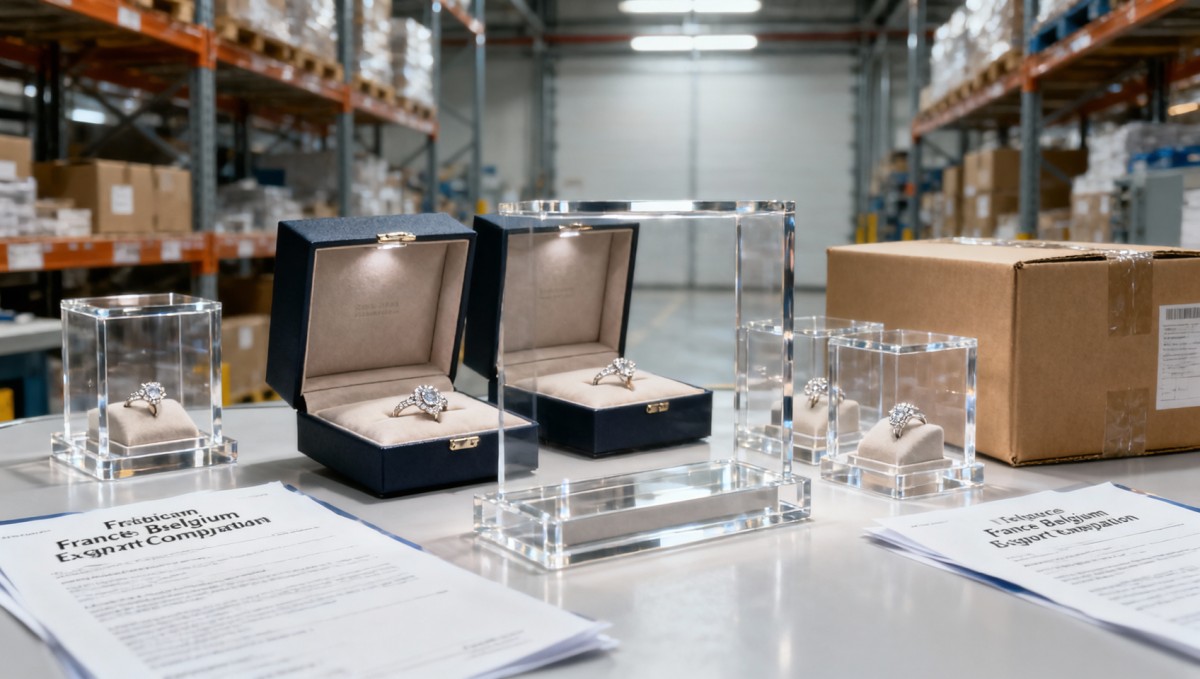
The product scope mentioned in the event summary includes jewelry packaging boxes, display trays, and acrylic display stands. The notice was jointly announced by ADEME in France and Recupel in Belgium on July 12, 2026.
The enforcement consequence described in the summary is also clear: products that are not registered may be removed from e-commerce platforms and detained by customs.
Where the Pressure Will Appear First
Export-facing manufacturers will need to treat EPR as a shipment prerequisite
From an industry perspective, manufacturers selling directly into the French and Belgian markets may be affected first because the requirement is linked to whether the product can remain listed and pass border controls. The immediate business impact is likely to fall on compliance review before shipment, document readiness, and coordination with local registration arrangements.
What deserves closer attention is whether product classification, exporter responsibilities, and registration timing are already being checked during order acceptance and dispatch planning. Even where production itself is unchanged, the delivery process may be disrupted if EPR registration is missing or incomplete.
Cross-border sellers and channel operators may face listing and fulfillment risk
Businesses operating through e-commerce platforms or distribution channels into France and Belgium may also be affected because the summary explicitly mentions platform delisting for non-registered products. In practical terms, this shifts EPR from a back-office legal issue to a front-end sales continuity issue.
These companies should pay attention to whether platform compliance files, product onboarding materials, and channel-side documentation need updating. The rule change may also affect how sellers confirm market eligibility before launching or replenishing affected product lines.
Buyers and sourcing teams may tighten supplier qualification checks
For importers, buyers, and sourcing teams purchasing Jewelry Packaging & Display products from China for the French and Belgian markets, the notice may change supplier screening priorities. Analysis shows that EPR readiness could become part of basic vendor qualification, especially where delivery schedules depend on uninterrupted customs clearance and platform availability.
The key concern is less about product design itself and more about whether the supplier can support compliant market entry. Procurement teams may therefore need to review supplier declarations, registration status, and related compliance documents earlier in the order cycle.
Supply chain service providers may see more compliance-sensitive coordination work
Freight forwarders, customs support teams, and other supply chain service providers may not be the regulated party in the notice, but they could still feel the operational effect. Where shipment windows are tight, missing EPR registration may create avoidable handover delays, customs exceptions, or last-minute documentation requests.
Observably, the business issue here is coordination: whether registration status is confirmed before cargo booking, customs filing, and platform launch. That makes compliance visibility more relevant across the delivery chain, not only within the manufacturing entity.
What Companies Should Watch Now
Check whether affected SKUs fall within the described product scope
Companies exporting to France and Belgium should first review whether their products fit the categories described in the notice, including jewelry boxes, display trays, and acrylic display stands under Jewelry Packaging & Display. Where product portfolios mix packaging, display, and accessory items, internal scope review becomes a practical first step.
Bring registration status into order and shipment review
Analysis shows that the main execution risk lies in treating EPR registration too late in the process. Because the summary links non-compliance to delisting and customs detention, companies should watch whether registration status is being checked before shipment release, not only after orders are secured.
Review channel and customer documentation requirements
Businesses selling through platforms or supplying channel partners should pay attention to whether customers, marketplaces, or downstream distributors begin asking for proof of registration or related compliance information. The input does not provide detailed document requirements, so this should be treated as a monitoring point rather than an established obligation beyond the confirmed registration requirement.
Track follow-up wording and enforcement practice
The current notice establishes a clear requirement and consequence, but it does not provide all operational details in the input. Companies should therefore continue tracking later official wording, enforcement interpretation, and any changes in how platforms, customs, or counterparties ask for supporting information.
How This Signal Should Be Read
Observably, this development is more than a general policy discussion because it includes a defined effective date, named authorities, a stated product direction, and direct enforcement consequences. That makes it more appropriate to understand this as an execution signal tied to market access rather than as a distant policy trend.
At the same time, analysis shows that the market still needs to watch how the requirement is applied in practice. The summary confirms registration and annual recycling fee obligations, but it does not set out the full operational path for every product scenario, business model, or documentation workflow. For that reason, the development should be read as a rule now entering the implementation stage, with some execution details still worth following.
A Compliance Shift With Trade Consequences
This event matters because it moves EPR for Jewelry Packaging & Display closer to a front-line trade and delivery issue for exports to France and Belgium. The confirmed message is straightforward: registration with local producer responsibility organizations and payment of the annual recycling fee become necessary for covered exports from October 1, 2026, and failure to comply may affect both online sales and customs clearance.
Current industry understanding should remain measured. It is more appropriate to understand this update as a concrete compliance requirement with direct commercial implications, while still recognizing that detailed execution practice, market feedback, and downstream documentation expectations may continue to develop.
Basis of This Article
This article is generated from the user-provided news title, effective date, and event summary. The specific official source link was not provided in the input, so it still needs to be verified on an ongoing basis.
For developments of this kind, commonly relevant source types may include official notices, releases from regulatory bodies, customs or trade authority information, industry association updates, standards-related documents, and reporting by authoritative trade media. Further observation should focus on policy detail, implementation wording, certification or compliance interpretation, changes in tender or procurement documents, market feedback, and how affected companies carry out registration in practice.
Search News
Hot Articles
- Fashion & Gem JewelryHow to Choose Designer Eyewear That Fits Your Store’s Customer ProfileOct 12, 2026
- Musical InstrumentsA Practical Guide to Identifying Wooden Orchestral Instruments by Family and ToneOct 10, 2026
- Indoor PlaygroundHow to Choose Animatronic Haunted House Props for High-Throughput AttractionsOct 08, 2026
Popular Tags
Need ExpertConsultation?
Connect with our specialized leisureengineering team for procurementstrategies.
Recommended News
 Sep 20, 2026How to Evaluate a Luxury Retail Packaging Supplier for Premium Brand ConsistencyLuxury retail packaging supplier evaluation guide: protect premium brand consistency with proven quality control, material expertise, scalable production, and supply reliability.● Luxury Retail Analyst
 Sep 13, 2026How U.S. Retailers Can Choose Jewelry Displays for Better Security and SalesJewelry displays USA retailers can use to balance security, product visibility, and sales performance. Explore practical selection tips for cases, lighting, materials, and suppliers.● Luxury Retail Analyst
 Aug 18, 2026How to Choose Retail Display Fixtures for Boutiques by Layout, Product Mix, and Brand StyleRetail display fixtures for boutiques should match layout, product mix, and brand style. Learn how to choose flexible, durable displays that improve flow, elevate presentation, and support sales.● Luxury Retail Analyst
 Jul 23, 2026Acrylic Jewelry Display Stands Price Guide: What Affects Cost and Bulk Buying Value?Acrylic jewelry display stands price explained: compare thickness, finish, customization, and bulk order value to cut sourcing risk and choose better retail displays.● Luxury Retail Analyst
 Jul 13, 2026France and Belgium Extend EPR to Jewelry Display PackagingFrance and Belgium extend EPR to jewelry display packaging from Oct 1, 2026. Learn how registration, recycling fees, and customs risks may impact exporters and sellers.● Luxury Retail Analyst
 Jul 08, 2026EU PPWR EPR Rules Take Effect for Jewelry PackagingEU PPWR EPR rules take effect for jewelry packaging on July 8, 2026. Learn key compliance risks, reporting duties, and how exporters can protect EU market access.● Luxury Retail Analyst
 Jul 07, 2026EU EN 71-3:2026 Tightens Lead Limit to 0.05%EU EN 71-3:2026 Tightens Lead Limit to 0.05%—learn how the new 500 ppm rule affects exports, metal components, compliance documents, and EU shipment readiness.● Luxury Retail Analyst
 Jul 05, 2026EN 71-3:2026 Tightens Heavy Metal Limits for Jewelry PackagingEN 71-3:2026 tightens heavy metal limits for jewelry packaging in the EU. Learn what exporters, importers, and suppliers must do before October 1, 2026 to stay compliant.● Luxury Retail Analyst
 Jun 29, 2026EU EPR Rule Takes Effect July 1 for Jewelry PackagingEU EPR Rule Takes Effect July 1 for Jewelry Packaging—learn how PPWR-linked registration, annual packaging reporting, and EU compliance checks may impact exporters, sellers, and supply chains.● Luxury Retail Analyst
 Jun 28, 2026Saudi Carbon Label Rule Hits Jewelry Packaging by Q3 2026Jewelry Packaging faces Saudi carbon label rules by Q3 2026. Learn SASO compliance deadlines, LCA certification steps, labeling impact, and how exporters can avoid shipment delays.● Luxury Retail Analyst
 Jun 27, 2026SASO Sets Carbon Label Rule for Jewelry PackagingSASO Sets Carbon Label Rule for Jewelry Packaging: learn how Saudi Arabia’s new carbon footprint and LCA requirement will impact exporters, packaging suppliers, and delivery timelines before the 2026 deadline.● Luxury Retail Analyst
 Apr 27, 2026Luxury Jewelry for Commercial Spaces ExplainedLuxury jewelry for commercial spaces explained: compare custom jewelry design, luxury jewelry wholesale, and reliable luxury jewelry manufacturer solutions for hotels, retail, and B2B buyers.● Luxury Retail Analyst
 Apr 18, 2026Luxury jewelry packaging: When minimalist boxes backfire on shelf appealTrampoline park, indoor playground & adventure playground packaging demands? Discover why luxury jewelry boxes fail—and how to fix shelf appeal across arcade games, musical instruments & office supplies.● Luxury Retail Analyst
 Apr 17, 2026Why luxury jewelry display cases matter more than you thinkLuxury jewelry display cases elevate trampoline parks, indoor playgrounds, arcade games & adventure playgrounds—boosting brand value, safety, and engagement.● Luxury Retail Analyst
 Apr 16, 2026Supply chain solutions for jewelry packaging: How lead time variance breaks seasonal launchesSupply chain solutions for jewelry packaging: Cut lead time variance, ensure on-time seasonal launches for designer eyewear, OEM manufacturing & luxury goods.● Luxury Retail Analyst
 Apr 16, 2026Custom jewelry packaging that enhances perceived valueCustom jewelry packaging for luxury accessories, timepieces & orchestral instruments—engineered for institutional buyers seeking premium unboxing, compliance & ROI.● Luxury Retail Analyst
 Apr 15, 2026Jewelry display cases that meet museum-grade UV and humidity controlsCommercial furniture meets museum-grade precision: UV-stable, humidity-controlled jewelry display cases for amusement equipment, sensory playgrounds, hotel tables & educational supplies.● Luxury Retail Analyst
 Apr 14, 2026Luxury jewelry packaging that survives transit—but not retail handlingLuxury jewelry, office supplies & musical instruments—discover transit-strong, retail-ready packaging that excels for trampoline parks, indoor playgrounds, arcade games and adventure playgrounds.● Luxury Retail Analyst
 Apr 14, 2026Luxury jewelry display cases that prevent tarnish without humidity controlLuxury jewelry display cases prevent tarnish without humidity control—ideal for office supplies, musical instruments, arcade games & adventure playgrounds.● Luxury Retail Analyst
 Apr 10, 2026Jewelry packaging & display suppliers rarely share shelf-life test data for eco-materialsDiscover verified shelf-life data for eco-packaging—trusted by OEM jewelry, ODM watches & designer eyewear brands. Get supply chain solutions that deliver transparency, not just promises.● Luxury Retail Analyst
 Apr 11, 2026Commercial kitchen suppliers offer modular design — but jewelry packaging doesn’t. Why?Unlock modular packaging for ODM watches, OEM jewelry & designer eyewear—agile supply chain solutions, premium accessories, commercial procurement made flexible.● Luxury Retail Analyst
 Mar 30, 2026Jewelry packaging & display units designed for retail are cracking under warehouse stacking pressureOEM jewelry displays failing under warehouse stacking? Discover stacking-ready solutions for hotel cabinets, playground components, live sound equipment & commercial procurement.● Luxury Retail Analyst
 Mar 28, 2026Custom jewelry packaging ordered with foil stamping often arrives with misaligned logos — and replacements take 3 weeksIndoor playground & adventure playground suppliers: Fix foil stamping misalignment in safety signage, luxury timepieces, DJ equipment—get verified ≤±0.2mm precision now.● Luxury Retail Analyst
") Mar 28, 2026Why luxury jewelry packaging fails under real retail lighting (not studio shots)Discover why trampoline park signage, luxury jewelry packaging, arcade games, and musical instruments—including string, wind & keyboard instruments—fail under real retail lighting. Expert insights for procurement pros.● Luxury Retail Analyst
Mar 28, 2026Why luxury jewelry packaging fails under real retail lighting (not studio shots)Discover why trampoline park signage, luxury jewelry packaging, arcade games, and musical instruments—including string, wind & keyboard instruments—fail under real retail lighting. Expert insights for procurement pros.● Luxury Retail Analyst