Self inking stamps wholesale: what users notice after six months
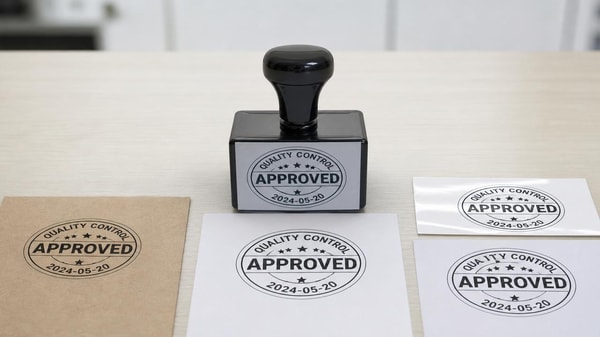
For buyers researching self inking stamps wholesale, the real test begins after purchase. Six months of daily use often reveal what catalogs and sample photos cannot: imprint consistency, refill efficiency, housing durability, and supplier reliability. This article explores the practical details users notice over time, helping information-focused sourcing teams evaluate long-term value instead of short-term pricing alone.
Why six-month performance matters across different business scenarios
Not every buyer uses stamps in the same way. A school office may stamp hundreds of documents during enrollment season, while a boutique retailer may only need neat brand marks on loyalty cards and packaging inserts. A logistics desk may prioritize speed and legibility on rough paper, while a hotel back office may care more about a clean impression on internal forms and long replacement cycles. That is why self inking stamps wholesale decisions should never be made only on unit cost.
After six months, usage patterns expose whether a product was matched to the right application. The same stamp can feel excellent in a low-volume reception environment and frustrating in a high-frequency warehouse setting. For sourcing teams, the useful question is not simply “Is this stamp good?” but “Is this stamp good for our scenario, paper type, staff habits, refill process, and reorder expectations?”
This scenario-based view is especially important for global commercial buyers, institutional procurement teams, and multi-site operators. In these settings, even small issues such as inconsistent date bands, cracked housings, or slow lead times can multiply across departments and locations.
Where self inking stamps wholesale is commonly used
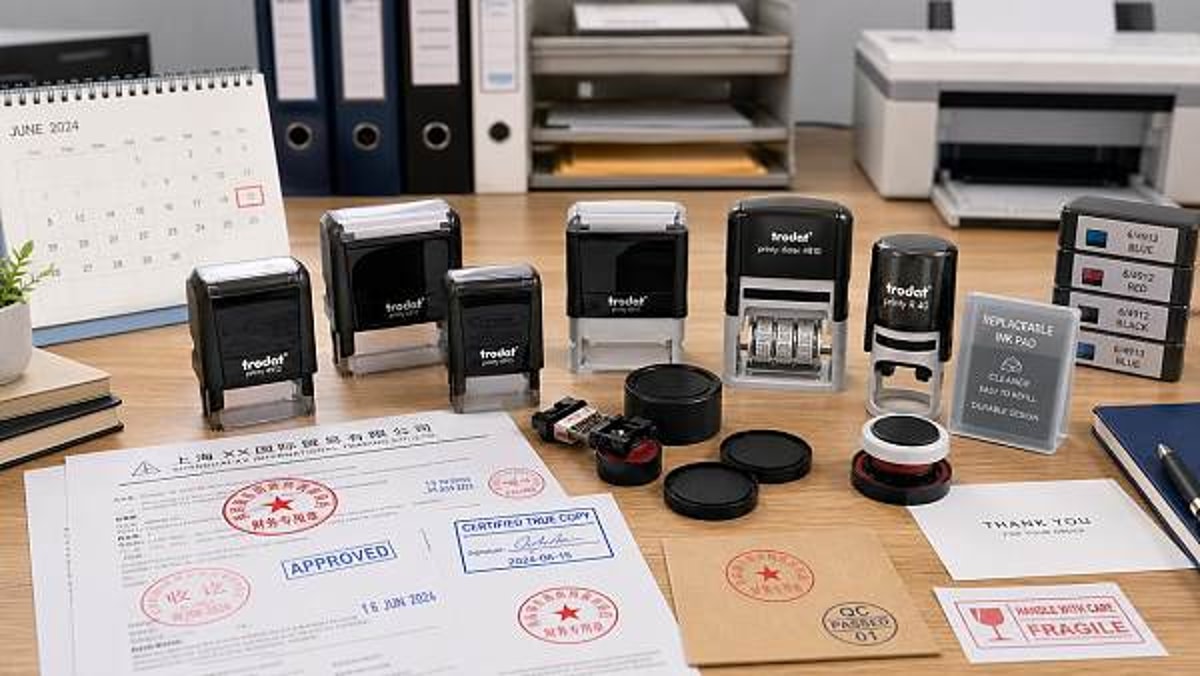
In the broad commercial market, self inking stamps wholesale appears in more places than many first-time researchers expect. Typical use cases include office administration, education, hospitality back-office operations, warehouse documentation, healthcare records in permitted formats, membership programs, event registration, and specialty retail packaging. The product category is simple, but the operating context changes everything.
Scenario 1: High-frequency office use and what breaks first
In high-volume office environments, users quickly notice whether the internal mechanism was engineered for repetition or only for occasional use. Six months of stamping approvals, received marks, date impressions, and filing codes reveal the first weaknesses: spring fatigue, uneven pressure, fading edges, and frame wobble.
For this scenario, self inking stamps wholesale buyers should evaluate cycle tolerance rather than color selection alone. If the stamp is used by multiple staff members, pressure inconsistency becomes a real issue. Better-designed products recover shape faster and maintain an even imprint even when operators have different hand strength and stamping angles.
Buyers in administrative offices should also ask whether replacement ink pads are standardized across sizes. Over time, maintenance convenience affects total ownership cost more than a small difference in initial quotation.
Scenario 2: Hospitality, front desk, and back-office control points
Hotels, serviced apartments, catering groups, and event venues often use stamps in less visible but highly structured workflows: invoice checks, receiving logs, kitchen inspection sheets, internal routing forms, and visitor administration. In these settings, users notice cleanliness first. A stamp that leaks slightly, leaves excess ink, or creates blurred borders quickly feels unprofessional.
After six months, hospitality teams often judge self inking stamps wholesale orders by three practical standards: does the stamp still look clean on the desk, does the text remain legible on standard office paper, and can busy staff refill or replace pads without creating downtime? Compact and quiet operation can matter too, especially in guest-facing service counters.
This is a good example of scenario mismatch. A rugged warehouse-style stamp may be durable, but if the housing feels bulky or the imprint is too heavy for polished paperwork, it may still be the wrong choice for hospitality operations.
Scenario 3: Education and institutional procurement
Schools, universities, training centers, and public-facing education offices often buy in batches. Their main challenge is not one stamp, but a mixed fleet: approval stamps, date stamps, teacher feedback stamps, department identifiers, and document control marks. Six months later, what users notice most is standardization. Are all units labeled clearly? Do replacement parts fit across the order? Can new branches reorder the same specification?
In institutional settings, self inking stamps wholesale value is strongly tied to procurement stability. A supplier that changes dimensions, handle textures, or pad formats between batches creates avoidable friction. Decision-makers should therefore assess SKU continuity, packaging accuracy, and batch traceability in addition to imprint quality.
Another six-month insight is that educational users often prefer intuitive, low-training products. If a stamp requires too much force, opens awkwardly for refilling, or lacks clear pad replacement instructions, support staff will notice long before procurement teams hear about it formally.
Scenario 4: Retail, specialty counters, and light branding tasks
Retail and specialty commerce use stamps differently. Here, the impression is part function, part brand touchpoint. Stores may stamp gift cards, loyalty slips, kraft packaging, paper bags, or in-store control forms. After six months, users pay attention to sharpness and presentation. A stamp can still work mechanically while failing visually.
For this scenario, buyers exploring self inking stamps wholesale should test the stamp on actual substrate types, not only on copier paper. Slightly textured papers, recycled sheets, or coated inserts may reveal edge bleeding or weak transfer. Color consistency also matters more in retail than in internal administration.
Compact body design may be another overlooked factor. In tight checkout spaces or premium display areas, a cleaner desktop presence supports the user experience more than an oversized industrial housing.
What long-term users usually compare: a practical decision table
When researchers compare self inking stamps wholesale options, it helps to translate product claims into long-term operational questions.
Common misjudgments when sourcing self inking stamps wholesale
A frequent mistake is assuming that a clear sample impression guarantees long-term performance. It does not. Many products look acceptable when freshly inked and lightly used. Only repeated pressure, changing operators, environmental dust, and refill cycles show whether the mechanism is truly stable.
Another mistake is choosing one stamp type for every department. Mixed-use businesses often need at least two categories: a heavy-duty option for repetitive administrative or warehouse work, and a cleaner, more presentation-focused option for customer-facing or premium paperwork. Scenario-specific sourcing often delivers better value than forced standardization.
Buyers also underestimate supplier reliability. In self inking stamps wholesale, after-sales support can matter as much as unit price. Questions about replacement pads, custom text corrections, MOQ flexibility, proofing accuracy, and lead-time consistency become more important after the first order ships.
How to match the product to your operating context
A practical sourcing approach starts with usage mapping. Identify who uses the stamp, how often, on what paper, at which desk, and whether replacement consumables must be managed centrally. This simple audit often clarifies whether you need compact custom text stamps, robust date models, multi-line office stamps, or a combination.
For information researchers and procurement teams, the most useful supplier questions are scenario-based: What is the expected cycle life in high-frequency use? Are replacement pads available for every model? Can the same model be reordered six months later? Is the housing material better suited to shared-use environments or light desktop use? Can OEM or ODM customization preserve consistent quality across branches?
This is where a data-backed sourcing perspective becomes valuable. In broad commercial trade, the right supplier is not simply the one with the lowest quote, but the one able to align manufacturing consistency with your operational reality.
FAQ for buyers evaluating long-term fit
Is self inking stamps wholesale suitable for low-volume businesses?
Yes, especially if branding, convenience, or multi-location consistency matters. However, low-volume users should avoid overbuying industrial models they do not need.
What usually fails first after six months?
Most complaints involve fading impressions, uneven pressure return, brittle housings, or difficult pad replacement rather than total product failure.
How can buyers compare suppliers more effectively?
Request repeat-order samples, replacement pad details, production tolerance information, and use-case references from similar sectors such as education, hospitality, office administration, or retail.
Final sourcing takeaway
The most useful lesson from six months of use is simple: self inking stamps wholesale should be evaluated by scenario, not by appearance alone. High-frequency offices need endurance, hospitality teams need cleanliness, institutions need standardization, and retail environments need visual sharpness with dependable daily operation.
If you are comparing suppliers or planning a larger procurement program, start by defining your actual usage environment, not just your preferred unit price. Once your business context is clear, it becomes much easier to assess imprint quality, refill strategy, durability expectations, and supplier reliability. That is the path to sourcing stamps that still perform well when the first six months of real work are over.
Search News
Hot Articles
Popular Tags
Need ExpertConsultation?
Connect with our specialized leisureengineering team for procurementstrategies.
Recommended News
 May 06, 2026Office tape dispensers that stay stable on fast-paced desksOffice tape dispensers that stay stable on fast-paced desks improve workflow, reduce tape waste, and support one-handed use. Compare smart, durable options now.● Institutional Buyer
 May 06, 2026Bubble envelopes bulk: the size mismatch that wastes shipping spendBubble envelopes bulk can cut costs—or quietly increase them. Learn how size mismatch drives shipping waste, damage risk, and packing delays, and how right-sizing protects margins.● Institutional Buyer
 May 06, 2026Office staplers bulk orders: why jam rates matter more than priceOffice staplers bulk buyers should compare jam rates before unit price. Learn how reliability, durability, and staple compatibility reduce hidden costs and improve workflow.● Institutional Buyer
 May 06, 2026Custom rubber stamps: what affects imprint clarity the mostCustom rubber stamps deliver the best imprint clarity when material quality, engraving depth, ink performance, and surface match work together. Learn what to compare before you buy.● Institutional Buyer
 May 06, 2026When paper guillotines become a safety risk in daily usePaper guillotines can become serious daily safety risks in offices, schools, and print rooms. Learn how to spot hazards, improve compliance, and choose safer models.● Institutional Buyer
 May 06, 2026Why wholesale packing tape performance changes by climateWholesale packing tape performance shifts with cold, heat, and humidity. Learn how climate affects adhesion, unwind, and seal reliability to choose the right tape and reduce shipping failures.● Institutional Buyer
 May 06, 2026Self inking stamps wholesale: what users notice after six monthsSelf inking stamps wholesale buyers often learn the truth after six months. Discover what users notice about durability, imprint quality, refills, and supplier reliability before you source.● Institutional Buyer
 May 06, 2026Hole punches wholesale: metal build or low-cost plastic?Hole punches wholesale: compare durable metal and low-cost plastic models for offices, schools, and bulk buyers. Discover which option delivers better value, fit, and long-term savings.● Institutional Buyer
 May 05, 2026Cork bulletin boards: why frame quality matters over board sizeCork bulletin boards deliver better long-term value when frame quality comes first. Learn how stronger materials, secure corners, and stable mounting improve durability, safety, and appearance.● Institutional Buyer
 May 05, 2026Soundproof phone booths: when sound ratings mislead office plansSoundproof phone booths can mislead office plans when ratings are taken at face value. Learn how to compare privacy, ventilation, placement, and compliance before you buy.● Institutional Buyer
 May 05, 2026Laser printer toner bulk: what affects page yield mostLaser printer toner bulk page yield depends on more than toner volume. Discover the top factors affecting real output and make smarter, lower-cost sourcing decisions.● Institutional Buyer
 May 05, 2026Science lab furniture: small design choices with big safety impactScience lab furniture shapes lab safety in ways many teams overlook. Discover smart design choices that reduce risk, improve compliance, and support efficient long-term performance.● Institutional Buyer
 May 05, 2026Wholesale ink cartridges: remanufactured vs compatible in real useWholesale ink cartridges compared in real use: remanufactured vs compatible on print quality, yield, firmware risk, and sourcing value—helping procurement teams buy smarter.● Institutional Buyer
 May 05, 2026Cash drawers wholesale: what causes jams at checkoutCash drawers wholesale guide: uncover the real causes of checkout jams, from latch design to POS compatibility, and learn how to source reliable drawers that reduce downtime.● Institutional Buyer
 May 05, 2026Office acoustic pods or open booths: which solves noise betterOffice acoustic pods vs. open booths: discover which solution controls noise better for privacy, focus, and hybrid calls, and make a smarter office planning decision.● Institutional Buyer
 May 05, 2026Office LED panel lights that cut glare without dim workspacesOffice LED panel lights that reduce glare without sacrificing brightness. Discover how to choose low-glare, high-comfort lighting for productive, compliant, and modern office spaces.● Institutional Buyer
 May 05, 2026Chemical resistant lab tops: which materials hold up bestChemical resistant lab tops compared: discover whether epoxy resin, phenolic resin, or stainless steel holds up best for harsh chemicals, heat, and daily lab demands.● Institutional Buyer
 May 05, 2026How to compare drafting tables wholesale without overbuyingDrafting tables wholesale comparison starts with MOQ, specs, and supplier reliability. Learn how to avoid overbuying, reduce inventory risk, and choose better-value sourcing options.● Institutional Buyer
 May 04, 2026Ergonomic Office Chairs Wholesale: Comfort Claims vs Real SupportErgonomic office chairs wholesale: learn how to verify real support beyond comfort claims with fit, adjustability, durability, and compliance insights for smarter commercial buying.● Institutional Buyer
 May 04, 2026Modular Office Workstations: Flexibility Can Add Setup CostsModular office workstations can improve flexibility, but setup costs often rise through installation, power, data, and rework. Learn when the added investment truly pays off.● Institutional Buyer
 May 04, 2026Steel Filing Cabinets: Why Some Drawers Jam Too EarlySteel filing cabinets often jam early due to weak slides, poor leveling, overload, or lock issues. Discover what to check before buying and how to avoid costly drawer failures.● Institutional Buyer
 May 04, 2026Office Network Racks: Airflow Problems Start With Bad PlanningOffice network racks can fail early when airflow is ignored. Learn the key planning checklist to prevent overheating, reduce maintenance risks, and build a more reliable office network.● Institutional Buyer
 May 04, 2026Office Partitions Wholesale: Open Plan Savings, Closed Office NeedsOffice partitions wholesale helps project managers cut fit-out costs, speed delivery, and balance open-plan efficiency with private office performance. Explore smarter commercial workspace solutions.● Institutional Buyer
 May 04, 2026Conference Room Tables: Common Layout Mistakes to AvoidConference room tables can make or break meeting flow. Discover common layout mistakes to avoid and plan smarter spaces for collaboration, AV integration, and professional results.● Institutional Buyer