Office LED panel lights that cut glare without dim workspaces
Choosing office LED panel lights for modern projects is no longer just about energy savings. Project managers need fixtures that reduce glare, maintain visual comfort, and keep workspaces bright enough for productivity and compliance. This guide explores how the right panel lighting supports better office performance, smarter specifications, and long-term value in commercial environments.
Why glare control matters differently across office project scenarios
For project managers, the challenge is rarely to find lighting that is simply bright. The real challenge is specifying office led panel lights that create balanced illumination for the actual way a space is used. An open-plan headquarters, a finance back office, a school administration building, and a co-working fit-out may all request “low-glare LED panels,” but their visual risks, occupancy patterns, ceiling constraints, and budget expectations are very different.
Glare becomes a project issue when staff work for long hours on screens, when ceilings are low, when panel spacing is poorly planned, or when a bright fixture causes contrast discomfort even though average lux levels look acceptable on paper. In other words, visual comfort is not a decorative bonus. It directly affects perceived workspace quality, staff satisfaction, compliance confidence, and sometimes even leasing appeal for commercial property owners.
That is why the best office LED panel lights are selected by scenario, not by wattage alone. Project teams need to review unified glare rating, diffuser quality, beam distribution, color consistency, driver performance, maintenance access, and installation method in relation to the workspace. A panel that works well in a circulation zone may be the wrong choice over dense desk layouts. A premium low-glare model may be essential in one setting and unnecessary in another.
Typical business scenarios where office LED panel lights are specified
Most commercial projects involving office LED panel lights fall into a few recurring scenarios. Understanding them early helps avoid over-specification in simple areas and under-specification in high-performance workspaces.
Scenario 1: Open-plan offices need low glare without dark desk zones
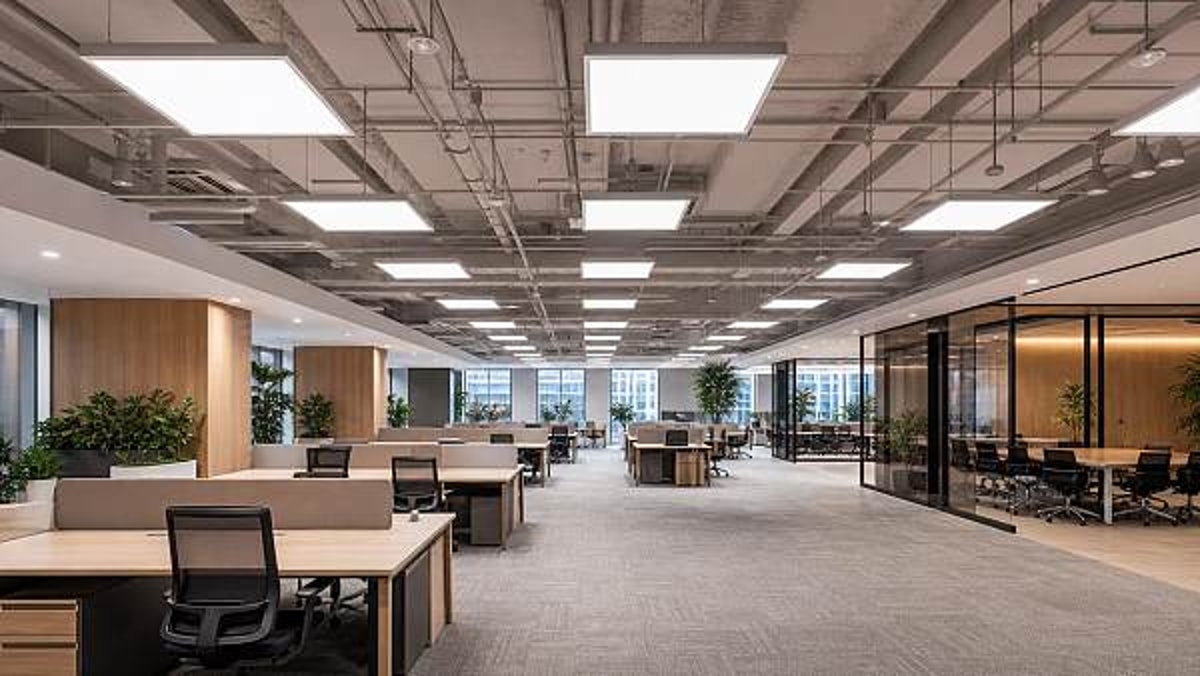
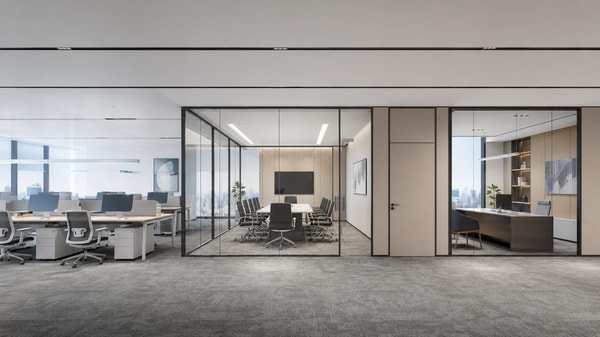
Open-plan environments are where office LED panel lights are most often judged harshly by end users. Employees sit under fixtures for extended periods and spend most of their day looking at screens. If luminaires produce harsh brightness at certain viewing angles, complaints appear quickly even when the measured illumination level meets specification.
In this scenario, project managers should focus on low unified glare rating, stable driver quality, and optical design that spreads light evenly across desk surfaces. A common mistake is selecting an ultra-bright panel with a basic diffuser and then reducing fixture count to save cost. This often creates bright spots directly under fixtures and darker zones between rows, which damages comfort and visual consistency.
A better approach is to choose office LED panel lights designed for workstation applications, often with microprismatic or advanced diffuser systems, then coordinate spacing with ceiling height and workstation layout. If the client expects future desk reconfiguration, maintaining good lighting uniformity becomes even more important than simply hitting a target lux level in the original plan.
Scenario 2: Meeting rooms and executive areas require controlled comfort and presentation readiness
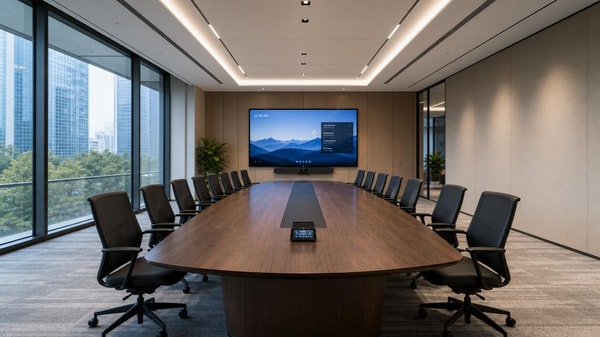
Meeting rooms look simple on the drawing set, but they create varied lighting demands. Staff may review documents, join video calls, present on screens, or host clients. In executive offices and boardrooms, lighting quality also influences the professional feel of the space.
Here, office LED panel lights should not create visual fatigue during long meetings or wash out presentation displays. Panels with reliable dimming compatibility, smooth light output, and good color rendering are often more suitable than standard utility-grade fixtures. In premium settings, tunable white or scene-based controls may also support multiple uses throughout the day.
For project managers, the key question is whether the room is used mainly for internal meetings, hybrid conferencing, or client-facing presentations. The more multifunctional the room, the more valuable flexible controls become. This is one of the clearest examples where the right office LED panel lights add business value beyond energy reduction.
Scenario 3: Administrative offices, campuses, and institutional spaces prioritize reliability at scale
In education administration buildings, government offices, and large institutional facilities, the buying logic often shifts. These sites still need low-glare office LED panel lights, but they also need straightforward maintenance, standardization across many rooms, and dependable product supply for phased projects.
In these cases, a fixture with excellent performance but poor supply continuity can become a serious procurement problem. Project managers should evaluate not only glare control and efficacy, but also warranty support, driver replacement strategy, batch consistency, and certification documentation. Standard module sizes, clear installation instructions, and stable lead times matter more than in one-off boutique fit-outs.
This is especially relevant for global sourcing decisions. Commercial buyers increasingly want office LED panel lights supported by verified manufacturing capability, compliance records, and repeatable quality control. For multi-site rollouts, consistency can be just as important as top-end performance.
Scenario 4: Co-working and flexible offices need adaptable lighting across mixed-use zones
Flexible offices combine hot desks, private booths, collaboration corners, and casual breakout areas within one footprint. That mix makes office LED panel lights harder to specify using a single standard rule. Lighting that feels ideal in the focused work zone may be too clinical in a lounge-style area, while softer ambient lighting may leave desks underlit.
For these projects, zoning matters. Project managers should divide the floor by task type and user expectation, then apply panel lighting where broad, comfortable, efficient illumination is needed. Controls such as occupancy sensors and grouped dimming can improve both user experience and operating cost. Visual comfort remains critical because these spaces often market themselves on workplace wellness and design quality.
If a co-working operator wants a polished, modern look, edge-lit office LED panel lights may appear attractive, but product selection should still be based on glare data, diffuser quality, and lifetime performance rather than appearance alone. In high-turnover occupancy models, reliable performance helps reduce maintenance disruptions and protect customer satisfaction.
How scenario differences change the technical specification
The same product family can behave very differently depending on mounting height, furniture density, daylight conditions, and user tasks. That is why project managers should translate each scenario into a practical specification checklist.
What project managers should confirm before approving office LED panel lights
A strong procurement decision usually comes from asking better questions early. Before approving office LED panel lights, project teams should confirm the following points with suppliers, consultants, or internal stakeholders:
- What is the real task profile of each area: screen work, paperwork, meetings, circulation, or mixed use?
- Are glare ratings supported by credible test data, not only brochure claims?
- How will ceiling type and mounting method affect visual comfort and maintenance access?
- Is the panel output aligned with target lux levels after considering spacing, reflectance, and daylight contribution?
- Will dimming, sensors, or building controls be used now or added later?
- Can the supplier support consistent batches for future expansion or replacement?
These questions help move the conversation from generic “LED panel pricing” to a more strategic decision on performance, risk, and lifecycle value.
Common mistakes when choosing office LED panel lights for low-glare applications
One frequent mistake is assuming that all flat panels are equally comfortable because they look similar. In reality, optical design varies widely. Another mistake is prioritizing nominal wattage savings over occupant comfort, especially in offices where staff sit under the same luminaires every day.
Project managers also sometimes review fixtures only by unit price, ignoring driver quality, lumen maintenance, color consistency, and warranty service. A lower-cost panel may create higher replacement and complaint costs later. Finally, some teams approve office LED panel lights without mock-up review in representative spaces. A sample installation can reveal glare, brightness balance, and finish integration issues that specification sheets do not fully capture.
How to match sourcing strategy to project scale and risk
Small office refurbishments may accept a simpler sourcing route if the application is straightforward and local support is strong. Larger commercial developments, smart campus projects, and multi-country rollouts require a more disciplined process. In these cases, office LED panel lights should be evaluated as part of a broader commercial sourcing strategy that includes compliance verification, supplier responsiveness, packaging quality, OEM or customization capacity, and long-term supply confidence.
This is where market intelligence and verified sourcing networks become valuable. Buyers in hospitality, education, institutional, and premium commercial environments increasingly need products that satisfy design intent, operational efficiency, and procurement accountability at the same time. A sourcing partner with insight into commercial standards and cross-border manufacturing capabilities can reduce risk significantly.
FAQ: scenario-based questions about office LED panel lights
Are office LED panel lights always suitable for every office area?
No. They are highly effective for many workspaces, but supporting areas, decorative zones, or hospitality-style lounges may need other fixture types or layered lighting to achieve the right atmosphere and function.
What matters more in screen-heavy offices: brightness or glare control?
Both matter, but glare control is often the deciding factor for user comfort once basic illumination targets are met. Overly bright panels with poor optical control can make a compliant design feel uncomfortable in practice.
When should a project team consider premium low-glare panels?
They are most justified in open-plan desk environments, high-value corporate interiors, meeting-heavy spaces, and sites where occupant satisfaction and long daily use make comfort especially important.
Final decision guide for commercial buyers
The best office LED panel lights are not chosen by a single specification line. They are chosen by matching the fixture to the actual workplace scenario, user behavior, maintenance plan, and project risk profile. For project managers, that means looking beyond “LED panel” as a category and assessing where glare control, uniformity, controls, reliability, and sourcing confidence have the highest impact.
If your project includes open-plan workstations, institutional offices, flexible commercial areas, or premium meeting environments, start with a scenario-led review. Define how each space is used, identify where visual comfort is most sensitive, and compare office LED panel lights against those conditions. That process leads to smarter specifications, fewer post-install complaints, and stronger long-term value for the client.
For commercial buyers navigating global sourcing options, a structured evaluation backed by trusted market intelligence can help narrow the field to solutions that meet both performance expectations and procurement standards. In modern office projects, reducing glare without dimming workspaces is not a trade-off. It is a specification goal that can be achieved when the product truly fits the scenario.
Search News
Hot Articles
Popular Tags
Need ExpertConsultation?
Connect with our specialized leisureengineering team for procurementstrategies.
Recommended News
 May 05, 2026Cork bulletin boards: why frame quality matters over board sizeCork bulletin boards deliver better long-term value when frame quality comes first. Learn how stronger materials, secure corners, and stable mounting improve durability, safety, and appearance.● Institutional Buyer
 May 05, 2026Soundproof phone booths: when sound ratings mislead office plansSoundproof phone booths can mislead office plans when ratings are taken at face value. Learn how to compare privacy, ventilation, placement, and compliance before you buy.● Institutional Buyer
 May 05, 2026Laser printer toner bulk: what affects page yield mostLaser printer toner bulk page yield depends on more than toner volume. Discover the top factors affecting real output and make smarter, lower-cost sourcing decisions.● Institutional Buyer
 May 05, 2026Science lab furniture: small design choices with big safety impactScience lab furniture shapes lab safety in ways many teams overlook. Discover smart design choices that reduce risk, improve compliance, and support efficient long-term performance.● Institutional Buyer
 May 05, 2026Wholesale ink cartridges: remanufactured vs compatible in real useWholesale ink cartridges compared in real use: remanufactured vs compatible on print quality, yield, firmware risk, and sourcing value—helping procurement teams buy smarter.● Institutional Buyer
 May 05, 2026Cash drawers wholesale: what causes jams at checkoutCash drawers wholesale guide: uncover the real causes of checkout jams, from latch design to POS compatibility, and learn how to source reliable drawers that reduce downtime.● Institutional Buyer
 May 05, 2026Office acoustic pods or open booths: which solves noise betterOffice acoustic pods vs. open booths: discover which solution controls noise better for privacy, focus, and hybrid calls, and make a smarter office planning decision.● Institutional Buyer
 May 05, 2026Office LED panel lights that cut glare without dim workspacesOffice LED panel lights that reduce glare without sacrificing brightness. Discover how to choose low-glare, high-comfort lighting for productive, compliant, and modern office spaces.● Institutional Buyer
 May 05, 2026Chemical resistant lab tops: which materials hold up bestChemical resistant lab tops compared: discover whether epoxy resin, phenolic resin, or stainless steel holds up best for harsh chemicals, heat, and daily lab demands.● Institutional Buyer
 May 05, 2026How to compare drafting tables wholesale without overbuyingDrafting tables wholesale comparison starts with MOQ, specs, and supplier reliability. Learn how to avoid overbuying, reduce inventory risk, and choose better-value sourcing options.● Institutional Buyer
 May 04, 2026Ergonomic Office Chairs Wholesale: Comfort Claims vs Real SupportErgonomic office chairs wholesale: learn how to verify real support beyond comfort claims with fit, adjustability, durability, and compliance insights for smarter commercial buying.● Institutional Buyer
 May 04, 2026Modular Office Workstations: Flexibility Can Add Setup CostsModular office workstations can improve flexibility, but setup costs often rise through installation, power, data, and rework. Learn when the added investment truly pays off.● Institutional Buyer
 May 04, 2026Steel Filing Cabinets: Why Some Drawers Jam Too EarlySteel filing cabinets often jam early due to weak slides, poor leveling, overload, or lock issues. Discover what to check before buying and how to avoid costly drawer failures.● Institutional Buyer
 May 04, 2026Office Network Racks: Airflow Problems Start With Bad PlanningOffice network racks can fail early when airflow is ignored. Learn the key planning checklist to prevent overheating, reduce maintenance risks, and build a more reliable office network.● Institutional Buyer
 May 04, 2026Office Partitions Wholesale: Open Plan Savings, Closed Office NeedsOffice partitions wholesale helps project managers cut fit-out costs, speed delivery, and balance open-plan efficiency with private office performance. Explore smarter commercial workspace solutions.● Institutional Buyer
 May 04, 2026Conference Room Tables: Common Layout Mistakes to AvoidConference room tables can make or break meeting flow. Discover common layout mistakes to avoid and plan smarter spaces for collaboration, AV integration, and professional results.● Institutional Buyer
 May 04, 2026Mobile Pedestals Wholesale: Why Drawer Slides Matter MoreMobile pedestals wholesale buyers should look beyond price—drawer slides shape durability, load capacity, and maintenance costs. Learn what to compare before ordering.● Institutional Buyer
 May 04, 2026Height Adjustable Standing Desks: Stability Matters More Than SpeedHeight adjustable standing desks should be judged by stability, not just speed. Learn how stronger frames improve safety, user confidence, and long-term value in commercial spaces.● Institutional Buyer
 May 04, 2026Executive Office Desks: When Looks Start to Hurt FunctionExecutive office desks should do more than look impressive. Discover how to balance prestige, ergonomics, storage, and tech support for smarter office buying decisions.● Institutional Buyer
 May 04, 2026Server Cabinets Wholesale: How to Avoid Ordering the Wrong DepthServer cabinets wholesale guide: avoid costly depth mistakes by checking usable internal space, rail fit, cable clearance, and expansion needs before placing bulk orders.● Institutional Buyer
 May 04, 2026Commercial Paper Shredders and the Hidden Cost of DowntimeCommercial paper shredders do more than destroy documents—they protect uptime, compliance, and budgets. Discover how to avoid hidden downtime costs and choose smarter for busy workplaces.● Institutional Buyer
 May 04, 2026Mesh Office Chairs OEM Orders: Specs That Cause ReworkMesh office chairs OEM projects often face rework from vague specs, certification gaps, and component mismatches. Learn what to verify before production to avoid delays and protect budgets.● Institutional Buyer
 May 04, 2026Stackable Visitor Chairs That Save Space Without Looking CheapStackable visitor chairs that save space without looking cheap—discover how to choose stylish, durable seating for offices, schools, and hospitality spaces.● Institutional Buyer
 May 04, 2026What Makes Commercial Acoustic Panels Worth the Cost?Commercial acoustic panels help buyers balance cost with performance, compliance, durability, and design. Learn what makes them worth the investment across offices, schools, hotels, and more.● Institutional Buyer