Laser printer toner bulk: what affects page yield most
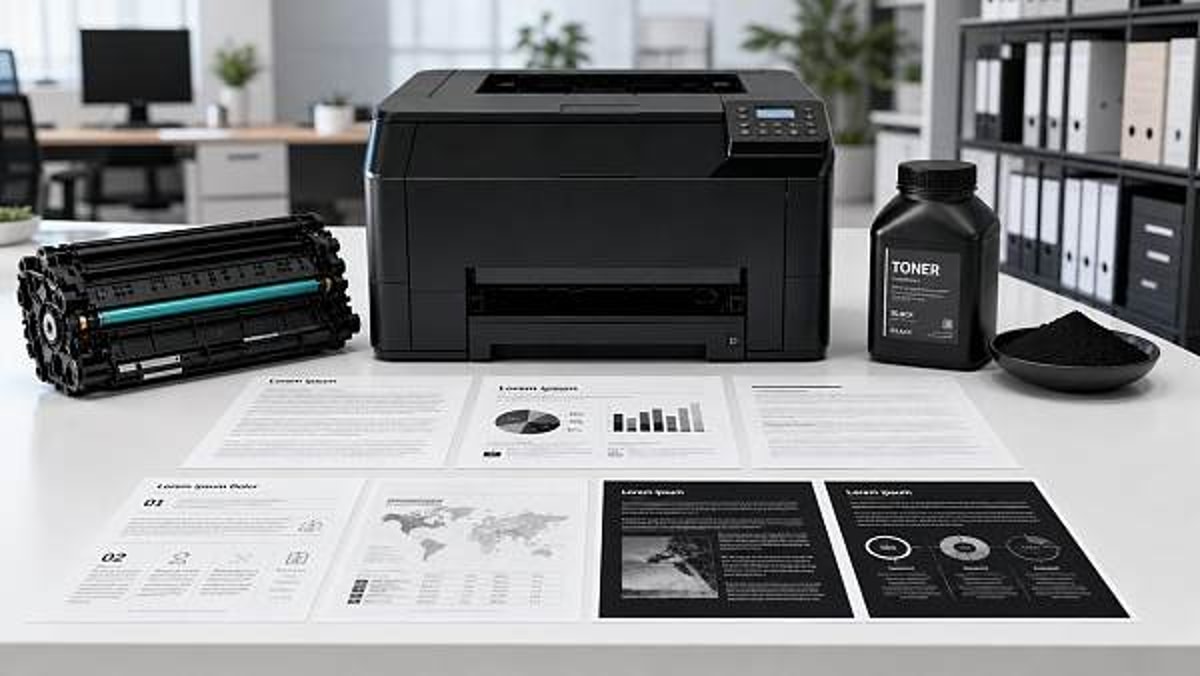
When evaluating laser printer toner bulk for enterprise or institutional use, page yield is often the first metric teams compare—but it is rarely determined by toner volume alone. Print coverage, cartridge design, device calibration, duty cycle, and testing standards all influence real-world output. For technical evaluators, understanding which factors affect yield most is essential to controlling cost, ensuring supply efficiency, and making sourcing decisions based on measurable performance.
Why page yield varies so much across business scenarios
In practice, laser printer toner bulk is not judged in a vacuum. A hospitality group printing guest communications, a university output center producing course packets, and a regional office handling invoices may all buy toner in volume, yet their yield results can differ dramatically even when they use the same stated cartridge capacity. That is why technical assessment should begin with scenario mapping rather than product comparison alone.
The main reason is simple: page yield is an interaction metric. It reflects not only how much toner exists in the system, but how the printer lays toner on paper, how often the engine starts and stops, whether pages are text-heavy or graphics-heavy, and how environmental and maintenance conditions affect transfer efficiency. For buyers working in complex sourcing environments, the question is not merely “Which toner offers the highest advertised yield?” but “Which laser printer toner bulk option gives the most stable and predictable yield in our actual usage pattern?”
The core factors that affect laser printer toner bulk yield most
Before looking at specific applications, technical evaluators should rank the major yield drivers. In most environments, the biggest influences are coverage rate, cartridge and hopper design, print mode defaults, image density settings, engine calibration behavior, and job pattern. ISO yield claims help establish a baseline, but they do not eliminate operational variation.
- Page coverage: The single largest variable. A 5% coverage test page is very different from invoices with logos, shaded tables, or full-page diagrams.
- Toner formulation and transfer efficiency: Particle size, charge consistency, and adhesion affect how much toner is actually consumed to achieve target darkness.
- Cartridge architecture: Waste collection design, developer integration, and residual unusable toner can reduce effective output.
- Printer calibration cycles: Some devices use toner during warm-up, density correction, or automatic maintenance.
- Print job behavior: Frequent one- or two-page jobs often reduce efficiency versus long continuous runs.
- Device settings: Draft mode, eco mode, resolution selection, and dark print preferences can materially change yield.
Scenario comparison: where yield assumptions usually fail
For laser printer toner bulk assessments, scenario-based comparison is far more useful than generic vendor claims. The table below shows how typical commercial environments influence the most important yield factors.
Scenario 1: Office environments with low-to-medium coverage
For standard office departments, laser printer toner bulk often performs closest to rated yield, but only if documents are mostly black text and jobs are grouped efficiently. Technical evaluators in these settings should pay special attention to device idle behavior and auto-calibration frequency. In decentralized office fleets, repeated waking, cleaning, and short-run printing can consume meaningful toner without producing a proportional page count.
In this scenario, the dominant factors are not usually toner mass alone. Instead, the most influential variables are engine efficiency, sleep-to-print recovery, and whether users routinely select darker print settings for readability. If a site prints many one-page approvals, labels, or email copies, actual yield can drop below expectations even when document coverage remains modest. A better sourcing approach is to test laser printer toner bulk against real print logs rather than rely only on ISO page declarations.
Scenario 2: Education, training, and institutional print centers
Universities, schools, and training providers usually present a mixed-yield profile. Course handouts may be text-light and efficient, while worksheets, charts, presentation decks, and grayscale illustrations quickly raise toner consumption. Here, the largest mistake is averaging all output into one simple yield assumption. Technical evaluators should separate high-coverage jobs from routine text jobs and model both independently.
For this scenario, laser printer toner bulk should be assessed with seasonal volume peaks in mind. During enrollment periods, exam weeks, or orientation cycles, printers may run near their duty cycle thresholds. Under these conditions, calibration events, component heating behavior, and mechanical wear can influence yield consistency. If the selected cartridge performs well only in moderate use but becomes unstable under heavy throughput, the apparent cost benefit can disappear through downtime, emergency replenishment, or inconsistent print density.
Scenario 3: Hospitality, branded communications, and premium presentation
In hotels, serviced residences, event venues, and premium customer-facing sites, page yield is often reduced by branding requirements. Even monochrome output may include dark logos, shaded headers, room-service templates, promotional inserts, or checklists with dense tables. In these environments, laser printer toner bulk should be evaluated not only for maximum pages but for visual consistency at target density.
This is a case where technical and procurement teams should avoid overvaluing the highest advertised yield number. A lower-claimed cartridge that maintains stable darkness and low residue on premium stationery may outperform a higher-claimed option that needs darker settings to preserve brand appearance. For GCT-aligned sourcing contexts, especially where guest experience matters, yield must be balanced with output quality, cartridge reliability, and supply continuity across multiple locations.
Scenario 4: Centralized high-volume operations
When laser printer toner bulk is used in centralized procurement hubs, document centers, or managed print environments, the yield conversation shifts. Long uninterrupted runs reduce some inefficiencies tied to start-stop behavior, but they increase the importance of sustained thermal performance, drum interaction, and residual toner management. In these applications, the question becomes whether the cartridge can convert toner supply into printable pages consistently across the entire life cycle.
Technical evaluators should request data on end-of-life performance, not just first-half output. Some systems show acceptable yield early but decline in density or trigger premature replacement thresholds before all usable toner is consumed. In bulk purchasing terms, this difference matters. A small amount of trapped or inaccessible toner per cartridge can become a substantial cost multiplier at fleet scale.
Which factors should carry the most weight by scenario
A practical evaluation framework helps technical teams weight the right variables for the right environment instead of applying one universal scoring model.
Common misjudgments when sourcing laser printer toner bulk
Several sourcing errors repeatedly distort yield expectations. The first is assuming that higher fill quantity always means higher usable output. In reality, cartridge design can limit how much toner is accessible. The second is using only standard test-page yield to estimate fleet economics. That baseline has value, but it does not capture local templates, user behavior, or firmware routines. The third is neglecting printer-specific interactions. The same laser printer toner bulk formula may behave differently across device generations due to fusing temperature, transfer mechanics, or chip-based consumption controls.
Another common oversight is failing to track cost per effective page by scenario. A product that looks competitive in a low-coverage office can become expensive in hospitality or education if higher darkness settings or graphic-heavy jobs reduce yield sharply. Technical evaluators should therefore calculate at least three models: rated yield cost, expected mixed-use yield cost, and worst-case high-coverage yield cost.
How technical evaluators should build a reliable assessment process
A high-quality assessment of laser printer toner bulk should combine lab logic with field realism. Start by identifying the top three print scenarios in the organization. Then pull representative files from each scenario, measure approximate coverage, and run controlled tests on actual fleet devices. Record page count, print mode, ambient conditions, calibration frequency, and user-selected density settings. This approach gives a stronger decision basis than brochure comparisons.
Next, compare cartridge behavior at beginning, midpoint, and end of life. Monitor whether low-toner warnings appear early, whether print darkness drops before replacement, and whether maintenance cycles increase as the cartridge ages. Finally, tie the technical findings to sourcing risk: supplier consistency, lot-to-lot variation, OEM versus compatible performance, and lead-time security. For commercial buyers, especially across distributed properties or institutions, the best option is the one that delivers predictable output, stable replenishment planning, and defensible total cost.
FAQ for scenario-based yield evaluation
Is page yield mainly determined by toner amount?
No. Toner amount matters, but coverage, cartridge efficiency, device calibration, and print settings often have equal or greater impact on real yield.
Which scenario causes the largest gap between rated and actual yield?
Branded, graphics-heavy, or stop-start printing environments usually show the biggest gap because coverage and maintenance behavior diverge most from standardized testing.
How should buyers test laser printer toner bulk before large-volume procurement?
Use representative business files, segment results by scenario, and compare effective page output across multiple devices and full cartridge life cycles.
Making the right sourcing decision for your own environment
The factor that affects laser printer toner bulk page yield most depends on where and how printing happens. In one environment, coverage is the dominant driver. In another, short-job inefficiency or cartridge residual loss matters more. For technical evaluators, the right decision comes from matching yield analysis to the real application scenario, not from comparing headline numbers alone.
If your organization is assessing bulk toner for office networks, education systems, hospitality operations, or centralized procurement programs, define your print scenarios first, test with real documents second, and price the solution based on effective yield rather than stated yield alone. That is the most reliable way to control operating cost, improve supply planning, and select laser printer toner bulk that truly fits the business case.
Search News
Hot Articles
Popular Tags
Need ExpertConsultation?
Connect with our specialized leisureengineering team for procurementstrategies.
Recommended News
 May 05, 2026Cork bulletin boards: why frame quality matters over board sizeCork bulletin boards deliver better long-term value when frame quality comes first. Learn how stronger materials, secure corners, and stable mounting improve durability, safety, and appearance.● Institutional Buyer
 May 05, 2026Soundproof phone booths: when sound ratings mislead office plansSoundproof phone booths can mislead office plans when ratings are taken at face value. Learn how to compare privacy, ventilation, placement, and compliance before you buy.● Institutional Buyer
 May 05, 2026Laser printer toner bulk: what affects page yield mostLaser printer toner bulk page yield depends on more than toner volume. Discover the top factors affecting real output and make smarter, lower-cost sourcing decisions.● Institutional Buyer
 May 05, 2026Science lab furniture: small design choices with big safety impactScience lab furniture shapes lab safety in ways many teams overlook. Discover smart design choices that reduce risk, improve compliance, and support efficient long-term performance.● Institutional Buyer
 May 05, 2026Wholesale ink cartridges: remanufactured vs compatible in real useWholesale ink cartridges compared in real use: remanufactured vs compatible on print quality, yield, firmware risk, and sourcing value—helping procurement teams buy smarter.● Institutional Buyer
 May 05, 2026Cash drawers wholesale: what causes jams at checkoutCash drawers wholesale guide: uncover the real causes of checkout jams, from latch design to POS compatibility, and learn how to source reliable drawers that reduce downtime.● Institutional Buyer
 May 05, 2026Office acoustic pods or open booths: which solves noise betterOffice acoustic pods vs. open booths: discover which solution controls noise better for privacy, focus, and hybrid calls, and make a smarter office planning decision.● Institutional Buyer
 May 05, 2026Office LED panel lights that cut glare without dim workspacesOffice LED panel lights that reduce glare without sacrificing brightness. Discover how to choose low-glare, high-comfort lighting for productive, compliant, and modern office spaces.● Institutional Buyer
 May 05, 2026Chemical resistant lab tops: which materials hold up bestChemical resistant lab tops compared: discover whether epoxy resin, phenolic resin, or stainless steel holds up best for harsh chemicals, heat, and daily lab demands.● Institutional Buyer
 May 05, 2026How to compare drafting tables wholesale without overbuyingDrafting tables wholesale comparison starts with MOQ, specs, and supplier reliability. Learn how to avoid overbuying, reduce inventory risk, and choose better-value sourcing options.● Institutional Buyer
 May 04, 2026Ergonomic Office Chairs Wholesale: Comfort Claims vs Real SupportErgonomic office chairs wholesale: learn how to verify real support beyond comfort claims with fit, adjustability, durability, and compliance insights for smarter commercial buying.● Institutional Buyer
 May 04, 2026Modular Office Workstations: Flexibility Can Add Setup CostsModular office workstations can improve flexibility, but setup costs often rise through installation, power, data, and rework. Learn when the added investment truly pays off.● Institutional Buyer
 May 04, 2026Steel Filing Cabinets: Why Some Drawers Jam Too EarlySteel filing cabinets often jam early due to weak slides, poor leveling, overload, or lock issues. Discover what to check before buying and how to avoid costly drawer failures.● Institutional Buyer
 May 04, 2026Office Network Racks: Airflow Problems Start With Bad PlanningOffice network racks can fail early when airflow is ignored. Learn the key planning checklist to prevent overheating, reduce maintenance risks, and build a more reliable office network.● Institutional Buyer
 May 04, 2026Office Partitions Wholesale: Open Plan Savings, Closed Office NeedsOffice partitions wholesale helps project managers cut fit-out costs, speed delivery, and balance open-plan efficiency with private office performance. Explore smarter commercial workspace solutions.● Institutional Buyer
 May 04, 2026Conference Room Tables: Common Layout Mistakes to AvoidConference room tables can make or break meeting flow. Discover common layout mistakes to avoid and plan smarter spaces for collaboration, AV integration, and professional results.● Institutional Buyer
 May 04, 2026Mobile Pedestals Wholesale: Why Drawer Slides Matter MoreMobile pedestals wholesale buyers should look beyond price—drawer slides shape durability, load capacity, and maintenance costs. Learn what to compare before ordering.● Institutional Buyer
 May 04, 2026Height Adjustable Standing Desks: Stability Matters More Than SpeedHeight adjustable standing desks should be judged by stability, not just speed. Learn how stronger frames improve safety, user confidence, and long-term value in commercial spaces.● Institutional Buyer
 May 04, 2026Executive Office Desks: When Looks Start to Hurt FunctionExecutive office desks should do more than look impressive. Discover how to balance prestige, ergonomics, storage, and tech support for smarter office buying decisions.● Institutional Buyer
 May 04, 2026Server Cabinets Wholesale: How to Avoid Ordering the Wrong DepthServer cabinets wholesale guide: avoid costly depth mistakes by checking usable internal space, rail fit, cable clearance, and expansion needs before placing bulk orders.● Institutional Buyer
 May 04, 2026Commercial Paper Shredders and the Hidden Cost of DowntimeCommercial paper shredders do more than destroy documents—they protect uptime, compliance, and budgets. Discover how to avoid hidden downtime costs and choose smarter for busy workplaces.● Institutional Buyer
 May 04, 2026Mesh Office Chairs OEM Orders: Specs That Cause ReworkMesh office chairs OEM projects often face rework from vague specs, certification gaps, and component mismatches. Learn what to verify before production to avoid delays and protect budgets.● Institutional Buyer
 May 04, 2026Stackable Visitor Chairs That Save Space Without Looking CheapStackable visitor chairs that save space without looking cheap—discover how to choose stylish, durable seating for offices, schools, and hospitality spaces.● Institutional Buyer
 May 04, 2026What Makes Commercial Acoustic Panels Worth the Cost?Commercial acoustic panels help buyers balance cost with performance, compliance, durability, and design. Learn what makes them worth the investment across offices, schools, hotels, and more.● Institutional Buyer