Physics lab apparatus: where low-cost kits usually fall short
Choosing physics lab apparatus on price alone often leads to inaccurate results, short product life, and missed learning outcomes. For schools, labs, and institutional buyers comparing low-cost kits, the real issue is not affordability but performance, safety, and long-term value. This article explores where budget options commonly fall short and what informed buyers should evaluate before sourcing.
For information researchers, procurement teams, and education buyers, the challenge is rarely finding a supplier that can quote a lower number. The harder task is determining whether a low-cost physics lab apparatus package can withstand 3 to 5 academic years, support repeatable experiments, and meet institutional safety expectations across dozens of users per week.
In B2B sourcing, especially for schools, training centers, and smart campus projects, the buying decision affects teaching quality, maintenance budgets, replacement cycles, and even audit compliance. A kit that appears 20% cheaper at purchase may create 40% to 60% higher lifecycle cost when fragile components, calibration drift, and missing documentation are factored in.
Why low-cost physics lab apparatus often underperforms in real teaching environments
Budget-oriented physics lab apparatus is not automatically unsuitable. The issue is that many low-cost kits are optimized for invoice price rather than classroom durability or measurement reliability. In controlled demos they may appear acceptable, but under daily institutional use, several weaknesses emerge within the first 6 to 12 months.
1. Measurement accuracy is frequently inconsistent
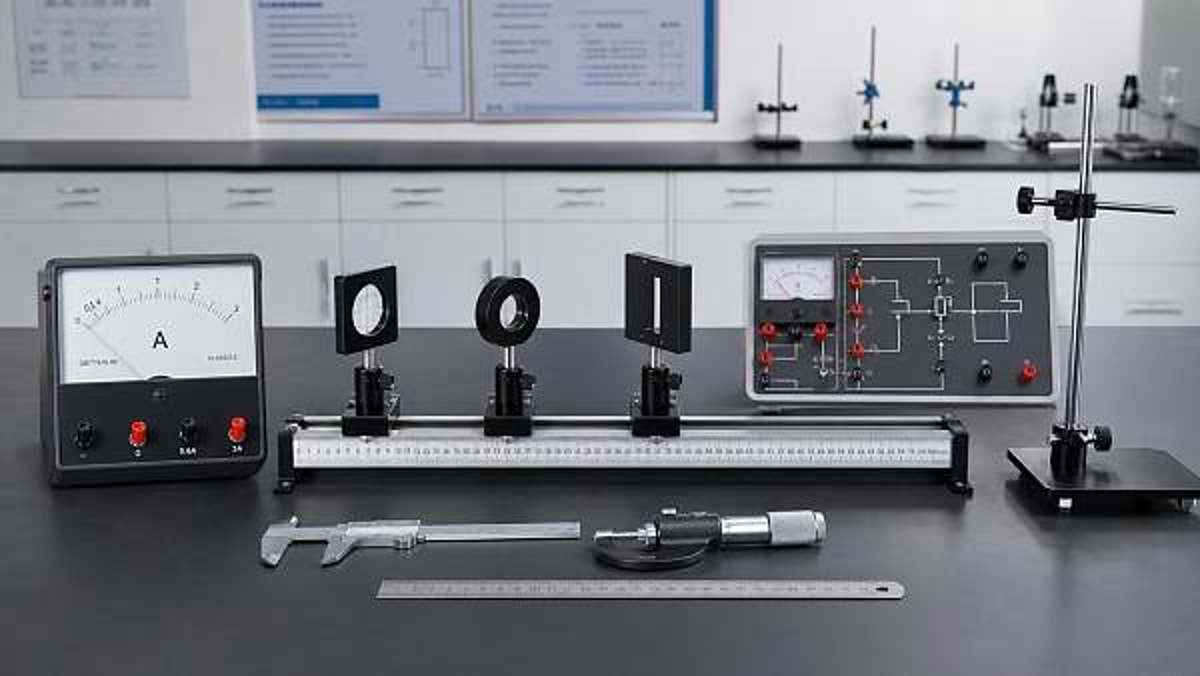
Physics learning depends on repeatable observation. Apparatus used for optics, mechanics, electricity, and thermodynamics must deliver stable readings within a practical tolerance band. Low-cost rulers, spring balances, ammeters, power supplies, and timing devices often show larger deviations, sometimes beyond the acceptable classroom range of ±2% to ±5% for basic experiments.
That level of variation may seem minor, but it can distort student outcomes. When 30 students perform the same experiment and receive inconsistent results because of apparatus quality rather than technique, the instructor loses teaching time and the institution loses confidence in the equipment set.
Common causes of poor accuracy
- Loose assembly tolerances in sliders, clamps, and scales
- Low-grade sensors or unstable electrical components
- Poor calibration before shipment
- Inadequate environmental resistance to humidity, dust, or transport vibration
2. Material quality is often reduced to hit target price points
A large portion of entry-level physics lab apparatus uses thinner metal sections, brittle plastic housings, low-grade fasteners, and weaker connectors. These decisions can lower factory cost by 8% to 15%, but they also shorten usable life in shared educational settings where apparatus is handled repeatedly, stored quickly, and moved across rooms.
For example, retort stands with unstable bases, low-strength clamps, or soft-thread screws may become unreliable after one semester. Electrical experiment boards may develop loose terminals after 200 to 500 connection cycles, which is far below what a busy school lab requires.
The table below highlights where low-cost physics lab apparatus usually differs from better-specified institutional-grade alternatives.
The key point is not that every premium product is necessary for every lab. It is that each compromise has a direct operational effect. Buyers comparing two physics lab apparatus kits should translate each materials choice into expected service life, replacement frequency, and classroom disruption.
3. Safety details are often oversimplified
In school and institutional settings, safety is not limited to electrical shock risk. It also includes edge finishing, thermal insulation, chemical resistance, cable protection, load stability, and age-appropriate design. Low-cost physics lab apparatus may omit small but important safety refinements such as shrouded terminals, anti-slip feet, guarded moving parts, or clear warning labels.
These omissions matter most when apparatus is used by large groups, sometimes 20 to 40 learners per session, under time pressure. A buyer should not only ask whether a kit functions, but whether it remains safe during repeated setup, rushed clean-up, and basic operator mistakes.
What informed buyers should evaluate before sourcing physics lab apparatus
A better sourcing process begins with a shift in evaluation criteria. Instead of comparing only unit price, buyers should score physics lab apparatus across at least 4 dimensions: performance, durability, safety, and support. This approach is especially useful for campus tenders, distributor sourcing, and multi-room laboratory projects.
Define the intended use case first
Not every institution requires the same specification. A secondary school performing standard mechanics and electricity experiments 2 or 3 times per week needs a different configuration from a teacher training college or a STEM demonstration center with daily use. Buyers should map apparatus demand by user age, experiment frequency, class size, and storage conditions before requesting quotations.
A practical procurement brief should include at least 6 items: experiment list, number of students per class, number of parallel stations, target service life, preferred materials, and documentation requirements. This prevents suppliers from offering incomplete kits that appear economical but fail during implementation.
Minimum buyer checklist
- List the exact experiments to be performed in a 1-year or 3-year curriculum.
- Estimate usage volume per apparatus item per month.
- Set acceptable accuracy ranges for critical measurements.
- Confirm replacement part availability for 12 to 24 months.
- Request packing lists, manuals, and maintenance instructions.
Review specifications beyond the quotation sheet
Many sourcing errors happen because the quote lists only generic item names such as “optical bench,” “ammeter,” or “mechanics set,” without enough technical detail. Better procurement requires buyers to ask for measurable specifications: material thickness, scale resolution, voltage range, current range, base weight, cable length, connector type, and operating temperature recommendations where relevant.
The following comparison framework can help procurement teams evaluate physics lab apparatus more systematically.
This type of framework helps buyers separate low price from low value. A supplier that provides fuller technical and service information is often better prepared for institutional business than one that competes only on basic unit cost.
Assess kit completeness and replacement logic
Another common weakness in low-cost physics lab apparatus is incomplete kit design. Buyers may receive a core set without enough accessories, adapters, consumables, or storage inserts to run the listed experiments efficiently. Missing 1 clamp, 2 leads, or a single alignment part can delay an entire class.
Institutional buyers should ask whether the kit supports easy part-by-part replacement rather than full-set repurchase. In practical terms, the ability to reorder 5 to 10 high-wear items separately can reduce long-term replacement spending and extend the useful life of a full lab package.
The hidden lifecycle costs behind “cheap” lab kits
When procurement is judged only by initial spend, low-cost physics lab apparatus can appear attractive. But institutional purchasing should calculate total ownership cost over at least 24 to 36 months. This includes breakage, troubleshooting time, spare parts, experiment failure rates, and re-order delays.
Direct cost is only one part of the equation
Suppose one kit costs 15% less at purchase. If it requires replacement of key components twice as often, takes 10 extra minutes to set up per session due to poor design, and generates more failed experiments, the apparent saving can disappear quickly. This is especially true when a lab runs 4 to 8 sections per week across multiple classes.
The indirect costs are often harder to see but more important in education. Inconsistent apparatus reduces instructional confidence, increases teacher intervention, and weakens student engagement. For procurement managers, that means the cheapest option may carry the highest educational risk.
Lead time and continuity also matter
A low-cost source is less attractive if replacement parts take 6 to 10 weeks, manuals are incomplete, or packaging damage rates are high. International and regional buyers should evaluate whether the supplier can maintain continuity across repeat orders, curriculum updates, or multi-campus rollouts.
From a B2B sourcing perspective, continuity includes stable product specification, documented packing lists, batch consistency, and predictable communication. These factors are often more valuable than a short-term discount of 5% to 8%.
Signs of stronger long-term value
- Clear spare parts policy with practical reorder quantities
- Documented manuals and experiment guidance in usable English
- Protective packaging for delicate optics and electrical items
- Consistent component sourcing across production batches
- Responsive pre-shipment clarification within 24 to 72 hours
How schools, labs, and distributors can source more effectively
Better sourcing does not always mean choosing the most expensive physics lab apparatus. It means matching specification to teaching need, then validating supplier capability. For many buyers, the most effective process is a 5-step review: define use case, compare technical details, check completeness, assess service support, and validate sample quality.
Use sample evaluation strategically
When order value is significant, sampling can prevent costly mistakes. A sample review should not be limited to visual appearance. Buyers should test assembly speed, measurement consistency, connector grip, stability on benches, and packaging resilience. Even a 7-day evaluation process can reveal issues that are invisible in a PDF catalog.
Align sourcing with curriculum and facility planning
Physics lab apparatus is part of a larger educational environment that may include lab furniture, storage systems, electrical layout, teacher workflow, and inventory control. Buyers planning new campuses or refurbishments should consider apparatus sourcing alongside room design, rather than as an isolated product order placed at the final stage.
This integrated approach is increasingly relevant in modern institutional projects, where procurement teams expect reliable supply, consistent documentation, and solutions that align with broader educational infrastructure. For sourcing platforms and trade intelligence partners, the value lies in helping buyers compare not just products, but operational fit.
Questions every information researcher should ask
Before shortlisting suppliers
- Can the supplier explain where its physics lab apparatus is best suited: basic school use, advanced teaching, or demonstration settings?
- Are specifications detailed enough to compare one quote against another?
- What are the high-wear components, and how are they replaced?
- Is the packaging designed for export and repeated institutional handling?
- Will the kit remain consistent if reordered after 12 months?
Low-cost physics lab apparatus usually falls short not because affordability is wrong, but because oversimplified sourcing criteria ignore accuracy, durability, safety, and service continuity. For schools, labs, distributors, and institutional buyers, the better decision is to evaluate total teaching value over a 2- to 3-year horizon rather than focusing only on purchase price.
At GCT, sourcing insight is built around real commercial decision-making: comparing specifications, identifying operational risks, and helping buyers move from broad market research to practical shortlists. If you are reviewing physics lab apparatus for an education project, campus upgrade, or supply program, contact us to discuss sourcing criteria, request a tailored comparison framework, or explore more solution-focused procurement guidance.
Search News
Hot Articles
Popular Tags
Need ExpertConsultation?
Connect with our specialized leisureengineering team for procurementstrategies.
Recommended News
 May 05, 2026Physics lab apparatus: where low-cost kits usually fall shortPhysics lab apparatus buying on price alone often leads to poor accuracy, weak durability, and higher lifecycle costs. Learn what low-cost kits miss and how to source safer, better-value solutions.● Institutional Buyer
 May 05, 2026School laboratory equipment: what should be replaced firstSchool laboratory equipment replacement starts with safety-critical assets. Learn what to replace first to improve compliance, reduce downtime, and maximize tight budgets.● Institutional Buyer
 May 05, 2026Thermal receipt printers: hidden upkeep costs before large rolloutThermal receipt printers may look affordable, but hidden upkeep costs can erode rollout budgets. Learn how to reduce downtime, control maintenance, and choose smarter for scale.● Institutional Buyer
 May 05, 2026Human anatomy models that improve hands-on teaching, not storageHuman anatomy models built for hands-on teaching, not storage. Discover durable, classroom-ready options that improve engagement, simplify setup, and support smarter education sourcing.● Institutional Buyer
 May 05, 2026Ceiling mount projector brackets: where installation mistakes happenCeiling mount projector brackets: discover where installation mistakes happen, how to avoid safety and alignment issues, and the checklist that helps teams deliver smoother AV projects.● Institutional Buyer
 May 05, 2026Barcode scanners for library: common issues with older systemsBarcode scanners for library upgrades can solve slow checkouts, read errors, and compatibility issues in older systems. Learn what fails first and how to choose a reliable replacement.● Institutional Buyer
 May 05, 2026What to check before ordering wholesale projector screensWholesale projector screens buyers should check material, gain, aspect ratio, installation, and supplier consistency before ordering. Reduce sourcing risk and choose reliable commercial solutions.● Institutional Buyer
 May 05, 2026Geography globes wholesale: what makes one model classroom-readyGeography globes wholesale buyers: discover what makes a model truly classroom-ready, from durability and readability to safety, compliance, and reliable bulk supply.● Institutional Buyer
 May 05, 2026Microscope slides wholesale: where quality gaps usually show upMicroscope slides wholesale buyers should watch for hidden quality gaps in flatness, edge finishing, cleanliness, and batch consistency—learn how to reduce waste and choose reliable suppliers.● Institutional Buyer
 May 05, 2026POS touch screens: what affects response speed and lifespanPOS touch screens directly impact checkout speed, uptime, and total cost. Learn what affects response speed and lifespan to choose the right solution for every business scenario.● Institutional Buyer
 May 04, 2026Kindergarten Furniture Bulk Orders and the Safety Details MissedKindergarten furniture bulk buyers: discover the hidden safety checks suppliers often miss, from emissions and stability to ergonomics and compliance, before placing large orders.● Institutional Buyer
 May 04, 2026School Desks and Chairs Wholesale: Matching Age to Size CorrectlySchool desks and chairs wholesale guide: learn how to match age to size correctly for better comfort, safety, compliance, and smarter school furniture purchasing.● Institutional Buyer
 May 04, 2026Library Bookshelves Wholesale: How Much Load Is Really Enough?Library bookshelves wholesale guide: learn how much load is truly enough for safety, durability, and compliance. Compare ratings, avoid costly mistakes, and choose the right shelving with confidence.● Institutional Buyer
 May 04, 2026Smart Interactive Whiteboards: Which Features Get Used Daily?Smart interactive whiteboards: discover which features teams and teachers actually use daily, from touch accuracy and wireless casting to easy collaboration, ROI, and smarter buying decisions.● Institutional Buyer
 May 04, 2026Student Chairs With Writing Pad: Which Sizes Fit Best?Student chairs with writing pad: discover which sizes best support comfort, posture, room capacity, and tablet use. Compare fit options for schools, universities, and training spaces.● Institutional Buyer
 May 03, 2026Beijing Women's FC Win Spurs AI Training System Export to UKBeijing Women's FC win sparks UK demand for AI sports training systems — real-time analytics, GDPR/ISO 27001 compliance & Heathrow logistics insights revealed.● Institutional Buyer
 May 01, 2026Park Trash Cans That Cut Maintenance Instead of Adding ItPark trash cans that reduce labor, resist weather, and stay cleaner longer. Learn which designs, materials, and features help lower maintenance costs across parks and outdoor spaces.● Institutional Buyer
 May 01, 2026Park Drinking Fountains That Hold Up Better in Public SpacesPark drinking fountains built for public spaces need durability, hygiene, and low maintenance. Discover how to choose vandal-resistant models that cut long-term costs.● Institutional Buyer
 May 01, 2026Restaurant POS Systems That Reduce Training Time at the CounterRestaurant POS systems that cut counter training time: compare intuitive workflows, role-based controls, and error-reducing features to speed onboarding and improve service consistency.● Institutional Buyer
 Apr 30, 20262026 Shanghai Smart Campus Expo: VR EdTech Gains ITU & ISO/IEC 23053 Dual CertificationVR EdTech gains ITU & ISO/IEC 23053 dual certification at 2026 Shanghai Smart Campus Expo—key for global smart PE tenders in UAE, Thailand & ASEAN.● Institutional Buyer
 Apr 29, 20262026 Shanghai Smart Campus Expo: VR EdTech Gains ITU & ISO/IEC Dual CertVR EdTech gains ITU & ISO/IEC dual cert at 2026 Shanghai Smart Campus Expo—key for exporters, integrators & compliance providers.● Institutional Buyer
 Apr 28, 20262026 Shanghai Smart Campus Expo: VR Teaching Devices Gain ITU & ISO/IEC 23053 CertificationVR teaching devices certified to ITU & ISO/IEC 23053 at 2026 Shanghai Smart Campus Expo—unlock EU tenders, interoperability, and global edtech growth.● Institutional Buyer
 Apr 27, 20262026 Shanghai Smart Campus Expo: VR EdTech Gains ITU & ISO/IEC Dual CertificationVR EdTech gains ITU & ISO/IEC dual certification at 2026 Shanghai Smart Campus Expo—key for global edtech exporters, integrators, and compliance teams.● Institutional Buyer
 Apr 26, 20262026 Shanghai Smart Campus Expo: VR EdTech Devices Gain ITU & ISO/IEC 23053 CertificationVR EdTech devices certified to ITU & ISO/IEC 23053 at 2026 Shanghai Smart Campus Expo — key for GCC & SEA education exporters, integrators, and compliance teams.● Institutional Buyer