School laboratory equipment: what should be replaced first
When budgets are tight and safety standards keep rising, knowing which school laboratory equipment to replace first becomes a critical project decision. For project managers and facility leaders, the priority is not just outdated tools, but equipment that affects safety, compliance, teaching quality, and long-term operating costs. This guide outlines how to identify the most urgent replacement needs and plan upgrades with practical, procurement-focused clarity.
In most school environments, laboratory renewal is not a one-time purchase. It is a phased capital project involving risk assessment, specification alignment, procurement scheduling, installation coordination, and future maintenance planning. For institutions managing science rooms, STEM labs, vocational training spaces, or smart campus upgrades, the question is rarely whether to replace school laboratory equipment, but which assets must move to the top of the list first.
A sound replacement strategy helps decision-makers reduce downtime, avoid compliance gaps, and direct limited funds toward equipment with the highest operational impact. It also improves vendor evaluation by shifting the discussion from price alone to lifecycle value, safety exposure, and teaching continuity.
How to Prioritize School Laboratory Equipment Replacement
The first step is to rank equipment by risk, not by age alone. In many schools, a 12-year-old microscope may still perform acceptably, while a 5-year-old fume extraction unit with declining airflow may already present a serious safety issue. Project leaders should assess at least 4 dimensions: safety, compliance, instructional necessity, and maintenance burden.
A practical scoring method is to assign each asset a 1-5 rating in those 4 categories. Equipment with a combined score above 16 out of 20 typically deserves immediate review. This approach helps teams defend budget requests with objective reasoning rather than subjective impressions.
The 4 Categories That Usually Come First
Across K-12 schools, colleges, and technical training centers, the same replacement pattern appears repeatedly. Items tied to ventilation, electrical safety, chemical handling, and emergency response should usually be reviewed before lower-risk instructional tools. These categories affect daily exposure, not occasional inconvenience.
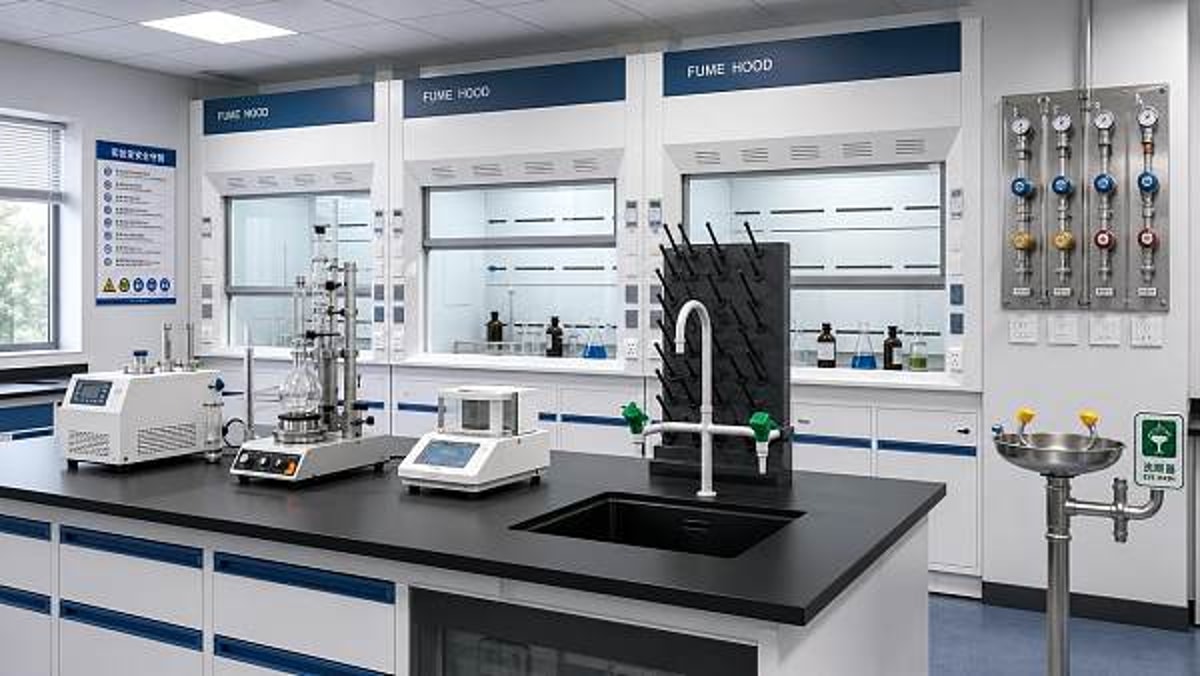
- Ventilation-related systems, including fume hoods and extraction units
- Gas taps, valves, regulators, and chemical-resistant pipework
- Electrical devices with heat output, exposed wiring, or unstable calibration
- Emergency stations such as eyewash units, safety showers, and fire control accessories
If budgets cover only 20% to 30% of a full laboratory refresh, these categories generally produce the strongest risk reduction per dollar spent. They also tend to influence insurance reviews, internal audits, and site acceptance standards more than basic classroom tools.
A Simple Replacement Matrix for Project Teams
The table below offers a practical framework for sorting school laboratory equipment into replacement priority groups. It is especially useful when multiple rooms are being reviewed within a 6- to 18-month capital cycle.
The key takeaway is that replacement priority should follow exposure severity and failure consequences. Instructional value matters, but equipment connected to ventilation, utilities, and emergency response usually comes before bench-level teaching instruments.
Why Age Alone Is a Weak Decision Metric
Many facilities still use age thresholds such as 8 years, 10 years, or 15 years as replacement triggers. While useful for budgeting forecasts, this method can distort actual urgency. A well-maintained analytical balance in a low-load classroom may remain serviceable for years, while a heavily used extraction arm in a chemistry room can become a problem much earlier.
A better model combines age with condition data: repair frequency, testing outcomes, spare-parts availability, energy use, and operator complaints. Once an item requires 3 or more service interventions in 12 months, replacement often becomes more cost-effective than continued patchwork maintenance.
What Equipment Should Usually Be Replaced First
For most project managers overseeing school laboratory equipment, the highest-priority items fall into 5 practical groups. These are the assets most likely to create compliance exposure, interrupt class schedules, or increase maintenance costs beyond reasonable limits.
1. Ventilation and Fume Control Systems
Ventilation is often the first area to review because failure is not always visible. A hood may appear functional while airflow has already dropped below the level needed for safe chemical handling. If staff report odor persistence, sash imbalance, or slow extraction, the system should be inspected immediately.
Replacement should be prioritized when corrosion is visible, controls are unreliable, or retrofitting costs approach 50% to 60% of a new unit. In project terms, upgrading extraction can also reduce downstream issues involving ducting, room pressure balance, and future room certification.
2. Gas and Water Service Points
Old gas taps, service valves, and sink fixtures may seem minor, but they are among the most critical components in daily lab safety. Brittle seals, inconsistent shutoff, and hidden leakage can turn a low-cost deferred item into a major shutdown event. In older schools, these components may also be incompatible with current bench layouts or upgraded utility standards.
If a site has experienced 2 leaks, repeated callouts, or corrosion around service points in the past school year, these items should move high on the procurement list. Utility replacement is especially important during renovation windows because access to under-bench systems becomes easier and labor disruption is reduced.
3. Emergency Safety Equipment
Eyewash stations, drench hoses, spill kits, fire blankets, and related accessories should never be treated as low-visibility items. If these systems are blocked, outdated, poorly marked, or inconsistently tested, the lab may not meet operational expectations during an incident. Even a 30-second delay in emergency response can materially change injury severity.
For school laboratory equipment planning, this category offers a relatively efficient improvement path. Compared with major casework replacement, emergency equipment upgrades are often faster to install, easier to standardize across multiple rooms, and highly visible during inspections.
4. Heating, Measurement, and Calibration-Dependent Devices
Hotplates, ovens, incubators, pH meters, balances, and data-logging devices affect both safety and teaching quality. A unit that drifts beyond tolerance may not cause an accident, but it can undermine experiment repeatability and student confidence in results. For technical and pre-university programs, inaccurate equipment can weaken learning outcomes significantly.
Project teams should review calibration records, warm-up times, power stability, and repair lead times. If spare parts now require 6-8 weeks or the device can no longer be calibrated within acceptable tolerance, replacement usually makes more sense than extending service life.
5. Fixed Furniture with Safety Implications
Not all school laboratory equipment is plug-in equipment. Damaged worktops, chemically degraded storage, unstable shelving, and poor cable management can also create serious operational risk. Casework replacement may not always come first, but where surface failure, moisture swelling, or poor cleanability is affecting daily use, it deserves accelerated review.
This is particularly relevant for schools transitioning to modern STEM layouts, where benches must support mobility, power access, and mixed-discipline use. In those cases, furniture replacement can improve both safety and room utilization by 15% to 25% compared with outdated fixed layouts.
How to Build a Replacement Plan That Procurement Can Approve
The technical case for replacing school laboratory equipment is only half the job. The other half is presenting a procurement-ready plan with clear scope, phasing, and commercial logic. Project managers need a framework that aligns site urgency with purchasing controls and installation timing.
Create a 3-Tier Capital Schedule
A practical model is to divide equipment into 3 tiers: immediate replacement within 0-3 months, planned replacement within 3-12 months, and monitored replacement within 12-24 months. This method allows schools to move quickly on high-risk items without losing visibility on medium-priority assets.
- Tier 1: safety-critical or non-compliant equipment with direct exposure risk
- Tier 2: operationally weak assets affecting teaching continuity or maintenance spend
- Tier 3: aging but still serviceable equipment scheduled for future modernization
This structure also helps during bid comparison. Suppliers can quote by phase, giving institutions more flexibility in funding approval and summer shutdown planning.
Use Commercial Criteria Beyond Unit Price
A low purchase price does not always reduce project cost. Teams should compare school laboratory equipment using at least 5 commercial factors: acquisition price, installation complexity, warranty terms, service availability, and expected maintenance frequency. For imported or custom-configured items, lead time and spare-parts support are equally important.
The table below shows how procurement teams can convert technical concerns into sourcing criteria during vendor evaluation.
This evaluation model is especially useful when sourcing internationally or comparing OEM and branded options. It keeps project discussions focused on operational outcomes rather than headline pricing alone.
Document the Existing Condition Before Tender
Before issuing RFQs, capture photographs, utility layouts, dimensions, fault history, and maintenance logs. A basic survey pack can reduce clarification rounds by 20% to 40% and improve quote accuracy. It also lowers the risk of variation orders after award.
For multi-room projects, standardizing this documentation across all spaces helps vendors identify where one specification can be repeated and where bespoke adaptation is required.
Common Mistakes in School Laboratory Equipment Upgrades
Even experienced teams can lose time and budget when upgrades are approached as isolated purchases rather than coordinated facility improvements. In school environments, the most common problems are usually avoidable with earlier planning.
Replacing Visible Items While Ignoring Hidden Infrastructure
Schools often replace front-end equipment first because it is easier to justify visually. However, new devices connected to old gas lines, overloaded circuits, or weak extraction systems may underperform from day one. A modern lab cannot depend on legacy infrastructure that has already passed its reliable service window.
Underestimating Installation Windows
A straightforward equipment swap may take 1-2 days, but full-room coordination involving utilities, commissioning, and staff handover can require 2-6 weeks. If procurement starts too late, work can spill into teaching periods and force temporary room closures.
Failing to Plan for Training and Handover
New school laboratory equipment only delivers value if users understand safe operation, cleaning routines, and reporting procedures. Even relatively simple items benefit from a structured handover checklist, especially where multiple technicians, teachers, or departments share responsibility.
A 6-Point Handover Checklist
- Installation completion record
- Utility connection verification
- Functional testing and calibration confirmation
- Operator guidance and safety briefing
- Maintenance schedule with service intervals
- Spare parts and warranty contact details
This final step protects the investment and gives facility teams a clear operational baseline for future audits.
Sourcing Support for Multi-Site and International Education Projects
For institutions, contractors, and procurement teams managing multiple campuses or cross-border projects, sourcing school laboratory equipment requires more than vendor comparison. It demands visibility into specification matching, delivery sequencing, supplier responsiveness, and product suitability across different facility types.
This is where a sourcing and intelligence platform such as Global Commercial Trade can add practical value. By connecting project stakeholders with market-focused supply insights across educational and commercial environments, GCT supports better supplier shortlisting, sharper procurement decisions, and more reliable upgrade planning for modern learning spaces.
If your team is evaluating which school laboratory equipment to replace first, start with the assets that create the highest safety and operational exposure: ventilation, gas service points, emergency systems, and calibration-dependent devices. Then build a phased plan around room access, utility readiness, and lifecycle cost. For tailored sourcing guidance, product comparisons, or project-specific upgrade strategies, contact us today to get a customized solution and explore more education facility procurement options.
Search News
Hot Articles
Popular Tags
Need ExpertConsultation?
Connect with our specialized leisureengineering team for procurementstrategies.
Recommended News
 May 05, 2026Physics lab apparatus: where low-cost kits usually fall shortPhysics lab apparatus buying on price alone often leads to poor accuracy, weak durability, and higher lifecycle costs. Learn what low-cost kits miss and how to source safer, better-value solutions.● Institutional Buyer
 May 05, 2026School laboratory equipment: what should be replaced firstSchool laboratory equipment replacement starts with safety-critical assets. Learn what to replace first to improve compliance, reduce downtime, and maximize tight budgets.● Institutional Buyer
 May 05, 2026Thermal receipt printers: hidden upkeep costs before large rolloutThermal receipt printers may look affordable, but hidden upkeep costs can erode rollout budgets. Learn how to reduce downtime, control maintenance, and choose smarter for scale.● Institutional Buyer
 May 05, 2026Human anatomy models that improve hands-on teaching, not storageHuman anatomy models built for hands-on teaching, not storage. Discover durable, classroom-ready options that improve engagement, simplify setup, and support smarter education sourcing.● Institutional Buyer
 May 05, 2026Ceiling mount projector brackets: where installation mistakes happenCeiling mount projector brackets: discover where installation mistakes happen, how to avoid safety and alignment issues, and the checklist that helps teams deliver smoother AV projects.● Institutional Buyer
 May 05, 2026Barcode scanners for library: common issues with older systemsBarcode scanners for library upgrades can solve slow checkouts, read errors, and compatibility issues in older systems. Learn what fails first and how to choose a reliable replacement.● Institutional Buyer
 May 05, 2026What to check before ordering wholesale projector screensWholesale projector screens buyers should check material, gain, aspect ratio, installation, and supplier consistency before ordering. Reduce sourcing risk and choose reliable commercial solutions.● Institutional Buyer
 May 05, 2026Geography globes wholesale: what makes one model classroom-readyGeography globes wholesale buyers: discover what makes a model truly classroom-ready, from durability and readability to safety, compliance, and reliable bulk supply.● Institutional Buyer
 May 05, 2026Microscope slides wholesale: where quality gaps usually show upMicroscope slides wholesale buyers should watch for hidden quality gaps in flatness, edge finishing, cleanliness, and batch consistency—learn how to reduce waste and choose reliable suppliers.● Institutional Buyer
 May 05, 2026POS touch screens: what affects response speed and lifespanPOS touch screens directly impact checkout speed, uptime, and total cost. Learn what affects response speed and lifespan to choose the right solution for every business scenario.● Institutional Buyer
 May 04, 2026Kindergarten Furniture Bulk Orders and the Safety Details MissedKindergarten furniture bulk buyers: discover the hidden safety checks suppliers often miss, from emissions and stability to ergonomics and compliance, before placing large orders.● Institutional Buyer
 May 04, 2026School Desks and Chairs Wholesale: Matching Age to Size CorrectlySchool desks and chairs wholesale guide: learn how to match age to size correctly for better comfort, safety, compliance, and smarter school furniture purchasing.● Institutional Buyer
 May 04, 2026Library Bookshelves Wholesale: How Much Load Is Really Enough?Library bookshelves wholesale guide: learn how much load is truly enough for safety, durability, and compliance. Compare ratings, avoid costly mistakes, and choose the right shelving with confidence.● Institutional Buyer
 May 04, 2026Smart Interactive Whiteboards: Which Features Get Used Daily?Smart interactive whiteboards: discover which features teams and teachers actually use daily, from touch accuracy and wireless casting to easy collaboration, ROI, and smarter buying decisions.● Institutional Buyer
 May 04, 2026Student Chairs With Writing Pad: Which Sizes Fit Best?Student chairs with writing pad: discover which sizes best support comfort, posture, room capacity, and tablet use. Compare fit options for schools, universities, and training spaces.● Institutional Buyer
 May 03, 2026Beijing Women's FC Win Spurs AI Training System Export to UKBeijing Women's FC win sparks UK demand for AI sports training systems — real-time analytics, GDPR/ISO 27001 compliance & Heathrow logistics insights revealed.● Institutional Buyer
 May 01, 2026Park Trash Cans That Cut Maintenance Instead of Adding ItPark trash cans that reduce labor, resist weather, and stay cleaner longer. Learn which designs, materials, and features help lower maintenance costs across parks and outdoor spaces.● Institutional Buyer
 May 01, 2026Park Drinking Fountains That Hold Up Better in Public SpacesPark drinking fountains built for public spaces need durability, hygiene, and low maintenance. Discover how to choose vandal-resistant models that cut long-term costs.● Institutional Buyer
 May 01, 2026Restaurant POS Systems That Reduce Training Time at the CounterRestaurant POS systems that cut counter training time: compare intuitive workflows, role-based controls, and error-reducing features to speed onboarding and improve service consistency.● Institutional Buyer
 Apr 30, 20262026 Shanghai Smart Campus Expo: VR EdTech Gains ITU & ISO/IEC 23053 Dual CertificationVR EdTech gains ITU & ISO/IEC 23053 dual certification at 2026 Shanghai Smart Campus Expo—key for global smart PE tenders in UAE, Thailand & ASEAN.● Institutional Buyer
 Apr 29, 20262026 Shanghai Smart Campus Expo: VR EdTech Gains ITU & ISO/IEC Dual CertVR EdTech gains ITU & ISO/IEC dual cert at 2026 Shanghai Smart Campus Expo—key for exporters, integrators & compliance providers.● Institutional Buyer
 Apr 28, 20262026 Shanghai Smart Campus Expo: VR Teaching Devices Gain ITU & ISO/IEC 23053 CertificationVR teaching devices certified to ITU & ISO/IEC 23053 at 2026 Shanghai Smart Campus Expo—unlock EU tenders, interoperability, and global edtech growth.● Institutional Buyer
 Apr 27, 20262026 Shanghai Smart Campus Expo: VR EdTech Gains ITU & ISO/IEC Dual CertificationVR EdTech gains ITU & ISO/IEC dual certification at 2026 Shanghai Smart Campus Expo—key for global edtech exporters, integrators, and compliance teams.● Institutional Buyer
 Apr 26, 20262026 Shanghai Smart Campus Expo: VR EdTech Devices Gain ITU & ISO/IEC 23053 CertificationVR EdTech devices certified to ITU & ISO/IEC 23053 at 2026 Shanghai Smart Campus Expo — key for GCC & SEA education exporters, integrators, and compliance teams.● Institutional Buyer