Custom promotional pens that get used instead of thrown away
In a market flooded with forgettable giveaways, custom promotional pens still stand out—when they are designed to be useful, comfortable, and worth keeping. For sourcing teams and brand decision-makers, choosing pens that get used instead of thrown away means balancing quality, functionality, and brand visibility. This guide explores what makes a promotional pen truly effective in today’s commercial landscape.
Why do some custom promotional pens get kept while others get discarded?
For information-led buyers, the core question is not whether custom promotional pens are affordable. It is whether they deliver repeated brand exposure after the first handout. In office supply programs, hotel front desks, education events, premium retail packaging, and trade exhibitions, the difference between a useful pen and a throwaway item comes down to writing quality, ergonomics, finish, and audience fit.
A low-cost pen can appear efficient on a quotation sheet, yet fail in use. If ink skips, the barrel cracks, the clip loosens, or the imprint fades, the brand message disappears with the product. By contrast, well-selected custom promotional pens stay on desks, in meeting folders, at reception counters, and inside hospitality welcome kits. That longer lifecycle turns a small branded item into a practical communication tool.
- Retention increases when the pen writes smoothly from first use and feels balanced in the hand.
- Perceived value rises when branding is subtle, clean, and matched to the user environment.
- Procurement risk falls when materials, refill type, print durability, and delivery conditions are checked before order confirmation.
For global commercial buyers, especially those managing multi-site sourcing, pen selection should be treated as a small-format procurement decision rather than a generic giveaway purchase. That is where structured sourcing insight matters.
Which commercial scenarios are best suited to custom promotional pens?
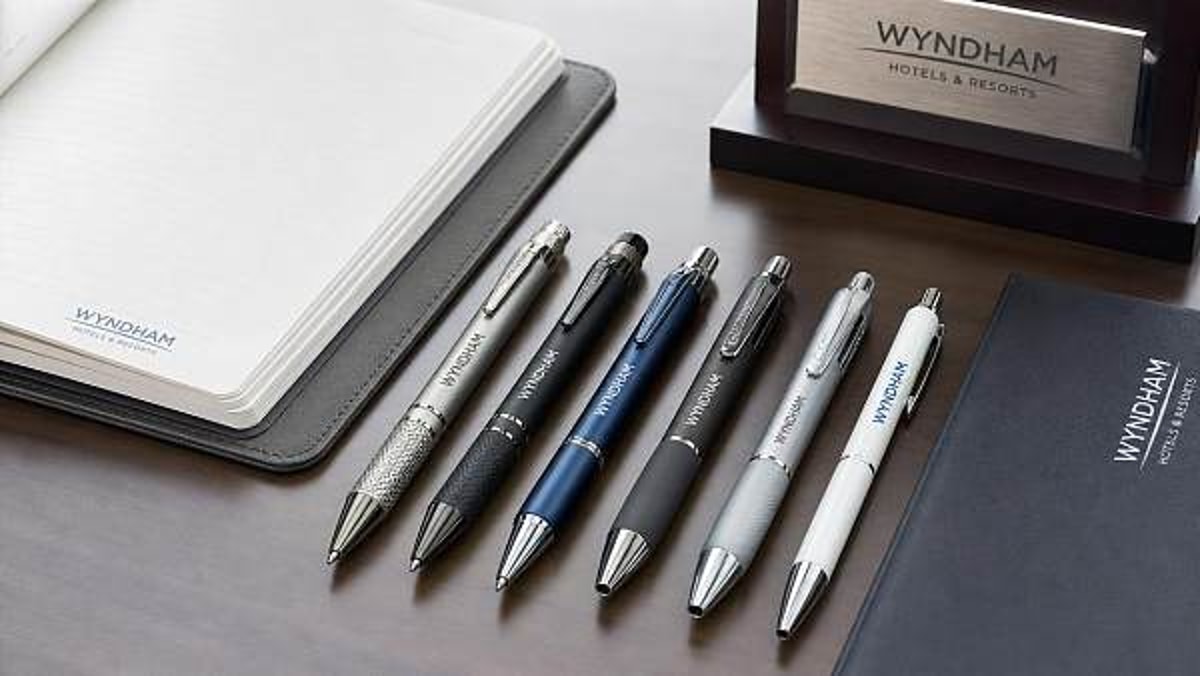
Different sectors use custom promotional pens for different reasons. A university may need reliable writing tools for onboarding and examinations. A hotel may want branded pens that align with interior aesthetics. A luxury retailer may require a pen that complements gift wrapping and after-sales documentation. A trade event organizer may prioritize volume, speed, and distribution ease.
The table below helps compare major application scenarios and the sourcing priorities usually attached to each one.
This comparison shows why one universal pen style rarely fits every use case. Effective custom promotional pens are selected by context, not by unit cost alone. GCT’s sector-based sourcing perspective is useful here because hospitality, education, leisure, and specialty retail each evaluate utility and appearance differently.
Scenario-based sourcing questions
- Will the pen be used for quick signatures, long writing sessions, or front-of-house brand presentation?
- Does the audience expect a practical office item, a welcome accessory, or a premium brand touchpoint?
- Is the program local, regional, or multi-country, with different compliance and logistics expectations?
What features matter most when evaluating custom promotional pens?
Sourcing teams often compare appearance first, but long-term usability depends on technical details. A pen that looks attractive in a digital mockup may still disappoint in live use. For that reason, evaluating custom promotional pens should include both visible design and hidden performance factors.
Key technical and functional checkpoints
- Ink performance: Look for consistent flow, acceptable dry time, and low skipping risk across common paper types used in offices, hotels, and event registration areas.
- Writing comfort: Barrel diameter, grip texture, and overall weight affect whether users keep the pen for repeated use.
- Clip reliability: In commercial settings, pens are often attached to notebooks, folders, staff lanyards, and shirt pockets. Weak clips reduce retention.
- Branding durability: Printed logos should resist rubbing and normal handling. Placement also matters, especially for slim or contoured barrels.
- Refill practicality: If the pen is intended for extended use, refillable formats can improve perceived quality and reduce waste.
When procurement teams request samples, they should test pens in realistic conditions rather than only reviewing catalog images. A five-minute writing test, a clip pressure check, and a print abrasion review can reveal more than a specification sheet alone.
The following table gives a practical framework for comparing common pen constructions used in custom promotional pens programs.
The right choice depends on campaign objectives. If the aim is broad reach, plastic retractable pens may work. If the aim is brand alignment and longer retention, soft-touch, metal, or refill-focused formats are often stronger candidates.
How should buyers compare cost, value, and alternatives?
One of the most common sourcing mistakes is treating custom promotional pens as a commodity with no value difference between options. In reality, low price per piece can create higher cost per impression if the item is discarded quickly. Useful pens may cost more upfront, but they can remain visible for weeks or months.
Procurement teams should compare not only purchase price, but also distribution efficiency, audience fit, storage requirements, and perceived waste. This is especially important in mixed-sector programs where the same sourcing office may support offices, hospitality venues, retail counters, and event operations.
A practical value comparison checklist
- Calculate expected retention, not just order quantity.
- Assess whether the pen supports the brand tier of the environment where it will be used.
- Review packaging efficiency for warehousing and international shipping.
- Consider alternatives such as notebooks, key items, or tech accessories only if they offer equal utility at the same point of contact.
Pens remain competitive because they combine low handling complexity with immediate daily usefulness. Unlike many giveaway items, they do not need explanation. People know how to use them, and in many work and service environments they are still needed constantly.
What should buyers check for compliance, safety, and supply reliability?
For international buyers, especially institutions and multi-country commercial groups, custom promotional pens should not be sourced purely on visual approval. Material declarations, ink safety considerations, labeling requirements, and destination-market expectations may all matter depending on where and how the pens will be distributed.
Not every program requires the same documentation, but responsible buyers commonly ask suppliers to clarify raw material information, applicable chemical restrictions, packaging consistency, and production batch control. These requests become more important when pens enter educational environments, hospitality groups, or branded retail systems with their own vendor onboarding rules.
Common procurement checks before bulk approval
- Confirm whether the supplier can provide documentation relevant to the target market, such as general chemical compliance declarations where required.
- Review print samples for consistency across multiple pieces, not just one approved sample.
- Clarify lead times for sampling, production, and export documentation before internal launch dates are fixed.
- Ask about substitution controls so barrel color, clip finish, and refill type are not changed without notice.
This is one of the areas where GCT adds practical value. Commercial buyers often do not need a generic product list; they need sourcing intelligence that connects design, compliance expectations, and supply consistency across sectors. That broader view helps reduce mismatch between what is ordered and what is actually needed on site.
How can sourcing teams build a better custom promotional pens program?
A successful program starts with segmentation. Instead of ordering one pen for every audience, many organizations get better results by using two or three tiers. For example, a volume pen for exhibitions, a mid-tier pen for office welcome packs, and a premium pen for executive or retail-facing situations. This approach controls budget while improving relevance.
Suggested implementation flow
- Define audience groups and where the pen will physically be used.
- Set minimum performance expectations for ink, comfort, and branding durability.
- Shortlist styles by material, finish, and budget range.
- Request physical samples and test them in realistic commercial environments.
- Approve artwork placement and check consistency across production samples.
- Confirm delivery schedule, packaging format, and any destination-specific documentation.
This process is especially helpful for buyers managing international projects or mixed commercial environments. A smart campus, hotel network, or specialty retail group may all need custom promotional pens, but their usage standards and brand expectations are not identical.
FAQ: what do buyers ask most often about custom promotional pens?
How do I know if custom promotional pens are right for my campaign?
They are usually a strong fit when your audience is likely to write by hand in offices, service counters, classrooms, events, or travel settings. If your priority is utility, easy distribution, and repeat visual contact with the brand, custom promotional pens remain one of the most practical options.
What matters more: low price or better pen quality?
For short, mass campaigns, low price may be acceptable if basic writing performance is stable. For hospitality, institutional, or premium retail use, better pen quality usually produces stronger retention and better brand perception. The ideal answer depends on audience value and usage duration.
Which branding method is safer for long-term use?
That depends on the pen material and finish. Buyers should ask for abrasion-resistant print performance and review actual branded samples. A logo that looks sharp on day one but rubs off in a week reduces the benefit of custom promotional pens significantly.
Are eco-focused pens always the best option?
Not automatically. They can strengthen sustainability messaging, but buyers should still assess writing quality, durability, and user appeal. If the pen is environmentally themed but uncomfortable or unreliable, it may still be discarded quickly. Practical use remains essential.
How long does a typical custom promotional pens order take?
Lead time varies by quantity, branding method, sample approval cycle, and shipping route. Buyers should separate sampling time, production time, and transit time during planning. For international projects, adding schedule buffer is wise, especially when artwork approval or compliance documentation is part of the workflow.
Why work with GCT when researching custom promotional pens?
GCT supports buyers who need more than a simple promotional product listing. Because commercial experiences are shaped by sector-specific expectations, sourcing decisions benefit from insight that connects office utility, hospitality presentation, institutional practicality, and premium retail standards. That cross-sector view is particularly useful when custom promotional pens must satisfy both operational and branding goals.
For procurement teams, brand managers, and sourcing researchers, GCT can help frame the right questions before supplier engagement: which pen structure fits the environment, what quality signals matter most, how to compare alternatives, what timeline risks to flag, and which documentation should be clarified early. This shortens evaluation time and improves decision quality.
Contact us for sourcing-focused support
If you are evaluating custom promotional pens for hospitality groups, office and educational supply programs, events, premium retail, or multi-site commercial projects, you can consult GCT on practical decision points including product selection, material and finish comparison, sample review criteria, delivery scheduling, customization options, and target-market documentation needs.
A useful conversation can start with a few specifics: your intended use scenario, estimated order volume, preferred pen type, branding method, required delivery window, and any compliance or packaging concerns. With that information, the sourcing discussion becomes faster, more precise, and more aligned with real commercial use.
Search News
Hot Articles
Popular Tags
Need ExpertConsultation?
Connect with our specialized leisureengineering team for procurementstrategies.
Recommended News
 May 05, 2026Custom promotional pens that get used instead of thrown awayCustom promotional pens that people actually keep: learn how to choose quality, comfortable, brand-right pens that boost visibility, reduce waste, and deliver better long-term value.● Institutional Buyer
 May 05, 2026Custom graduation gowns: why fabric choice changes event photosCustom graduation gowns look dramatically different on camera depending on fabric. Learn how sheen, drape, and wrinkle resistance shape photo quality and smarter sourcing.● Institutional Buyer
 May 05, 2026Ballpoint pens bulk: why writing distance changes buyer satisfactionBallpoint pens bulk buyers often overlook writing distance, yet it strongly shapes user satisfaction, brand perception, and reorder value across offices, schools, promotions, and service counters.● Institutional Buyer
 May 05, 2026Watercolor paints bulk: student use reveals quality fastWatercolor paints bulk for schools: see how student use quickly exposes pigment, packaging, and durability issues. Learn what buyers should check before sourcing at scale.● Institutional Buyer
 May 05, 2026Wholesale sticky notes: which paper grades actually stay putWholesale sticky notes buyers: learn which paper grades truly stay put. Compare economy, office, premium, and recycled options to improve adhesion, writing quality, and repeat orders.● Institutional Buyer
 May 05, 2026Highlighter markers wholesale: why ink consistency matters moreHighlighter markers wholesale buyers should look beyond price: consistent ink flow improves writing performance, reduces complaints, and supports stronger repeat orders. Learn what reliable sourcing really requires.● Institutional Buyer
 May 05, 2026Wholesale school backpacks: when low price leads to high returnsWholesale school backpacks may look cost-saving, but low prices often mean higher returns, complaints, and hidden procurement costs. Learn how to compare suppliers smarter.● Institutional Buyer
 May 05, 2026Art supplies wholesale trends schools are paying attention toArt supplies wholesale trends schools are watching now: safer materials, smarter bulk buying, sustainable options, and reliable suppliers that protect budgets and improve classroom outcomes.● Institutional Buyer
 May 05, 2026Colored pencils wholesale: which specs matter beyond color countColored pencils wholesale buyers should look beyond color count. Compare core strength, pigment quality, safety, wood, and packaging to source better products with confidence.● Institutional Buyer
 May 05, 2026School uniforms wholesale: what causes fit issues at scaleSchool uniforms wholesale fit issues often start with sizing gaps, fabric behavior, and weak supplier coordination. Learn the key causes and how buyers can reduce returns and protect uniform program quality.● Institutional Buyer
 May 05, 2026Graduation caps and tassels: matching colors is harder than it looksGraduation caps and tassels are harder to match than they seem. Learn how to control color standards, supplier quality, and bulk order accuracy for flawless ceremony delivery.● Institutional Buyer
 May 05, 2026Why some dry erase boards bulk orders fail in daily useDry erase boards bulk orders can fail fast in real use. Learn what causes ghosting, warping, weak mounting, and short lifespan—and how to source boards that truly fit schools, offices, hotels, and healthcare.● Institutional Buyer
 May 04, 2026PU Leather Journals: Why Some Covers Peel Too SoonPU leather journals can look elegant and affordable, but why do some peel so quickly? Discover the real causes, warning signs, and smarter buying tips before you choose.● Institutional Buyer
 May 04, 2026Retractable Badge Reels: The Small Item That Fails FirstRetractable badge reels fail faster than many workplace accessories. Learn what causes breakage, how to source durable options, and how to cut replacement costs.● Institutional Buyer
 May 04, 2026Id Card Holders Wholesale: Hard Shell or Soft Vinyl?Id card holders wholesale guide: compare hard shell vs soft vinyl for durability, cost, branding, and daily use to choose the best bulk option for offices, schools, events, and more.● Institutional Buyer
 May 04, 2026Office Laminating Machines: The Heat Settings People OverlookOffice laminating machines perform best when heat settings match pouch thickness, paper type, and speed. Learn how proper temperature control reduces bubbles, curl, waste, and rework.● Institutional Buyer
 May 04, 2026Custom Printed Lanyards: Which Material Holds Up Best?Custom printed lanyards: discover which materials last longest, keep logos sharp, and deliver better value for events, offices, schools, and premium commercial use.● Institutional Buyer
 May 04, 2026Why Wholesale Spiral Notebooks Vary So Much in Paper FeelWholesale spiral notebooks can look alike yet feel completely different. Learn what paper weight, fiber, coating, and sourcing standards mean for writing quality and smarter bulk buying.● Institutional Buyer
 May 04, 2026Binding Machines Wholesale: Small Price Gaps, Big Quality RisksBinding machines wholesale buyers face hidden quality risks behind small price gaps. Learn how to compare durability, compliance, and total cost before you order.● Institutional Buyer
 May 04, 2026Custom Printed Planners That People Actually Keep UsingCustom printed planners that people actually keep using—learn how to choose the right format, materials, and branding to boost retention, usability, and long-term brand value.● Institutional Buyer
 May 02, 2026Wholesale chef coats that hold shape after repeated industrial washingWholesale chef coats that stay sharp after repeated industrial washing. Compare fabrics, stitching, and supplier standards to choose durable uniforms that protect brand image and reduce replacement costs.● Institutional Buyer
 May 02, 2026What makes non slip chef shoes comfortable for 12-hour shiftsNon slip chef shoes for 12-hour shifts should deliver lasting support, cushioning, breathability, and grip. Learn what buyers and chefs should compare before choosing.● Institutional Buyer
 May 02, 2026Kenya Marathon Record Break Sparks Carbon-Plate Shoe Export Surge to AfricaKenya Marathon Record Break sparks surge in carbon-plate shoe exports to Africa—urgent bilingual labeling compliance needed for EAC markets.● Institutional Buyer
 May 01, 2026Custom Hotel Uniforms: Where Fit Problems Usually StartCustom hotel uniforms often fail at the fit-planning stage. Learn where sizing issues start, how to compare suppliers, and how to avoid costly reorders with smarter sourcing.● Institutional Buyer