Colored pencils wholesale: which specs matter beyond color count
When evaluating colored pencils wholesale options, color count is only the starting point. For schools, retailers, and institutional buyers, factors like core strength, pigment quality, safety compliance, wood type, and packaging consistency often determine long-term value. This guide explores the specifications that matter most when sourcing colored pencils at scale, helping buyers compare products with greater confidence and commercial clarity.
Why a checklist works better than a simple product comparison
For information-led buyers, colored pencils wholesale decisions usually involve more than choosing a low unit price or a larger set size. A retailer may need strong shelf presentation, a school may care most about break resistance and safety, and an importer may need stable specification control across repeated orders. Looking only at “12 colors,” “24 colors,” or “36 colors” can hide major differences in durability, writing feel, and compliance.
A checklist-based review helps buyers compare suppliers using practical criteria instead of marketing language. It also reduces risk during sourcing, especially when dealing with OEM or ODM programs, mixed container orders, or private label packaging. In the colored pencils wholesale market, the best results usually come from verifying a small group of technical and commercial details before requesting quotations at scale.
Start with these priority checks before discussing price
Before comparing offers, confirm the product category itself. “Colored pencil” can refer to economy classroom pencils, artist-grade pencils, jumbo preschool pencils, metallic pencils, watercolor pencils, or dual-ended promotional sets. If the product definition is unclear, pricing becomes meaningless because suppliers may be quoting different constructions and quality levels.
- Define the user group: early education, K-12 schools, office supply buyers, art retailers, gift channels, or institutional procurement.
- Confirm the format: standard hexagonal, round barrel, triangular ergonomic, jumbo, mini, or double-ended.
- State whether the order is for stock products, private label, custom packaging, or full specification customization.
- Clarify the expected quality tier: entry-level, mid-market, student premium, or artist-oriented.
- Request a fixed specification sheet before asking for final pricing.
This first-stage filtering is essential in colored pencils wholesale because it aligns technical requirements with actual use cases and prevents inaccurate quote comparisons.
Core specification checklist: what matters beyond color count
1. Core composition and break resistance
Core quality directly affects user satisfaction, return rates, and sharpening performance. Ask whether the core is wax-based, oil-based, or a student-grade blended formula. For most education and retail channels, break resistance is more important than premium artistic softness. A pencil that breaks during transport or sharpening creates waste and damages brand trust.
Key checks include core diameter, centering accuracy, bonding strength between core and wood, and sharpening stability. Larger cores are not always better; the right diameter depends on intended users. Preschool products may need thicker, more durable cores, while standard school supplies often prioritize balance between smooth coloring and controlled point formation.
2. Pigment strength and laydown consistency
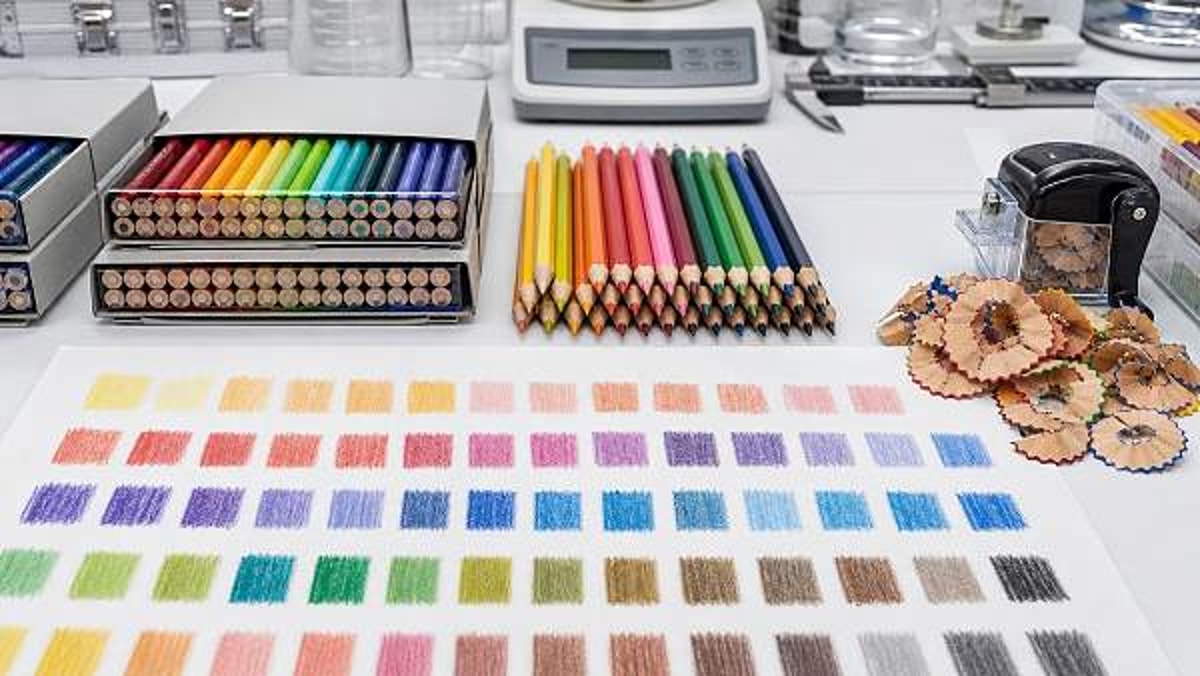
In colored pencils wholesale, pigment quality should be judged by coverage, brightness, repeatability, and blend consistency rather than just how many shades appear in the box. Poorly pigmented pencils feel hard, produce weak marks, and reduce customer satisfaction. Retail and institutional buyers should ask for sample swatches on common paper grades, not just digital color charts.
Useful indicators include smooth laydown, visible color differentiation in smaller sets, even coating across production lots, and acceptable lightfastness for the target market. For school use, strong brightness and easy application often matter more than fine-art lightfastness. For specialty art supply channels, the opposite may be true.
3. Wood quality and sharpening behavior
Wood type is often overlooked in colored pencils wholesale, yet it has a major effect on sharpening ease, production consistency, and product image. Soft, straight-grain wood sharpens more cleanly and reduces splintering. Inferior wood can crack, chip, or hold the core unevenly. Buyers should ask what species is used, whether it is sustainably sourced, and how the slats are dried and processed.
If the project targets export retail channels, clean sharpening is especially important because end users often judge overall quality from the first use. For schools and bulk-use environments, easy sharpening also saves time and lowers replacement frequency.
4. Barrel finish, shape, and user comfort
The outer barrel is not a minor cosmetic issue. Shape affects grip, rolling resistance, packing efficiency, and user control. Triangular barrels are popular for children and training settings, while hexagonal barrels are common for schools and office supply trade. Round barrels may suit certain premium or gift-oriented lines but can roll off desks more easily.
Also review lacquer smoothness, printed markings, color identification, and end-cap accuracy. In private label colored pencils wholesale programs, inconsistent printing or poorly matched barrel colors can weaken brand presentation even when the core quality is acceptable.
5. Safety compliance and market access documents
Safety documentation is non-negotiable for school supply and children’s stationery channels. Depending on destination market, buyers may need EN71, ASTM D-4236, CPSIA-related declarations, REACH-related checks, or other chemical safety reports. The exact requirement depends on where and how the pencils will be sold, but the sourcing principle is simple: do not rely on verbal assurances.
Request current test reports, identify the tested model clearly, and confirm whether the documents match the exact materials and packaging configuration being quoted. In colored pencils wholesale transactions, even a packaging change can trigger additional compliance review if labeling or accessory items differ.
A practical comparison table for bulk buyers
Use the table below to compare suppliers on the specifications that most often affect procurement outcomes.
Adjust the checklist by buyer type and use scenario
Not every buyer should apply the same scoring logic. Colored pencils wholesale sourcing becomes more accurate when the checklist reflects the actual channel.
For schools and institutional procurement
Prioritize safety, durability, sharpening ease, and pack count consistency. Standardized assortment matters more than rare shades. Teachers and administrators usually prefer reliable everyday performance over premium artistic nuance. Replacement rates, classroom handling, and age suitability are central decision points.
For retailers and import distributors
Shelf appeal, barcode accuracy, packaging finish, and repeatable quality become critical. A retailer may accept a slightly higher cost if the product has stronger display impact, fewer complaints, and more stable restocking. In this colored pencils wholesale context, carton dimensions, assortment planning, and seasonal gifting formats may matter as much as the pencil itself.
For private label and OEM buyers
Ask deeper questions about mold availability, color matching capability, print durability, packaging artwork workflow, sampling lead time, and order minimums by SKU. A factory may offer attractive pricing but have weak packaging control or long approval cycles. For brand owners, process reliability is a specification in itself.
Commonly ignored risks in colored pencils wholesale
- Assuming sample quality equals mass production quality without lot controls.
- Ignoring sharpening tests and checking color only.
- Using outdated compliance reports that do not match the quoted SKU.
- Overlooking packaging drop resistance for e-commerce or export transit.
- Failing to specify tolerances for barrel printing, lacquer finish, and color naming.
- Comparing prices without confirming whether freight cartons, inner trays, or accessories are included.
Most sourcing problems come from undocumented assumptions. A clear specification sheet, approved sample, and written quality checkpoints are usually more valuable than aggressive negotiation on price alone.
Execution steps: how to move from research to supplier evaluation
- Create a short brief covering user group, target market, quality tier, set size, packaging style, and compliance needs.
- Request technical data sheets and current test documents before discussing final bulk pricing.
- Order physical samples and test sharpening, color laydown, break resistance, and packaging quality.
- Score suppliers using weighted criteria instead of a single price ranking.
- Confirm production lead time, reorder stability, carton marking, and inspection method.
- Lock the approved sample against a final specification reference for future orders.
FAQ: quick answers for information-stage buyers
Is more color variety always better in colored pencils wholesale?
No. For many school, office, and institutional uses, a smaller well-balanced set with strong pigment and durable construction delivers better commercial value than a larger set with weak differentiation and inconsistent quality.
What is the most overlooked technical specification?
Sharpening performance is often underestimated. It combines wood quality, core centering, bonding, and break resistance into a real-world user experience that strongly affects satisfaction and complaint rates.
Should buyers ask for compliance documents even for non-toy channels?
Yes. Requirements vary by market and application, but safety and chemical documentation support market access, risk management, and buyer confidence across many stationery channels.
What to prepare before contacting suppliers
If you want meaningful quotations and faster sourcing progress, prepare a clear request package. Include target destination market, expected annual volume, desired set sizes, packaging type, quality benchmark, certification expectations, and whether you need OEM, ODM, or stock goods. In colored pencils wholesale, suppliers respond more accurately when the buying brief is specific.
If further evaluation is needed, prioritize discussion around exact specifications, sample approval standards, compliance scope, production lead time, MOQ by packaging type, and inspection arrangements. Those questions will reveal far more about long-term suitability than color count alone, and they provide the commercial clarity needed for dependable bulk sourcing decisions.
Search News
Hot Articles
Popular Tags
Need ExpertConsultation?
Connect with our specialized leisureengineering team for procurementstrategies.
Recommended News
 May 05, 2026Custom promotional pens that get used instead of thrown awayCustom promotional pens that people actually keep: learn how to choose quality, comfortable, brand-right pens that boost visibility, reduce waste, and deliver better long-term value.● Institutional Buyer
 May 05, 2026Custom graduation gowns: why fabric choice changes event photosCustom graduation gowns look dramatically different on camera depending on fabric. Learn how sheen, drape, and wrinkle resistance shape photo quality and smarter sourcing.● Institutional Buyer
 May 05, 2026Ballpoint pens bulk: why writing distance changes buyer satisfactionBallpoint pens bulk buyers often overlook writing distance, yet it strongly shapes user satisfaction, brand perception, and reorder value across offices, schools, promotions, and service counters.● Institutional Buyer
 May 05, 2026Watercolor paints bulk: student use reveals quality fastWatercolor paints bulk for schools: see how student use quickly exposes pigment, packaging, and durability issues. Learn what buyers should check before sourcing at scale.● Institutional Buyer
 May 05, 2026Wholesale sticky notes: which paper grades actually stay putWholesale sticky notes buyers: learn which paper grades truly stay put. Compare economy, office, premium, and recycled options to improve adhesion, writing quality, and repeat orders.● Institutional Buyer
 May 05, 2026Highlighter markers wholesale: why ink consistency matters moreHighlighter markers wholesale buyers should look beyond price: consistent ink flow improves writing performance, reduces complaints, and supports stronger repeat orders. Learn what reliable sourcing really requires.● Institutional Buyer
 May 05, 2026Wholesale school backpacks: when low price leads to high returnsWholesale school backpacks may look cost-saving, but low prices often mean higher returns, complaints, and hidden procurement costs. Learn how to compare suppliers smarter.● Institutional Buyer
 May 05, 2026Art supplies wholesale trends schools are paying attention toArt supplies wholesale trends schools are watching now: safer materials, smarter bulk buying, sustainable options, and reliable suppliers that protect budgets and improve classroom outcomes.● Institutional Buyer
 May 05, 2026Colored pencils wholesale: which specs matter beyond color countColored pencils wholesale buyers should look beyond color count. Compare core strength, pigment quality, safety, wood, and packaging to source better products with confidence.● Institutional Buyer
 May 05, 2026School uniforms wholesale: what causes fit issues at scaleSchool uniforms wholesale fit issues often start with sizing gaps, fabric behavior, and weak supplier coordination. Learn the key causes and how buyers can reduce returns and protect uniform program quality.● Institutional Buyer
 May 05, 2026Graduation caps and tassels: matching colors is harder than it looksGraduation caps and tassels are harder to match than they seem. Learn how to control color standards, supplier quality, and bulk order accuracy for flawless ceremony delivery.● Institutional Buyer
 May 05, 2026Why some dry erase boards bulk orders fail in daily useDry erase boards bulk orders can fail fast in real use. Learn what causes ghosting, warping, weak mounting, and short lifespan—and how to source boards that truly fit schools, offices, hotels, and healthcare.● Institutional Buyer
 May 04, 2026PU Leather Journals: Why Some Covers Peel Too SoonPU leather journals can look elegant and affordable, but why do some peel so quickly? Discover the real causes, warning signs, and smarter buying tips before you choose.● Institutional Buyer
 May 04, 2026Retractable Badge Reels: The Small Item That Fails FirstRetractable badge reels fail faster than many workplace accessories. Learn what causes breakage, how to source durable options, and how to cut replacement costs.● Institutional Buyer
 May 04, 2026Id Card Holders Wholesale: Hard Shell or Soft Vinyl?Id card holders wholesale guide: compare hard shell vs soft vinyl for durability, cost, branding, and daily use to choose the best bulk option for offices, schools, events, and more.● Institutional Buyer
 May 04, 2026Office Laminating Machines: The Heat Settings People OverlookOffice laminating machines perform best when heat settings match pouch thickness, paper type, and speed. Learn how proper temperature control reduces bubbles, curl, waste, and rework.● Institutional Buyer
 May 04, 2026Custom Printed Lanyards: Which Material Holds Up Best?Custom printed lanyards: discover which materials last longest, keep logos sharp, and deliver better value for events, offices, schools, and premium commercial use.● Institutional Buyer
 May 04, 2026Why Wholesale Spiral Notebooks Vary So Much in Paper FeelWholesale spiral notebooks can look alike yet feel completely different. Learn what paper weight, fiber, coating, and sourcing standards mean for writing quality and smarter bulk buying.● Institutional Buyer
 May 04, 2026Binding Machines Wholesale: Small Price Gaps, Big Quality RisksBinding machines wholesale buyers face hidden quality risks behind small price gaps. Learn how to compare durability, compliance, and total cost before you order.● Institutional Buyer
 May 04, 2026Custom Printed Planners That People Actually Keep UsingCustom printed planners that people actually keep using—learn how to choose the right format, materials, and branding to boost retention, usability, and long-term brand value.● Institutional Buyer
 May 02, 2026Wholesale chef coats that hold shape after repeated industrial washingWholesale chef coats that stay sharp after repeated industrial washing. Compare fabrics, stitching, and supplier standards to choose durable uniforms that protect brand image and reduce replacement costs.● Institutional Buyer
 May 02, 2026What makes non slip chef shoes comfortable for 12-hour shiftsNon slip chef shoes for 12-hour shifts should deliver lasting support, cushioning, breathability, and grip. Learn what buyers and chefs should compare before choosing.● Institutional Buyer
 May 02, 2026Kenya Marathon Record Break Sparks Carbon-Plate Shoe Export Surge to AfricaKenya Marathon Record Break sparks surge in carbon-plate shoe exports to Africa—urgent bilingual labeling compliance needed for EAC markets.● Institutional Buyer
 May 01, 2026Custom Hotel Uniforms: Where Fit Problems Usually StartCustom hotel uniforms often fail at the fit-planning stage. Learn where sizing issues start, how to compare suppliers, and how to avoid costly reorders with smarter sourcing.● Institutional Buyer