Custom graduation gowns: why fabric choice changes event photos
When schools, event planners, and project leads invest in custom graduation gowns, fabric choice becomes more than a style decision—it directly shapes how the ceremony looks in every photo. From shine and drape to wrinkle resistance and color consistency, the right material can elevate visual impact, brand image, and event coordination. Understanding these differences helps decision-makers deliver a polished graduation experience that performs well both on stage and on camera.
Why do custom graduation gowns look different in photos even when the color is the same?
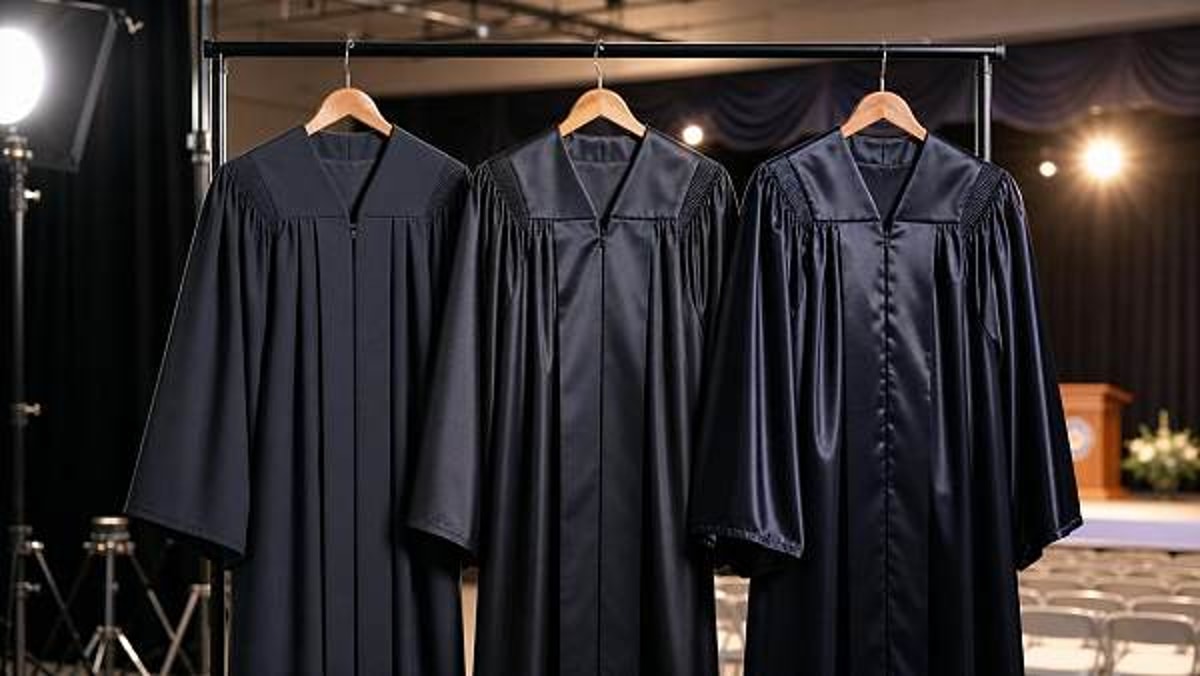
The short answer is fabric behavior under light. Two gowns may both be labeled navy, black, or royal blue, yet they can photograph very differently because the surface texture, weave density, and finish affect how light reflects back into the camera. This is one of the most overlooked issues in custom graduation gowns procurement, especially for project managers responsible for event consistency across hundreds or thousands of attendees.
Matte fabrics tend to absorb more light and produce a calmer, more uniform appearance in group photos. Glossy fabrics, by contrast, reflect directional light and can create bright hotspots, making some gowns appear lighter or uneven on stage. In outdoor ceremonies, that difference becomes even more visible because sunlight changes throughout the event. In indoor auditoriums, spotlights and LED screens can exaggerate sheen and create color shifts that are not noticeable by eye but become obvious in professional photography.
For organizations managing brand image, this matters beyond aesthetics. Graduation photos are often used in brochures, alumni communications, admissions marketing, and social media. If custom graduation gowns do not photograph consistently, the institution may appear less organized, even when logistics are otherwise well executed.
Which fabric properties have the biggest impact on event photos?
Several material characteristics directly influence the visual outcome. Buyers often focus first on price and color, but event performance depends on a wider set of factors. For project leaders comparing suppliers, the following properties should be reviewed together rather than in isolation.
Among these, sheen, drape, and wrinkle resistance usually create the fastest visible differences. A gown with elegant drape can make processional photos look refined and coordinated. A low-cost fabric with poor recovery may crease heavily after unpacking, creating an untidy appearance before the first graduate even reaches the stage.
What fabric types are commonly used for custom graduation gowns, and how do they compare?
Most custom graduation gowns are produced from polyester-based materials because they balance durability, cost efficiency, and color retention. However, not all polyester fabrics perform the same way. The finish, yarn quality, and weaving method significantly influence the final result.
Lightweight tricot or basic plain-weave polyester is often chosen for budget-sensitive, high-volume events. It is practical and easy to scale, but if the fabric is too thin or glossy, it may photograph unevenly. Mid-weight matte polyester is a more reliable option for institutions prioritizing professional group photography, because it reduces glare and generally hangs better on stage. Premium woven blends or upgraded polyester with a soft-touch finish can offer better drape and a more elevated appearance, which is especially useful for private schools, universities with strong visual branding, or ceremonies where media coverage is expected.
Some buyers assume that shinier always means more ceremonial. In reality, excessive shine often lowers photo quality. Camera flashes, moving spotlights, and sunlight can make bright reflections compete with faces, medals, and stoles. For most institutions, a controlled, semi-matte finish offers the best balance between formality and photographic consistency.
How should project managers choose custom graduation gowns for different ceremony settings?
The best fabric is not universal; it depends on the event environment, image requirements, and operational constraints. A project manager should begin with the venue and production conditions rather than the catalog photo.
For outdoor ceremonies, prioritize opacity, UV-stable color performance, and low-to-moderate sheen. Sunlight can expose thin fabric, amplify wrinkles, and create strong contrast between shaded and bright areas. In these cases, custom graduation gowns with a matte finish and stable structure usually deliver cleaner photos. For indoor stage events, the focus shifts to how the fabric reacts to directional lighting. Ask suppliers for images under LED, spotlight, and mixed warm-cool lighting conditions.
If the event involves long holding periods, mass seating, transport in cartons, or same-day distribution, wrinkle resistance becomes a leading criterion. This is especially important for large institutions coordinating multiple ceremony sessions. A fabric that arrives looking presentable with minimal steaming can reduce labor costs and on-site delays.
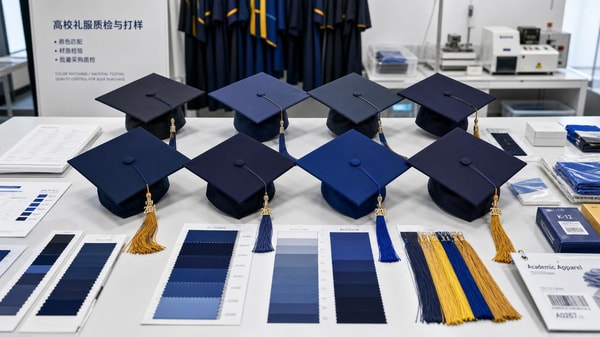
For international buyers or sourcing teams working through trading partners, sample validation is essential. GCT-style sourcing discipline means evaluating not just a swatch, but also a finished gown sample under realistic conditions: stage light, daylight, movement, and group photography. That process reduces risk before scaling production.
What are the most common mistakes buyers make when sourcing custom graduation gowns?
The first mistake is approving fabric from a small swatch alone. A swatch cannot fully show drape, transparency, or how highlights break across a full robe. What seems elegant in hand may look overly reflective in a crowded auditorium.
The second mistake is treating color as the only visual specification. In reality, color, finish, and thickness work together. A black gown with a satin-like surface may appear charcoal under strong light, while a matte black can retain depth and authority in photos.
The third mistake is underestimating batch consistency. Large graduation orders often require multiple dye lots or production windows. Without clear quality control standards, custom graduation gowns from different batches can vary slightly in shade or gloss, which becomes visible when graduates stand side by side.
Another frequent issue is overlooking packaging and logistics. Even high-quality gowns can photograph poorly if compressed for too long or packed without crease management. Procurement teams should confirm carton density, folding method, and unpacking recommendations as part of the sourcing brief, not as an afterthought.
How can buyers evaluate fabric quality before placing a large order?
A disciplined review process helps decision-makers compare suppliers beyond basic price quotes. For custom graduation gowns, the most effective approach is to combine visual testing, operational testing, and supplier capability verification.
Start by requesting at least two fabric options in the target color, ideally one matte and one semi-matte. Then ask for a sewn sample, not only yardage. Photograph the sample under outdoor light, indoor light, and smartphone flash. Review both individual portraits and group-style shots from a distance. This gives a realistic view of how the fabric performs in the actual use case.
Next, test wrinkle recovery by folding or packing the sample for 24 to 48 hours. Hang it and observe how quickly creases release. If the institution requires repeated use or rental turnover, this step becomes even more important. You should also check seam stability, zipper quality if applicable, and comfort around the neckline and sleeves, because poor construction can distort how the gown sits in photos.
Finally, verify supplier controls. Ask whether the manufacturer can maintain color standards across replenishment orders, what inspection methods are used, and how they manage OEM or ODM customization. For project-based procurement, a supplier’s ability to deliver consistent results at scale is often more valuable than a slightly lower unit price.
Does a better fabric always mean a higher cost, and is it worth it?
Not always, but there is usually a trade-off between entry-level cost and event performance. The right question is not whether the fabric is cheapest, but whether it protects the outcome of the ceremony. When custom graduation gowns are being sourced for a major event, visual inconsistency can create hidden costs: emergency steaming, replacement units, poor media assets, and reputational friction with stakeholders.
For one-time, budget-controlled ceremonies, a standard polyester option may be sufficient if its sheen and opacity are well managed. For institutions with recurring annual events, stronger branding needs, or heavy photography usage, spending modestly more on a better-performing fabric often produces a better total-value result. This is especially true when the gowns will appear in marketing archives for years after the event ends.
In commercial sourcing, value should be measured through durability, visual consistency, operational ease, and supplier reliability. A slightly more expensive fabric that reduces preparation time and improves photo quality may be the more economical choice in practice.
What should you confirm with suppliers before finalizing custom graduation gowns?
Before issuing a final purchase order, project managers should confirm a focused set of questions that connect design intent with execution risk. This step is where many sourcing problems can be prevented.
- What is the exact fabric composition, weight, and surface finish?
- Can the supplier provide finished samples in the actual ceremony color?
- How does the fabric perform under daylight, stage lighting, and camera flash?
- What controls are in place for color consistency across production batches?
- What is the packaging method, and how will wrinkling be minimized in transit?
- What are the lead times for sampling, bulk production, and replenishment?
- Can the supplier support custom trims, embroidery, or institutional branding without affecting drape?
These questions are practical, not optional. They help ensure that custom graduation gowns match the visual expectations of the institution while remaining manageable from a procurement and project delivery standpoint.
What is the key takeaway for decision-makers?
Fabric choice changes event photos because it changes how graduation gowns reflect light, hold shape, resist wrinkles, and preserve color consistency across a crowd. For buyers responsible for quality, timelines, and stakeholder perception, custom graduation gowns should be evaluated as a visual performance product, not just a ceremonial uniform. The most effective sourcing decisions come from testing real samples, matching material behavior to venue conditions, and confirming production controls before scale-up.
If you need to move from evaluation to implementation, the first priorities to discuss are fabric finish, photo performance, batch consistency, packaging method, lead time, and customization details. Once those points are clear, it becomes much easier to compare suppliers, align budgets, and build a graduation program that looks polished both in person and in every image that follows.
Search News
Hot Articles
Popular Tags
Need ExpertConsultation?
Connect with our specialized leisureengineering team for procurementstrategies.
Recommended News
 May 05, 2026Custom promotional pens that get used instead of thrown awayCustom promotional pens that people actually keep: learn how to choose quality, comfortable, brand-right pens that boost visibility, reduce waste, and deliver better long-term value.● Institutional Buyer
 May 05, 2026Custom graduation gowns: why fabric choice changes event photosCustom graduation gowns look dramatically different on camera depending on fabric. Learn how sheen, drape, and wrinkle resistance shape photo quality and smarter sourcing.● Institutional Buyer
 May 05, 2026Ballpoint pens bulk: why writing distance changes buyer satisfactionBallpoint pens bulk buyers often overlook writing distance, yet it strongly shapes user satisfaction, brand perception, and reorder value across offices, schools, promotions, and service counters.● Institutional Buyer
 May 05, 2026Watercolor paints bulk: student use reveals quality fastWatercolor paints bulk for schools: see how student use quickly exposes pigment, packaging, and durability issues. Learn what buyers should check before sourcing at scale.● Institutional Buyer
 May 05, 2026Wholesale sticky notes: which paper grades actually stay putWholesale sticky notes buyers: learn which paper grades truly stay put. Compare economy, office, premium, and recycled options to improve adhesion, writing quality, and repeat orders.● Institutional Buyer
 May 05, 2026Highlighter markers wholesale: why ink consistency matters moreHighlighter markers wholesale buyers should look beyond price: consistent ink flow improves writing performance, reduces complaints, and supports stronger repeat orders. Learn what reliable sourcing really requires.● Institutional Buyer
 May 05, 2026Wholesale school backpacks: when low price leads to high returnsWholesale school backpacks may look cost-saving, but low prices often mean higher returns, complaints, and hidden procurement costs. Learn how to compare suppliers smarter.● Institutional Buyer
 May 05, 2026Art supplies wholesale trends schools are paying attention toArt supplies wholesale trends schools are watching now: safer materials, smarter bulk buying, sustainable options, and reliable suppliers that protect budgets and improve classroom outcomes.● Institutional Buyer
 May 05, 2026Colored pencils wholesale: which specs matter beyond color countColored pencils wholesale buyers should look beyond color count. Compare core strength, pigment quality, safety, wood, and packaging to source better products with confidence.● Institutional Buyer
 May 05, 2026School uniforms wholesale: what causes fit issues at scaleSchool uniforms wholesale fit issues often start with sizing gaps, fabric behavior, and weak supplier coordination. Learn the key causes and how buyers can reduce returns and protect uniform program quality.● Institutional Buyer
 May 05, 2026Graduation caps and tassels: matching colors is harder than it looksGraduation caps and tassels are harder to match than they seem. Learn how to control color standards, supplier quality, and bulk order accuracy for flawless ceremony delivery.● Institutional Buyer
 May 05, 2026Why some dry erase boards bulk orders fail in daily useDry erase boards bulk orders can fail fast in real use. Learn what causes ghosting, warping, weak mounting, and short lifespan—and how to source boards that truly fit schools, offices, hotels, and healthcare.● Institutional Buyer
 May 04, 2026PU Leather Journals: Why Some Covers Peel Too SoonPU leather journals can look elegant and affordable, but why do some peel so quickly? Discover the real causes, warning signs, and smarter buying tips before you choose.● Institutional Buyer
 May 04, 2026Retractable Badge Reels: The Small Item That Fails FirstRetractable badge reels fail faster than many workplace accessories. Learn what causes breakage, how to source durable options, and how to cut replacement costs.● Institutional Buyer
 May 04, 2026Id Card Holders Wholesale: Hard Shell or Soft Vinyl?Id card holders wholesale guide: compare hard shell vs soft vinyl for durability, cost, branding, and daily use to choose the best bulk option for offices, schools, events, and more.● Institutional Buyer
 May 04, 2026Office Laminating Machines: The Heat Settings People OverlookOffice laminating machines perform best when heat settings match pouch thickness, paper type, and speed. Learn how proper temperature control reduces bubbles, curl, waste, and rework.● Institutional Buyer
 May 04, 2026Custom Printed Lanyards: Which Material Holds Up Best?Custom printed lanyards: discover which materials last longest, keep logos sharp, and deliver better value for events, offices, schools, and premium commercial use.● Institutional Buyer
 May 04, 2026Why Wholesale Spiral Notebooks Vary So Much in Paper FeelWholesale spiral notebooks can look alike yet feel completely different. Learn what paper weight, fiber, coating, and sourcing standards mean for writing quality and smarter bulk buying.● Institutional Buyer
 May 04, 2026Binding Machines Wholesale: Small Price Gaps, Big Quality RisksBinding machines wholesale buyers face hidden quality risks behind small price gaps. Learn how to compare durability, compliance, and total cost before you order.● Institutional Buyer
 May 04, 2026Custom Printed Planners That People Actually Keep UsingCustom printed planners that people actually keep using—learn how to choose the right format, materials, and branding to boost retention, usability, and long-term brand value.● Institutional Buyer
 May 02, 2026Wholesale chef coats that hold shape after repeated industrial washingWholesale chef coats that stay sharp after repeated industrial washing. Compare fabrics, stitching, and supplier standards to choose durable uniforms that protect brand image and reduce replacement costs.● Institutional Buyer
 May 02, 2026What makes non slip chef shoes comfortable for 12-hour shiftsNon slip chef shoes for 12-hour shifts should deliver lasting support, cushioning, breathability, and grip. Learn what buyers and chefs should compare before choosing.● Institutional Buyer
 May 02, 2026Kenya Marathon Record Break Sparks Carbon-Plate Shoe Export Surge to AfricaKenya Marathon Record Break sparks surge in carbon-plate shoe exports to Africa—urgent bilingual labeling compliance needed for EAC markets.● Institutional Buyer
 May 01, 2026Custom Hotel Uniforms: Where Fit Problems Usually StartCustom hotel uniforms often fail at the fit-planning stage. Learn where sizing issues start, how to compare suppliers, and how to avoid costly reorders with smarter sourcing.● Institutional Buyer