Ballpoint pens bulk: why writing distance changes buyer satisfaction
When sourcing ballpoint pens bulk, many buyers focus on unit price, branding, and lead time, but writing distance often has the biggest impact on user satisfaction and reorder rates. A pen that writes longer, smoother, and more consistently can reduce complaints, improve brand perception, and deliver better value across offices, schools, and promotional programs.
Why writing distance matters differently across business scenarios
For procurement teams, the phrase ballpoint pens bulk usually signals a price-driven purchase. Yet the real business outcome depends on where and how the pens will be used. A reception desk in a premium hotel, an examination hall in a school, a conference giveaway program, and a bank branch all ask very different things from the same product category. In each case, writing distance affects user perception in a practical way: fewer interruptions, more complete usage, and less waste.
Writing distance is not just a technical specification on a test sheet. It influences replacement frequency, front-line staff convenience, brand image, and total cost per successful writing experience. Buyers who ignore it often end up with pens that look good in the carton but underperform in the field. That gap is especially costly in high-volume commercial settings where a small quality issue becomes a repeated complaint.
For global sourcing teams, this is where supplier evaluation becomes more strategic. Instead of asking only for a low quote on ballpoint pens bulk, buyers should ask how writing distance interacts with storage conditions, writing pressure, user type, refill design, and branding goals. The most suitable pen is rarely the cheapest line item; it is the one that performs reliably in its actual use environment.
A quick scenario comparison for bulk buyers
The table below shows how writing distance should be judged across common procurement situations. This helps buyers compare specifications in a way that reflects operational reality rather than catalog claims alone.
Scenario 1: Office and institutional procurement
In office settings, ballpoint pens bulk are consumed quietly but continuously. Human resources, finance, administration, logistics, and front-desk teams may use hundreds or thousands of pens over a year. Here, writing distance matters because it directly affects replacement cycles and staff interruption. If pens stop early or skip during signatures, users quickly lose trust in the entire batch.
The main requirement in this scenario is dependable daily performance. Buyers should look beyond the nominal ink length and ask about line consistency, tip size, drying resistance, and cap or retractable sealing quality. A pen with moderate branding appeal but strong writing reliability will usually outperform a lower-cost alternative in total value.
This is also a scenario where storage conditions matter. Many institutions buy in large quantities and keep inventory for months. Pens that write well at the start of use after extended warehousing create better satisfaction than pens with attractive pricing but weak shelf stability.
Scenario 2: Schools, training centers, and examination environments
For education buyers, the decision around ballpoint pens bulk should be strongly tied to user pressure and writing duration. Students write for long periods, often with varying grip control and inconsistent pressure. In exam environments, even one pen failure can create stress, complaints, and reputational damage for the organizer or supplier.
In this use case, long writing distance alone is not enough. The pen must start quickly, maintain a smooth line, and avoid scratching on lower-cost paper. A product tested only under ideal conditions may not perform well in real classrooms. Buyers should request samples and run practical tests involving fast writing, pauses, and restart behavior.
Education procurement also tends to be cost-sensitive. That makes it tempting to choose the lowest quote. However, if the pen runs out too early or requires too much pressure, the actual cost rises through replacement demand and negative feedback. In this scenario, durability and writing ease usually deserve more weight than cosmetic design.
Scenario 3: Promotional programs and branded giveaways
Promotional buyers often treat ballpoint pens bulk as a branding tool first and a writing instrument second. That is a mistake when the goal is lasting exposure. If a giveaway pen stops writing after limited use, the brand message disappears with it. Writing distance therefore becomes part of brand retention, not just product performance.
In event marketing, trade shows, new store openings, and corporate campaigns, the ideal pen should create an immediate smooth writing experience and remain useful long enough to stay on desks, in bags, or at home. This extends logo visibility and improves the perceived value of the promotion.
The correct buying approach here is balanced evaluation. A premium shell with poor refill quality weakens campaign ROI. A simple design with strong writing distance may outperform flashier options because recipients continue using it. For procurement teams managing branded merchandise, a useful pen often delivers better long-tail marketing value than a visually impressive but short-lived one.
Scenario 4: Hospitality, healthcare, and public counters
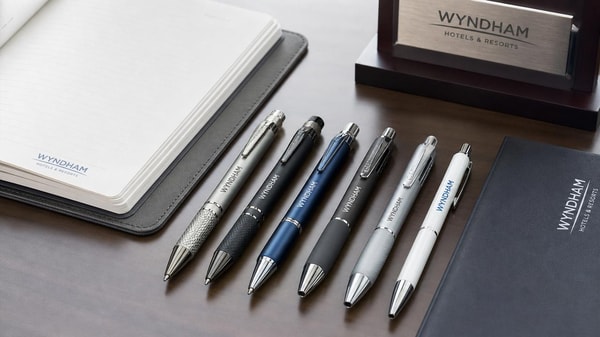
Hotels, clinics, service centers, and reception counters operate in a shared-use environment. Pens may sit idle for hours, then be used by many people with different writing habits. In these settings, ballpoint pens bulk should be judged on reliability after inactivity and tolerance for rough handling.
This is where writing distance connects with service quality. Guests signing forms in a lobby or patients filling registration documents do not distinguish between pen failure and service failure. If the pen skips, the experience feels careless. For premium hospitality or healthcare settings, that small friction can undermine an otherwise professional environment.
Buyers in these sectors should also consider hygiene protocols, attachment methods, and refill replacement strategy. A slightly higher-quality pen with stable ink flow may reduce front-desk disruptions and support a more polished customer journey.
How to match writing distance to the right procurement goal
Not every buyer needs the maximum possible writing distance. The right target depends on use frequency, user sensitivity, and brand expectations. A practical sourcing process for ballpoint pens bulk should begin with a few scenario-based questions:
- Will the pens be used intensively every day or occasionally by visitors?
- Will users notice slight skipping, or is smoothness mission-critical?
- Will the pens be stored for long periods before distribution?
- Is the pen mainly a writing tool, a brand carrier, or both?
- What paper types and writing conditions are most common?
By answering these questions, procurement teams can separate essential performance requirements from nice-to-have features. This reduces overbuying in simple applications and underbuying in sensitive service environments.
Common misjudgments when buying ballpoint pens bulk
The first common mistake is assuming all advertised writing distance claims are equally meaningful. Test standards, writing angle, paper type, and environmental conditions can change results. Buyers should compare test logic, not just the number.
The second mistake is confusing long writing distance with better user experience in every case. A pen can have large ink capacity yet still write poorly due to weak tip quality or unstable flow. Distance should always be assessed together with smoothness and startup reliability.
The third mistake is underestimating the reputational impact of a low-performing pen in customer-facing scenarios. In hospitality, healthcare, or premium retail, a low-cost pen that fails publicly can damage perceived professionalism more than the savings justify.
Supplier evaluation checklist by application scenario
A structured evaluation process helps buyers of ballpoint pens bulk make stronger sourcing decisions. The checklist below can be used during quotation comparison, sample review, and factory discussions.
Final sourcing guidance for procurement teams
The best ballpoint pens bulk program is not defined by the lowest unit price or the highest catalog specification alone. It is defined by fit. Offices need consistency, schools need dependable long-session writing, promotions need brand-carrying usefulness, and public service counters need instant readiness after idle time. Writing distance becomes valuable when it supports the actual scenario, not when it exists only as a sales claim.
For buyers managing global sourcing, this means sample testing by application, comparing supplier test methods, and aligning specifications with the user environment before finalizing volume orders. If you are reviewing ballpoint pens bulk for multiple channels, segment the purchase by use case instead of forcing one pen model into every scenario. That approach typically improves satisfaction, lowers complaint rates, and creates a more credible long-term procurement standard.
In practical terms, start with the scenario, define the writing expectation, and only then negotiate price. That sequence helps procurement teams buy smarter, protect user experience, and turn a simple stationery item into a more reliable business asset.
Search News
Hot Articles
Popular Tags
Need ExpertConsultation?
Connect with our specialized leisureengineering team for procurementstrategies.
Recommended News
 May 05, 2026Custom promotional pens that get used instead of thrown awayCustom promotional pens that people actually keep: learn how to choose quality, comfortable, brand-right pens that boost visibility, reduce waste, and deliver better long-term value.● Institutional Buyer
 May 05, 2026Custom graduation gowns: why fabric choice changes event photosCustom graduation gowns look dramatically different on camera depending on fabric. Learn how sheen, drape, and wrinkle resistance shape photo quality and smarter sourcing.● Institutional Buyer
 May 05, 2026Ballpoint pens bulk: why writing distance changes buyer satisfactionBallpoint pens bulk buyers often overlook writing distance, yet it strongly shapes user satisfaction, brand perception, and reorder value across offices, schools, promotions, and service counters.● Institutional Buyer
 May 05, 2026Watercolor paints bulk: student use reveals quality fastWatercolor paints bulk for schools: see how student use quickly exposes pigment, packaging, and durability issues. Learn what buyers should check before sourcing at scale.● Institutional Buyer
 May 05, 2026Wholesale sticky notes: which paper grades actually stay putWholesale sticky notes buyers: learn which paper grades truly stay put. Compare economy, office, premium, and recycled options to improve adhesion, writing quality, and repeat orders.● Institutional Buyer
 May 05, 2026Highlighter markers wholesale: why ink consistency matters moreHighlighter markers wholesale buyers should look beyond price: consistent ink flow improves writing performance, reduces complaints, and supports stronger repeat orders. Learn what reliable sourcing really requires.● Institutional Buyer
 May 05, 2026Wholesale school backpacks: when low price leads to high returnsWholesale school backpacks may look cost-saving, but low prices often mean higher returns, complaints, and hidden procurement costs. Learn how to compare suppliers smarter.● Institutional Buyer
 May 05, 2026Art supplies wholesale trends schools are paying attention toArt supplies wholesale trends schools are watching now: safer materials, smarter bulk buying, sustainable options, and reliable suppliers that protect budgets and improve classroom outcomes.● Institutional Buyer
 May 05, 2026Colored pencils wholesale: which specs matter beyond color countColored pencils wholesale buyers should look beyond color count. Compare core strength, pigment quality, safety, wood, and packaging to source better products with confidence.● Institutional Buyer
 May 05, 2026School uniforms wholesale: what causes fit issues at scaleSchool uniforms wholesale fit issues often start with sizing gaps, fabric behavior, and weak supplier coordination. Learn the key causes and how buyers can reduce returns and protect uniform program quality.● Institutional Buyer
 May 05, 2026Graduation caps and tassels: matching colors is harder than it looksGraduation caps and tassels are harder to match than they seem. Learn how to control color standards, supplier quality, and bulk order accuracy for flawless ceremony delivery.● Institutional Buyer
 May 05, 2026Why some dry erase boards bulk orders fail in daily useDry erase boards bulk orders can fail fast in real use. Learn what causes ghosting, warping, weak mounting, and short lifespan—and how to source boards that truly fit schools, offices, hotels, and healthcare.● Institutional Buyer
 May 04, 2026PU Leather Journals: Why Some Covers Peel Too SoonPU leather journals can look elegant and affordable, but why do some peel so quickly? Discover the real causes, warning signs, and smarter buying tips before you choose.● Institutional Buyer
 May 04, 2026Retractable Badge Reels: The Small Item That Fails FirstRetractable badge reels fail faster than many workplace accessories. Learn what causes breakage, how to source durable options, and how to cut replacement costs.● Institutional Buyer
 May 04, 2026Id Card Holders Wholesale: Hard Shell or Soft Vinyl?Id card holders wholesale guide: compare hard shell vs soft vinyl for durability, cost, branding, and daily use to choose the best bulk option for offices, schools, events, and more.● Institutional Buyer
 May 04, 2026Office Laminating Machines: The Heat Settings People OverlookOffice laminating machines perform best when heat settings match pouch thickness, paper type, and speed. Learn how proper temperature control reduces bubbles, curl, waste, and rework.● Institutional Buyer
 May 04, 2026Custom Printed Lanyards: Which Material Holds Up Best?Custom printed lanyards: discover which materials last longest, keep logos sharp, and deliver better value for events, offices, schools, and premium commercial use.● Institutional Buyer
 May 04, 2026Why Wholesale Spiral Notebooks Vary So Much in Paper FeelWholesale spiral notebooks can look alike yet feel completely different. Learn what paper weight, fiber, coating, and sourcing standards mean for writing quality and smarter bulk buying.● Institutional Buyer
 May 04, 2026Binding Machines Wholesale: Small Price Gaps, Big Quality RisksBinding machines wholesale buyers face hidden quality risks behind small price gaps. Learn how to compare durability, compliance, and total cost before you order.● Institutional Buyer
 May 04, 2026Custom Printed Planners That People Actually Keep UsingCustom printed planners that people actually keep using—learn how to choose the right format, materials, and branding to boost retention, usability, and long-term brand value.● Institutional Buyer
 May 02, 2026Wholesale chef coats that hold shape after repeated industrial washingWholesale chef coats that stay sharp after repeated industrial washing. Compare fabrics, stitching, and supplier standards to choose durable uniforms that protect brand image and reduce replacement costs.● Institutional Buyer
 May 02, 2026What makes non slip chef shoes comfortable for 12-hour shiftsNon slip chef shoes for 12-hour shifts should deliver lasting support, cushioning, breathability, and grip. Learn what buyers and chefs should compare before choosing.● Institutional Buyer
 May 02, 2026Kenya Marathon Record Break Sparks Carbon-Plate Shoe Export Surge to AfricaKenya Marathon Record Break sparks surge in carbon-plate shoe exports to Africa—urgent bilingual labeling compliance needed for EAC markets.● Institutional Buyer
 May 01, 2026Custom Hotel Uniforms: Where Fit Problems Usually StartCustom hotel uniforms often fail at the fit-planning stage. Learn where sizing issues start, how to compare suppliers, and how to avoid costly reorders with smarter sourcing.● Institutional Buyer