Science lab furniture: small design choices with big safety impact
In laboratory projects, safety is often shaped by details that seem minor at first glance. The right science lab furniture can influence workflow efficiency, chemical resistance, ergonomic comfort, and compliance from day one. For project managers and engineering leaders, understanding how small design choices affect long-term safety is essential to creating reliable, high-performance lab environments.
For most project managers, the real question is not whether science lab furniture matters, but which design decisions have the biggest impact on risk, compliance, maintenance, and lifecycle cost. In practice, seemingly small choices such as edge profiles, cabinet core materials, hinge quality, load ratings, sink placement, and service integration can determine whether a lab remains safe and efficient for years or becomes a source of recurring incidents and costly retrofits.
The overall judgment is straightforward: in lab environments, furniture should be treated as a safety system, not just an interior fit-out package. When specified correctly, it supports chemical handling, cleaner workflows, better supervision, easier cleaning, and more reliable regulatory performance. When chosen only on upfront price or appearance, it often introduces hidden operational risk.
What project managers are really trying to solve when they search for science lab furniture
Search intent around science lab furniture is usually practical and decision-driven. Project leaders are rarely looking for generic product descriptions. They want to understand how to select furniture that aligns with the lab’s function, protects users, reduces coordination problems during installation, and stands up to daily wear without creating compliance headaches.
They are also trying to reduce uncertainty. A science lab may involve chemicals, heat, moisture, glassware, instrumentation, compressed gases, and demanding cleaning protocols. That means furniture selection affects far more than layout. It influences operating safety, service access, user fatigue, contamination control, and even emergency response.
For engineering and project teams, the most valuable content therefore focuses on decision criteria: what to prioritize, what to question suppliers about, where failures commonly occur, and how to balance performance with budget. Those are the issues that shape procurement quality and long-term project outcomes.
Why “small” furniture design choices create outsized safety consequences
Laboratories are dense working environments where many activities happen at once. People move between benches, reagents, storage zones, sinks, instruments, and utilities in repetitive patterns. In such spaces, even minor friction points can compound into frequent near-misses, maintenance problems, or unsafe workarounds.
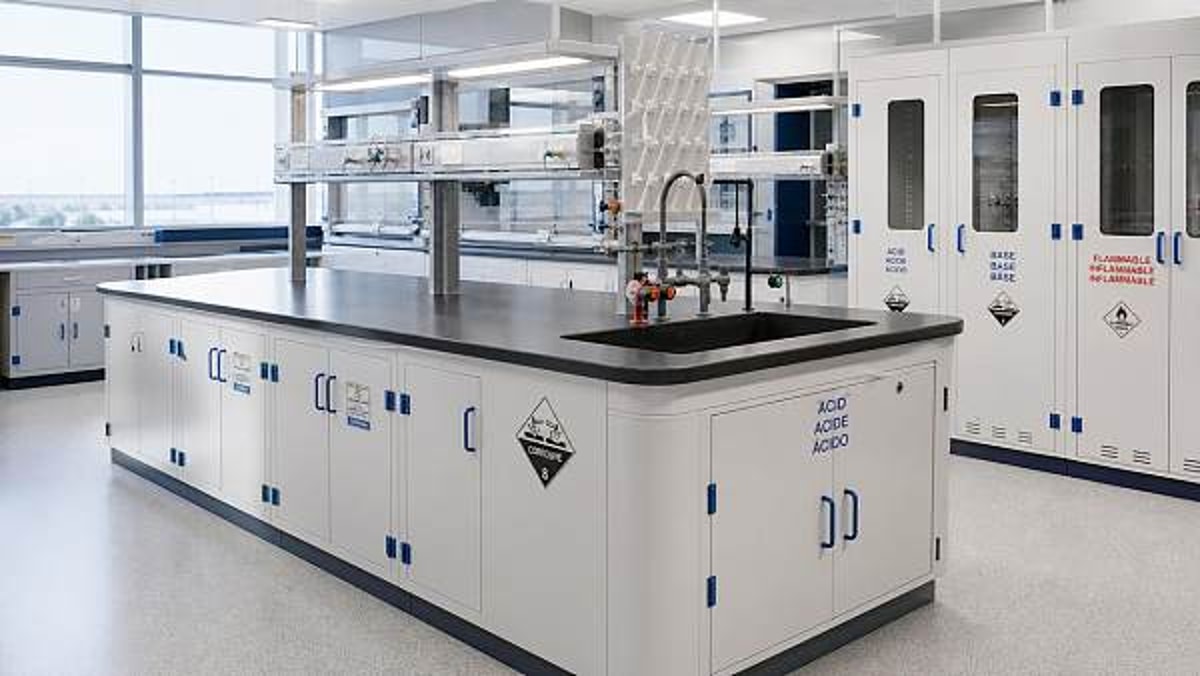
A rounded countertop edge, for example, may seem cosmetic. In reality, it can reduce impact injuries, make surfaces easier to clean, and help prevent chipping that later traps contaminants. Likewise, choosing corrosion-resistant hinges may appear secondary during procurement, but failed hinges can cause misaligned doors, unsafe storage access, and premature cabinet replacement.
The same logic applies to under-bench clearance, drawer glide quality, shelving depth, lock placement, and splash-resistant joints. Each decision may look small in isolation, yet together they shape how safely and predictably the laboratory operates every day.
This is why experienced buyers assess science lab furniture at the detail level. They know that operational safety is rarely lost through one dramatic specification mistake. More often, it erodes through multiple minor compromises that were underestimated during design and sourcing.
Material selection: the first safety decision, not just a durability choice
For project managers, one of the most critical evaluation areas is material compatibility. Different lab types expose furniture to different hazards, including solvents, acids, alkalis, heat, humidity, and mechanical abrasion. A finish or substrate that performs well in one environment may degrade rapidly in another.
Cabinet bodies, worktops, liners, and shelving should be matched to actual use cases rather than broad assumptions. Chemical labs may require high resistance to aggressive reagents. Teaching labs may need impact tolerance and easy maintenance. Research settings often need a balance of adaptability, cleanability, and service integration.
Low-cost substitutions create some of the most common long-term failures. Swelling core boards, delaminating surfaces, rust-prone hardware, and poor-quality sealants can all undermine safety after occupancy. Once deterioration starts, cleaning becomes harder, contamination risk rises, and departments begin improvising around broken components.
A better procurement approach is to ask targeted questions: What substances will routinely contact the surface? What cleaning agents will be used? What temperatures are expected? What is the expected service life under actual usage intensity? Good science lab furniture specifications are rooted in these operational realities.
Bench layout and circulation: where safety meets workflow
Many safety problems in labs are not caused by defective furniture, but by furniture that supports inefficient movement. Aisle width, bench spacing, island orientation, and storage placement all influence how users carry chemicals, share tools, pass one another, and access safety equipment.
For project managers overseeing new builds or renovations, circulation planning should be reviewed as seriously as mechanical and electrical coordination. If users must twist around open drawers, cross paths near wet areas, or transport materials through congested zones, the furniture layout is actively increasing exposure to accidents.
Well-planned science lab furniture reduces cross-traffic and supports task zoning. Wet work, analytical tasks, storage, equipment stations, and waste handling should be arranged to reduce unnecessary movement and overlap. The benefit is not only safer operation but also better productivity and easier supervision.
In educational or multi-user labs, visibility is especially important. Furniture height and orientation should allow instructors, supervisors, or safety officers to maintain clear sight lines. This design choice improves incident detection, behavior monitoring, and response speed without adding complexity to operations.
Storage design is a safety issue, not an afterthought
Cabinets, drawers, and shelving often receive less early-stage attention than worktops and major casework, yet storage design directly affects chemical segregation, breakage risk, manual handling, and housekeeping standards. Poor storage planning leads users to place hazardous items in convenient but inappropriate locations.
Project teams should evaluate not just storage capacity, but storage logic. Are frequently used items within ergonomic reach? Are incompatible materials physically separated? Are heavy containers stored low enough to reduce lifting risk? Are locks, trays, and liners suitable for the materials being handled?
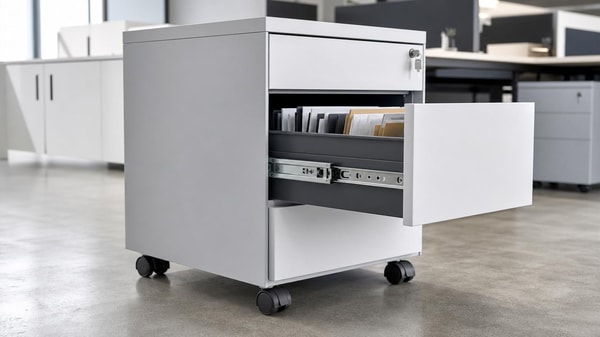
Drawer extension and load performance also matter. In labs, users often pull drawers while wearing gloves, carrying tools, or working quickly. Weak runners, shallow compartments, and unstable internal dividers can create spills or dropped items. Over time, these become recurring operational hazards rather than isolated defects.
Good science lab furniture design makes correct behavior easier. When the furniture naturally supports organized storage, users are less likely to improvise. That is one of the clearest examples of how design can quietly improve safety culture.
Service integration: where furniture and engineering coordination often fail
One of the biggest sources of project frustration is poor integration between furniture and building services. Benches and cabinets must accommodate power, data, water, drainage, gas, extraction, and sometimes specialized equipment. If coordination happens too late, teams often face site modifications, access problems, or compromised safety clearances.
For project managers and engineering leads, this makes early coordination essential. The furniture package should not be finalized independently from MEP design, equipment schedules, and user workflows. Access panels, service voids, chase dimensions, outlet positioning, and shutoff locations all need to be validated before fabrication.
Safety depends heavily on maintainability. If technicians cannot easily reach valves, traps, outlets, or isolation points, even routine servicing becomes disruptive and risky. Furniture that looks clean in a rendering but blocks access in operation is a poor specification, no matter how attractive the finish.
The best suppliers of science lab furniture understand this and provide detailed shop drawings, utility coordination support, and realistic installation tolerances. That support can significantly reduce change orders and help maintain both project schedule and safety performance.
Ergonomics and user behavior: overlooked drivers of long-term risk
Ergonomic design is sometimes treated as a comfort issue rather than a safety priority. In labs, that is a mistake. Repetitive reaching, awkward standing postures, poor seated access, and excessive force when opening storage all increase fatigue. Fatigued users are more likely to spill materials, mishandle equipment, or bypass proper procedures.
Bench height should reflect the tasks being performed, not just a standard dimension copied from another project. Precision work, seated instrument use, and wet processing may all require different setups. Adjustable or task-specific solutions can be especially valuable in mixed-use labs.
Handle design, door swing direction, shelf accessibility, and legroom also matter. Small ergonomic improvements reduce friction throughout the working day. Over hundreds of daily interactions, these details help maintain concentration and make safe technique more natural.
For project managers, the practical lesson is simple: if the furniture encourages strain, users will create workarounds. Some of those workarounds will undermine safety, even if the original specification met basic technical standards.
Cleanability and contamination control should be built into the furniture package
Cleanability is one of the most underestimated aspects of science lab furniture. Gaps, exposed joints, rough finishes, unsealed edges, and poorly detailed intersections can all trap residues or make cleaning inconsistent. In labs handling chemicals, biological materials, or sensitive samples, that is more than a housekeeping issue.
Furniture should support the cleaning protocols the lab will actually use. Smooth surfaces, coved transitions where appropriate, resistant finishes, and well-sealed penetrations reduce residue buildup and simplify routine sanitation. They also help preserve appearance and functionality over time.
From a project perspective, cleanability is a lifecycle value issue as much as a safety issue. Furniture that is hard to clean often shows visible deterioration earlier, creates complaints from users, and generates pressure for repair or replacement long before the expected service life ends.
When reviewing submittals, it is wise to ask how joints are sealed, how penetrations are finished, and how replacement parts will be handled if surfaces are damaged. These practical details often reveal whether a supplier truly understands lab use conditions.
Compliance matters, but real-world performance matters more
Compliance remains essential in laboratory environments, but project managers should avoid assuming that certificates alone guarantee safe performance. A furniture system may comply with selected standards and still perform poorly if it is mismatched to the lab’s actual operations, poorly installed, or inadequately coordinated with users and utilities.
That is why supplier evaluation should go beyond test reports. Ask for project references in similar lab types, details on hardware durability, chemical resistance data, installation methodology, and after-sales support capabilities. Real project evidence often says more about risk than a polished brochure.
It is also important to consider future flexibility. Labs evolve, and furniture that cannot adapt to revised workflows, new instruments, or updated safety requirements may become obsolete earlier than expected. Modular science lab furniture can provide strategic value if expansion or reconfiguration is likely.
In short, compliance is the baseline. Operational fit, durability, serviceability, and supplier competence are what turn compliance into dependable day-to-day safety.
How to make better procurement decisions for science lab furniture
For project leaders managing competitive sourcing, the best decisions usually come from a structured evaluation process. Start by classifying the lab by risk profile, usage intensity, and functional zones. Then define which furniture elements are safety-critical, which are workflow-critical, and which are primarily aesthetic or budget-sensitive.
Next, involve the right stakeholders early. End users, EHS personnel, maintenance teams, engineers, and procurement specialists all see different risks. Their input can prevent costly blind spots, particularly around storage logic, service access, and cleaning requirements.
Supplier comparison should include more than unit price. Review material specifications, hardware grade, fabrication consistency, project coordination capability, lead times, warranty terms, and replacement part availability. A lower-cost offer may become the higher-cost option if it creates delays, defects, or early replacement needs.
Mock-ups or sample reviews can be especially useful. They allow teams to inspect edge quality, drawer operation, finish consistency, and utility integration before full commitment. In laboratory fit-outs, small defects visible in a sample often point to larger performance issues later.
Final takeaway for project managers and engineering leaders
The central lesson is clear: science lab furniture should never be specified as a background package. It is an active part of the lab’s safety, efficiency, and lifecycle performance. Small design choices affect how people move, store, clean, connect services, and respond to risk every day.
For project managers, the most effective approach is to evaluate furniture through an operational lens. Ask how each design detail will perform under real usage, not just how it looks on a drawing or how it compares on initial price. That mindset leads to fewer compromises, better coordination, and safer long-term outcomes.
When selected with care, science lab furniture does more than furnish a room. It helps create a laboratory that is easier to manage, safer to use, and more resilient over its full service life. That is the kind of small-design, big-impact thinking that strong lab projects depend on.
Search News
Hot Articles
Popular Tags
Need ExpertConsultation?
Connect with our specialized leisureengineering team for procurementstrategies.
Recommended News
 May 05, 2026Cork bulletin boards: why frame quality matters over board sizeCork bulletin boards deliver better long-term value when frame quality comes first. Learn how stronger materials, secure corners, and stable mounting improve durability, safety, and appearance.● Institutional Buyer
 May 05, 2026Soundproof phone booths: when sound ratings mislead office plansSoundproof phone booths can mislead office plans when ratings are taken at face value. Learn how to compare privacy, ventilation, placement, and compliance before you buy.● Institutional Buyer
 May 05, 2026Laser printer toner bulk: what affects page yield mostLaser printer toner bulk page yield depends on more than toner volume. Discover the top factors affecting real output and make smarter, lower-cost sourcing decisions.● Institutional Buyer
 May 05, 2026Science lab furniture: small design choices with big safety impactScience lab furniture shapes lab safety in ways many teams overlook. Discover smart design choices that reduce risk, improve compliance, and support efficient long-term performance.● Institutional Buyer
 May 05, 2026Wholesale ink cartridges: remanufactured vs compatible in real useWholesale ink cartridges compared in real use: remanufactured vs compatible on print quality, yield, firmware risk, and sourcing value—helping procurement teams buy smarter.● Institutional Buyer
 May 05, 2026Cash drawers wholesale: what causes jams at checkoutCash drawers wholesale guide: uncover the real causes of checkout jams, from latch design to POS compatibility, and learn how to source reliable drawers that reduce downtime.● Institutional Buyer
 May 05, 2026Office acoustic pods or open booths: which solves noise betterOffice acoustic pods vs. open booths: discover which solution controls noise better for privacy, focus, and hybrid calls, and make a smarter office planning decision.● Institutional Buyer
 May 05, 2026Office LED panel lights that cut glare without dim workspacesOffice LED panel lights that reduce glare without sacrificing brightness. Discover how to choose low-glare, high-comfort lighting for productive, compliant, and modern office spaces.● Institutional Buyer
 May 05, 2026Chemical resistant lab tops: which materials hold up bestChemical resistant lab tops compared: discover whether epoxy resin, phenolic resin, or stainless steel holds up best for harsh chemicals, heat, and daily lab demands.● Institutional Buyer
 May 05, 2026How to compare drafting tables wholesale without overbuyingDrafting tables wholesale comparison starts with MOQ, specs, and supplier reliability. Learn how to avoid overbuying, reduce inventory risk, and choose better-value sourcing options.● Institutional Buyer
 May 04, 2026Ergonomic Office Chairs Wholesale: Comfort Claims vs Real SupportErgonomic office chairs wholesale: learn how to verify real support beyond comfort claims with fit, adjustability, durability, and compliance insights for smarter commercial buying.● Institutional Buyer
 May 04, 2026Modular Office Workstations: Flexibility Can Add Setup CostsModular office workstations can improve flexibility, but setup costs often rise through installation, power, data, and rework. Learn when the added investment truly pays off.● Institutional Buyer
 May 04, 2026Steel Filing Cabinets: Why Some Drawers Jam Too EarlySteel filing cabinets often jam early due to weak slides, poor leveling, overload, or lock issues. Discover what to check before buying and how to avoid costly drawer failures.● Institutional Buyer
 May 04, 2026Office Network Racks: Airflow Problems Start With Bad PlanningOffice network racks can fail early when airflow is ignored. Learn the key planning checklist to prevent overheating, reduce maintenance risks, and build a more reliable office network.● Institutional Buyer
 May 04, 2026Office Partitions Wholesale: Open Plan Savings, Closed Office NeedsOffice partitions wholesale helps project managers cut fit-out costs, speed delivery, and balance open-plan efficiency with private office performance. Explore smarter commercial workspace solutions.● Institutional Buyer
 May 04, 2026Conference Room Tables: Common Layout Mistakes to AvoidConference room tables can make or break meeting flow. Discover common layout mistakes to avoid and plan smarter spaces for collaboration, AV integration, and professional results.● Institutional Buyer
 May 04, 2026Mobile Pedestals Wholesale: Why Drawer Slides Matter MoreMobile pedestals wholesale buyers should look beyond price—drawer slides shape durability, load capacity, and maintenance costs. Learn what to compare before ordering.● Institutional Buyer
 May 04, 2026Height Adjustable Standing Desks: Stability Matters More Than SpeedHeight adjustable standing desks should be judged by stability, not just speed. Learn how stronger frames improve safety, user confidence, and long-term value in commercial spaces.● Institutional Buyer
 May 04, 2026Executive Office Desks: When Looks Start to Hurt FunctionExecutive office desks should do more than look impressive. Discover how to balance prestige, ergonomics, storage, and tech support for smarter office buying decisions.● Institutional Buyer
 May 04, 2026Server Cabinets Wholesale: How to Avoid Ordering the Wrong DepthServer cabinets wholesale guide: avoid costly depth mistakes by checking usable internal space, rail fit, cable clearance, and expansion needs before placing bulk orders.● Institutional Buyer
 May 04, 2026Commercial Paper Shredders and the Hidden Cost of DowntimeCommercial paper shredders do more than destroy documents—they protect uptime, compliance, and budgets. Discover how to avoid hidden downtime costs and choose smarter for busy workplaces.● Institutional Buyer
 May 04, 2026Mesh Office Chairs OEM Orders: Specs That Cause ReworkMesh office chairs OEM projects often face rework from vague specs, certification gaps, and component mismatches. Learn what to verify before production to avoid delays and protect budgets.● Institutional Buyer
 May 04, 2026Stackable Visitor Chairs That Save Space Without Looking CheapStackable visitor chairs that save space without looking cheap—discover how to choose stylish, durable seating for offices, schools, and hospitality spaces.● Institutional Buyer
 May 04, 2026What Makes Commercial Acoustic Panels Worth the Cost?Commercial acoustic panels help buyers balance cost with performance, compliance, durability, and design. Learn what makes them worth the investment across offices, schools, hotels, and more.● Institutional Buyer