Human anatomy models that improve hands-on teaching, not storage
Human anatomy models should do more than sit in cabinets—they should actively support touch-based, repeatable learning in classrooms, labs, and training centers. For educators and buyers researching better teaching tools, this guide explores how human anatomy models can improve hands-on instruction, boost learner engagement, and deliver practical value beyond simple storage or display.
For institutional buyers, lab coordinators, and education suppliers, the real question is not whether a model looks impressive on a shelf. It is whether it supports frequent handling, fast lesson setup, clear anatomical interpretation, and efficient replacement cycles over 3 to 5 years of use. In a B2B teaching environment, utility, durability, and teaching fit matter more than display value alone.
Across colleges, nursing schools, smart campuses, and vocational training centers, human anatomy models are increasingly evaluated as active teaching assets. Buyers now compare disassembly depth, material resilience, labeling clarity, cleaning requirements, and storage footprint with the same rigor they use for other instructional equipment. That shift is especially relevant for procurement teams balancing educational impact, operating budgets, and classroom turnover.
Why hands-on anatomy learning requires more than a display model
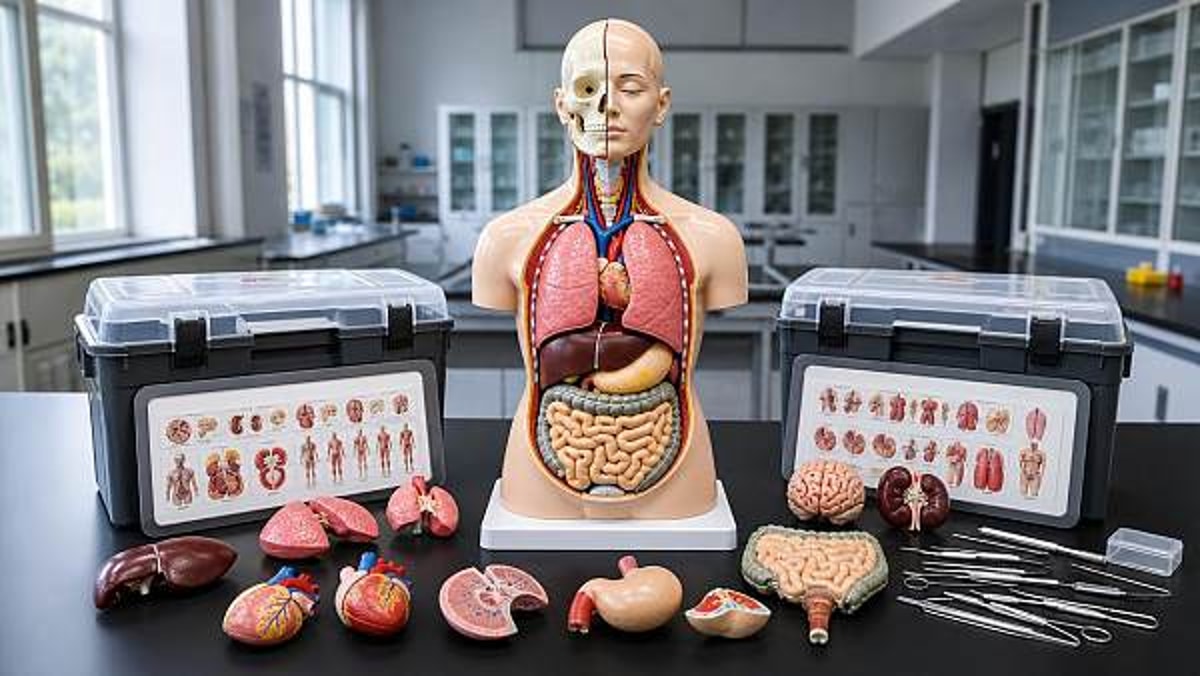
In anatomy education, touch-based learning helps convert abstract diagrams into physical understanding. A torso model with 12 to 20 removable parts, for example, allows learners to identify organ position, relative scale, and spatial relationships in ways that flat charts cannot fully replicate. This matters in teaching settings where students must transition from theory to observation and then to practical recall.
Human anatomy models become most effective when they are built for repeated use across multiple sessions per week. In a typical lab serving 25 to 40 students, one model may be handled dozens of times in a single day. If magnets loosen, connectors crack, or labels fade after 6 to 12 months, the teaching value drops quickly and replacement costs rise sooner than planned.
What educators expect from active-use models
Teaching teams usually look for four practical outcomes: fast setup, intuitive part separation, visual clarity from 1 to 3 meters away, and enough structural strength to survive repeated student handling. These needs are common in medical assistant programs, high school biology labs, nurse training centers, and campus demonstration rooms.
- Clear organ boundaries and color coding for quick recognition
- Removable components that do not require excessive force
- Stable bases that prevent tipping during desk or lab bench use
- Surfaces that can be cleaned after frequent contact
Why storage-first purchasing often creates teaching gaps
Some buyers still prioritize compact storage or showroom appearance over active classroom performance. That approach can create practical problems. A model that stores neatly but takes 8 to 10 minutes to assemble before every lesson reduces usable teaching time. A fragile display-grade model may also discourage student interaction, turning a tactile resource into a visual prop.
In commercial education procurement, every minute of setup and every avoidable replacement event affects total value. A well-chosen human anatomy model should reduce teaching friction, not add to it. The strongest purchase decisions come from matching the model to the teaching workflow, not just the storage cabinet.
The comparison below shows how display-oriented and instruction-oriented human anatomy models differ in real educational use.
For most education buyers, the better long-term option is the model built for classroom repetition. It supports higher usage volume, better learner interaction, and a lower risk of underused equipment sitting in storage after the first term.
How human anatomy models improve engagement and retention
Learner engagement improves when students can observe, touch, remove, compare, and reassemble anatomical structures. In many teaching environments, the strongest recall happens when a lesson combines at least 3 modes: visual reference, instructor explanation, and tactile interaction. Human anatomy models make that blended approach easier to implement during 30-minute demonstrations or 90-minute lab sessions.
This is especially useful for information-driven buyers serving institutions that want measurable learning support. While models alone do not guarantee better outcomes, they help reduce confusion around scale, orientation, and organ relationships. That practical clarity can shorten explanation time and make assessment review more efficient.
Common teaching scenarios where models add value
1. Foundational biology classrooms
Introductory learners often struggle with 2D textbook interpretation. A basic torso or skeleton model helps them map names to forms and improves confidence during early-stage lessons. In classes with 20 to 35 students, rotating one or two models through small groups can create more direct engagement than lecture-only instruction.
2. Nursing and allied health training
Students in practical health programs need more than vocabulary recognition. They need to understand placement, access pathways, and system relationships. Human anatomy models with removable lungs, heart, liver, stomach, or reproductive structures support pre-clinical explanation before learners move to simulation or supervised practice.
3. Campus demonstration rooms and open days
Anatomy models also serve recruitment and public education functions. During campus tours, science fairs, or training center presentations, an interactive model often draws more attention than posters alone. For institutions investing in modern educational spaces, that dual teaching-and-display function adds value without turning the purchase into a purely decorative one.
- Students identify a structure visually.
- They handle or remove the part directly.
- They repeat the name and function in context.
- They reassemble the model to test recall.
This 4-step sequence is simple, scalable, and effective for many classroom formats. It also supports instructors who need repeatable lesson design across multiple terms.
What buyers should evaluate before sourcing human anatomy models
For procurement teams, selection should begin with intended use rather than catalog appearance. A model for a low-contact reception display is not the same as one for weekly lab instruction. Before purchase, buyers should define user age group, lesson frequency, required anatomy depth, available storage, and cleaning protocol. These five criteria usually determine whether the model will be actively used or rarely touched.
Key specification areas to compare
The table below outlines practical buying factors that matter in commercial education sourcing, especially when orders involve multiple classrooms, training centers, or campus-wide supply planning.
A buyer does not always need the highest part count or the largest model. The better decision is the one that fits lesson objectives, available staff time, and expected usage frequency. For many institutions, a mid-complexity model used 3 times a week delivers more value than an advanced model used only during occasional demonstrations.
Questions to ask suppliers before ordering
- How many assembly and disassembly cycles is the model designed to tolerate under normal teaching use?
- Are spare parts, bases, or replacement organs available within 2 to 6 weeks?
- What cleaning method is recommended for daily, weekly, and term-end maintenance?
- Does the packaging support repeated institutional storage and transport?
- Can the supplier support mixed orders for skeleton, organ, and torso models in one shipment?
These questions help reduce procurement risk. They also matter for distributors, school sourcing teams, and commercial trade intermediaries who need predictable fulfillment, fewer returns, and better after-sales coordination.
Implementation, maintenance, and lifecycle planning
A strong buying decision includes a practical deployment plan. Even well-made human anatomy models underperform if institutions do not assign handling rules, cleaning steps, and storage procedures. For multi-room facilities, standardization across departments can reduce confusion and improve asset life over 24 to 60 months.
A simple 5-step implementation workflow
- Define teaching level and required anatomy depth.
- Match model type to lesson frequency and class size.
- Confirm packaging, spare-part policy, and lead time.
- Train instructors or lab staff on assembly and cleaning.
- Review usage after the first 30 to 60 days and adjust quantities if needed.
This process is useful for single-site schools and for larger procurement networks. It also aligns with the way many B2B buyers manage educational equipment rollouts: specification review first, operational fit second, and reorder strategy third.
Maintenance issues that affect total value
Maintenance is often overlooked at the buying stage. Yet daily wipe-down time, weekly inspection needs, and part-loss risk can determine whether a model remains classroom-ready. If a 15-piece torso loses 2 components within one term and replacements are hard to source, the model may become incomplete and less useful long before the end of its expected life.
Institutions should set simple rules: store small detachable parts in labeled trays, inspect connectors once every 4 to 8 weeks, and keep one staff member responsible for condition checks. These habits are low-cost but can significantly reduce avoidable replacement purchases.
Common sourcing and usage mistakes
- Buying highly detailed models for beginner-level instruction where simpler structures are enough
- Ignoring base stability in classrooms with frequent movement between rooms
- Choosing compact storage over fast daily usability
- Ordering without checking replacement component availability
Avoiding these errors improves both educational performance and budget control. For buyers comparing suppliers globally, this is where sourcing intelligence becomes important: product suitability is only part of the decision, while service continuity and fulfillment reliability complete the picture.
Where human anatomy models fit in broader commercial education sourcing
Within the wider office and educational supplies market, human anatomy models sit at the intersection of instructional quality, facility planning, and institutional purchasing discipline. They are often sourced alongside science lab tools, classroom furniture, storage systems, display aids, and teacher support materials. That makes them part of a larger educational ecosystem rather than an isolated product line.
For B2B sourcing teams, integrated purchasing can simplify vendor coordination, packaging, shipping, and installation planning. A buyer outfitting 10 science rooms, for instance, may prefer one sourcing pathway that covers anatomy models, storage carts, labeling systems, and lab accessories rather than managing four separate vendors with different lead times.
This is also where market-oriented sourcing platforms and trade intelligence providers add value. By helping buyers compare product readiness, supplier capabilities, and practical use cases, they reduce the gap between catalog description and classroom reality. In educational procurement, that gap is often where underused equipment and avoidable costs begin.
Human anatomy models deliver the most value when they are selected as active teaching tools, not passive display pieces. Buyers should focus on handling durability, anatomy depth, visibility, cleaning practicality, replacement support, and lesson fit. When those factors align, the models support stronger engagement, more repeatable instruction, and better use of institutional budgets over time.
For educators, distributors, and institutional procurement teams looking to source practical classroom solutions, a well-matched anatomy model can strengthen both teaching delivery and equipment efficiency. If you are reviewing options for modern campuses, training centers, or education supply programs, contact GCT to explore tailored sourcing support, compare suitable human anatomy models, and learn more solutions for commercial learning environments.
Search News
Hot Articles
Popular Tags
Need ExpertConsultation?
Connect with our specialized leisureengineering team for procurementstrategies.
Recommended News
 May 05, 2026Physics lab apparatus: where low-cost kits usually fall shortPhysics lab apparatus buying on price alone often leads to poor accuracy, weak durability, and higher lifecycle costs. Learn what low-cost kits miss and how to source safer, better-value solutions.● Institutional Buyer
 May 05, 2026School laboratory equipment: what should be replaced firstSchool laboratory equipment replacement starts with safety-critical assets. Learn what to replace first to improve compliance, reduce downtime, and maximize tight budgets.● Institutional Buyer
 May 05, 2026Thermal receipt printers: hidden upkeep costs before large rolloutThermal receipt printers may look affordable, but hidden upkeep costs can erode rollout budgets. Learn how to reduce downtime, control maintenance, and choose smarter for scale.● Institutional Buyer
 May 05, 2026Human anatomy models that improve hands-on teaching, not storageHuman anatomy models built for hands-on teaching, not storage. Discover durable, classroom-ready options that improve engagement, simplify setup, and support smarter education sourcing.● Institutional Buyer
 May 05, 2026Ceiling mount projector brackets: where installation mistakes happenCeiling mount projector brackets: discover where installation mistakes happen, how to avoid safety and alignment issues, and the checklist that helps teams deliver smoother AV projects.● Institutional Buyer
 May 05, 2026Barcode scanners for library: common issues with older systemsBarcode scanners for library upgrades can solve slow checkouts, read errors, and compatibility issues in older systems. Learn what fails first and how to choose a reliable replacement.● Institutional Buyer
 May 05, 2026What to check before ordering wholesale projector screensWholesale projector screens buyers should check material, gain, aspect ratio, installation, and supplier consistency before ordering. Reduce sourcing risk and choose reliable commercial solutions.● Institutional Buyer
 May 05, 2026Geography globes wholesale: what makes one model classroom-readyGeography globes wholesale buyers: discover what makes a model truly classroom-ready, from durability and readability to safety, compliance, and reliable bulk supply.● Institutional Buyer
 May 05, 2026Microscope slides wholesale: where quality gaps usually show upMicroscope slides wholesale buyers should watch for hidden quality gaps in flatness, edge finishing, cleanliness, and batch consistency—learn how to reduce waste and choose reliable suppliers.● Institutional Buyer
 May 05, 2026POS touch screens: what affects response speed and lifespanPOS touch screens directly impact checkout speed, uptime, and total cost. Learn what affects response speed and lifespan to choose the right solution for every business scenario.● Institutional Buyer
 May 04, 2026Kindergarten Furniture Bulk Orders and the Safety Details MissedKindergarten furniture bulk buyers: discover the hidden safety checks suppliers often miss, from emissions and stability to ergonomics and compliance, before placing large orders.● Institutional Buyer
 May 04, 2026School Desks and Chairs Wholesale: Matching Age to Size CorrectlySchool desks and chairs wholesale guide: learn how to match age to size correctly for better comfort, safety, compliance, and smarter school furniture purchasing.● Institutional Buyer
 May 04, 2026Library Bookshelves Wholesale: How Much Load Is Really Enough?Library bookshelves wholesale guide: learn how much load is truly enough for safety, durability, and compliance. Compare ratings, avoid costly mistakes, and choose the right shelving with confidence.● Institutional Buyer
 May 04, 2026Smart Interactive Whiteboards: Which Features Get Used Daily?Smart interactive whiteboards: discover which features teams and teachers actually use daily, from touch accuracy and wireless casting to easy collaboration, ROI, and smarter buying decisions.● Institutional Buyer
 May 04, 2026Student Chairs With Writing Pad: Which Sizes Fit Best?Student chairs with writing pad: discover which sizes best support comfort, posture, room capacity, and tablet use. Compare fit options for schools, universities, and training spaces.● Institutional Buyer
 May 03, 2026Beijing Women's FC Win Spurs AI Training System Export to UKBeijing Women's FC win sparks UK demand for AI sports training systems — real-time analytics, GDPR/ISO 27001 compliance & Heathrow logistics insights revealed.● Institutional Buyer
 May 01, 2026Park Trash Cans That Cut Maintenance Instead of Adding ItPark trash cans that reduce labor, resist weather, and stay cleaner longer. Learn which designs, materials, and features help lower maintenance costs across parks and outdoor spaces.● Institutional Buyer
 May 01, 2026Park Drinking Fountains That Hold Up Better in Public SpacesPark drinking fountains built for public spaces need durability, hygiene, and low maintenance. Discover how to choose vandal-resistant models that cut long-term costs.● Institutional Buyer
 May 01, 2026Restaurant POS Systems That Reduce Training Time at the CounterRestaurant POS systems that cut counter training time: compare intuitive workflows, role-based controls, and error-reducing features to speed onboarding and improve service consistency.● Institutional Buyer
 Apr 30, 20262026 Shanghai Smart Campus Expo: VR EdTech Gains ITU & ISO/IEC 23053 Dual CertificationVR EdTech gains ITU & ISO/IEC 23053 dual certification at 2026 Shanghai Smart Campus Expo—key for global smart PE tenders in UAE, Thailand & ASEAN.● Institutional Buyer
 Apr 29, 20262026 Shanghai Smart Campus Expo: VR EdTech Gains ITU & ISO/IEC Dual CertVR EdTech gains ITU & ISO/IEC dual cert at 2026 Shanghai Smart Campus Expo—key for exporters, integrators & compliance providers.● Institutional Buyer
 Apr 28, 20262026 Shanghai Smart Campus Expo: VR Teaching Devices Gain ITU & ISO/IEC 23053 CertificationVR teaching devices certified to ITU & ISO/IEC 23053 at 2026 Shanghai Smart Campus Expo—unlock EU tenders, interoperability, and global edtech growth.● Institutional Buyer
 Apr 27, 20262026 Shanghai Smart Campus Expo: VR EdTech Gains ITU & ISO/IEC Dual CertificationVR EdTech gains ITU & ISO/IEC dual certification at 2026 Shanghai Smart Campus Expo—key for global edtech exporters, integrators, and compliance teams.● Institutional Buyer
 Apr 26, 20262026 Shanghai Smart Campus Expo: VR EdTech Devices Gain ITU & ISO/IEC 23053 CertificationVR EdTech devices certified to ITU & ISO/IEC 23053 at 2026 Shanghai Smart Campus Expo — key for GCC & SEA education exporters, integrators, and compliance teams.● Institutional Buyer