Wholesale ink cartridges: remanufactured vs compatible in real use
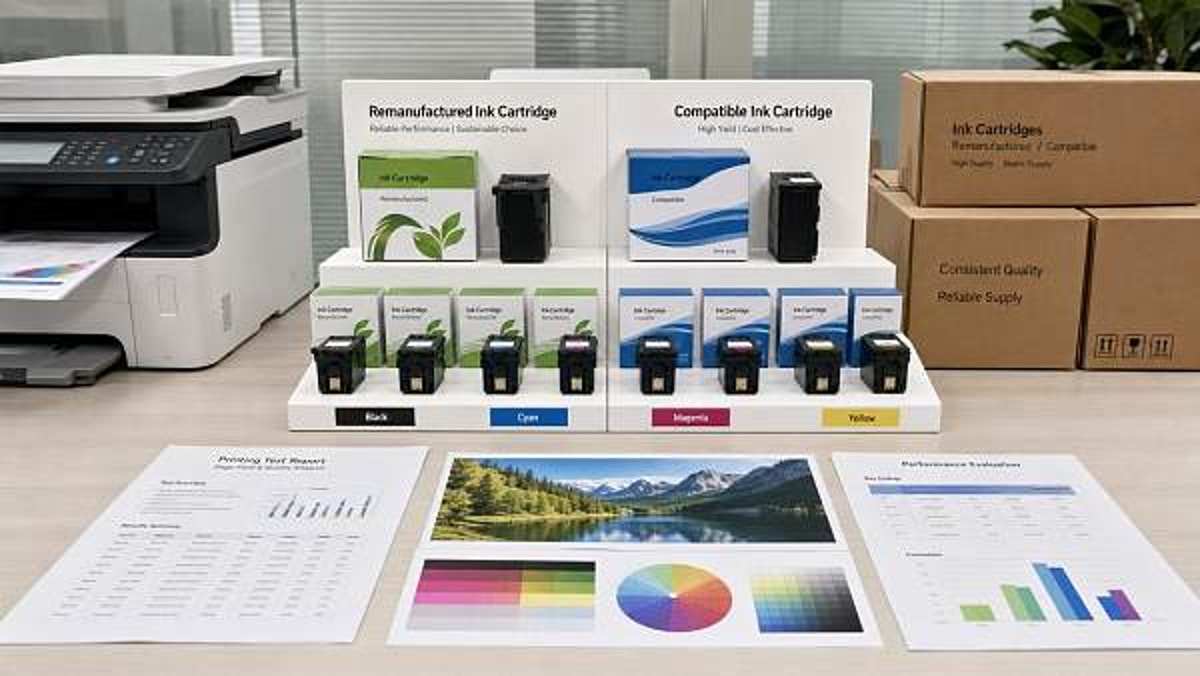
For procurement teams comparing wholesale ink cartridges, the real question is not just price but performance, consistency, and supply risk in daily operations. This article explores remanufactured versus compatible cartridges in real use, helping buyers assess print quality, page yield, compliance concerns, and long-term value before making high-volume sourcing decisions.
Why the conversation around wholesale ink cartridges is changing
The market for wholesale ink cartridges is no longer shaped by unit cost alone. Procurement teams in offices, schools, hospitality groups, service centers, and multi-site commercial operations are dealing with a different set of pressures than they did a few years ago. Supply continuity matters more because printing is still embedded in contracts, guest documents, invoices, labels, forms, and internal workflows. At the same time, sustainability targets, tighter compliance reviews, and pressure to reduce total operating cost are pushing buyers to compare remanufactured and compatible options more carefully.
This shift is especially relevant in B2B purchasing. A cartridge that looks cheaper on paper can become more expensive if it creates printer downtime, inconsistent output, leakage, firmware conflict, or higher replacement frequency. As a result, the real-use performance of wholesale ink cartridges has become a strategic sourcing topic rather than a routine consumables decision.
The biggest trend signal: buyers are moving from price comparison to risk-adjusted value
In practical procurement terms, the comparison between remanufactured and compatible cartridges is now less about which category is “better” in theory and more about which one is more predictable in a specific fleet environment. Buyers increasingly evaluate wholesale ink cartridges through a risk-adjusted lens: page yield stability, printhead behavior, machine compatibility, claim rates, and supplier responsiveness.
This trend is visible across sectors with mixed printer fleets. A school district may need low-cost volume printing but cannot tolerate frequent cartridge errors during exam periods. A hotel group may print fewer pages overall, yet brand presentation requires sharp output for guest materials and back-office paperwork. In both cases, procurement teams are placing more weight on operational consistency than on headline discount percentages.
Trend comparison in real use
What is driving this shift in buyer behavior
Several market forces are influencing how buyers assess wholesale ink cartridges. First, printer manufacturers continue to update firmware, authentication methods, and chip recognition systems. That creates a moving target for non-OEM supply. Second, more organizations have formal ESG goals, making remanufactured products attractive where cartridge recovery and reuse can be documented. Third, procurement departments are under pressure to reduce hidden costs, including IT support calls, returns handling, and machine interruption.
Another important factor is fleet fragmentation. Many organizations now operate a mix of legacy printers, newer networked devices, and desktop units spread across locations. In this environment, one universal cartridge strategy rarely works. Wholesale ink cartridges must be segmented by application: high-volume monochrome admin printing, image-sensitive color output, branch office convenience stock, or managed replenishment programs.
Key drivers behind the market change
In real use, where remanufactured cartridges tend to perform best
Remanufactured cartridges often perform well in environments where the printer models are mature, the supply chain is stable, and the buyer values environmental positioning alongside cost control. Because the original shell was designed by the OEM, a well-remanufactured cartridge can deliver good mechanical fit when rebuilding standards are strong. For procurement teams with repeatable printer fleets, this can be a practical middle ground between OEM pricing and low-end aftermarket uncertainty.
However, real-use outcomes depend heavily on the remanufacturer’s process. Cleaning, worn-part replacement, seal integrity, nozzle condition, and chip handling all affect reliability. That means remanufactured wholesale ink cartridges are not automatically a safer option simply because they started as OEM products. Buyers should treat them as engineered products that require documented quality control, batch traceability, and failure-response support.
Where compatible cartridges are gaining ground
Compatible cartridges are gaining attention because manufacturers of aftermarket consumables have improved design, mold precision, chip development, and ink chemistry. In some high-volume categories, compatible wholesale ink cartridges now offer strong cost efficiency and broad availability, especially where the market for a given printer model is large enough to support continuous product refinement.
For procurement teams, the strongest case for compatible cartridges usually appears in standardized, cost-sensitive workflows where output quality is important but not highly brand-critical. Internal documents, routine forms, admin printing, and decentralized site replenishment often fit this profile. The key caution is that compatibility success depends on the supplier’s technical update speed. When printer firmware changes, buyers need assurance that the supplier can provide revised chips or replacement stock quickly.
How the impact differs across procurement roles and business settings
The remanufactured versus compatible decision affects more than the purchasing department. It touches finance, IT support, operations, sustainability teams, and end users. That is why sourcing wholesale ink cartridges increasingly requires cross-functional evaluation rather than a single price benchmark.
What smart buyers should focus on now
The current market signal is clear: category labels matter less than supplier capability. When evaluating wholesale ink cartridges, procurement teams should ask for evidence tied to real use. That includes model-specific page yield ranges, defect or DOA rates, quality inspection process, ink formulation consistency, and support history after firmware changes. A serious supplier should also be able to explain whether certain printer models are better served by remanufactured stock and others by compatible stock.
It is also wise to segment sourcing decisions by document type and business criticality. Not every printer in the organization needs the same cartridge category. Many buyers reduce risk by using one approach for high-volume back-office devices and another for image-sensitive or customer-facing output. This layered sourcing strategy is becoming more common because it balances savings with operational control.
Practical evaluation checklist
Before placing larger orders for wholesale ink cartridges, buyers should verify the following points:
- Whether the tested cartridge batch matches the production batch that will be delivered
- Whether support exists for firmware-related recognition issues
- Whether yield claims are based on realistic office use, not ideal lab assumptions alone
- Whether packaging, labeling, and traceability meet internal compliance requirements
- Whether the supplier can maintain continuity across multiple sites and reorder cycles
How this trend may develop over the next sourcing cycle
Looking ahead, the market for wholesale ink cartridges is likely to become more segmented, not less. Higher-performing suppliers will differentiate through testing transparency, chip update responsiveness, environmental documentation, and deeper fleet-specific recommendations. Meanwhile, weaker sellers may continue to compete only on low price, creating more variability for buyers who do not validate performance in advance.
Procurement teams should also expect greater scrutiny of supply chain resilience. A supplier that offers good pricing but inconsistent replenishment may create a larger risk than a slightly more expensive partner with reliable stock planning and technical support. In that sense, the future of sourcing is less about choosing remanufactured or compatible as a fixed ideology and more about building a cartridge portfolio strategy backed by evidence.
Final judgment for procurement teams
In real use, remanufactured cartridges can be a strong fit where sustainability goals, mature printer fleets, and proven rebuild quality align. Compatible cartridges can be highly competitive where cost efficiency, broad SKU access, and responsive technical updating are the priority. For buyers of wholesale ink cartridges, the most important change is that selection should now be based on risk profile, support capability, and use-case fit rather than a simple remanufactured-versus-compatible debate.
If your organization wants to judge the trend’s impact on its own business, focus first on five questions: which printers are most business-critical, where downtime is least acceptable, how firmware is managed, what sustainability reporting is required, and whether your supplier can prove stable performance over repeated orders. Those answers will lead to a more reliable sourcing decision than price comparison alone.
Search News
Hot Articles
Popular Tags
Need ExpertConsultation?
Connect with our specialized leisureengineering team for procurementstrategies.
Recommended News
 May 05, 2026Cork bulletin boards: why frame quality matters over board sizeCork bulletin boards deliver better long-term value when frame quality comes first. Learn how stronger materials, secure corners, and stable mounting improve durability, safety, and appearance.● Institutional Buyer
 May 05, 2026Soundproof phone booths: when sound ratings mislead office plansSoundproof phone booths can mislead office plans when ratings are taken at face value. Learn how to compare privacy, ventilation, placement, and compliance before you buy.● Institutional Buyer
 May 05, 2026Laser printer toner bulk: what affects page yield mostLaser printer toner bulk page yield depends on more than toner volume. Discover the top factors affecting real output and make smarter, lower-cost sourcing decisions.● Institutional Buyer
 May 05, 2026Science lab furniture: small design choices with big safety impactScience lab furniture shapes lab safety in ways many teams overlook. Discover smart design choices that reduce risk, improve compliance, and support efficient long-term performance.● Institutional Buyer
 May 05, 2026Wholesale ink cartridges: remanufactured vs compatible in real useWholesale ink cartridges compared in real use: remanufactured vs compatible on print quality, yield, firmware risk, and sourcing value—helping procurement teams buy smarter.● Institutional Buyer
 May 05, 2026Cash drawers wholesale: what causes jams at checkoutCash drawers wholesale guide: uncover the real causes of checkout jams, from latch design to POS compatibility, and learn how to source reliable drawers that reduce downtime.● Institutional Buyer
 May 05, 2026Office acoustic pods or open booths: which solves noise betterOffice acoustic pods vs. open booths: discover which solution controls noise better for privacy, focus, and hybrid calls, and make a smarter office planning decision.● Institutional Buyer
 May 05, 2026Office LED panel lights that cut glare without dim workspacesOffice LED panel lights that reduce glare without sacrificing brightness. Discover how to choose low-glare, high-comfort lighting for productive, compliant, and modern office spaces.● Institutional Buyer
 May 05, 2026Chemical resistant lab tops: which materials hold up bestChemical resistant lab tops compared: discover whether epoxy resin, phenolic resin, or stainless steel holds up best for harsh chemicals, heat, and daily lab demands.● Institutional Buyer
 May 05, 2026How to compare drafting tables wholesale without overbuyingDrafting tables wholesale comparison starts with MOQ, specs, and supplier reliability. Learn how to avoid overbuying, reduce inventory risk, and choose better-value sourcing options.● Institutional Buyer
 May 04, 2026Ergonomic Office Chairs Wholesale: Comfort Claims vs Real SupportErgonomic office chairs wholesale: learn how to verify real support beyond comfort claims with fit, adjustability, durability, and compliance insights for smarter commercial buying.● Institutional Buyer
 May 04, 2026Modular Office Workstations: Flexibility Can Add Setup CostsModular office workstations can improve flexibility, but setup costs often rise through installation, power, data, and rework. Learn when the added investment truly pays off.● Institutional Buyer
 May 04, 2026Steel Filing Cabinets: Why Some Drawers Jam Too EarlySteel filing cabinets often jam early due to weak slides, poor leveling, overload, or lock issues. Discover what to check before buying and how to avoid costly drawer failures.● Institutional Buyer
 May 04, 2026Office Network Racks: Airflow Problems Start With Bad PlanningOffice network racks can fail early when airflow is ignored. Learn the key planning checklist to prevent overheating, reduce maintenance risks, and build a more reliable office network.● Institutional Buyer
 May 04, 2026Office Partitions Wholesale: Open Plan Savings, Closed Office NeedsOffice partitions wholesale helps project managers cut fit-out costs, speed delivery, and balance open-plan efficiency with private office performance. Explore smarter commercial workspace solutions.● Institutional Buyer
 May 04, 2026Conference Room Tables: Common Layout Mistakes to AvoidConference room tables can make or break meeting flow. Discover common layout mistakes to avoid and plan smarter spaces for collaboration, AV integration, and professional results.● Institutional Buyer
 May 04, 2026Mobile Pedestals Wholesale: Why Drawer Slides Matter MoreMobile pedestals wholesale buyers should look beyond price—drawer slides shape durability, load capacity, and maintenance costs. Learn what to compare before ordering.● Institutional Buyer
 May 04, 2026Height Adjustable Standing Desks: Stability Matters More Than SpeedHeight adjustable standing desks should be judged by stability, not just speed. Learn how stronger frames improve safety, user confidence, and long-term value in commercial spaces.● Institutional Buyer
 May 04, 2026Executive Office Desks: When Looks Start to Hurt FunctionExecutive office desks should do more than look impressive. Discover how to balance prestige, ergonomics, storage, and tech support for smarter office buying decisions.● Institutional Buyer
 May 04, 2026Server Cabinets Wholesale: How to Avoid Ordering the Wrong DepthServer cabinets wholesale guide: avoid costly depth mistakes by checking usable internal space, rail fit, cable clearance, and expansion needs before placing bulk orders.● Institutional Buyer
 May 04, 2026Commercial Paper Shredders and the Hidden Cost of DowntimeCommercial paper shredders do more than destroy documents—they protect uptime, compliance, and budgets. Discover how to avoid hidden downtime costs and choose smarter for busy workplaces.● Institutional Buyer
 May 04, 2026Mesh Office Chairs OEM Orders: Specs That Cause ReworkMesh office chairs OEM projects often face rework from vague specs, certification gaps, and component mismatches. Learn what to verify before production to avoid delays and protect budgets.● Institutional Buyer
 May 04, 2026Stackable Visitor Chairs That Save Space Without Looking CheapStackable visitor chairs that save space without looking cheap—discover how to choose stylish, durable seating for offices, schools, and hospitality spaces.● Institutional Buyer
 May 04, 2026What Makes Commercial Acoustic Panels Worth the Cost?Commercial acoustic panels help buyers balance cost with performance, compliance, durability, and design. Learn what makes them worth the investment across offices, schools, hotels, and more.● Institutional Buyer