Chemical resistant lab tops: which materials hold up best
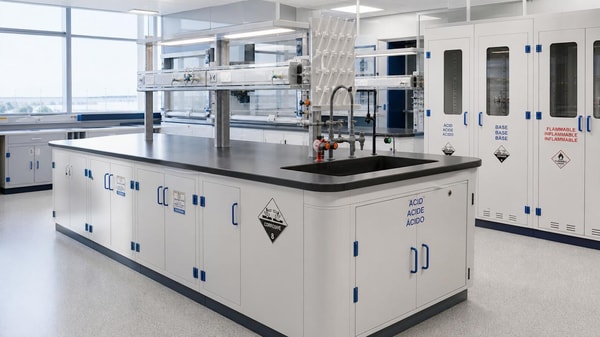
Selecting chemical resistant lab tops is a critical decision for technical evaluators balancing durability, safety, lifecycle cost, and compliance. From epoxy resin and phenolic resin to stainless steel and specialized laminates, each material responds differently to acids, solvents, heat, and heavy daily use. This guide outlines which options hold up best in demanding laboratory environments and how to match surface performance with application requirements.
For most technical evaluations, the short answer is this: epoxy resin usually offers the best all-around chemical resistance for harsh wet labs, phenolic resin is often a strong value choice for educational and routine analytical spaces, and stainless steel performs best where hygiene, impact resistance, and solvent exposure matter more than resistance to aggressive acids. Specialized laminate and solid surface options can work in light-duty settings, but they are rarely the safest choice for environments with continuous chemical contact.
The real challenge is not identifying the “strongest” material in the abstract. It is determining which surface will hold up under your actual chemical profile, cleaning regimen, heat load, mechanical abuse, and replacement cycle. Technical evaluators are usually less concerned with marketing claims than with failure modes: swelling, delamination, staining, seam breakdown, edge attack, thermal shock cracking, or long-term degradation after repeated exposure.
This article focuses on those decision points. Rather than reviewing every laboratory worktop material equally, it emphasizes the criteria that matter most in procurement and specification: chemical compatibility, heat tolerance, contamination control, maintenance burden, installation risk, and total cost of ownership.
What technical evaluators are really trying to determine
When buyers search for the best chemical resistant lab tops, they are rarely looking for a generic product list. They are usually trying to answer a more practical question: which material will minimize failure risk in a specific lab environment without overspending on unnecessary performance?
That means the evaluation process should begin with application mapping, not catalog comparison. A teaching lab using dilute acids, occasional solvents, and standard disinfectants has a very different risk profile from a pharmaceutical QC lab, a pathology lab, a semiconductor prep area, or an industrial research facility handling concentrated corrosives.
In most projects, the key concerns are predictable. Will the surface resist the acids, alkalis, and solvents used daily? Can it tolerate hot apparatus or accidental heat spikes? Will seams or cutouts become weak points? How easily can the top be cleaned and decontaminated? And if the surface is damaged, will repair be practical or will replacement disrupt operations?
These are the issues that determine lifecycle performance. A lab top that appears cost-effective at installation can become expensive if it stains permanently, blisters at sink cutouts, or requires early replacement in high-exposure zones.
Which materials hold up best overall
Across demanding laboratory settings, several materials dominate the conversation: epoxy resin, phenolic resin, stainless steel, and chemical-resistant laminate systems. Each has legitimate strengths, but they do not perform equally under aggressive chemical conditions.
Epoxy resin is widely considered the benchmark for high-performance chemical resistant lab tops. It offers strong resistance to a broad range of acids, alkalis, solvents, and moisture. Because it is non-porous and monolithic, it also avoids some of the seam and core-exposure issues found in layered materials. For labs that expect regular contact with corrosive reagents, epoxy resin is often the safest specification.
Phenolic resin also performs well, especially in environments where chemical exposure is moderate rather than extreme. It is durable, impact-resistant, and often more budget-friendly than epoxy. However, its performance depends heavily on construction quality, edge detailing, and the actual chemicals used. It is a capable choice, but usually not the first choice for the harshest chemical abuse.
Stainless steel is excellent in applications where cleanliness, washdown, and mechanical durability are top priorities. It handles many solvents well and performs strongly in hygienic environments. But it is not universally resistant to all laboratory chemicals. Certain acids, chlorides, and prolonged exposure conditions can cause corrosion or pitting, especially if the wrong alloy is selected.
Chemical-resistant laminates and compact laminates can serve in lower-risk environments, including some academic, diagnostics, and support labs. They may offer good short-term performance and attractive economics, but they are generally less forgiving under sustained chemical attack, high heat, or edge damage.
So if the question is which material holds up best in the broadest range of demanding applications, epoxy resin typically leads. If the question is which material offers the best balance of performance and cost in less aggressive labs, phenolic resin often becomes competitive. If sanitation and workflow dominate more than corrosive chemistry, stainless steel may be the right answer.
Epoxy resin lab tops: why they are often the first choice for harsh chemistry
Epoxy resin earns its reputation because it combines several properties that technical evaluators value at the same time. It is highly resistant to chemical attack, non-porous, dimensionally stable, and comparatively tolerant of heat. In many specification documents, it is the default recommendation for wet chemistry labs, industrial testing facilities, and R&D areas where exposure uncertainty is high.
One of its biggest advantages is broad-spectrum compatibility. Epoxy resin generally performs well against many mineral acids, organic solvents, salts, and cleaning agents. That does not mean every chemical is harmless at every concentration and dwell time, but it does mean the material gives evaluators a larger margin of safety than most alternatives.
It also handles heat better than many layered surfaces. Hot glassware or brief contact with elevated temperatures is less likely to cause immediate blistering or delamination because there is no laminated surface layer to separate from a substrate. This matters in active laboratory workflows where accidental thermal exposure is common.
Another practical benefit is fabrication flexibility. Integrated sinks, splashs, and molded configurations can reduce seam-related vulnerabilities. Fewer joints often mean fewer locations where chemicals can collect or where long-term damage can begin.
Its limitations are mostly economic and logistical. Epoxy resin is usually more expensive up front than phenolic or laminate-based options. Lead times may also be longer depending on project scale and customization. In some installations, weight and handling considerations can influence casework design and on-site coordination.
Still, when failure is costly or hazardous, the premium is often justified. For technical evaluators responsible for reducing operational risk, epoxy resin is less about buying the “best-looking” top and more about buying tolerance for uncertainty.
Phenolic resin lab tops: where they perform well and where caution is needed
Phenolic resin is often selected for schools, universities, healthcare support labs, and commercial laboratories seeking a durable and cost-conscious solution. It is manufactured as a dense composite material and is known for good impact resistance, useful structural strength, and dependable service in many everyday lab settings.
Its value proposition is straightforward: it offers a meaningful step up from standard laminates while remaining more economical than epoxy in many projects. For technical evaluators managing budget constraints across multiple rooms or large institutional rollouts, that can be a major advantage.
Phenolic surfaces also tend to perform well in humid environments and are generally easier to keep in good visual condition than lower-grade alternatives. In educational labs or multi-user spaces where surfaces face both misuse and routine cleaning, that durability matters.
However, evaluators should be careful not to treat phenolic as interchangeable with epoxy. Edge integrity, cutout protection, and long-term resistance under aggressive chemical exposure require close review. Repeated contact with strong acids, oxidizers, or harsh solvents may exceed what some phenolic systems can tolerate over time.
The practical takeaway is that phenolic resin works best when the chemical profile is known and moderate, not when exposure is severe, highly varied, or difficult to control. If your risk assessment includes frequent spills of concentrated reagents, hot acid handling, or prolonged dwell times, epoxy resin remains the safer specification in most cases.
Stainless steel lab tops: best for hygiene, not automatically best for every chemical
Stainless steel is sometimes assumed to be universally chemical-proof because of its industrial image. In reality, its suitability depends heavily on the substances involved, the grade of steel, and the cleaning environment. It is a top-performing choice for some laboratories, but not a universal answer to chemical resistance.
Where stainless steel excels is sanitation. It is smooth, easy to clean, and highly suitable for environments where contamination control and frequent washdown are essential. Clinical support areas, food-related labs, clean process zones, and certain pharmaceutical spaces often benefit from these strengths.
It also offers strong impact resistance and handles mechanical abuse well. Carts, tools, and repeated equipment movement are less likely to cause structural damage than on brittle or layered surfaces. For high-traffic work zones, this can reduce cosmetic and operational wear.
But chemical compatibility must be reviewed carefully. Chlorides, some acids, and poorly managed cleaning residues can attack stainless steel over time. Surface finish, weld quality, and alloy selection all affect durability. Type 304 may be adequate in some settings, while 316 may be more appropriate where corrosion risk is higher.
Another consideration is heat and user experience. Stainless steel can tolerate hot items, but it may scratch, show surface marks, and create a more industrial aesthetic that does not fit every educational or research environment. It is also noisier in use and may not provide the same visual warmth or perceived finish quality as resin-based options.
For evaluators, stainless steel should be specified because its hygiene and mechanical properties align with the application, not because it is presumed to outperform every other surface chemically.
Why laminates and solid surface materials are usually limited to lighter-duty applications
Specialized laminates, compact laminates, and some solid surface materials are often marketed as practical solutions for laboratory and technical spaces. In the right context, they can be effective. But they should be evaluated with discipline, especially when the project brief includes the phrase chemical resistant lab tops.
The main issue is not that these materials have no chemical resistance. Many do resist common spills, routine cleaners, and light laboratory use. The issue is that their performance margin is narrower. They are more vulnerable to prolonged dwell times, hot object contact, seam failure, or edge damage that exposes underlying structure.
In low-risk environments such as dry labs, administrative support areas, sample receiving counters, or educational rooms with controlled chemical use, they may deliver acceptable service at lower capital cost. They can also offer wider design flexibility in color, edge treatment, and visual integration.
However, for technical evaluators responsible for compliance, safety, and long service life, these materials are usually best treated as selective-use options rather than default choices for wet chemistry work. They can succeed when exposure conditions are clearly limited, but they leave less room for misuse, process change, or operational drift.
How to compare materials by the failure modes that matter most
A strong material evaluation should focus less on advertised benefits and more on how each option fails. This approach helps technical teams move from product marketing to risk control.
Chemical attack is the most obvious failure mode. Look for resistance data that reflects your actual chemicals, concentrations, temperatures, and exposure durations. A surface that resists brief splash contact may still degrade under repeated pooling or overnight exposure.
Thermal damage is another major factor. Ask whether the surface can tolerate incidental hot glassware, heated instruments, or sterilization-related temperature spikes. Materials that pass general chemical tests may still blister or crack under thermal stress.
Seam and edge failure often determines real-world lifespan. Many tops do not fail in the middle of the worksurface. They fail at sink rims, joints, penetrations, corners, or front edges where moisture and chemicals accumulate. This is particularly important for layered products.
Mechanical wear should not be overlooked. Impact resistance, abrasion tolerance, and load-bearing behavior matter in laboratories where equipment is moved frequently or where users are not gentle with surfaces.
Cleanability and contamination control also influence specification quality. Non-porous materials with fewer joints generally support easier maintenance and more predictable hygiene performance. In regulated environments, this can be as important as headline chemical resistance.
By organizing comparisons around failure modes, evaluators can distinguish between materials that test well in ideal conditions and materials that remain reliable in daily use.
Questions technical evaluators should ask suppliers before specifying a lab top
Supplier conversations should go beyond brochures and generic chemical charts. The goal is to confirm whether a product can perform under your operating reality, not just under laboratory test conditions defined by the manufacturer.
Start by requesting chemical resistance data tied to the substances you actually use, including concentration ranges and likely dwell times. If your lab handles nitric acid, hydrochloric acid, xylene, acetone, sodium hydroxide, bleach, or specialty reagents, ask for specific response guidance rather than broad assurances.
Next, ask about heat tolerance, especially near equipment zones. Clarify whether the rating applies to brief contact, continuous exposure, or both. A top may survive a momentary hot flask but still degrade next to a recurring heat source.
Fabrication details are equally important. Ask how seams are formed, how sink cutouts are protected, whether integrated sinks are available, and what edge construction is used. These details often determine whether a material performs for fifteen years or fails in five.
Also review maintenance expectations. Which cleaners are approved? What practices void warranties? Can minor damage be repaired in place? What does typical long-term appearance degradation look like in comparable installations?
Finally, ask for project references in similar applications. A supplier with successful installations in school labs may not necessarily be the best fit for a high-corrosive industrial or pharmaceutical setting. Relevant field history is one of the strongest trust signals in technical sourcing.
How to match the right lab top to the application
If you need a practical rule of thumb, start with the chemistry and work backward. For aggressive wet chemistry, choose epoxy resin first unless there is a compelling reason not to. Its broad resistance profile makes it the safest general recommendation.
For teaching labs, routine analytical spaces, and institutional projects with controlled exposure, phenolic resin often provides the best balance of cost and durability. It is especially attractive when budgets must stretch across many rooms but performance still needs to exceed basic commercial surfaces.
For sanitary environments, washdown zones, and mechanically demanding work areas, stainless steel deserves serious consideration. Just ensure the alloy and finish are aligned with the actual chemical exposure profile.
For dry labs or low-risk support spaces, specialized laminates or solid surfaces may be acceptable. But they should be specified intentionally and not as substitutes for true chemical-duty tops in corrosive applications.
In mixed-use facilities, a zoned approach is often best. Not every room requires the same material. Using epoxy at wet benches, phenolic in general teaching areas, and stainless steel in washdown or prep zones can optimize both performance and budget.
Conclusion: the best chemical resistant lab tops are the ones matched to real exposure risk
There is no single laboratory worksurface that is best in every situation, but there is a clear hierarchy once actual exposure conditions are defined. For the broadest and toughest chemical resistance, epoxy resin remains the leading choice. For cost-effective durability in moderate-use labs, phenolic resin is often the strongest alternative. For hygienic and mechanically demanding environments, stainless steel can outperform resin-based options when the chemistry allows it.
For technical evaluators, the most reliable decision process is to compare materials against real chemicals, actual workflows, thermal loads, edge conditions, and maintenance practices. That approach leads to better specifications than relying on generic claims about durability.
In other words, the best chemical resistant lab tops are not chosen by category alone. They are chosen by how well their strengths align with your operating risk, compliance needs, and lifecycle expectations. When those factors are evaluated carefully, the right material becomes much easier to defend both technically and commercially.
Search News
Hot Articles
Popular Tags
Need ExpertConsultation?
Connect with our specialized leisureengineering team for procurementstrategies.
Recommended News
 May 05, 2026Cork bulletin boards: why frame quality matters over board sizeCork bulletin boards deliver better long-term value when frame quality comes first. Learn how stronger materials, secure corners, and stable mounting improve durability, safety, and appearance.● Institutional Buyer
 May 05, 2026Soundproof phone booths: when sound ratings mislead office plansSoundproof phone booths can mislead office plans when ratings are taken at face value. Learn how to compare privacy, ventilation, placement, and compliance before you buy.● Institutional Buyer
 May 05, 2026Laser printer toner bulk: what affects page yield mostLaser printer toner bulk page yield depends on more than toner volume. Discover the top factors affecting real output and make smarter, lower-cost sourcing decisions.● Institutional Buyer
 May 05, 2026Science lab furniture: small design choices with big safety impactScience lab furniture shapes lab safety in ways many teams overlook. Discover smart design choices that reduce risk, improve compliance, and support efficient long-term performance.● Institutional Buyer
 May 05, 2026Wholesale ink cartridges: remanufactured vs compatible in real useWholesale ink cartridges compared in real use: remanufactured vs compatible on print quality, yield, firmware risk, and sourcing value—helping procurement teams buy smarter.● Institutional Buyer
 May 05, 2026Cash drawers wholesale: what causes jams at checkoutCash drawers wholesale guide: uncover the real causes of checkout jams, from latch design to POS compatibility, and learn how to source reliable drawers that reduce downtime.● Institutional Buyer
 May 05, 2026Office acoustic pods or open booths: which solves noise betterOffice acoustic pods vs. open booths: discover which solution controls noise better for privacy, focus, and hybrid calls, and make a smarter office planning decision.● Institutional Buyer
 May 05, 2026Office LED panel lights that cut glare without dim workspacesOffice LED panel lights that reduce glare without sacrificing brightness. Discover how to choose low-glare, high-comfort lighting for productive, compliant, and modern office spaces.● Institutional Buyer
 May 05, 2026Chemical resistant lab tops: which materials hold up bestChemical resistant lab tops compared: discover whether epoxy resin, phenolic resin, or stainless steel holds up best for harsh chemicals, heat, and daily lab demands.● Institutional Buyer
 May 05, 2026How to compare drafting tables wholesale without overbuyingDrafting tables wholesale comparison starts with MOQ, specs, and supplier reliability. Learn how to avoid overbuying, reduce inventory risk, and choose better-value sourcing options.● Institutional Buyer
 May 04, 2026Ergonomic Office Chairs Wholesale: Comfort Claims vs Real SupportErgonomic office chairs wholesale: learn how to verify real support beyond comfort claims with fit, adjustability, durability, and compliance insights for smarter commercial buying.● Institutional Buyer
 May 04, 2026Modular Office Workstations: Flexibility Can Add Setup CostsModular office workstations can improve flexibility, but setup costs often rise through installation, power, data, and rework. Learn when the added investment truly pays off.● Institutional Buyer
 May 04, 2026Steel Filing Cabinets: Why Some Drawers Jam Too EarlySteel filing cabinets often jam early due to weak slides, poor leveling, overload, or lock issues. Discover what to check before buying and how to avoid costly drawer failures.● Institutional Buyer
 May 04, 2026Office Network Racks: Airflow Problems Start With Bad PlanningOffice network racks can fail early when airflow is ignored. Learn the key planning checklist to prevent overheating, reduce maintenance risks, and build a more reliable office network.● Institutional Buyer
 May 04, 2026Office Partitions Wholesale: Open Plan Savings, Closed Office NeedsOffice partitions wholesale helps project managers cut fit-out costs, speed delivery, and balance open-plan efficiency with private office performance. Explore smarter commercial workspace solutions.● Institutional Buyer
 May 04, 2026Conference Room Tables: Common Layout Mistakes to AvoidConference room tables can make or break meeting flow. Discover common layout mistakes to avoid and plan smarter spaces for collaboration, AV integration, and professional results.● Institutional Buyer
 May 04, 2026Mobile Pedestals Wholesale: Why Drawer Slides Matter MoreMobile pedestals wholesale buyers should look beyond price—drawer slides shape durability, load capacity, and maintenance costs. Learn what to compare before ordering.● Institutional Buyer
 May 04, 2026Height Adjustable Standing Desks: Stability Matters More Than SpeedHeight adjustable standing desks should be judged by stability, not just speed. Learn how stronger frames improve safety, user confidence, and long-term value in commercial spaces.● Institutional Buyer
 May 04, 2026Executive Office Desks: When Looks Start to Hurt FunctionExecutive office desks should do more than look impressive. Discover how to balance prestige, ergonomics, storage, and tech support for smarter office buying decisions.● Institutional Buyer
 May 04, 2026Server Cabinets Wholesale: How to Avoid Ordering the Wrong DepthServer cabinets wholesale guide: avoid costly depth mistakes by checking usable internal space, rail fit, cable clearance, and expansion needs before placing bulk orders.● Institutional Buyer
 May 04, 2026Commercial Paper Shredders and the Hidden Cost of DowntimeCommercial paper shredders do more than destroy documents—they protect uptime, compliance, and budgets. Discover how to avoid hidden downtime costs and choose smarter for busy workplaces.● Institutional Buyer
 May 04, 2026Mesh Office Chairs OEM Orders: Specs That Cause ReworkMesh office chairs OEM projects often face rework from vague specs, certification gaps, and component mismatches. Learn what to verify before production to avoid delays and protect budgets.● Institutional Buyer
 May 04, 2026Stackable Visitor Chairs That Save Space Without Looking CheapStackable visitor chairs that save space without looking cheap—discover how to choose stylish, durable seating for offices, schools, and hospitality spaces.● Institutional Buyer
 May 04, 2026What Makes Commercial Acoustic Panels Worth the Cost?Commercial acoustic panels help buyers balance cost with performance, compliance, durability, and design. Learn what makes them worth the investment across offices, schools, hotels, and more.● Institutional Buyer