Sports equipment for schools: durability claims worth testing
When buyers assess sports equipment for schools, bold durability claims should never replace evidence. For technical evaluators balancing safety, lifecycle cost, and compliance, real performance depends on materials, construction methods, and verified testing under daily school use. This article examines which claims deserve scrutiny and how to identify products built for long-term institutional demand.
Why durability claims in sports equipment for schools need technical verification
In school procurement, durability is often presented as a marketing promise rather than a measurable engineering outcome. Technical assessment teams know that sports equipment for schools must survive repeated impacts, outdoor exposure, uneven handling, storage movement, and use by students with very different body weights and skill levels. A claim such as “heavy-duty” or “built to last” means little unless it is tied to material grade, load tolerance, corrosion resistance, fastening method, and test records.
This is especially important for institutional buyers working across education, recreation, and multi-use commercial environments. School gyms, smart campuses, training halls, and shared community facilities all demand products that remain safe over long service cycles. In these settings, the true question is not whether equipment looks robust on delivery day. The question is whether it maintains structural integrity after thousands of cycles of real use.
For evaluators, durability should be treated as a decision framework covering five linked risks:
- Safety risk, including frame instability, sharp edge exposure, part loosening, or surface failure.
- Budget risk, where low upfront cost results in frequent replacement or repair.
- Compliance risk, especially when documentation cannot support institutional review or public tender requirements.
- Operational risk, such as downtime during semester schedules, physical education programs, or shared-facility bookings.
- Supplier risk, if after-sales support, spare parts, or manufacturing consistency are unclear.
Because Global Commercial Trade focuses on data-backed sourcing intelligence across office and educational supplies and adjacent commercial sectors, the evaluation lens goes beyond catalog language. Technical buyers need evidence that a supplier understands institutional usage, cross-border compliance expectations, and the difference between consumer-grade sports gear and equipment intended for schools.
Which durability claims deserve the most scrutiny?
Not all claims carry equal risk. Some are easy to verify through documentation and inspection, while others require deeper testing or supplier questioning. The following table highlights the claims in sports equipment for schools that most often influence purchasing decisions and the evidence technical evaluators should request before approval.
The key insight is that a durability claim only becomes useful when it can be converted into a checkable input. A technical team should be able to match each claim to a specification sheet, sample inspection point, and likely failure mode. If a supplier cannot explain how the claim is demonstrated, the claim should be treated cautiously.
Red flags during document review
- Generic brochures with no mention of substrate material, finish process, or testing method.
- Load capacities shown without user conditions, cycle assumptions, or installation requirements.
- Claims of long service life with no maintenance guidance or wear-part replacement schedule.
- Samples that look acceptable cosmetically but show loose hardware, inconsistent welds, or uneven coatings.
What technical evaluators should inspect in sports equipment for schools
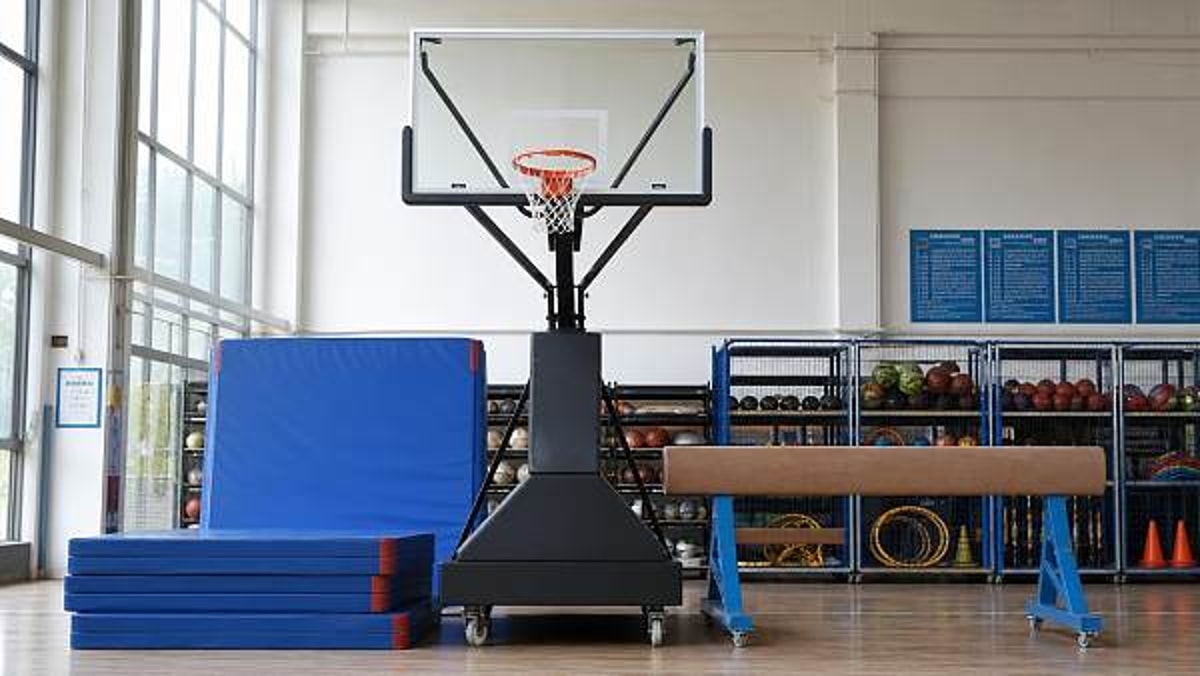
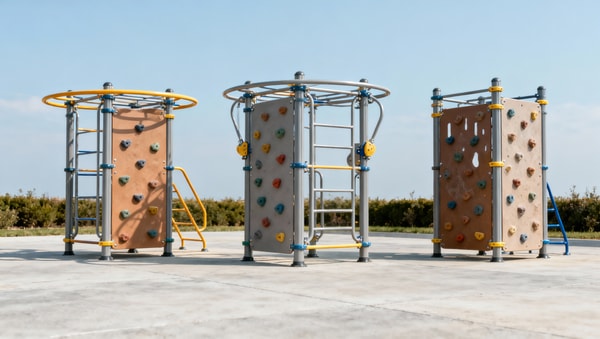
The most reliable procurement decisions are made when product review moves from surface appearance to component-level scrutiny. This is true whether the item is a basketball system, gym bench, climbing unit, storage cart, volleyball post, protective mat, or outdoor training station. The same principle applies across school procurement: materials, connections, protection layers, and maintenance access determine long-term durability more than brand language alone.
Material and structure
Steel remains common in sports equipment for schools because it balances strength, cost, and fabrication flexibility. But grade alone is not enough. Evaluators should ask whether critical frames use consistent wall thickness, whether stress points have reinforcement plates, and whether welded sections have been designed to reduce fatigue concentration. Aluminum can lower weight for movable systems, but the joint design and deformation resistance must still be validated.
Fasteners, hinges, and moving parts
School-use equipment is frequently folded, rolled, stacked, or repositioned by non-specialist staff. That means casters, bearings, hinge pins, anchor points, and locking devices deserve as much attention as the main frame. A strong frame paired with weak moving hardware still creates a short product life. Inspect whether replacement parts are standardized and whether torque-sensitive joints can be maintained with normal facility tools.
Surface finish and user-contact areas
Durability in schools is not only about surviving force. It also means resisting sweat, moisture, cleaning chemicals, accidental abrasion, and rough storage practices. Coatings should be consistent on edges and weld zones, grip areas should not degrade quickly, and padded surfaces should tolerate frequent disinfection without cracking or peeling. In educational environments, easy-to-clean construction can directly affect lifecycle cost.
A practical inspection checklist
- Check whether the bill of materials identifies key structural materials instead of generic phrases.
- Review all user-contact points for edge finishing, seam quality, and pinch hazards.
- Confirm the rated use scenario, such as age group, indoor or outdoor installation, and supervision level.
- Ask for maintenance intervals and replacement recommendations for wear components.
- Request sample-level inspection or video validation for moving assemblies if in-person review is not possible.
How to compare school sports equipment beyond purchase price
Technical evaluators are often asked to justify why one bid for sports equipment for schools costs more than another. The strongest answer is not “better quality” in abstract terms. It is a lifecycle comparison showing where lower-priced products may create hidden costs through maintenance labor, downtime, premature replacement, or non-compliance risk.
The table below can support structured bid review by translating quality assumptions into measurable procurement categories.
This comparison does not mean the highest quoted price is automatically correct. It means a school buyer should normalize bids against total ownership conditions. A product that lasts longer, needs fewer interventions, and is easier to document may offer better value even when the initial unit price is higher.
Which standards and compliance points matter most?
Standards for sports equipment for schools vary by product category, geography, and intended use. Technical teams should avoid assuming that one compliance statement covers everything. Indoor gym apparatus, playground-adjacent fitness structures, movable goals, protective mats, and spectator-related installations may each fall under different safety expectations. The practical goal is to confirm that the supplier can provide documentation relevant to the product type and the target market.
Compliance areas that deserve review
- Mechanical safety, including stability, load performance, entrapment risk, and structural endurance.
- Material safety, especially where coatings, foams, plastics, or user-contact surfaces are involved.
- Installation guidance, anchor requirements, use limitations, and maintenance instructions.
- Traceability records, including batch control, technical drawings, and quality inspection reports.
For global sourcing, this is where a specialized intelligence platform adds value. Buyers sourcing through complex cross-border channels do not only need product lists. They need alignment between supplier capability, documentation readiness, commercial lead time, and destination-market compliance expectations. GCT’s role in that process is to help institutional procurement teams reduce blind spots before sample approval or contract finalization.
Application scenarios: why school use is harder than many suppliers expect
A supplier may have experience in retail sports goods yet still struggle to serve educational institutions well. Sports equipment for schools is exposed to a combination of user diversity, schedule intensity, and handling variability that differs from home or boutique fitness use. Understanding the scenario helps evaluators test whether a product specification is realistic.
The table below maps common school scenarios to the durability and selection issues they create.
This scenario view helps prevent overbuying and underbuying at the same time. A school that only compares unit price may end up paying for features it does not need, or worse, omitting the exact reinforcements required for daily institutional use.
Common mistakes when specifying sports equipment for schools
Mistake 1: treating all user loads as the same
School environments combine children, teenagers, staff, and sometimes community users. Dynamic loads, misuse patterns, and side impacts can differ substantially from ideal use assumptions. If a load rating is not linked to actual use conditions, the figure may be misleading.
Mistake 2: focusing on the main structure and ignoring accessories
Casters, nets, padding, clamps, hooks, fastening kits, and locking devices are often the first points of failure. They also drive service calls. Technical evaluators should assign weighted scores to accessories and consumable parts, not only the main body.
Mistake 3: accepting durability claims without maintenance assumptions
Even well-built sports equipment for schools requires inspections, tightening, cleaning, and occasional part replacement. Products that appear inexpensive may only perform if maintenance is frequent. If the school cannot support that schedule, the specification should be adjusted accordingly.
Mistake 4: separating sourcing from logistics and installation realities
Durability is also affected by packaging, transit vibration, site handling, and installation quality. A technically sound product can still underperform if it arrives with coating damage, missing hardware, or unclear assembly instructions. Commercial buyers should evaluate supplier readiness across the full delivery chain.
FAQ: practical questions technical buyers often ask
How should we test samples of sports equipment for schools before approval?
Start with a document review, then move to physical inspection. Check dimensions, weld consistency, finish quality, fastener security, and stability under realistic loading. If the item has moving parts, test repeated folding, rolling, or adjustment cycles. For padded or polymer components, inspect compression recovery and surface resistance after cleaning. Approval is stronger when sample observations are recorded against a pre-set checklist.
What matters more: test reports or factory capability?
Both matter, but they answer different questions. Test reports help show product performance under defined conditions. Factory capability indicates whether that performance can be reproduced consistently across orders. Technical evaluators should review production controls, material traceability, and inspection routines alongside any formal test evidence.
Are imported school sports products always harder to verify?
Not necessarily. The challenge is not import status by itself but information transparency. A well-organized supplier with clear drawings, inspection records, and compliance files may be easier to assess than a local source with vague specifications. This is where structured sourcing intelligence and supplier screening can reduce evaluation time.
How do we balance budget limits with durability expectations?
Segment equipment by criticality. For high-risk or high-frequency items, prioritize stronger specifications and proven maintenance support. For lower-intensity or short-term-use items, cost optimization may be more appropriate. A mixed strategy often produces better value than applying the same quality tier across every product category.
Why choose us for sourcing analysis and supplier evaluation
For technical teams evaluating sports equipment for schools, the real challenge is rarely finding suppliers. The challenge is filtering claims, comparing unlike quotations, and identifying which products can meet institutional expectations over time. Global Commercial Trade supports this process through focused B2B intelligence, cross-sector sourcing insight, and a commercial perspective shaped by real procurement conditions in educational and public-use environments.
We help buyers move from broad market search to decision-ready evaluation by focusing on the details that affect risk and performance:
- Parameter confirmation for frames, finishes, padding systems, mobility parts, and installation requirements.
- Product selection support for school gyms, campus recreation zones, outdoor sports areas, and multi-use institutional spaces.
- Lead time and delivery planning aligned with project schedules, tender milestones, and phased installations.
- Supplier communication support for OEM or customization requests, including dimensions, branding, packing, and accessory configuration.
- Documentation review related to compliance expectations, sample requests, inspection priorities, and quotation comparison.
If your team is reviewing sports equipment for schools and needs help comparing specifications, clarifying certification scope, checking sample readiness, or discussing quotation structure, contact us with your target product list and project requirements. We can support conversations around technical parameters, customization feasibility, lead time, sample arrangements, and supplier shortlisting so your final decision is based on evidence rather than claims.
Search News
Hot Articles
Popular Tags
Need ExpertConsultation?
Connect with our specialized leisureengineering team for procurementstrategies.
Recommended News
 May 05, 2026Sports equipment for schools: durability claims worth testingSports equipment for schools should be judged by test data, materials, and compliance—not bold claims. Learn how to spot durable, safer options before you buy.● Theme Park Strategist
 May 04, 2026CPSC Recalls 3 Chinese-Made Kids' Climbing FramesCPSC recalls 3 Chinese-made kids' climbing frames over ASTM F1487-23 compliance risks—urgent implications for exporters, testers & importers globally.● Theme Park Strategist
 May 02, 2026Sanya Asian Beach Games Closure Spurs Halal Certification Demand for Sand Sports GearHalal certification demand surges for sand sports gear post-Sanya Asian Beach Games—key for volleyball nets, inflatable parks & Middle East exports.● Theme Park Strategist
 May 01, 2026Sanya Asian Beach Games Closure Triggers Halal Certification Demand for Sand Sports EquipmentHalal certification demand surges for sand sports equipment post-Sanya Asian Beach Games—key for beach volleyball, kite surfing & football gear exporters targeting GCC markets.● Theme Park Strategist
 May 01, 2026AI Football Training Robots Export Surge After Man Utd MatchAI football training robots surge in EU demand after Man Utd’s match—FIFA-certified, GPS+IMU equipped, CE-compliant & multilingual ready.● Theme Park Strategist
 May 01, 2026Shanghai Extreme Sports Association Re-elected; EN 15613 Certification Urgency RisesEN 15613 certification urgency surges as Shanghai Extreme Sports Association re-elected—key for EU-bound skateboards, climbing walls & wind tunnels.● Theme Park Strategist
 May 01, 2026Amusement Park Signage That Improves Flow Without Adding ClutterAmusement park signage that improves guest flow, reduces confusion, and supports safety without visual clutter. Discover practical strategies for clearer wayfinding and better park operations.● Theme Park Strategist
 Apr 30, 2026Asian Beach Games Boost Export Demand for Commercial Beach Sports EquipmentCommercial beach sports equipment export demand surges post-Asian Beach Games—key for manufacturers targeting Middle East markets with ISO/ASTM compliance.● Theme Park Strategist
 Apr 30, 2026Water park equipment choices that affect downtime the mostWater park equipment choices can make or break uptime. Learn which pumps, controls, filtration, and material specs reduce downtime, cut maintenance risk, and improve sourcing decisions.● Theme Park Strategist
 Apr 30, 2026Theme park rides with shorter queues and stronger repeat appealTheme park rides with shorter queues and stronger repeat appeal: learn how smarter capacity, ride mix, and sourcing decisions can improve guest flow, ROI, and park performance.● Theme Park Strategist
 Apr 29, 2026Asian Beach Games Boost Demand for UV-Resistant Beach Sports EquipmentUV-resistant beach sports equipment demand surges after China's gold sweep at Sanya Asian Beach Games—key for exporters targeting Middle East markets.● Theme Park Strategist
 Apr 28, 2026Asia Beach Games Boost Export Inquiries for Commercial Sand Sports EquipmentCommercial sand sports equipment exporters see 210% surge in inquiries amid Asia Beach Games—IP68, ISO 22301 & maritime packaging demand spikes from KSA, UAE, Indonesia, Thailand.● Theme Park Strategist
 Apr 27, 2026Asia Beach Games Boost Demand for Portable Sand Sports EquipmentPortable sand sports equipment demand surges 217% amid Asia Beach Games—discover UV-resistant, anchor-stable volleyball & soccer systems for export.● Theme Park Strategist
 Apr 26, 2026China FA Warns Nanjing City Over Fan Conduct; Security Compliance Tightens for International MatchesChina FA warns Nanjing City over fan conduct—key alert for venues, security providers & tech integrators ahead of June 30, 2026 compliance deadline.● Theme Park Strategist
 Apr 25, 2026China FA Warns Nanjing City Over Fan Conduct, Ups Security RulesChina FA warns Nanjing City over fan conduct—new AI security, drone countermeasures & spectrum monitoring now mandated for AFC matches.● Theme Park Strategist
 Apr 24, 2026China FA Warns Nanjing City Over Fan Conduct; ISO 20785 Compliance AcceleratesISO 20785 compliance accelerates as China FA warns Nanjing City over fan conduct—key for sports security integrators targeting Middle East & SEA tenders.● Theme Park Strategist
 Apr 28, 2026How Long Does Amusement Equipment Really Stay Profitable?Amusement equipment profitability lasts 5–12 years. Compare lifecycle ROI with park benches, luxury furniture, hotel beds, custom furniture, hotel furniture, hotel chairs, hotel tables, and hotel equipment.● Theme Park Strategist
 Apr 24, 2026How to Source Park Trash Cans That LastPark trash cans sourcing guide: compare durable materials, supplier options, capacity, and lifecycle cost for playground planning, hospitality procurement, and safer outdoor spaces.● Theme Park Strategist
 Apr 24, 2026Park Trash Cans: What Specs Matter Most?Park trash cans buying guide: compare material, capacity, maintenance, and safety specs for playground planning, playground surfacing, and hospitality procurement projects.● Theme Park Strategist
 Apr 24, 2026What to Check Before Buying Amusement EquipmentAmusement equipment buyers: check playground safety, playground borders, playground climbers, and sensory playground features before purchase to reduce risk and improve long-term value.● Theme Park Strategist
 Apr 24, 2026Amusement Equipment: Buy New or Used?Amusement equipment buying guide: compare new vs. used options for playground climbers, playground borders, sensory playground design, and playground safety to reduce risk and improve ROI.● Theme Park Strategist
 Apr 23, 2026Amusement Equipment Upgrades That Change Guest ExperienceAmusement equipment upgrades improve guest experience with sensory playground features, playground climbers, playground safety, playground borders, and smart commercial furniture solutions.● Theme Park Strategist
 Apr 23, 2026Amusement Equipment Safety Issues Often Missed at InstallAmusement equipment and playground safety start at install. Learn how sensory playground, playground borders, and playground climbers affect compliance, durability, and safer commercial projects.● Theme Park Strategist
 Apr 25, 2026Theme Park Rides That Cut MaintenanceTheme park rides that cut maintenance: compare durable theme park rides, playground structures, inclusive playground and playground swings for leisure park projects. Learn how smart materials and supplier support reduce downtime and lifecycle costs.● Theme Park Strategist