Hole punches wholesale: metal build or low-cost plastic?
For procurement teams evaluating hole punches wholesale, the choice between durable metal construction and budget-friendly plastic can directly affect cost control, user satisfaction, and long-term supply value. This guide compares both options through a practical B2B lens, helping buyers identify the right balance of durability, pricing, and application fit for offices, schools, and commercial purchasing programs.
Why the hole punches wholesale market is shifting
The conversation around hole punches wholesale has changed. A few years ago, many buyers treated the category as a low-risk stationery item and focused almost entirely on unit price. Today, procurement teams are under broader pressure: reduce replacement frequency, meet sustainability expectations, standardize user experience across sites, and justify every SKU in a multi-location purchasing program. That has pushed the market away from a simple “cheapest available” mindset and toward a more segmented buying approach.
In practical terms, buyers are now comparing total use value, not just invoice price. A metal hole punch may cost more upfront, but in high-volume environments it can reduce downtime, complaints, and reorder frequency. A plastic model may still be the better fit where usage is light, user turnover is high, or budget frameworks are tight. The key trend is not that one material is replacing the other. It is that procurement decisions are becoming more context-based, with application fit driving product selection.
Key signals behind the material decision
Several market signals explain why buyers are looking more closely at metal versus plastic in hole punches wholesale contracts.
- Higher scrutiny on operating cost rather than single-order savings.
- Growing interest in product lifespan and waste reduction.
- More mixed-use buying programs serving offices, schools, training centers, and shared commercial spaces.
- Demand for ergonomic tools as employers and institutions pay closer attention to user comfort.
- Supplier consolidation, which encourages buyers to rationalize product tiers instead of stocking many similar models.
These changes matter because the category is no longer judged only by whether a hole punch can punch paper. It is judged by whether it performs consistently across user groups, fits site-level demand, and supports procurement efficiency over time.
Metal build versus plastic: the trend comparison buyers actually need
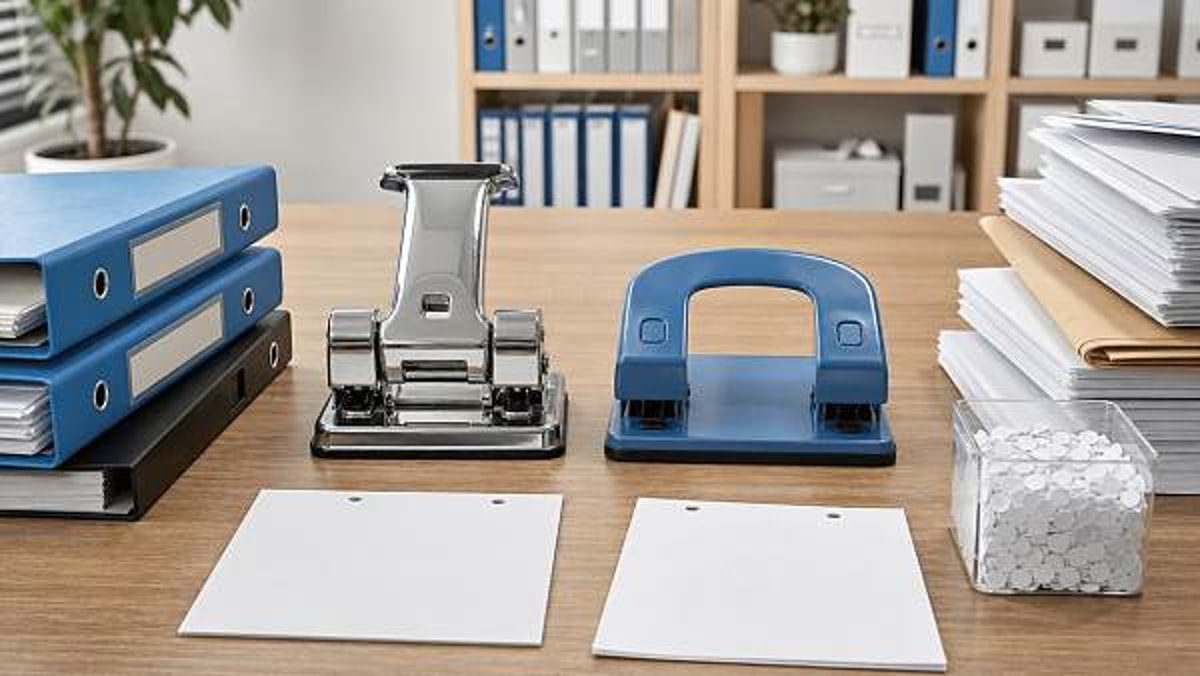
The strongest shift in hole punches wholesale is the move from generic material assumptions to role-based evaluation. Metal is increasingly favored for central offices, print rooms, administrative departments, and institutional settings with repeated daily use. Plastic remains relevant for classrooms, event packs, starter office kits, and price-sensitive distributions where throughput is low.
This comparison shows why hole punches wholesale sourcing is becoming more tiered. Instead of selecting one universal model, many buyers now build a two-level assortment: durable metal units for core work areas and low-cost plastic units for occasional-use points.
What is driving stronger demand for metal models
Metal construction is gaining attention because many organizations have rediscovered the cost of small-tool failure. In centralized office functions, document handling may be less visible than before, but it still matters in legal, finance, education administration, logistics, and records management. When a low-grade punch jams, misaligns, or breaks, the disruption may be minor on its own but expensive in aggregate.
Another driver is the shift toward procurement accountability. Buyers are expected to explain why a slightly higher-priced item can be the smarter commercial choice. Metal models support that case when they offer longer life, better punching accuracy, cleaner operation, and stronger user confidence. In many B2B settings, fewer complaints and fewer replenishment cycles are valuable outcomes even if they do not appear directly on the product label.
There is also a brand and workspace factor. Premium offices, hospitality back offices, and institutional environments increasingly want tools that match a professional standard. While hole punches are a small category, consistent quality across desk accessories contributes to the perception of operational discipline.
Why plastic models still hold an important place
The rise of value-based sourcing does not mean plastic has become obsolete. In fact, plastic options remain highly relevant in hole punches wholesale because many organizations manage diverse usage scenarios. Not every location requires heavy-duty construction. For low-frequency applications, paying for maximum durability can create unnecessary cost.
Plastic models often serve buyers well when they need broad coverage, lightweight distribution, and strict budget control. Educational buyers, training operators, public programs, and fast-scaling office networks may prioritize reach over lifespan. In those cases, replacing a low-cost unit after light service may still be commercially acceptable. The market trend is not “plastic loses.” It is “plastic must be matched to the right use case.”
This is especially true in environments where products may be loaned, shared casually, or included in onboarding kits. The procurement logic shifts from durability-first to cost-per-access-point. That keeps plastic firmly in the sourcing mix.
Who feels the impact most across the buying chain
The material choice in hole punches wholesale affects more than the end user. It also influences inventory planning, supplier relationships, and internal service standards.
For commercial buyers, the main lesson is that category management should reflect different stakeholder needs rather than rely on one blanket specification.
The next buying criteria go beyond material alone
Although the metal-versus-plastic debate is central, market direction suggests that future hole punches wholesale decisions will be influenced by a wider set of criteria. Buyers increasingly ask about punch capacity, handle comfort, chip tray design, alignment guides, finish quality, carton efficiency, and packaging suitability for e-commerce or internal distribution.
This reflects a broader procurement trend: categories once considered basic are being evaluated through lifecycle and user-experience lenses. A metal body with poor ergonomics may underperform a well-designed plastic product in some environments. Likewise, an ultra-cheap plastic unit can become expensive if return rates, breakage, or dissatisfaction rise. The real trend is specification maturity. Buyers are becoming more precise about how product design interacts with operational reality.
How procurement teams should assess the direction now
A useful response is to classify demand before issuing or renewing a hole punches wholesale order. Start with actual usage intensity, then map products accordingly. High-use departments usually justify metal construction. Light-use sites may be better served by selected plastic models that meet minimum quality expectations. This segmented approach often improves both service levels and cost discipline.
It is also wise to request sample testing across user groups. Procurement decisions on hole punches wholesale improve significantly when based on hands-on feedback from administrators, teachers, assistants, or facilities teams who will actually use the tools.
What to monitor in the coming sourcing cycle
Looking ahead, buyers should monitor a few practical signals. First, watch whether suppliers are improving entry-level plastic quality without major price increases. Second, track whether metal models are being redesigned for better comfort and lighter handling. Third, evaluate packaging and logistics efficiency, especially if products are shipped across regional branches or through distributor networks. Finally, review replacement and complaint data by site. This internal evidence often gives a clearer sourcing direction than generic market claims.
For many organizations, the most effective strategy will not be choosing metal or plastic once and for all. It will be building a smarter category architecture. In the current hole punches wholesale environment, success comes from aligning material choice with use intensity, workforce expectations, and procurement accountability.
Final judgment for buyers
The market signal is clear: hole punches wholesale purchasing is becoming more selective, more evidence-driven, and more sensitive to total value. Metal construction is gaining ground where durability, professional presentation, and stable performance matter. Low-cost plastic remains a valid option where scale, access, and budget discipline lead the decision. The right answer depends less on material ideology and more on operational fit.
If your organization wants to judge the trend’s impact on its own buying strategy, focus on five questions: how often are the tools used, where do failures create real disruption, what level of user experience is expected, how important is replacement reduction, and can a tiered assortment simplify purchasing? Those answers will do more to improve hole punches wholesale outcomes than chasing the lowest quote alone.
Search News
Hot Articles
Popular Tags
Need ExpertConsultation?
Connect with our specialized leisureengineering team for procurementstrategies.
Recommended News
 May 06, 2026Office tape dispensers that stay stable on fast-paced desksOffice tape dispensers that stay stable on fast-paced desks improve workflow, reduce tape waste, and support one-handed use. Compare smart, durable options now.● Institutional Buyer
 May 06, 2026Bubble envelopes bulk: the size mismatch that wastes shipping spendBubble envelopes bulk can cut costs—or quietly increase them. Learn how size mismatch drives shipping waste, damage risk, and packing delays, and how right-sizing protects margins.● Institutional Buyer
 May 06, 2026Office staplers bulk orders: why jam rates matter more than priceOffice staplers bulk buyers should compare jam rates before unit price. Learn how reliability, durability, and staple compatibility reduce hidden costs and improve workflow.● Institutional Buyer
 May 06, 2026Custom rubber stamps: what affects imprint clarity the mostCustom rubber stamps deliver the best imprint clarity when material quality, engraving depth, ink performance, and surface match work together. Learn what to compare before you buy.● Institutional Buyer
 May 06, 2026When paper guillotines become a safety risk in daily usePaper guillotines can become serious daily safety risks in offices, schools, and print rooms. Learn how to spot hazards, improve compliance, and choose safer models.● Institutional Buyer
 May 06, 2026Why wholesale packing tape performance changes by climateWholesale packing tape performance shifts with cold, heat, and humidity. Learn how climate affects adhesion, unwind, and seal reliability to choose the right tape and reduce shipping failures.● Institutional Buyer
 May 06, 2026Self inking stamps wholesale: what users notice after six monthsSelf inking stamps wholesale buyers often learn the truth after six months. Discover what users notice about durability, imprint quality, refills, and supplier reliability before you source.● Institutional Buyer
 May 06, 2026Hole punches wholesale: metal build or low-cost plastic?Hole punches wholesale: compare durable metal and low-cost plastic models for offices, schools, and bulk buyers. Discover which option delivers better value, fit, and long-term savings.● Institutional Buyer
 May 05, 2026Cork bulletin boards: why frame quality matters over board sizeCork bulletin boards deliver better long-term value when frame quality comes first. Learn how stronger materials, secure corners, and stable mounting improve durability, safety, and appearance.● Institutional Buyer
 May 05, 2026Soundproof phone booths: when sound ratings mislead office plansSoundproof phone booths can mislead office plans when ratings are taken at face value. Learn how to compare privacy, ventilation, placement, and compliance before you buy.● Institutional Buyer
 May 05, 2026Laser printer toner bulk: what affects page yield mostLaser printer toner bulk page yield depends on more than toner volume. Discover the top factors affecting real output and make smarter, lower-cost sourcing decisions.● Institutional Buyer
 May 05, 2026Science lab furniture: small design choices with big safety impactScience lab furniture shapes lab safety in ways many teams overlook. Discover smart design choices that reduce risk, improve compliance, and support efficient long-term performance.● Institutional Buyer
 May 05, 2026Wholesale ink cartridges: remanufactured vs compatible in real useWholesale ink cartridges compared in real use: remanufactured vs compatible on print quality, yield, firmware risk, and sourcing value—helping procurement teams buy smarter.● Institutional Buyer
 May 05, 2026Cash drawers wholesale: what causes jams at checkoutCash drawers wholesale guide: uncover the real causes of checkout jams, from latch design to POS compatibility, and learn how to source reliable drawers that reduce downtime.● Institutional Buyer
 May 05, 2026Office acoustic pods or open booths: which solves noise betterOffice acoustic pods vs. open booths: discover which solution controls noise better for privacy, focus, and hybrid calls, and make a smarter office planning decision.● Institutional Buyer
 May 05, 2026Office LED panel lights that cut glare without dim workspacesOffice LED panel lights that reduce glare without sacrificing brightness. Discover how to choose low-glare, high-comfort lighting for productive, compliant, and modern office spaces.● Institutional Buyer
 May 05, 2026Chemical resistant lab tops: which materials hold up bestChemical resistant lab tops compared: discover whether epoxy resin, phenolic resin, or stainless steel holds up best for harsh chemicals, heat, and daily lab demands.● Institutional Buyer
 May 05, 2026How to compare drafting tables wholesale without overbuyingDrafting tables wholesale comparison starts with MOQ, specs, and supplier reliability. Learn how to avoid overbuying, reduce inventory risk, and choose better-value sourcing options.● Institutional Buyer
 May 04, 2026Ergonomic Office Chairs Wholesale: Comfort Claims vs Real SupportErgonomic office chairs wholesale: learn how to verify real support beyond comfort claims with fit, adjustability, durability, and compliance insights for smarter commercial buying.● Institutional Buyer
 May 04, 2026Modular Office Workstations: Flexibility Can Add Setup CostsModular office workstations can improve flexibility, but setup costs often rise through installation, power, data, and rework. Learn when the added investment truly pays off.● Institutional Buyer
 May 04, 2026Steel Filing Cabinets: Why Some Drawers Jam Too EarlySteel filing cabinets often jam early due to weak slides, poor leveling, overload, or lock issues. Discover what to check before buying and how to avoid costly drawer failures.● Institutional Buyer
 May 04, 2026Office Network Racks: Airflow Problems Start With Bad PlanningOffice network racks can fail early when airflow is ignored. Learn the key planning checklist to prevent overheating, reduce maintenance risks, and build a more reliable office network.● Institutional Buyer
 May 04, 2026Office Partitions Wholesale: Open Plan Savings, Closed Office NeedsOffice partitions wholesale helps project managers cut fit-out costs, speed delivery, and balance open-plan efficiency with private office performance. Explore smarter commercial workspace solutions.● Institutional Buyer
 May 04, 2026Conference Room Tables: Common Layout Mistakes to AvoidConference room tables can make or break meeting flow. Discover common layout mistakes to avoid and plan smarter spaces for collaboration, AV integration, and professional results.● Institutional Buyer