Custom rubber stamps: what affects imprint clarity the most
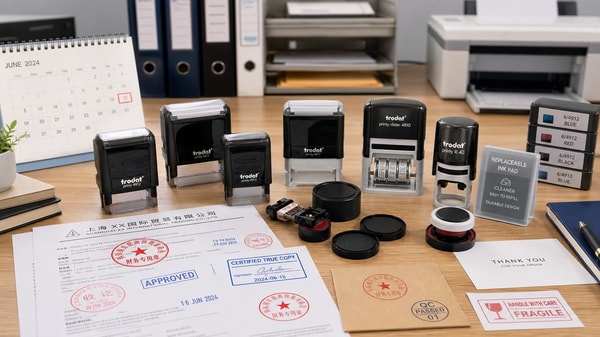
When evaluating custom rubber stamps, imprint clarity depends on more than just the design itself. Material quality, engraving precision, ink consistency, mounting stability, and paper surface all influence how sharp and readable the final mark appears. For buyers comparing suppliers or stamp specifications, understanding these factors is essential to selecting products that deliver clean, professional, and repeatable results.
Why imprint clarity has become a bigger buying signal
The market for custom rubber stamps is changing in a subtle but important way. Buyers are no longer judging a stamp only by its shape, price, or turnaround time. Across office supplies, education, hospitality back-of-house operations, retail packaging, and specialty administrative workflows, the expected standard has shifted toward cleaner and more consistent impressions. A stamp that looks acceptable on day one but degrades quickly, fills in fine details, or produces uneven edges is increasingly seen as a reliability problem rather than a minor cosmetic issue.
This matters because many business environments now depend on visual consistency. A blurred date stamp in a hotel receiving department can create traceability issues. A muddy approval mark in an educational institution may reduce legibility in records. A weak logo impression on boutique packaging can undermine brand presentation. As commercial buyers demand better process control and better presentation standards, imprint clarity has become one of the most practical ways to assess the quality of custom rubber stamps.
For information researchers comparing products or suppliers, the key question is no longer simply “Which stamp design do I need?” but “What combination of materials, manufacturing choices, and usage conditions most affects imprint quality over time?” That is where the market is moving, and that shift is influencing how suppliers describe their capabilities and how buyers evaluate performance.
The biggest change: buyers are evaluating the full stamping system, not just the stamp face
One of the clearest trend signals is that imprint clarity is now understood as a system outcome. In the past, buyers often focused on artwork approval alone. Today, more experienced procurement teams recognize that custom rubber stamps perform as part of a chain that includes die material, engraving depth, handle or mount stability, ink formulation, pad saturation, operator pressure, and the receiving surface.
This broader view is changing sourcing conversations. Suppliers are being asked more detailed questions about laser engraving versus traditional methods, recommended line thickness, expected impression count, rubber hardness, and compatibility with coated paper, cardboard, kraft labels, or porous office sheets. The result is a more technical and more quality-oriented purchasing process.
What affects imprint clarity the most in current market conditions
Although many elements matter, several factors now stand out because they directly connect supplier capability with real-world performance. Buyers researching custom rubber stamps should pay particular attention to the following areas.
1. Rubber material quality and hardness
The rubber compound remains one of the strongest predictors of clarity. If the material is too soft, fine lines may spread or collapse under pressure. If it is too hard, the stamp may not transfer ink evenly across textured or slightly uneven paper. Better custom rubber stamps use material matched to the intended level of detail and expected usage frequency. Material consistency also affects wear resistance, which is critical for buyers needing stable impressions over thousands of uses.
2. Engraving precision and relief depth
The cleaner the engraving, the cleaner the mark. In recent years, precision expectations have increased, especially for logos, small fonts, serial fields, and multifunction office stamps. Poorly controlled relief depth can lead to excess contact area, causing background smudging or filled-in text. Fine engraving, by contrast, protects negative space and helps each character remain legible. This is why technical capability at the production stage often matters more than buyers first assume.
3. Ink behavior, not just ink color
A growing sourcing mistake is to treat ink as an afterthought. In reality, viscosity, drying speed, pigment load, and compatibility with both rubber and substrate all influence whether custom rubber stamps produce a crisp impression. Ink that is too thin may bleed on absorbent paper. Ink that is too thick can miss detail or create patchy transfer. For commercial use, the right question is not simply “black or blue?” but “Which ink formula supports the clearest result on the actual materials being stamped?”
4. Mounting and pressure distribution
Even a well-made die can perform poorly if the mount flexes, tilts, or transfers pressure unevenly. This is increasingly relevant as buyers choose between traditional hand stamps, self-inking units, pre-inked designs, and high-frequency desk models. Stable mounting helps ensure that all parts of the custom rubber stamp contact the surface evenly. For larger stamps especially, poor pressure distribution often causes faint corners, dark centers, or inconsistent border lines.
5. Substrate reality
More buyers now use stamps on mixed materials: recycled paper, glossy labels, cardboard sleeves, kraft bags, coated forms, and textured packaging inserts. This trend means that substrate selection can no longer be separated from stamp specification. The same custom rubber stamps may look excellent on copier paper but lose edge definition on coated stock. Clarity depends on testing the actual use case, not assuming one universal result.
Why these factors are becoming more important now
Several market forces are pushing imprint clarity higher on the decision agenda. First, branding standards are rising even in operational tools. A stamped mark is no longer viewed purely as a back-office utility; in some sectors it contributes to customer-facing presentation. Second, process documentation has become more scrutinized. Internal audits, inventory control, and receiving workflows all depend on readable marks. Third, buyers have access to a wider range of global suppliers, which increases both opportunity and variability. As a result, technical differences that once went unnoticed now shape supplier selection.
For a platform serving commercial sourcing intelligence, this reflects a broader procurement trend: products once considered low-complexity are now evaluated through quality assurance, workflow efficiency, and total-use performance. Custom rubber stamps fit that pattern. Their value is no longer measured only by unit cost but by how reliably they perform in real business conditions.
Who is most affected by the shift toward clarity-focused evaluation
The impact is not limited to manufacturers. Different commercial participants feel the shift in different ways, and understanding those differences helps information researchers ask better questions during supplier comparison.
Signals buyers should watch when comparing custom rubber stamps
The most useful trend insight is practical: clarity problems are often predictable before purchase if buyers know which signals to review. Strong suppliers of custom rubber stamps increasingly provide application-specific guidance rather than generic promises. That alone is a positive sign.
- Sample impressions on multiple paper types, not only digital artwork proofs
- Clear recommendations on minimum line thickness and font size
- Disclosure of stamp type suitability for high-frequency or fine-detail use
- Guidance on ink refills, replacement cycles, and storage conditions
- Willingness to discuss substrate-specific performance limits
By contrast, vague descriptions such as “high quality,” “clear effect,” or “durable material” without technical detail are becoming less persuasive in a market that rewards evidence. For information researchers, this means supplier communication quality is itself a useful evaluation tool.
How businesses should respond to the trend
The response should be strategic rather than overly complicated. Companies sourcing custom rubber stamps do not need laboratory-level testing for every order, but they do need better alignment between intended use and specification. The first step is to define whether the stamp is primarily operational, administrative, branding-related, or mixed use. The second is to identify the actual surfaces and impression volume. The third is to confirm the acceptable level of detail and readability under normal working conditions.
This more structured approach helps buyers avoid a common mistake: choosing a stamp based on artwork appearance while ignoring the pressure, ink, and substrate conditions that determine real output. In today’s market, a lower initial price can easily be offset by poor consistency, reorders, wasted impressions, and user dissatisfaction.
A forward-looking view for sourcing and specification
Looking ahead, the custom rubber stamps market is likely to become more segmented. Commodity products will remain available, but buyers with stronger workflow, branding, or compliance needs will increasingly favor suppliers that can combine design support, material matching, and repeatable manufacturing quality. This does not mean every buyer needs a premium solution. It means the gap between “acceptable” and “fit for purpose” is widening.
That distinction is especially relevant in commercial sourcing environments where multiple sites, multiple users, or multiple paper types are involved. In such cases, the best-performing custom rubber stamps are usually those selected through use-case evaluation rather than generic catalog choice. Buyers who treat clarity as a measurable performance outcome will make better long-term decisions than those who view it as a minor aesthetic feature.
Final judgment: what to confirm before making a decision
For anyone researching custom rubber stamps today, the most useful takeaway is simple: imprint clarity is shaped by a chain of decisions, and the weakest point in that chain often determines the result. Current market changes are pushing buyers to examine not just design, but material composition, engraving precision, ink behavior, mounting stability, and substrate compatibility as a connected system.
If a business wants to judge how this trend affects its own operations, it should confirm five questions: What level of detail must remain readable? On which surfaces will the stamp actually be used? How often will it be used? What type of consistency is required across locations or teams? And can the supplier explain, with evidence, why its custom rubber stamps will perform under those real conditions?
Those answers will do far more to predict clear, professional impressions than price alone. In a market where operational quality and brand presentation increasingly overlap, that is the direction worth following.
Search News
Hot Articles
Popular Tags
Need ExpertConsultation?
Connect with our specialized leisureengineering team for procurementstrategies.
Recommended News
 May 06, 2026Office tape dispensers that stay stable on fast-paced desksOffice tape dispensers that stay stable on fast-paced desks improve workflow, reduce tape waste, and support one-handed use. Compare smart, durable options now.● Institutional Buyer
 May 06, 2026Bubble envelopes bulk: the size mismatch that wastes shipping spendBubble envelopes bulk can cut costs—or quietly increase them. Learn how size mismatch drives shipping waste, damage risk, and packing delays, and how right-sizing protects margins.● Institutional Buyer
 May 06, 2026Office staplers bulk orders: why jam rates matter more than priceOffice staplers bulk buyers should compare jam rates before unit price. Learn how reliability, durability, and staple compatibility reduce hidden costs and improve workflow.● Institutional Buyer
 May 06, 2026Custom rubber stamps: what affects imprint clarity the mostCustom rubber stamps deliver the best imprint clarity when material quality, engraving depth, ink performance, and surface match work together. Learn what to compare before you buy.● Institutional Buyer
 May 06, 2026When paper guillotines become a safety risk in daily usePaper guillotines can become serious daily safety risks in offices, schools, and print rooms. Learn how to spot hazards, improve compliance, and choose safer models.● Institutional Buyer
 May 06, 2026Why wholesale packing tape performance changes by climateWholesale packing tape performance shifts with cold, heat, and humidity. Learn how climate affects adhesion, unwind, and seal reliability to choose the right tape and reduce shipping failures.● Institutional Buyer
 May 06, 2026Self inking stamps wholesale: what users notice after six monthsSelf inking stamps wholesale buyers often learn the truth after six months. Discover what users notice about durability, imprint quality, refills, and supplier reliability before you source.● Institutional Buyer
 May 06, 2026Hole punches wholesale: metal build or low-cost plastic?Hole punches wholesale: compare durable metal and low-cost plastic models for offices, schools, and bulk buyers. Discover which option delivers better value, fit, and long-term savings.● Institutional Buyer
 May 05, 2026Cork bulletin boards: why frame quality matters over board sizeCork bulletin boards deliver better long-term value when frame quality comes first. Learn how stronger materials, secure corners, and stable mounting improve durability, safety, and appearance.● Institutional Buyer
 May 05, 2026Soundproof phone booths: when sound ratings mislead office plansSoundproof phone booths can mislead office plans when ratings are taken at face value. Learn how to compare privacy, ventilation, placement, and compliance before you buy.● Institutional Buyer
 May 05, 2026Laser printer toner bulk: what affects page yield mostLaser printer toner bulk page yield depends on more than toner volume. Discover the top factors affecting real output and make smarter, lower-cost sourcing decisions.● Institutional Buyer
 May 05, 2026Science lab furniture: small design choices with big safety impactScience lab furniture shapes lab safety in ways many teams overlook. Discover smart design choices that reduce risk, improve compliance, and support efficient long-term performance.● Institutional Buyer
 May 05, 2026Wholesale ink cartridges: remanufactured vs compatible in real useWholesale ink cartridges compared in real use: remanufactured vs compatible on print quality, yield, firmware risk, and sourcing value—helping procurement teams buy smarter.● Institutional Buyer
 May 05, 2026Cash drawers wholesale: what causes jams at checkoutCash drawers wholesale guide: uncover the real causes of checkout jams, from latch design to POS compatibility, and learn how to source reliable drawers that reduce downtime.● Institutional Buyer
 May 05, 2026Office acoustic pods or open booths: which solves noise betterOffice acoustic pods vs. open booths: discover which solution controls noise better for privacy, focus, and hybrid calls, and make a smarter office planning decision.● Institutional Buyer
 May 05, 2026Office LED panel lights that cut glare without dim workspacesOffice LED panel lights that reduce glare without sacrificing brightness. Discover how to choose low-glare, high-comfort lighting for productive, compliant, and modern office spaces.● Institutional Buyer
 May 05, 2026Chemical resistant lab tops: which materials hold up bestChemical resistant lab tops compared: discover whether epoxy resin, phenolic resin, or stainless steel holds up best for harsh chemicals, heat, and daily lab demands.● Institutional Buyer
 May 05, 2026How to compare drafting tables wholesale without overbuyingDrafting tables wholesale comparison starts with MOQ, specs, and supplier reliability. Learn how to avoid overbuying, reduce inventory risk, and choose better-value sourcing options.● Institutional Buyer
 May 04, 2026Ergonomic Office Chairs Wholesale: Comfort Claims vs Real SupportErgonomic office chairs wholesale: learn how to verify real support beyond comfort claims with fit, adjustability, durability, and compliance insights for smarter commercial buying.● Institutional Buyer
 May 04, 2026Modular Office Workstations: Flexibility Can Add Setup CostsModular office workstations can improve flexibility, but setup costs often rise through installation, power, data, and rework. Learn when the added investment truly pays off.● Institutional Buyer
 May 04, 2026Steel Filing Cabinets: Why Some Drawers Jam Too EarlySteel filing cabinets often jam early due to weak slides, poor leveling, overload, or lock issues. Discover what to check before buying and how to avoid costly drawer failures.● Institutional Buyer
 May 04, 2026Office Network Racks: Airflow Problems Start With Bad PlanningOffice network racks can fail early when airflow is ignored. Learn the key planning checklist to prevent overheating, reduce maintenance risks, and build a more reliable office network.● Institutional Buyer
 May 04, 2026Office Partitions Wholesale: Open Plan Savings, Closed Office NeedsOffice partitions wholesale helps project managers cut fit-out costs, speed delivery, and balance open-plan efficiency with private office performance. Explore smarter commercial workspace solutions.● Institutional Buyer
 May 04, 2026Conference Room Tables: Common Layout Mistakes to AvoidConference room tables can make or break meeting flow. Discover common layout mistakes to avoid and plan smarter spaces for collaboration, AV integration, and professional results.● Institutional Buyer