Office tape dispensers that stay stable on fast-paced desks
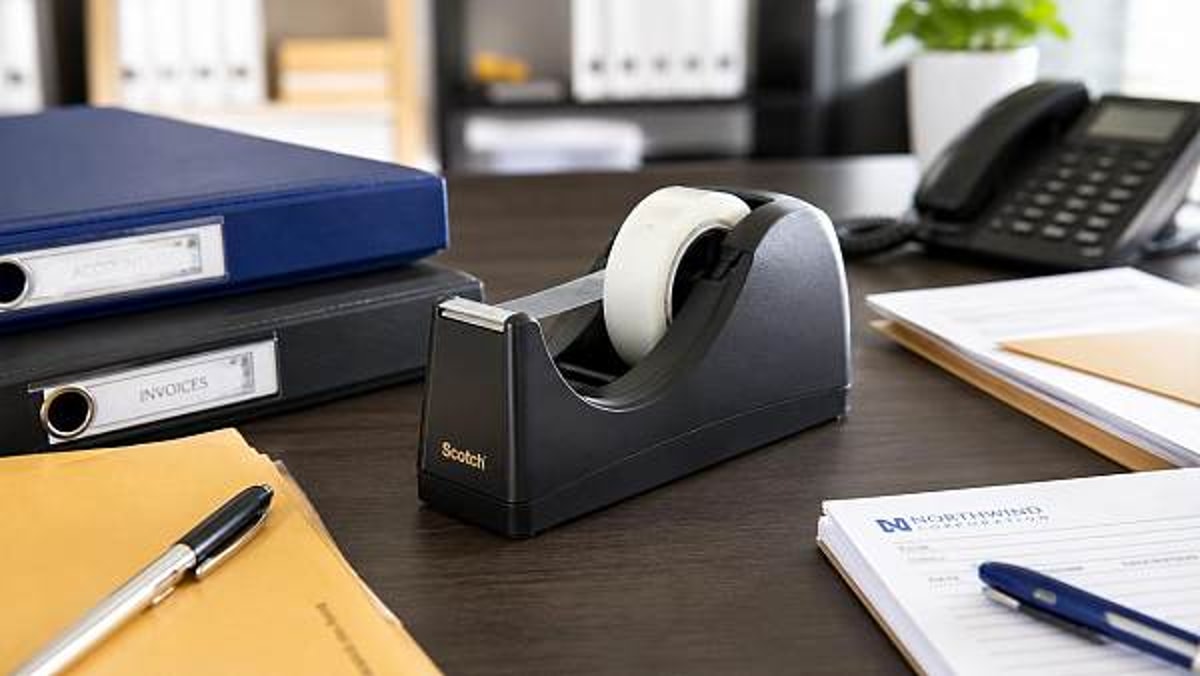
On busy workstations, unstable tools slow people down and create small but costly frustrations. Office tape dispensers that stay stable on fast-paced desks help maintain workflow, improve one-handed use, and support a cleaner, more efficient setup. This guide explores what makes a dispenser reliable, from weighted bases to material quality, so information-driven buyers can compare options with confidence.
Why do stable office tape dispensers matter more than many buyers expect?
For many procurement teams, office tape dispensers look like a low-priority line item. Yet in offices, schools, front desks, mailrooms, hospitality back offices, and administrative service centers, they are handled dozens or even hundreds of times each day. When a dispenser slides, tips, or requires two-handed operation, the result is not dramatic failure. It is repeated micro-inefficiency.
Those small disruptions add up. Reception staff preparing guest packets, school administrators assembling documents, and retail teams labeling packages all benefit from stable office tape dispensers that stay in place under pressure. For information researchers comparing supply options, the real question is not only price. It is whether the dispenser supports smooth repetitive use in a commercial setting.
In broader commercial sourcing, durable desktop tools support brand consistency and operational order. A premium office environment, smart campus, hotel business center, or managed workspace is judged not only by large investments such as furniture or digital systems, but also by the reliability of the everyday tools placed on desks.
- They reduce hand repositioning during repetitive tasks such as sealing envelopes, labeling folders, or preparing event materials.
- They lower the chance of tape waste caused by poor feed angle, sudden movement, or jagged cuts.
- They help maintain desk order in fast-paced environments where every item must remain exactly where users expect it.
- They can support a cleaner aesthetic in client-facing offices, educational institutions, and hospitality spaces.
What makes office tape dispensers stay stable on fast-paced desks?
Stability is not the result of one feature alone. Buyers evaluating office tape dispensers should look at the relationship between base weight, anti-slip contact area, center of gravity, tape roll resistance, and blade placement. A dispenser may look substantial online, but if its mass sits too high or its base pads are too narrow, it may still shift during normal use.
Core design factors that influence stability
- Weighted base: Heavier bases usually improve one-handed dispensing, especially on laminate, coated wood, metal, or composite desktop surfaces.
- Base footprint: A wider footprint spreads force more effectively and helps prevent tipping when users pull tape at an angle.
- Anti-slip pads: Rubber or similar friction-enhancing contact points reduce movement, but they must remain durable and resist hardening over time.
- Material rigidity: Thin plastic shells can flex during use, while metal or reinforced composite bodies tend to hold alignment better.
- Blade geometry: The cut edge should allow a clean tear without excessive pulling force, which is often what causes unstable units to slide.
Commercial buyers should also consider desk behavior. A dispenser used in a quiet executive office faces different demands than one used at a shared admin station, print room, school office, or logistics support desk. In faster environments, stability depends on repeated side pulls, quick releases, and less controlled handling.
The comparison below helps research teams identify how design choices typically affect performance when selecting office tape dispensers for commercial use.
This table shows why appearance alone is a weak buying signal. Stable office tape dispensers usually succeed because several modest engineering decisions work together. That matters for institutional sourcing, where a small defect repeated across many desks becomes a recurring operational complaint.
Which desk environments need different dispenser types?
Not all workstations behave the same way. A procurement team choosing office tape dispensers for a hotel administrative office, a university department, a shared corporate workspace, or a specialty retail back office should start with workflow intensity, user turnover, and surface conditions.
Typical use scenarios
- Front desk and reception: Visual presentation matters. Buyers often prefer stable office tape dispensers with cleaner lines, compact dimensions, and quieter tape pull behavior.
- Shared admin stations: Frequent handoff between users increases rough handling. Heavier units with broad bases are usually more suitable.
- Education and training centers: Safety, simplicity, and replacement convenience become important, especially when multiple departments need standardized supplies.
- Mailrooms and document processing areas: Speed is critical. Tape dispensers must maintain position during repeated pulls and quick cutting cycles.
- Premium commercial interiors: The dispenser should fit the overall material palette and desk organization concept, not look like an afterthought.
In commercial sourcing, this scenario-based approach avoids overbuying and underbuying. A highly decorative metal unit may work well in a client-facing suite but be less practical in a busy document station if it is harder to reload. On the other hand, a very basic lightweight model may create constant friction in high-frequency use.
The following table helps compare office tape dispensers by application setting rather than by generic marketing claims.
For buyers responsible for many locations, application mapping is often more valuable than selecting one universal model. It helps create a rational category strategy: premium front-of-house options for visible desks and robust workhorse dispensers for operational zones.
How should information-driven buyers compare specifications?
Many product listings for office tape dispensers provide limited detail. That forces buyers to infer performance from photos, which is risky. A more reliable approach is to request or compare a short set of practical specifications tied directly to usability.
Useful specification checkpoints
- Confirm approximate unit weight or weighted-base construction. Even if exact figures vary by supplier, the difference between light and substantial is critical.
- Check compatible tape core and tape width. This reduces mismatch between existing supply inventory and dispenser format.
- Review base material and anti-slip solution. Ask whether the contact pads are replaceable, molded in, or adhesive-attached.
- Ask about blade type and replacement policy if relevant for commercial maintenance plans.
- Consider finish quality for visible environments. Surface scratching, discoloration, or seam quality can affect perception in hospitality and executive spaces.
Where sourcing spans multiple countries or facilities, standardization matters. Global Commercial Trade supports this style of evaluation by connecting product selection with broader commercial fit: visual coherence, operational reliability, supplier communication, and sourcing clarity across categories such as office and educational supplies.
What procurement mistakes are common when sourcing office tape dispensers?
The most common mistake is treating all office tape dispensers as interchangeable. This often leads to poor desk performance, inconsistent user experience, and fragmented replacement purchasing. Another mistake is buying solely from image-based catalogs without asking how the dispenser behaves under commercial use conditions.
Frequent sourcing errors
- Selecting the lowest-cost unit without considering tape waste, replacement frequency, or staff frustration.
- Ignoring desk surface differences. A unit that grips well on one material may slide on another.
- Failing to match dispenser capacity with local tape formats already used in the organization.
- Overlooking appearance in customer-facing areas where small desktop details influence brand perception.
- Not requesting samples for high-volume or multi-site deployment decisions.
A careful procurement process does not need to be complicated. It simply needs to move beyond unit price and include real-use questions. For information researchers, this is where supplier-side intelligence becomes valuable. A sourcing partner that understands commercial environments can help narrow options before buyers spend time evaluating unsuitable products.
How do cost, durability, and alternatives affect the final decision?
Price differences among office tape dispensers may seem minor, but the cost logic changes when purchasing across departments, campuses, hospitality sites, or administrative networks. A slightly higher initial cost may be justified if the dispenser reduces replacement cycles, tape waste, or user complaints. Conversely, premium styling may not be necessary for back-office zones.
Alternatives also deserve attention. Desktop dispensers are not the only option. In some fast-moving settings, handheld dispensers or pre-cut adhesive solutions may be used. However, these alternatives serve different workflows. For desks where quick, repeat, one-handed access matters, stable office tape dispensers still offer strong value.
A practical budgeting framework
- Use lower-cost practical models for internal, low-visibility desks with moderate use.
- Use heavier and more durable models for high-frequency document stations and shared work areas.
- Use visually refined models for guest-facing or executive environments where aesthetics matter.
This tiered approach can improve cost control without forcing one product type into every use case. It is especially useful for buyers managing mixed environments across office, education, hospitality, and commercial support spaces.
Are there standards, compliance, or quality checks worth asking about?
Office tape dispensers are not usually purchased under the same strict regulatory lens as electrical equipment, but commercial buyers still benefit from basic quality and material diligence. Depending on the sourcing region and material composition, buyers may ask suppliers about product safety, restricted substance conformity where relevant, packaging durability, and consistency of production across batches.
For institutional and international procurement, practical quality checks often matter more than abstract claims. Ask whether the blade is securely mounted, whether the body shows consistent molding or finishing, whether the anti-slip components remain attached after repeated use, and whether replacement parts or matching models will remain available for follow-on orders.
Useful quality-control questions
- Is the dispenser suitable for the tape widths and roll sizes used in our offices?
- How consistent is the base weight and finish across production lots?
- What packaging method protects the product during international transport and warehouse handling?
- Can samples be reviewed for grip, cut quality, and surface finish before volume purchase?
FAQ: what do buyers usually ask about office tape dispensers?
How do I know if office tape dispensers will really stay stable on smooth desks?
Look beyond product photos. Ask about base weight, anti-slip pad material, and overall footprint. Smooth laminate and coated desks often expose the weaknesses of lightweight models first. Sample testing on the actual desk surface is the most reliable method before bulk procurement.
Are metal office tape dispensers always better than plastic ones?
Not always. Metal can improve rigidity and weight, but a well-designed reinforced plastic model with a properly weighted base may perform very well. The better question is how the full structure behaves during one-handed pulling, not what the outer shell is made from alone.
What matters most for multi-site office supply standardization?
Prioritize tape compatibility, stable performance, durable base grip, and consistent replenishment availability. If different sites use different tape formats, harmonizing dispenser specifications can reduce ordering errors and support cleaner procurement management.
Should reception desks use the same dispenser as back-office stations?
Often no. Reception desks may need a more refined appearance and smaller footprint, while back-office stations may need heavier, harder-working office tape dispensers optimized for speed and repetitive handling. Segmenting by use case usually produces better value than choosing one model for all desks.
Why work with a sourcing partner that understands commercial environments?
For information researchers, the challenge is rarely finding a tape dispenser. The challenge is filtering options efficiently, understanding which specifications matter, and aligning product choice with the desk environment, purchasing structure, and image of the space. That is especially true when office supplies are part of a broader commercial project rather than a one-off retail purchase.
Global Commercial Trade supports this process by combining product intelligence with cross-sector sourcing perspective. Whether the requirement comes from office and educational supplies, hospitality administration, campus operations, or premium commercial interiors, the goal is the same: identify office tape dispensers that are practical, stable, visually appropriate, and easier to source with confidence.
Why choose us
If you are comparing office tape dispensers for fast-paced desks, we can help you move from generic product browsing to decision-ready sourcing. You can consult with us on specification confirmation, model comparison for different desk environments, compatible tape formats, sample review options, expected delivery timing, OEM or customization questions, packaging requirements for international shipment, and quotation planning for multi-site procurement.
This is especially useful for buyers who need to balance appearance, daily usability, and supply reliability across commercial spaces. Instead of reviewing countless similar listings, you can focus on the few details that actually determine whether office tape dispensers will stay stable, work smoothly, and fit your operational setting.
Search News
Hot Articles
Popular Tags
Need ExpertConsultation?
Connect with our specialized leisureengineering team for procurementstrategies.
Recommended News
 May 06, 2026Office tape dispensers that stay stable on fast-paced desksOffice tape dispensers that stay stable on fast-paced desks improve workflow, reduce tape waste, and support one-handed use. Compare smart, durable options now.● Institutional Buyer
 May 06, 2026Bubble envelopes bulk: the size mismatch that wastes shipping spendBubble envelopes bulk can cut costs—or quietly increase them. Learn how size mismatch drives shipping waste, damage risk, and packing delays, and how right-sizing protects margins.● Institutional Buyer
 May 06, 2026Office staplers bulk orders: why jam rates matter more than priceOffice staplers bulk buyers should compare jam rates before unit price. Learn how reliability, durability, and staple compatibility reduce hidden costs and improve workflow.● Institutional Buyer
 May 06, 2026Custom rubber stamps: what affects imprint clarity the mostCustom rubber stamps deliver the best imprint clarity when material quality, engraving depth, ink performance, and surface match work together. Learn what to compare before you buy.● Institutional Buyer
 May 06, 2026When paper guillotines become a safety risk in daily usePaper guillotines can become serious daily safety risks in offices, schools, and print rooms. Learn how to spot hazards, improve compliance, and choose safer models.● Institutional Buyer
 May 06, 2026Why wholesale packing tape performance changes by climateWholesale packing tape performance shifts with cold, heat, and humidity. Learn how climate affects adhesion, unwind, and seal reliability to choose the right tape and reduce shipping failures.● Institutional Buyer
 May 06, 2026Self inking stamps wholesale: what users notice after six monthsSelf inking stamps wholesale buyers often learn the truth after six months. Discover what users notice about durability, imprint quality, refills, and supplier reliability before you source.● Institutional Buyer
 May 06, 2026Hole punches wholesale: metal build or low-cost plastic?Hole punches wholesale: compare durable metal and low-cost plastic models for offices, schools, and bulk buyers. Discover which option delivers better value, fit, and long-term savings.● Institutional Buyer
 May 05, 2026Cork bulletin boards: why frame quality matters over board sizeCork bulletin boards deliver better long-term value when frame quality comes first. Learn how stronger materials, secure corners, and stable mounting improve durability, safety, and appearance.● Institutional Buyer
 May 05, 2026Soundproof phone booths: when sound ratings mislead office plansSoundproof phone booths can mislead office plans when ratings are taken at face value. Learn how to compare privacy, ventilation, placement, and compliance before you buy.● Institutional Buyer
 May 05, 2026Laser printer toner bulk: what affects page yield mostLaser printer toner bulk page yield depends on more than toner volume. Discover the top factors affecting real output and make smarter, lower-cost sourcing decisions.● Institutional Buyer
 May 05, 2026Science lab furniture: small design choices with big safety impactScience lab furniture shapes lab safety in ways many teams overlook. Discover smart design choices that reduce risk, improve compliance, and support efficient long-term performance.● Institutional Buyer
 May 05, 2026Wholesale ink cartridges: remanufactured vs compatible in real useWholesale ink cartridges compared in real use: remanufactured vs compatible on print quality, yield, firmware risk, and sourcing value—helping procurement teams buy smarter.● Institutional Buyer
 May 05, 2026Cash drawers wholesale: what causes jams at checkoutCash drawers wholesale guide: uncover the real causes of checkout jams, from latch design to POS compatibility, and learn how to source reliable drawers that reduce downtime.● Institutional Buyer
 May 05, 2026Office acoustic pods or open booths: which solves noise betterOffice acoustic pods vs. open booths: discover which solution controls noise better for privacy, focus, and hybrid calls, and make a smarter office planning decision.● Institutional Buyer
 May 05, 2026Office LED panel lights that cut glare without dim workspacesOffice LED panel lights that reduce glare without sacrificing brightness. Discover how to choose low-glare, high-comfort lighting for productive, compliant, and modern office spaces.● Institutional Buyer
 May 05, 2026Chemical resistant lab tops: which materials hold up bestChemical resistant lab tops compared: discover whether epoxy resin, phenolic resin, or stainless steel holds up best for harsh chemicals, heat, and daily lab demands.● Institutional Buyer
 May 05, 2026How to compare drafting tables wholesale without overbuyingDrafting tables wholesale comparison starts with MOQ, specs, and supplier reliability. Learn how to avoid overbuying, reduce inventory risk, and choose better-value sourcing options.● Institutional Buyer
 May 04, 2026Ergonomic Office Chairs Wholesale: Comfort Claims vs Real SupportErgonomic office chairs wholesale: learn how to verify real support beyond comfort claims with fit, adjustability, durability, and compliance insights for smarter commercial buying.● Institutional Buyer
 May 04, 2026Modular Office Workstations: Flexibility Can Add Setup CostsModular office workstations can improve flexibility, but setup costs often rise through installation, power, data, and rework. Learn when the added investment truly pays off.● Institutional Buyer
 May 04, 2026Steel Filing Cabinets: Why Some Drawers Jam Too EarlySteel filing cabinets often jam early due to weak slides, poor leveling, overload, or lock issues. Discover what to check before buying and how to avoid costly drawer failures.● Institutional Buyer
 May 04, 2026Office Network Racks: Airflow Problems Start With Bad PlanningOffice network racks can fail early when airflow is ignored. Learn the key planning checklist to prevent overheating, reduce maintenance risks, and build a more reliable office network.● Institutional Buyer
 May 04, 2026Office Partitions Wholesale: Open Plan Savings, Closed Office NeedsOffice partitions wholesale helps project managers cut fit-out costs, speed delivery, and balance open-plan efficiency with private office performance. Explore smarter commercial workspace solutions.● Institutional Buyer
 May 04, 2026Conference Room Tables: Common Layout Mistakes to AvoidConference room tables can make or break meeting flow. Discover common layout mistakes to avoid and plan smarter spaces for collaboration, AV integration, and professional results.● Institutional Buyer