Recorders flutes bulk: tuning consistency is often the real issue
When evaluating recorders flutes bulk purchases, price and appearance rarely determine long-term satisfaction. For technical assessors, tuning consistency is often the real issue, affecting classroom use, ensemble balance, return rates, and supplier credibility. This article examines why pitch stability varies across batches and what procurement teams should verify before approving large-volume sourcing decisions.
What tuning consistency means in large-volume recorder sourcing
In the context of recorders flutes bulk evaluation, tuning consistency refers to how closely instruments from the same order match an expected pitch standard and how reliably each note centers across the usable range. For technical assessment teams, this is not a narrow musical detail. It is a functional quality indicator that affects whether a shipment performs as a coherent set in schools, training centers, youth ensembles, and commercial education programs.
A recorder can look well finished, pass a simple visual inspection, and still create serious performance issues if note placement is unstable. In bulk supply, even small pitch deviations become amplified. One unit may play acceptably on its own, but twenty or fifty units used together can reveal sharp upper notes, flat low notes, inconsistent response, or noticeable differences in overall tuning reference such as A=440 or A=442 alignment. This is why experienced buyers in the Pro Audio & Musical Instruments sector increasingly treat tuning consistency as a batch-level control issue rather than an isolated product flaw.
Why the industry pays attention to this issue now
Global sourcing conditions have changed. Buyers are under pressure to balance cost efficiency with reliability, especially when supplying educational institutions, hospitality entertainment programs, and multi-site retail channels. In this environment, recorders flutes bulk orders are often placed with OEM or ODM factories serving multiple brands, which increases the importance of process discipline, tooling control, and production repeatability.
For intelligence-led sourcing platforms such as GCT, the issue fits a wider commercial reality: technical quality now shapes brand trust as much as price. A distributor that receives a visually acceptable but acoustically inconsistent batch may face returns, warranty friction, and damaged buyer confidence. For institutional buyers, inconsistency can disrupt curriculum planning, ensemble rehearsals, and standardized teaching outcomes. In other words, tuning consistency is not just a musical concern; it is a commercial reliability issue across sourcing, operations, and end-user experience.
Where pitch variation in recorders flutes bulk orders usually comes from
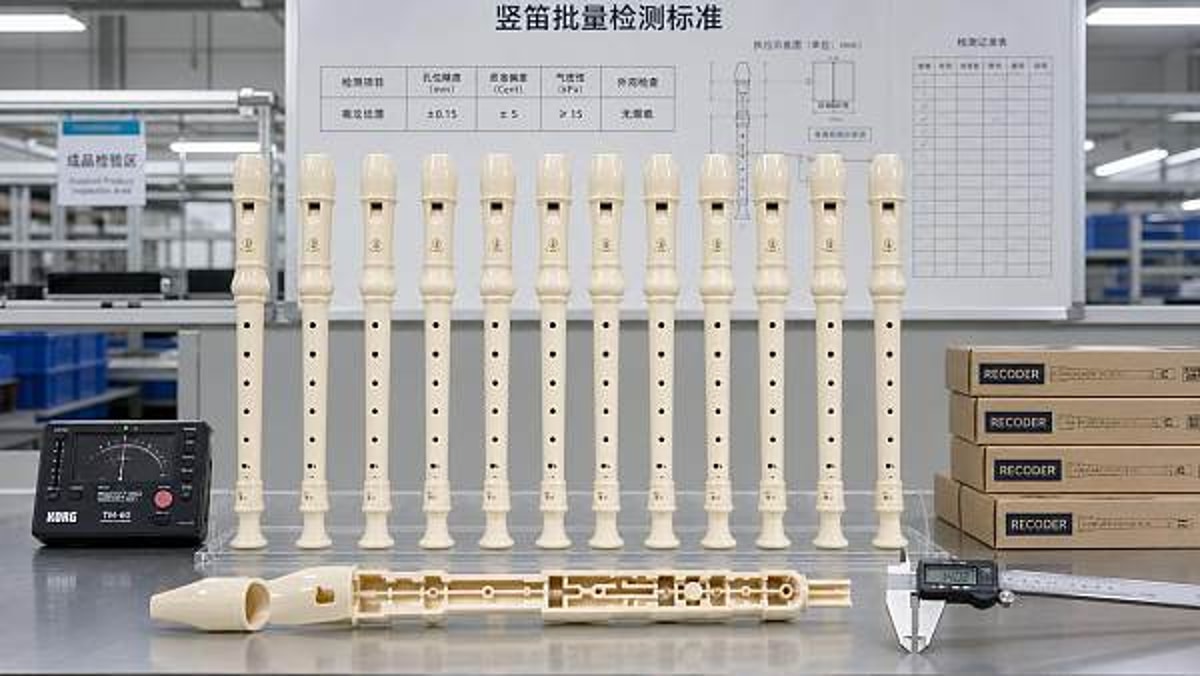
Pitch instability in bulk recorder supply usually results from accumulated manufacturing variation rather than one dramatic defect. The most common source is dimensional inconsistency in the bore, windway, labium, or finger hole placement. Because the recorder is acoustically sensitive, slight differences in internal geometry can shift tuning across multiple notes. If tooling wear is not monitored or molds are not maintained consistently, the same model can behave differently from batch to batch.
Material behavior is another factor. Plastic recorders can vary depending on resin composition, cooling control, shrinkage rates, and finishing processes. Wooden models add complexity because moisture content, grain structure, machining response, and post-production stabilization all influence final tuning. Even if the nominal design is correct, production variability can move the result away from the target intonation profile.
Assembly and finishing also matter. Headjoint fit, joint sealing, surface burrs near tone holes, and uneven voicing adjustments can change response and pitch tendency. In lower-cost production environments, manual finishing may differ from worker to worker, creating inconsistency within the same shipment. This is why technical assessors should avoid assuming that an approved pre-production sample guarantees stable mass output unless process controls are documented.
A practical overview of tuning risk factors
The table below summarizes the quality areas that most often influence tuning consistency in recorders flutes bulk projects.
Why tuning consistency has real business value
For technical evaluators, the value of tuning consistency is measurable. In education supply, matched pitch reduces setup time for teachers and improves group learning results. In entry-level ensemble use, players can focus on fingering and rhythm instead of compensating for badly placed notes. In retail and distribution, more consistent products mean fewer complaints framed as “hard to play” or “poor sound,” which often mask intonation defects.
There is also a sourcing credibility dimension. Suppliers that can prove stable tuning across recorders flutes bulk production are demonstrating process maturity. That matters to procurement teams managing repeat contracts, private-label programs, or institutional frameworks. A stable product creates predictability in reorder planning, after-sales support, and market positioning. For premium commercial buyers, especially those operating in quality-sensitive sectors, this stability is part of the supplier’s trust signal.
Typical use cases and what each one demands
Not all bulk recorder programs require the same level of acoustic control. The application should shape the evaluation standard.
How technical assessors should evaluate supplier claims
When reviewing recorders flutes bulk proposals, technical teams should request more than a generic statement that instruments are “professionally tuned.” That language is too vague to support a sourcing decision. A stronger evaluation approach asks the supplier to define its pitch standard, test method, sample size, environmental conditions, and acceptance range for key notes.
An effective assessment protocol usually includes random sampling from multiple cartons, not only top-of-batch approval samples. Instruments should be checked by a competent player or acoustic technician using a consistent airflow approach and a calibrated tuner. The objective is not to demand elite conservatory-level precision from every educational recorder, but to verify that the product is appropriate for its declared market and consistent within that standard.
It is also useful to compare first-article samples, pilot-run units, and final production units. Many problems in recorders flutes bulk projects emerge only when volume production begins. A supplier that cannot explain process drift between sample approval and shipment may not have sufficient manufacturing control for long-term cooperation.
Signs of a mature factory process
Factories with reliable acoustic consistency tend to show the same operational traits. They maintain tooling and document wear intervals. They control raw material input rather than switching resin or wood lots without validation. They standardize finishing of the windway and labium. They use traceable in-process inspections instead of relying only on final packing checks. And they can explain which notes are most sensitive on the model being supplied and how they manage those risks.
For B2B buyers, this matters because a supplier’s technical transparency is often more valuable than a polished catalog. In sectors where commercial reputation depends on quality continuity, the ability to discuss tolerances, correction methods, and failure patterns is a strong indicator of real capability. This aligns with the broader GCT sourcing perspective: expertise-backed verification reduces procurement risk more effectively than marketing claims.
Practical checkpoints before approving a bulk order
Before signing off on recorders flutes bulk production, technical assessors should confirm several practical points. First, verify the intended user level: beginner classroom, intermediate training, or branded retail supply. Second, confirm the pitch reference and expected playing conditions, since temperature and blowing style affect readings. Third, require a documented sampling plan covering more than a token number of pieces. Fourth, define what constitutes a rejectable intonation issue at the note level, not just at the overall instrument level.
Fifth, request evidence of consistency across separate production dates if the order will be delivered in stages. Sixth, examine whether packaging, storage, or transit conditions could affect moisture balance or part fit, especially for wooden units. Finally, connect technical approval to commercial terms. If tuning nonconformity exceeds the agreed threshold, the contract should specify remedies such as replacement, sorting, credit, or rework responsibility.
Common mistakes in assessment
One common mistake is over-relying on visual quality. Clean molding, polished surfaces, and attractive packaging do not guarantee acoustic consistency. Another is testing only one sample and assuming the batch will follow. A third is using an evaluator without recorder-specific familiarity; some apparent tuning faults are actually response or fingering issues, while real systemic pitch errors may be missed by a non-specialist.
Another frequent problem is failing to distinguish between acceptable educational tolerance and true production inconsistency. A buyer should not impose unrealistic criteria, but neither should broad tolerance language be used to excuse unstable manufacturing. The best approach is application-based evaluation supported by documented evidence.
Final perspective for sourcing teams
The central lesson in recorders flutes bulk sourcing is straightforward: tuning consistency often determines whether a large order succeeds in real use. It affects musical usability, institutional satisfaction, return exposure, and supplier reputation. For technical assessment personnel, the most useful mindset is to treat intonation as a production-system outcome, not a cosmetic afterthought.
If your organization is comparing suppliers, launching a private-label line, or qualifying factories for education and commercial distribution, the right next step is to build acoustic verification into the sourcing process from the start. With structured sampling, defined tolerances, and transparent supplier communication, procurement teams can reduce hidden quality risk and select recorders flutes bulk partners that support dependable long-term performance.
Search News
Hot Articles
Popular Tags
Need ExpertConsultation?
Connect with our specialized leisureengineering team for procurementstrategies.
Recommended News
 May 06, 2026Recorders flutes bulk: tuning consistency is often the real issueRecorders flutes bulk buyers should look beyond price: tuning consistency drives classroom performance, fewer returns, and stronger supplier trust. Learn what to verify before sourcing.● Pro Audio Engineer
 May 06, 2026Wholesale musical instruments for schools without uneven qualityWholesale musical instruments for schools with consistent quality: learn how to compare suppliers, verify standards, cut replacement costs, and buy durable classroom-ready instruments with confidence.● Pro Audio Engineer
 May 01, 2026China Table Tennis Team Departs for London; BS EN 14904:2021 Takes EffectBS EN 14904:2021 takes effect 1 May 2026 — vital for exporters, manufacturers & UK importers of commercial table tennis tables. Act now to avoid port detentions.● Pro Audio Engineer
 May 01, 2026London Table Tennis World Championships: RoHS 3 Compliance Urgent for EU-Bound Ping Pong EquipmentRoHS 3 compliance is urgent for EU-bound ping pong equipment ahead of the 2026 London Table Tennis World Championships — act now to avoid delays, rejections & costly retesting.● Pro Audio Engineer
 Apr 30, 2026How to vet a musical instruments exporter before first ordersmusical instruments exporter vetting guide: learn how to assess quality control, compliance, lead times, and supplier reliability before first orders.● Pro Audio Engineer
 Apr 30, 2026Instrument cables that reduce noise without overspendingInstrument cables that cut noise without inflating costs. Discover how buyers can choose durable, low-noise options for hospitality, schools, events, and commercial venues.● Pro Audio Engineer
 Apr 30, 2026Music accessories people replace too often and whyMusic accessories are often replaced too soon. Learn which items truly wear out, how to spot real failure signs, and how smarter buying can cut costs and improve reliability.● Pro Audio Engineer
 Apr 30, 2026Music production tools that actually speed up a home studioMusic production tools that truly speed up a home studio: compare workflow-saving gear, avoid costly mistakes, and build a faster, smarter setup with confidence.● Pro Audio Engineer
 Apr 29, 2026String Instruments Compared: What Really Affects Tone and DurabilityString instruments compared for tone and durability: learn how materials, construction, hardware, and setup affect long-term performance for schools, venues, rentals, and sourcing teams.● Pro Audio Engineer
 Apr 29, 2026Wind Instruments Maintenance Tips That Prevent Costly RepairsWind instruments maintenance tips that help teams prevent leaks, corrosion, and pad failure. Learn practical care steps to reduce repair costs and keep instruments performance-ready.● Pro Audio Engineer
 Apr 29, 2026Percussion Instruments Buying Guide: Sound, Build, and ValuePercussion instruments buying guide for schools, venues, and studios—compare sound, build quality, durability, and total value to source smarter and avoid costly mistakes.● Pro Audio Engineer
 Apr 29, 2026How to Find Reliable Musical Instruments WholesaleMusical instruments wholesale made safer: learn how to vet a musical instruments manufacturer, compare suppliers, and source reliable musical instruments for schools and bands with confidence.● Pro Audio Engineer
 Apr 29, 2026Musical Instruments for Schools on BudgetMusical instruments for schools on a budget: compare musical instruments for bands, wholesale options, and how to choose a reliable musical instruments manufacturer for lasting value.● Pro Audio Engineer
 Apr 29, 2026OEM or ODM Musical Instruments ManufacturerFind the right musical instruments manufacturer for bands, schools, and wholesale buyers. Compare OEM vs ODM options, customization, quality control, and sourcing strategies.● Pro Audio Engineer
 Apr 29, 2026Which Musical Instruments Fit Small BandsMusical instruments for bands: explore smart lineups for schools, venues, and buyers comparing musical instruments wholesale and a trusted musical instruments manufacturer.● Pro Audio Engineer
 Apr 29, 2026Musical Instruments Wholesale Buying GuideMusical instruments wholesale guide for bands, schools, and distributors: compare musical instruments manufacturers, MOQ, quality, compliance, and sourcing strategies for smarter bulk buying.● Pro Audio Engineer
 Apr 29, 2026How to Source Musical Instruments for SchoolsMusical instruments for schools: learn how to compare musical instruments wholesale options, choose a trusted musical instruments manufacturer, and source durable musical instruments for bands with confidence.● Pro Audio Engineer
 Apr 29, 2026How to Choose a Musical Instruments ManufacturerFind the right musical instruments manufacturer for bands, schools, and wholesale buyers. Compare quality, OEM/ODM options, compliance, and lead times to source with confidence.● Pro Audio Engineer
 Apr 29, 2026How to Choose Musical Instruments for BandsMusical instruments for bands guide: compare musical instruments manufacturer options, wholesale terms, and musical instruments for schools to source durable, high-value solutions.● Pro Audio Engineer
 Apr 26, 2026Musical instruments manufacturer compliance: EU RoHS vs. US CPSIA documentation gapsMusical instruments manufacturer? Close EU RoHS vs. US CPSIA documentation gaps—critical for bands, schools & trampoline park suppliers. Avoid disqualification.● Pro Audio Engineer
 Apr 26, 2026High-quality musical instruments: why serial number verification matters for resale valueHigh-quality musical instruments for bands and schools rely on serial number verification to protect resale value, authenticity, and compliance—trusted by top suppliers worldwide.● Pro Audio Engineer
 Apr 26, 2026Musical instruments supplier lead times: why 8-week delivery now means ‘in stock’Musical instruments supplier lead times hit 8 weeks—now meaning 'in stock.' Compare trampoline park supplier, indoor playground manufacturer & more for assured readiness.● Pro Audio Engineer
 Apr 26, 2026Musical instruments for schools: what happens when warranty service requires shipping overseasMusical instruments for schools & bands: Avoid costly overseas warranty shipping. Discover high-quality, service-backed instruments from trusted manufacturers and suppliers.● Pro Audio Engineer
 Apr 26, 2026Musical instruments manufacturer transparency: where are your components really made?Discover how top musical instruments manufacturer & trampoline park supplier ensure component transparency—boost safety, compliance, and ROI for bands, schools, and indoor playground installations.● Pro Audio Engineer