Commercial playground equipment school projects often underestimate
Many school construction teams discover too late that commercial playground equipment school projects often underestimate site planning, compliance, lifecycle costs, and installation complexity. For project managers and engineering leads, early sourcing decisions can directly affect safety, budget control, and long-term value. This article explores the hidden risks and strategic considerations behind smarter playground procurement.
In practical terms, the biggest mistake is not choosing the wrong slide or climbing frame. It is treating the playground as a late-stage product purchase instead of a coordinated construction package. When that happens, budgets drift, approvals slow down, drainage conflicts appear, safety surfacing gets compromised, and the final asset may cost far more to own than originally expected.
For teams managing a commercial playground equipment school project, the right approach is to evaluate the playground through the same lens used for other critical site systems: compliance, durability, installation dependencies, maintenance load, supplier capability, and total lifecycle value. That is where better decisions are made.
Why school playground projects are so often underestimated
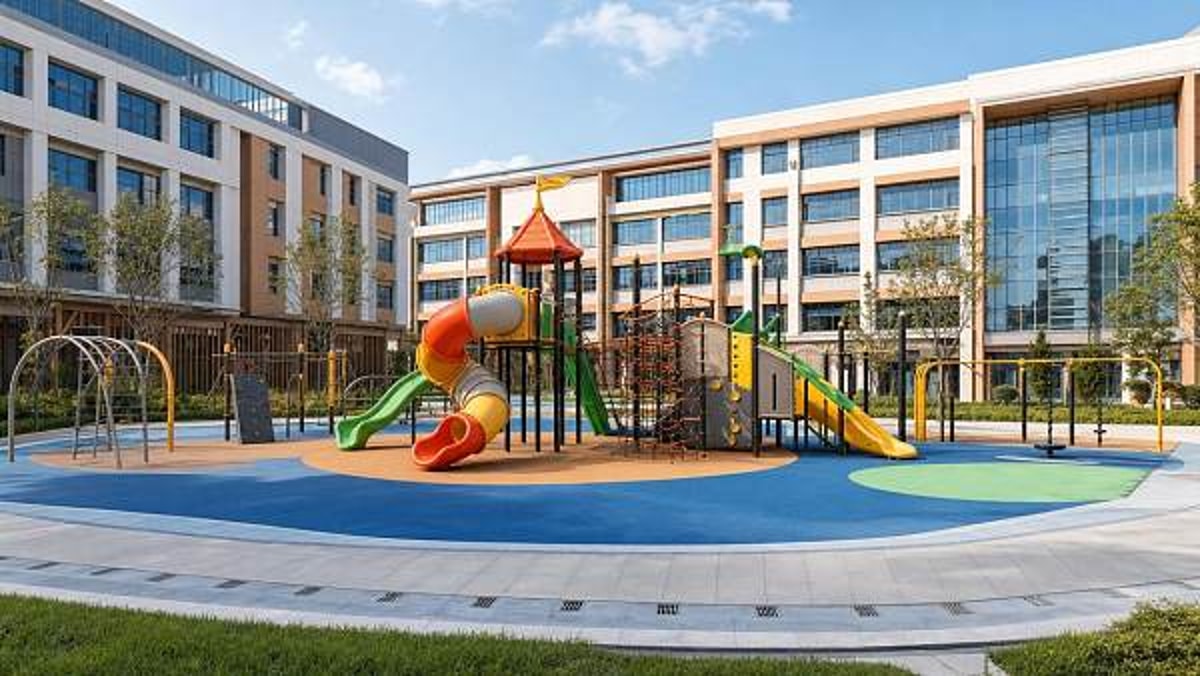
School playgrounds are frequently assumed to be straightforward because they look simpler than classrooms, sports halls, or MEP systems. Yet a playground combines civil works, safety engineering, child-use design, accessibility planning, procurement coordination, and long-term asset management. The visible equipment is only one part of the project.
Many project teams also inherit unrealistic assumptions early in planning. A concept image may suggest a fixed budget before soil conditions, age-group zoning, fall-height requirements, or local code reviews are understood. By the time these issues surface, redesign becomes expensive and program schedules become tight.
Another common reason is fragmented responsibility. Architects may define layout intent, procurement teams may compare quotes, contractors may focus on installation access, and school operators may think about supervision and maintenance. If nobody integrates these viewpoints early, the commercial playground equipment school package gets under-scoped.
The real search intent behind “commercial playground equipment school”
When project managers and engineering leads search this term, they are rarely looking only for product catalogs. Their actual intent is broader and more practical. They want to know what to buy, what to watch for, how to avoid mistakes, and how to defend their recommendation internally.
In most cases, they are trying to answer questions such as: Which equipment type is appropriate for a school setting? What standards apply? What hidden costs will appear after the purchase order? How should the site be prepared? Which supplier can support drawings, certifications, logistics, and installation requirements? And what option offers the best long-term value rather than the lowest headline price?
That means the most useful content is not generic discussion about play benefits. It is structured guidance that supports evaluation, procurement planning, and risk reduction. For a professional reader, decision clarity matters more than marketing language.
What project managers care about most before approval
For this audience, safety compliance is usually the first filter. If a supplier cannot clearly document testing standards, material specifications, surfacing compatibility, and age-appropriate design, the proposal will not survive internal review. Schools operate under intense reputational and operational scrutiny, so uncertified or poorly documented systems create unacceptable risk.
The second concern is budget predictability. Teams need to know not only equipment cost, but also freight, customs exposure, foundations, drainage works, safety surfacing, edge restraints, installation labor, inspections, and post-install adjustment. A cheap quote that excludes these items is not a savings opportunity; it is a budget trap.
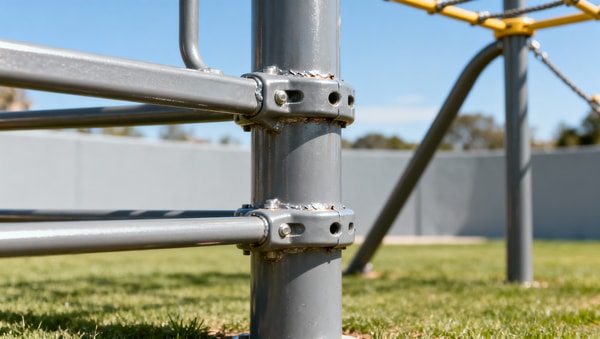
Third comes durability and maintenance. School environments are high-frequency, high-wear settings. Equipment must withstand repeated daily use, UV exposure, rain, cleaning, and occasional misuse. Procurement teams therefore care about coating quality, corrosion resistance, hardware consistency, spare parts availability, and realistic maintenance intervals.
Finally, they care about supplier execution. Even strong products can fail at project level if the vendor cannot provide shop drawings, anchoring details, engineering support, lead-time transparency, packaging quality, and responsive after-sales service. In global sourcing, capability gaps often appear after contract award, when they are hardest to fix.
The costs that are usually missed in early budgeting
The most common budgeting error in a commercial playground equipment school project is focusing on equipment unit price while ignoring implementation cost. Site preparation alone can vary significantly depending on slope correction, compaction, root removal, utility conflicts, and access limitations for machinery.
Safety surfacing is another major blind spot. Whether the project uses poured-in-place rubber, rubber tiles, engineered wood fiber, synthetic turf systems, or another solution, surfacing performance must match fall-height requirements and maintenance realities. Surfacing can become a substantial share of the project budget, especially when drainage layers and edge detailing are included.
Freight and logistics also deserve more attention. Oversized components, mixed-material packaging, remote school locations, and phased campus construction can all increase delivery complexity. If the procurement schedule ignores port delays, unloading requirements, storage conditions, or on-site sequencing, labor inefficiencies and damage risk rise quickly.
Teams should also budget for inspection, punch-list correction, and maintenance readiness. Replacement fasteners, touch-up finishes, spare components, and staff training are small compared with total project cost, but they make a major difference to commissioning speed and operational continuity.
Compliance is not a checklist item; it shapes design and procurement
Compliance is often approached too late, as if it were a final paperwork task. In reality, compliance influences equipment selection, spacing, foundations, surfacing, guardrail design, accessibility features, and use-zone planning from the beginning. If these issues are deferred, redesign can affect both cost and schedule.
Standards vary by market, so international buyers should confirm which testing and safety frameworks apply in the school’s jurisdiction. Beyond certificates, teams should ask how the equipment configuration, installation method, and surfacing system together satisfy the intended standard. A certificate for one product component does not automatically validate the entire installed playground.
Accessibility should be treated in the same integrated way. For schools, inclusive play is not only a social value issue but often a planning, brand, and stakeholder expectation. Accessible routes, transfer points, sensory elements, and mixed-challenge play opportunities should be designed into the concept rather than added after budget cuts have already happened.
Site conditions can change the entire equipment decision
Not every playground product fits every campus. Soil conditions, water movement, wind exposure, sun intensity, and adjacent circulation patterns all influence what should be specified. A design that works well in a catalog may underperform badly on a constrained or poorly drained school site.
Drainage is especially important. Standing water shortens surfacing life, affects usability, and may create safety issues. Equipment layout should be coordinated with grading strategy, stormwater behavior, and foundation design. This is why the playground should be reviewed alongside landscape and civil packages, not isolated as an afterthought.
Supervision lines also matter. Schools need layouts that allow teachers and staff to monitor activity efficiently. Overly dense configurations, hidden zones, and mixed-age conflict points may reduce operational safety even when the equipment itself meets technical standards.
How to evaluate suppliers beyond the catalog
For commercial buyers, supplier evaluation should focus on execution reliability as much as product appeal. Ask whether the manufacturer has completed comparable school or institutional projects, whether it can customize layouts responsibly, and whether it can provide stable quality across repeated orders.
Documentation quality is a strong indicator. Serious suppliers can usually provide detailed technical drawings, material breakdowns, hardware specifications, coating information, recommended installation procedures, and maintenance guidelines without delay. Vague answers at tender stage often become larger problems during fabrication or installation.
It is also wise to assess how the supplier handles OEM or ODM requests. Custom branding, school color schemes, themed elements, or site-specific dimensions can add value, but customization must not compromise testing integrity, lead times, or spare-parts consistency. A capable partner will explain these trade-offs clearly.
For internationally sourced commercial playground equipment school packages, teams should verify packaging standards, labeling accuracy, parts traceability, and post-delivery support. If replacement components require long delays or unclear identification, the school may face extended downtime later.
A practical procurement framework for better decisions
A useful way to structure procurement is to divide evaluation into six categories: compliance, fit-for-site, total installed cost, lifecycle durability, supplier capability, and educational or user value. This creates a more defensible basis for recommendation than comparing quotes on price alone.
Under compliance, confirm standards, testing scope, accessibility provisions, and age-group suitability. Under fit-for-site, review topography, drainage, circulation, supervision needs, and climate exposure. Under total installed cost, include all construction and logistics line items, not just product cost.
Under lifecycle durability, compare material systems, finish warranties, spare-part availability, and expected maintenance effort. Under supplier capability, assess project references, engineering responsiveness, packaging quality, and installation support. Under user value, consider whether the design serves the school’s actual student profile, play patterns, and inclusion goals.
This framework helps project leaders explain why one option may be more expensive upfront but far more reliable over ten years. It also helps prevent procurement from being driven by visually attractive but operationally weak proposals.
What a smarter school playground brief should include
If teams want better quotations and fewer surprises, the tender brief must be more specific. At minimum, it should define age groups, target capacity, available footprint, desired play outcomes, accessibility expectations, local compliance requirements, preferred materials, and maintenance constraints.
The brief should also include site conditions: topographic data, drainage context, geotechnical notes if available, utility constraints, equipment access routes, and staging limitations. Without this information, suppliers can only make assumptions, and those assumptions usually create variation orders later.
Operational inputs should not be ignored. Ask school stakeholders about supervision concerns, vandalism exposure, cleaning expectations, and term-time installation restrictions. These details often determine whether a concept is truly workable in a live campus environment.
Long-term value matters more than the lowest procurement number
In education projects, asset longevity and reliability have direct financial consequences. A playground that requires frequent closure, expensive repairs, or premature surfacing replacement disrupts school operations and damages stakeholder confidence. The cheapest system at purchase can easily become the most expensive system to own.
High-value solutions usually combine durable materials, realistic maintenance planning, compliant design, and dependable supplier support. They may also offer modular replacement paths, allowing schools to refresh worn elements without replacing the entire system. That flexibility improves capital planning over time.
For project managers, the key takeaway is simple: a commercial playground equipment school project should be evaluated as a long-life operational asset, not a one-time decorative installation. When procurement decisions reflect that mindset, the result is safer delivery, more stable budgeting, and better long-term return.
Conclusion: treat the playground as infrastructure, not an accessory
School teams often underestimate commercial playground equipment because the visible product seems deceptively simple. In reality, the project sits at the intersection of safety, civil coordination, procurement discipline, child-centered design, and lifecycle asset management. That is why late decisions and incomplete scopes create such consistent problems.
For project managers and engineering leads, the best safeguard is early, structured evaluation. Define site realities, confirm compliance pathways, budget the full installed cost, and choose suppliers based on execution strength as well as product design. When these steps are taken seriously, the playground becomes a durable, defensible investment rather than a recurring project headache.
In short, smarter sourcing begins with a better question. Do not ask only which playground equipment looks best or costs least. Ask which solution is safest to deliver, easiest to maintain, best suited to the school environment, and strongest in long-term value. That is the standard that should guide every commercial playground equipment school decision.
Search News
Hot Articles
Popular Tags
Need ExpertConsultation?
Connect with our specialized leisureengineering team for procurementstrategies.
Recommended News
 May 06, 2026Commercial playground equipment school projects often underestimateCommercial playground equipment school projects often miss hidden costs, compliance, and site risks. Learn how to source safer, smarter solutions that protect budgets and deliver long-term value.● Theme Park Strategist
 May 06, 2026CPSC Recalls 3 Chinese-Made Outdoor Climbing FramesCPSC recalls 3 Chinese-made outdoor climbing frames—127,000 units affected due to weld & pinch-gap safety failures. Urgent compliance action required for exporters, importers, and retailers.● Theme Park Strategist
 May 05, 2026CPSC Recalls 3 Chinese-Made Kids' Outdoor Climbing FramesCPSC recalls 3 Chinese-made kids' outdoor climbing frames for ASTM F1487-23 failures—structural instability & pinch hazards. Urgent compliance & testing insights for exporters, OEMs, and importers.● Theme Park Strategist
 May 05, 2026Sports equipment for schools: durability claims worth testingSports equipment for schools should be judged by test data, materials, and compliance—not bold claims. Learn how to spot durable, safer options before you buy.● Theme Park Strategist
 May 04, 2026CPSC Recalls 3 Chinese-Made Kids' Climbing FramesCPSC recalls 3 Chinese-made kids' climbing frames over ASTM F1487-23 compliance risks—urgent implications for exporters, testers & importers globally.● Theme Park Strategist
 May 02, 2026Sanya Asian Beach Games Closure Spurs Halal Certification Demand for Sand Sports GearHalal certification demand surges for sand sports gear post-Sanya Asian Beach Games—key for volleyball nets, inflatable parks & Middle East exports.● Theme Park Strategist
 May 01, 2026Sanya Asian Beach Games Closure Triggers Halal Certification Demand for Sand Sports EquipmentHalal certification demand surges for sand sports equipment post-Sanya Asian Beach Games—key for beach volleyball, kite surfing & football gear exporters targeting GCC markets.● Theme Park Strategist
 May 01, 2026AI Football Training Robots Export Surge After Man Utd MatchAI football training robots surge in EU demand after Man Utd’s match—FIFA-certified, GPS+IMU equipped, CE-compliant & multilingual ready.● Theme Park Strategist
 May 01, 2026Shanghai Extreme Sports Association Re-elected; EN 15613 Certification Urgency RisesEN 15613 certification urgency surges as Shanghai Extreme Sports Association re-elected—key for EU-bound skateboards, climbing walls & wind tunnels.● Theme Park Strategist
 May 01, 2026Amusement Park Signage That Improves Flow Without Adding ClutterAmusement park signage that improves guest flow, reduces confusion, and supports safety without visual clutter. Discover practical strategies for clearer wayfinding and better park operations.● Theme Park Strategist
 Apr 30, 2026Asian Beach Games Boost Export Demand for Commercial Beach Sports EquipmentCommercial beach sports equipment export demand surges post-Asian Beach Games—key for manufacturers targeting Middle East markets with ISO/ASTM compliance.● Theme Park Strategist
 Apr 30, 2026Water park equipment choices that affect downtime the mostWater park equipment choices can make or break uptime. Learn which pumps, controls, filtration, and material specs reduce downtime, cut maintenance risk, and improve sourcing decisions.● Theme Park Strategist
 Apr 30, 2026Theme park rides with shorter queues and stronger repeat appealTheme park rides with shorter queues and stronger repeat appeal: learn how smarter capacity, ride mix, and sourcing decisions can improve guest flow, ROI, and park performance.● Theme Park Strategist
 Apr 29, 2026Asian Beach Games Boost Demand for UV-Resistant Beach Sports EquipmentUV-resistant beach sports equipment demand surges after China's gold sweep at Sanya Asian Beach Games—key for exporters targeting Middle East markets.● Theme Park Strategist
 Apr 28, 2026Asia Beach Games Boost Export Inquiries for Commercial Sand Sports EquipmentCommercial sand sports equipment exporters see 210% surge in inquiries amid Asia Beach Games—IP68, ISO 22301 & maritime packaging demand spikes from KSA, UAE, Indonesia, Thailand.● Theme Park Strategist
 Apr 27, 2026Asia Beach Games Boost Demand for Portable Sand Sports EquipmentPortable sand sports equipment demand surges 217% amid Asia Beach Games—discover UV-resistant, anchor-stable volleyball & soccer systems for export.● Theme Park Strategist
 Apr 26, 2026China FA Warns Nanjing City Over Fan Conduct; Security Compliance Tightens for International MatchesChina FA warns Nanjing City over fan conduct—key alert for venues, security providers & tech integrators ahead of June 30, 2026 compliance deadline.● Theme Park Strategist
 Apr 25, 2026China FA Warns Nanjing City Over Fan Conduct, Ups Security RulesChina FA warns Nanjing City over fan conduct—new AI security, drone countermeasures & spectrum monitoring now mandated for AFC matches.● Theme Park Strategist
 Apr 24, 2026China FA Warns Nanjing City Over Fan Conduct; ISO 20785 Compliance AcceleratesISO 20785 compliance accelerates as China FA warns Nanjing City over fan conduct—key for sports security integrators targeting Middle East & SEA tenders.● Theme Park Strategist
 Apr 28, 2026How Long Does Amusement Equipment Really Stay Profitable?Amusement equipment profitability lasts 5–12 years. Compare lifecycle ROI with park benches, luxury furniture, hotel beds, custom furniture, hotel furniture, hotel chairs, hotel tables, and hotel equipment.● Theme Park Strategist
 Apr 24, 2026How to Source Park Trash Cans That LastPark trash cans sourcing guide: compare durable materials, supplier options, capacity, and lifecycle cost for playground planning, hospitality procurement, and safer outdoor spaces.● Theme Park Strategist
 Apr 24, 2026Park Trash Cans: What Specs Matter Most?Park trash cans buying guide: compare material, capacity, maintenance, and safety specs for playground planning, playground surfacing, and hospitality procurement projects.● Theme Park Strategist
 Apr 24, 2026What to Check Before Buying Amusement EquipmentAmusement equipment buyers: check playground safety, playground borders, playground climbers, and sensory playground features before purchase to reduce risk and improve long-term value.● Theme Park Strategist
 Apr 24, 2026Amusement Equipment: Buy New or Used?Amusement equipment buying guide: compare new vs. used options for playground climbers, playground borders, sensory playground design, and playground safety to reduce risk and improve ROI.● Theme Park Strategist