CPSC Recalls 3 Chinese-Made Kids' Outdoor Climbing Frames
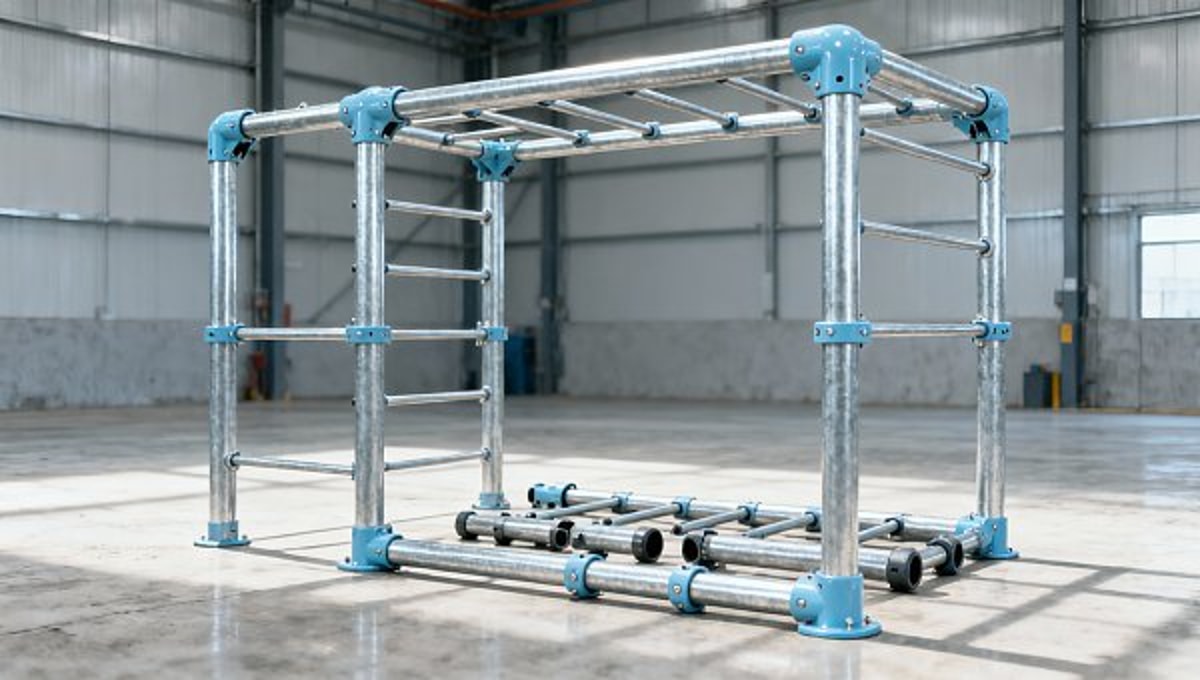
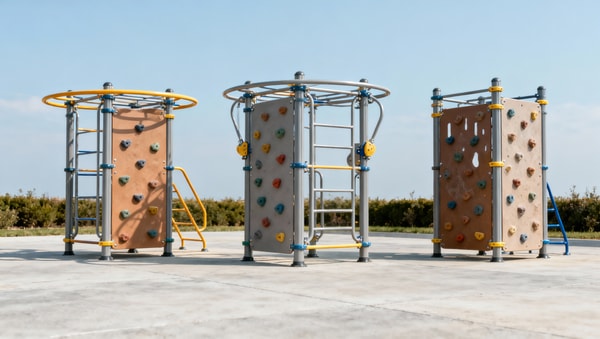
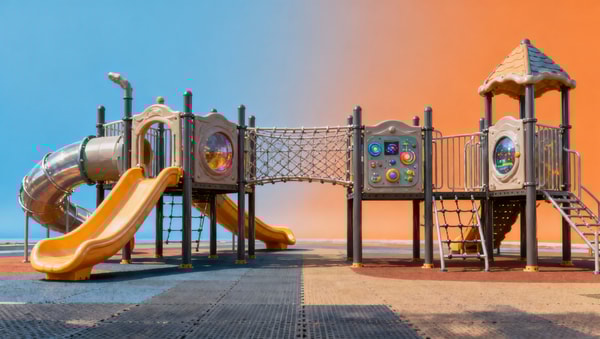
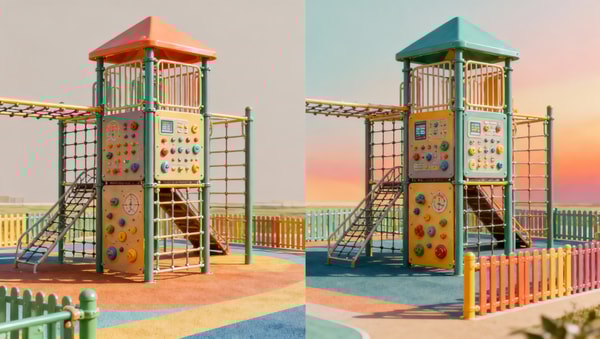
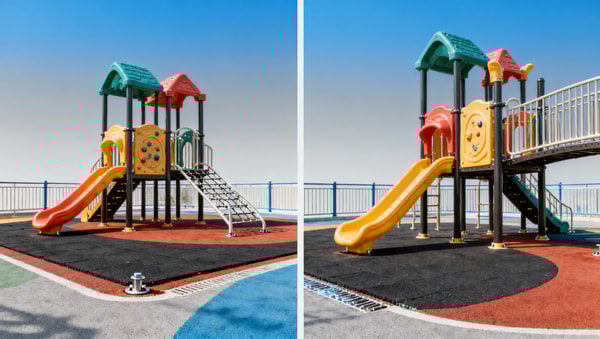
On May 4, 2026, the U.S. Consumer Product Safety Commission (CPSC) issued an urgent recall of three models of children’s outdoor climbing frames manufactured in China—highlighting structural instability and pinch-point hazards. This development is highly relevant to exporters, OEM/ODM manufacturers, third-party testing providers, and importers serving North American, Middle Eastern, Latin American, and Southeast Asian markets—especially those handling ASTM F1487-compliant playground equipment.
Event Overview
The U.S. Consumer Product Safety Commission (CPSC) announced an urgent recall on May 4, 2026, covering three models of children’s outdoor climbing frames produced in China. The recall cites noncompliance with ASTM F1487-23—the U.S. standard for public-use playground equipment—specifically due to insufficient structural strength and serious entrapment risks at moving parts. No injuries have been reported to date. Importers in the Middle East, Latin America, and Southeast Asia have initiated additional testing procedures and are requesting updated ASTM compliance documentation and third-party structural safety certifications from suppliers.
Industries Affected by Segment
Direct Exporters & OEM/ODM Manufacturers
These entities face immediate pressure to verify compliance of existing and pending shipments. The recall triggers heightened scrutiny not only in the U.S., but also in regions where importers now proactively demand revised ASTM F1487-23 test reports—regardless of prior certification status. Re-testing costs, timeline delays, and potential order cancellations represent direct operational impacts.
Third-Party Testing & Certification Providers
Providers accredited for ASTM F1487 testing are seeing increased inquiry volume—particularly for structural load testing and dynamic pinch-point assessments. Demand is shifting toward reports that explicitly reference clause-by-clause verification against the 2023 edition, not just generic ‘ASTM compliant’ statements.
Importers & Regional Distributors (Middle East, LATAM, SEA)
Though outside CPSC jurisdiction, importers in these regions are voluntarily aligning with U.S. enforcement thresholds as a risk-mitigation measure. Their procurement teams are now requiring dual-layer validation: (1) updated ASTM F1487-23 test reports, and (2) independent structural integrity certificates—not merely supplier declarations or older-version certifications.
What Relevant Companies or Practitioners Should Focus On Now
Monitor CPSC’s official follow-up communications and recall expansion signals
Analysis shows the CPSC has not yet indicated whether this recall may expand to additional models or brands sharing similar design features (e.g., hinge-based articulation points, non-reinforced frame joints). Stakeholders should track CPSC’s public database updates and recall notice revisions over the next 30 days.
Prioritize verification of ASTM F1487-23 alignment—not just general ASTM compliance
Observably, many existing test reports reference earlier editions (e.g., F1487-17 or F1487-21) or omit specific clauses related to static load capacity (Section 6.2), dynamic impact resistance (Section 6.3), and finger/hand entrapment zones (Section 7.5). Current requests from importers focus explicitly on 2023-edition clause mapping.
Review technical documentation and assembly instructions for entrapment-risk language
From industry perspective, CPSC’s emphasis on ‘anti-pinch injury’ reflects growing regulatory attention to user-interface hazards beyond structural failure. Suppliers should audit product manuals and packaging for clear warnings on pinch points—and ensure such warnings meet ISO 20653 or ASTM F2356-22 guidance on hazard communication.
Prepare for tighter pre-shipment verification protocols in non-U.S. markets
Current more suitable interpretation is that this recall functions as a de facto benchmark for regional importers—even where local regulations do not yet mandate ASTM F1487-23. Several SEA-based distributors confirmed initiating internal ‘U.S.-equivalent’ screening for all new climbing frame SKUs effective May 2026.
Editorial Perspective / Industry Observation
This recall is better understood as a regulatory signal—not yet a systemic outcome. Analysis shows it does not indicate broad-based noncompliance across Chinese-made climbing equipment, nor does it reflect new statutory requirements. Rather, it highlights how enforcement priorities are shifting toward granular clause-level adherence and real-world use-case risk assessment (e.g., dynamic loading during multi-child use, wear-induced gap enlargement). Observably, the speed and scope of regional importer response—outside formal regulatory mandates—suggests growing reliance on U.S. standards as a proxy for global safety credibility. That trend warrants ongoing tracking, especially as ASTM F1487-23 enters its second full year of implementation.
In summary, this recall underscores a tightening linkage between U.S. enforcement actions and downstream commercial expectations across multiple export markets. It is not primarily about product failure—but about evolving expectations for documentation specificity, test methodology transparency, and proactive hazard mitigation beyond minimum code thresholds. For affected stakeholders, the current priority is not reactive correction, but systematic alignment with clause-level ASTM F1487-23 verification and updated technical communication protocols.
Source: U.S. Consumer Product Safety Commission (CPSC) Recall Notice, May 4, 2026.
Note: Ongoing developments—including potential recall expansions or regional regulatory responses—remain under observation and will be updated separately as confirmed.
Search News
Hot Articles
- Indoor PlaygroundFIBA 2026 Court Guidelines Enforce LED Uniformity & Floor AcousticsMay 05, 2026
- Stationery & UniformsShandong Lions Reject Tao Hanlin’s Retirement — Implications for Sportswear OEMsMay 05, 2026
- Smart Campus TechLiaoning Tieren Appoints Korean Coach Xu Zhengyuan, Signals Shift in K-League Equipment ProcurementMay 05, 2026
Popular Tags
Need ExpertConsultation?
Connect with our specialized leisureengineering team for procurementstrategies.
Recommended News
 May 05, 2026CPSC Recalls 3 Chinese-Made Kids' Outdoor Climbing FramesCPSC recalls 3 Chinese-made kids' outdoor climbing frames for ASTM F1487-23 failures—structural instability & pinch hazards. Urgent compliance & testing insights for exporters, OEMs, and importers.● Theme Park Strategist
 May 05, 2026Sports equipment for schools: durability claims worth testingSports equipment for schools should be judged by test data, materials, and compliance—not bold claims. Learn how to spot durable, safer options before you buy.● Theme Park Strategist
 May 04, 2026CPSC Recalls 3 Chinese-Made Kids' Climbing FramesCPSC recalls 3 Chinese-made kids' climbing frames over ASTM F1487-23 compliance risks—urgent implications for exporters, testers & importers globally.● Theme Park Strategist
 May 02, 2026Sanya Asian Beach Games Closure Spurs Halal Certification Demand for Sand Sports GearHalal certification demand surges for sand sports gear post-Sanya Asian Beach Games—key for volleyball nets, inflatable parks & Middle East exports.● Theme Park Strategist
 May 01, 2026Sanya Asian Beach Games Closure Triggers Halal Certification Demand for Sand Sports EquipmentHalal certification demand surges for sand sports equipment post-Sanya Asian Beach Games—key for beach volleyball, kite surfing & football gear exporters targeting GCC markets.● Theme Park Strategist
 May 01, 2026AI Football Training Robots Export Surge After Man Utd MatchAI football training robots surge in EU demand after Man Utd’s match—FIFA-certified, GPS+IMU equipped, CE-compliant & multilingual ready.● Theme Park Strategist
 May 01, 2026Shanghai Extreme Sports Association Re-elected; EN 15613 Certification Urgency RisesEN 15613 certification urgency surges as Shanghai Extreme Sports Association re-elected—key for EU-bound skateboards, climbing walls & wind tunnels.● Theme Park Strategist
 May 01, 2026Amusement Park Signage That Improves Flow Without Adding ClutterAmusement park signage that improves guest flow, reduces confusion, and supports safety without visual clutter. Discover practical strategies for clearer wayfinding and better park operations.● Theme Park Strategist
 Apr 30, 2026Asian Beach Games Boost Export Demand for Commercial Beach Sports EquipmentCommercial beach sports equipment export demand surges post-Asian Beach Games—key for manufacturers targeting Middle East markets with ISO/ASTM compliance.● Theme Park Strategist
 Apr 30, 2026Water park equipment choices that affect downtime the mostWater park equipment choices can make or break uptime. Learn which pumps, controls, filtration, and material specs reduce downtime, cut maintenance risk, and improve sourcing decisions.● Theme Park Strategist
 Apr 30, 2026Theme park rides with shorter queues and stronger repeat appealTheme park rides with shorter queues and stronger repeat appeal: learn how smarter capacity, ride mix, and sourcing decisions can improve guest flow, ROI, and park performance.● Theme Park Strategist
 Apr 29, 2026Asian Beach Games Boost Demand for UV-Resistant Beach Sports EquipmentUV-resistant beach sports equipment demand surges after China's gold sweep at Sanya Asian Beach Games—key for exporters targeting Middle East markets.● Theme Park Strategist
 Apr 28, 2026Asia Beach Games Boost Export Inquiries for Commercial Sand Sports EquipmentCommercial sand sports equipment exporters see 210% surge in inquiries amid Asia Beach Games—IP68, ISO 22301 & maritime packaging demand spikes from KSA, UAE, Indonesia, Thailand.● Theme Park Strategist
 Apr 27, 2026Asia Beach Games Boost Demand for Portable Sand Sports EquipmentPortable sand sports equipment demand surges 217% amid Asia Beach Games—discover UV-resistant, anchor-stable volleyball & soccer systems for export.● Theme Park Strategist
 Apr 26, 2026China FA Warns Nanjing City Over Fan Conduct; Security Compliance Tightens for International MatchesChina FA warns Nanjing City over fan conduct—key alert for venues, security providers & tech integrators ahead of June 30, 2026 compliance deadline.● Theme Park Strategist
 Apr 25, 2026China FA Warns Nanjing City Over Fan Conduct, Ups Security RulesChina FA warns Nanjing City over fan conduct—new AI security, drone countermeasures & spectrum monitoring now mandated for AFC matches.● Theme Park Strategist
 Apr 24, 2026China FA Warns Nanjing City Over Fan Conduct; ISO 20785 Compliance AcceleratesISO 20785 compliance accelerates as China FA warns Nanjing City over fan conduct—key for sports security integrators targeting Middle East & SEA tenders.● Theme Park Strategist
 Apr 28, 2026How Long Does Amusement Equipment Really Stay Profitable?Amusement equipment profitability lasts 5–12 years. Compare lifecycle ROI with park benches, luxury furniture, hotel beds, custom furniture, hotel furniture, hotel chairs, hotel tables, and hotel equipment.● Theme Park Strategist
 Apr 24, 2026How to Source Park Trash Cans That LastPark trash cans sourcing guide: compare durable materials, supplier options, capacity, and lifecycle cost for playground planning, hospitality procurement, and safer outdoor spaces.● Theme Park Strategist
 Apr 24, 2026Park Trash Cans: What Specs Matter Most?Park trash cans buying guide: compare material, capacity, maintenance, and safety specs for playground planning, playground surfacing, and hospitality procurement projects.● Theme Park Strategist
 Apr 24, 2026What to Check Before Buying Amusement EquipmentAmusement equipment buyers: check playground safety, playground borders, playground climbers, and sensory playground features before purchase to reduce risk and improve long-term value.● Theme Park Strategist
 Apr 24, 2026Amusement Equipment: Buy New or Used?Amusement equipment buying guide: compare new vs. used options for playground climbers, playground borders, sensory playground design, and playground safety to reduce risk and improve ROI.● Theme Park Strategist
 Apr 23, 2026Amusement Equipment Upgrades That Change Guest ExperienceAmusement equipment upgrades improve guest experience with sensory playground features, playground climbers, playground safety, playground borders, and smart commercial furniture solutions.● Theme Park Strategist
 Apr 23, 2026Amusement Equipment Safety Issues Often Missed at InstallAmusement equipment and playground safety start at install. Learn how sensory playground, playground borders, and playground climbers affect compliance, durability, and safer commercial projects.● Theme Park Strategist