CPSC Recalls 3 Chinese-Made Outdoor Climbing Frames
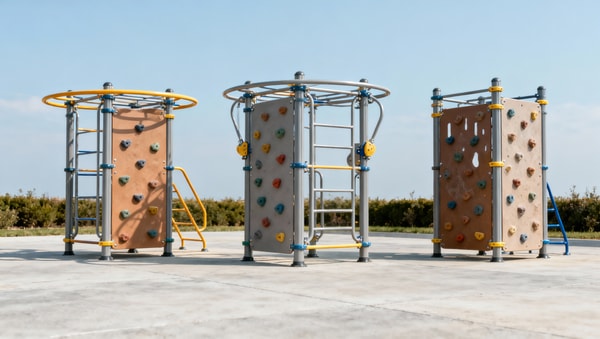
On May 3, 2026, the U.S. Consumer Product Safety Commission (CPSC) issued an urgent recall (Recall ID: 26-218) of three models of outdoor children’s climbing frames manufactured in China — affecting 127,000 units. This action signals heightened regulatory scrutiny for exporters of outdoor playground equipment to the U.S. market, particularly those engaged in structural safety compliance under UL/ASTM F1487 standards.
Event Overview
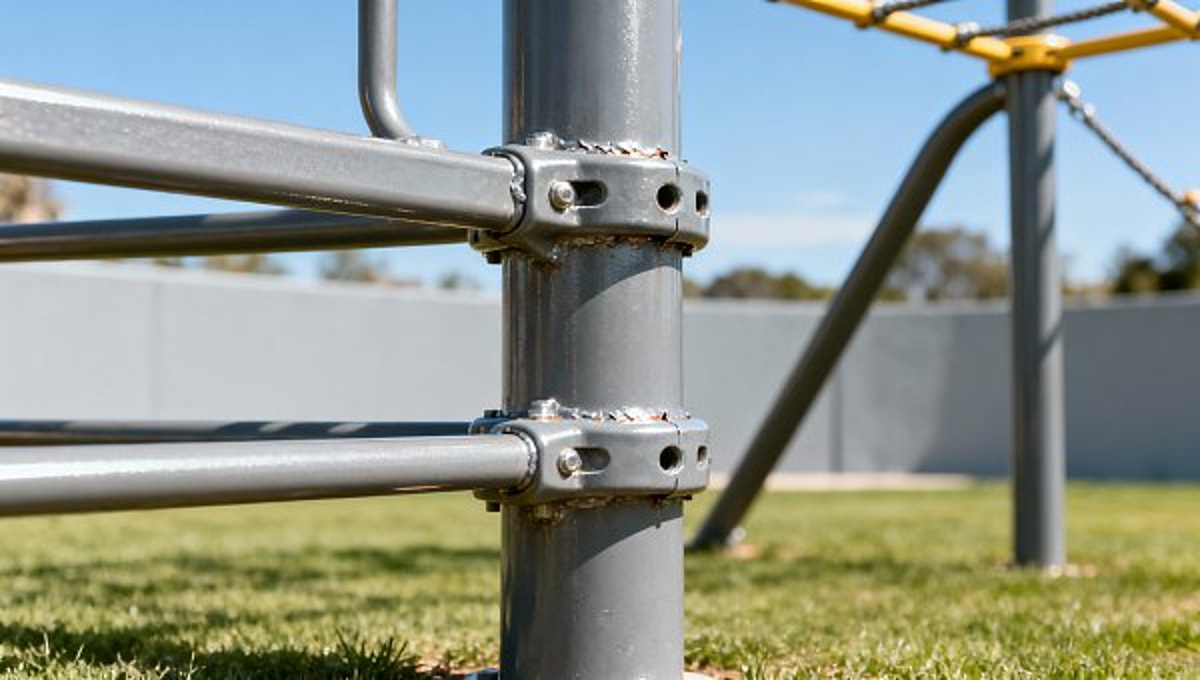
The U.S. Consumer Product Safety Commission (CPSC) announced a formal recall on May 3, 2026 (Recall ID: 26-218), covering three models of outdoor children’s climbing frames produced by three Chinese manufacturers. A total of 127,000 units are affected. The identified hazards include insufficient weld strength at vertical support columns and excessive pinching-gap dimensions at joint areas — both violating ASTM F1487 requirements for public-use outdoor playground equipment. The recall has triggered automatic delisting on Amazon and Walmart platforms and requires importers to submit corrective action verification reports to CPSC.
Industries Affected
Direct Exporters & Importers
Companies acting as U.S.-based importers or China-based exporters handling CPSC-regulated outdoor play equipment face immediate compliance obligations. They are required to submit remediation reports and may bear liability for product withdrawal, logistics costs, and potential penalties if corrective actions are delayed or inadequate.
Manufacturers & Contract Producers
Chinese manufacturers producing climbing frames — especially those without in-house structural testing capacity — are directly impacted. Defects cited (weld integrity, gap dimensioning) reflect gaps in production-level quality control and pre-shipment conformity assessment against ASTM F1487 Section 6 (structural integrity) and Section 8 (entrapment hazards).
Retail & E-commerce Channel Operators
U.S. online retailers including Amazon and Walmart have implemented automated takedown protocols for listed SKUs matching the recalled models. This highlights growing platform-level enforcement of CPSC recall data, increasing operational risk for sellers relying on third-party logistics or unverified supplier documentation.
Supply Chain & Compliance Service Providers
Third-party testing labs, certification consultants, and compliance auditors supporting export-oriented manufacturers are seeing increased demand for ASTM F1487 gap assessments — particularly for weld inspection protocols and dynamic joint clearance measurement methods. Demand is shifting from document-based audits toward physical sample validation.
What Relevant Companies or Practitioners Should Monitor and Do Now
Track Official CPSC Communications and Recall Verification Requirements
Importers and manufacturers must monitor CPSC’s official recall page and any follow-up notices regarding acceptable verification evidence (e.g., test reports from CPSC-accepted labs, revised weld procedure specifications, dimensional inspection records). Submission deadlines and evidentiary thresholds are not publicly specified beyond the initial notice and require direct coordination with CPSC’s Office of Compliance.
Review ASTM F1487 Compliance for Structural Welding and Pinch Points
Manufacturers should prioritize re-evaluation of welding procedures per ASTM F1487 Section 6.3 (load-bearing welds) and joint geometry per Section 8.2 (entrapment zones). Emphasis should be placed on production-line measurement practices — not just design-stage simulation — given that the defect was identified post-production.
Assess Platform-Level Recall Integration Protocols
Sellers and brand owners distributing via Amazon or Walmart should verify whether their internal SKU identification systems align with CPSC’s recall database fields (e.g., model number, batch code, manufacturer name). Inconsistent labeling or incomplete ASIN-level metadata may delay reinstatement even after corrective action is completed.
Prepare Documentation for Supplier Accountability and Traceability
Exporters should ensure full traceability from raw material lot numbers to final assembly records — especially for welded components. CPSC’s verification process increasingly references material certifications, welder qualification records, and first-article inspection reports. Maintaining these documents in English and aligned with U.S. regulatory expectations is now operationally critical.
Editorial Perspective / Industry Observation
Observably, this recall reflects a shift from reactive hazard reporting to proactive structural compliance enforcement — particularly where manufacturing process controls fail to translate design intent into consistent physical output. Analysis shows CPSC is tightening integration between recall triggers and upstream production accountability, moving beyond end-product testing to require verifiable process discipline. This event is less a one-off incident and more a signal of accelerating expectations for documented, auditable manufacturing controls in children’s outdoor equipment exports to the U.S. Current regulatory momentum suggests future recalls will increasingly cite procedural gaps — not just final-product nonconformities.
Conclusion:
This recall underscores that structural safety compliance for outdoor playground equipment is no longer solely about passing a third-party lab test. It now encompasses verifiable, repeatable manufacturing execution — especially for load-critical welds and entrapment-sensitive geometries. For industry stakeholders, it is more accurate to interpret this action not as an isolated compliance failure, but as an early indicator of evolving U.S. regulatory emphasis on production-process transparency and supplier traceability.
Information Sources:
- U.S. Consumer Product Safety Commission (CPSC) Official Recall Notice, Recall ID: 26-218, issued May 3, 2026
- CPSC Recall Database Entry (publicly accessible as of May 3, 2026)
Note: Ongoing developments — including importer response timelines, CPSC-accepted verification formats, and potential expansion to additional models — remain under observation.
Search News
Hot Articles
- Indoor PlaygroundLiaoning Tieren Appoints Shin Jeong-won; K-League Training Gear Sourcing Shift PossibleMay 06, 2026
- Indoor PlaygroundNBA LED Interactive Court System Enters Mass ProductionMay 06, 2026
- Smart Campus TechIOC Selects Chinese University’s Athlete Support Model as Global Procurement BenchmarkMay 06, 2026
Popular Tags
Need ExpertConsultation?
Connect with our specialized leisureengineering team for procurementstrategies.
Recommended News
 May 06, 2026CPSC Recalls 3 Chinese-Made Outdoor Climbing FramesCPSC recalls 3 Chinese-made outdoor climbing frames—127,000 units affected due to weld & pinch-gap safety failures. Urgent compliance action required for exporters, importers, and retailers.● Theme Park Strategist
 May 05, 2026CPSC Recalls 3 Chinese-Made Kids' Outdoor Climbing FramesCPSC recalls 3 Chinese-made kids' outdoor climbing frames for ASTM F1487-23 failures—structural instability & pinch hazards. Urgent compliance & testing insights for exporters, OEMs, and importers.● Theme Park Strategist
 May 05, 2026Sports equipment for schools: durability claims worth testingSports equipment for schools should be judged by test data, materials, and compliance—not bold claims. Learn how to spot durable, safer options before you buy.● Theme Park Strategist
 May 04, 2026CPSC Recalls 3 Chinese-Made Kids' Climbing FramesCPSC recalls 3 Chinese-made kids' climbing frames over ASTM F1487-23 compliance risks—urgent implications for exporters, testers & importers globally.● Theme Park Strategist
 May 02, 2026Sanya Asian Beach Games Closure Spurs Halal Certification Demand for Sand Sports GearHalal certification demand surges for sand sports gear post-Sanya Asian Beach Games—key for volleyball nets, inflatable parks & Middle East exports.● Theme Park Strategist
 May 01, 2026Sanya Asian Beach Games Closure Triggers Halal Certification Demand for Sand Sports EquipmentHalal certification demand surges for sand sports equipment post-Sanya Asian Beach Games—key for beach volleyball, kite surfing & football gear exporters targeting GCC markets.● Theme Park Strategist
 May 01, 2026AI Football Training Robots Export Surge After Man Utd MatchAI football training robots surge in EU demand after Man Utd’s match—FIFA-certified, GPS+IMU equipped, CE-compliant & multilingual ready.● Theme Park Strategist
 May 01, 2026Shanghai Extreme Sports Association Re-elected; EN 15613 Certification Urgency RisesEN 15613 certification urgency surges as Shanghai Extreme Sports Association re-elected—key for EU-bound skateboards, climbing walls & wind tunnels.● Theme Park Strategist
 May 01, 2026Amusement Park Signage That Improves Flow Without Adding ClutterAmusement park signage that improves guest flow, reduces confusion, and supports safety without visual clutter. Discover practical strategies for clearer wayfinding and better park operations.● Theme Park Strategist
 Apr 30, 2026Asian Beach Games Boost Export Demand for Commercial Beach Sports EquipmentCommercial beach sports equipment export demand surges post-Asian Beach Games—key for manufacturers targeting Middle East markets with ISO/ASTM compliance.● Theme Park Strategist
 Apr 30, 2026Water park equipment choices that affect downtime the mostWater park equipment choices can make or break uptime. Learn which pumps, controls, filtration, and material specs reduce downtime, cut maintenance risk, and improve sourcing decisions.● Theme Park Strategist
 Apr 30, 2026Theme park rides with shorter queues and stronger repeat appealTheme park rides with shorter queues and stronger repeat appeal: learn how smarter capacity, ride mix, and sourcing decisions can improve guest flow, ROI, and park performance.● Theme Park Strategist
 Apr 29, 2026Asian Beach Games Boost Demand for UV-Resistant Beach Sports EquipmentUV-resistant beach sports equipment demand surges after China's gold sweep at Sanya Asian Beach Games—key for exporters targeting Middle East markets.● Theme Park Strategist
 Apr 28, 2026Asia Beach Games Boost Export Inquiries for Commercial Sand Sports EquipmentCommercial sand sports equipment exporters see 210% surge in inquiries amid Asia Beach Games—IP68, ISO 22301 & maritime packaging demand spikes from KSA, UAE, Indonesia, Thailand.● Theme Park Strategist
 Apr 27, 2026Asia Beach Games Boost Demand for Portable Sand Sports EquipmentPortable sand sports equipment demand surges 217% amid Asia Beach Games—discover UV-resistant, anchor-stable volleyball & soccer systems for export.● Theme Park Strategist
 Apr 26, 2026China FA Warns Nanjing City Over Fan Conduct; Security Compliance Tightens for International MatchesChina FA warns Nanjing City over fan conduct—key alert for venues, security providers & tech integrators ahead of June 30, 2026 compliance deadline.● Theme Park Strategist
 Apr 25, 2026China FA Warns Nanjing City Over Fan Conduct, Ups Security RulesChina FA warns Nanjing City over fan conduct—new AI security, drone countermeasures & spectrum monitoring now mandated for AFC matches.● Theme Park Strategist
 Apr 24, 2026China FA Warns Nanjing City Over Fan Conduct; ISO 20785 Compliance AcceleratesISO 20785 compliance accelerates as China FA warns Nanjing City over fan conduct—key for sports security integrators targeting Middle East & SEA tenders.● Theme Park Strategist
 Apr 28, 2026How Long Does Amusement Equipment Really Stay Profitable?Amusement equipment profitability lasts 5–12 years. Compare lifecycle ROI with park benches, luxury furniture, hotel beds, custom furniture, hotel furniture, hotel chairs, hotel tables, and hotel equipment.● Theme Park Strategist
 Apr 24, 2026How to Source Park Trash Cans That LastPark trash cans sourcing guide: compare durable materials, supplier options, capacity, and lifecycle cost for playground planning, hospitality procurement, and safer outdoor spaces.● Theme Park Strategist
 Apr 24, 2026Park Trash Cans: What Specs Matter Most?Park trash cans buying guide: compare material, capacity, maintenance, and safety specs for playground planning, playground surfacing, and hospitality procurement projects.● Theme Park Strategist
 Apr 24, 2026What to Check Before Buying Amusement EquipmentAmusement equipment buyers: check playground safety, playground borders, playground climbers, and sensory playground features before purchase to reduce risk and improve long-term value.● Theme Park Strategist
 Apr 24, 2026Amusement Equipment: Buy New or Used?Amusement equipment buying guide: compare new vs. used options for playground climbers, playground borders, sensory playground design, and playground safety to reduce risk and improve ROI.● Theme Park Strategist
 Apr 23, 2026Amusement Equipment Upgrades That Change Guest ExperienceAmusement equipment upgrades improve guest experience with sensory playground features, playground climbers, playground safety, playground borders, and smart commercial furniture solutions.● Theme Park Strategist