EU Proposes Stricter Phthalate Testing for VR Haptic Suits
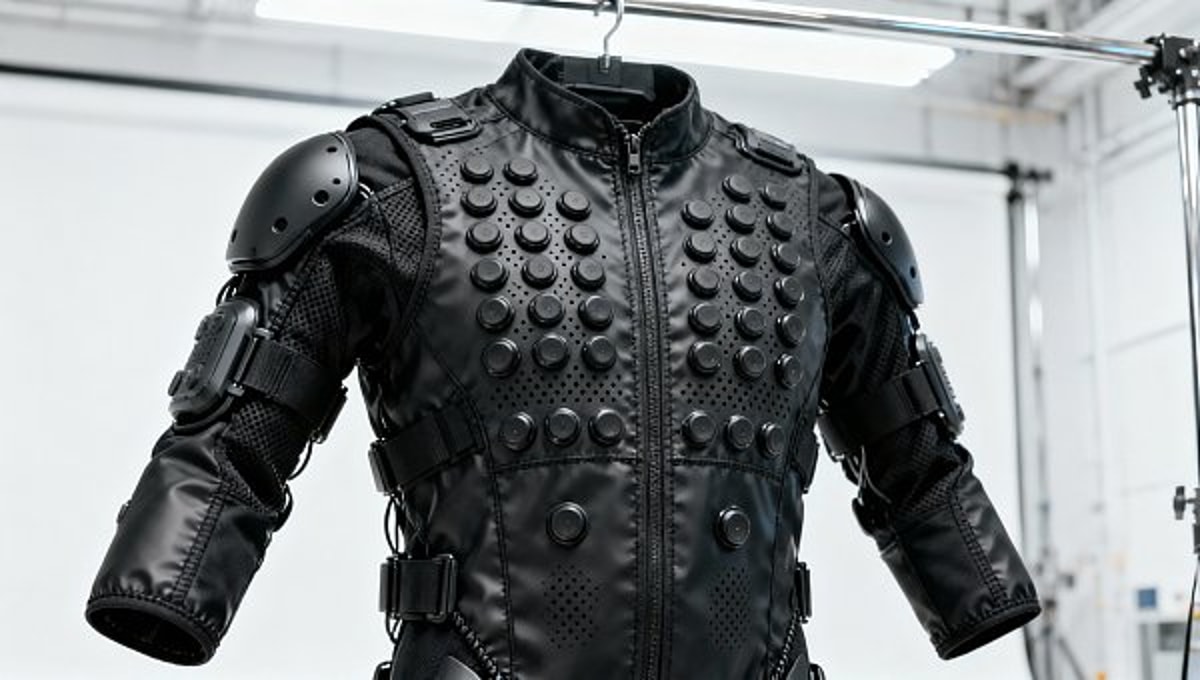
On 4 May 2026, the European Chemicals Agency (ECHA) published a draft amendment to REACH Annex XVII, proposing to extend restrictions on four phthalates (DEHP, BBP, DBP, DIBP) to all smart athletic apparel containing elastic fabrics—including VR haptic suits and AI-powered compression wear. This development directly affects exporters of intelligent sportswear from China, particularly ODM manufacturers in Guangdong and Zhejiang provinces, and signals heightened compliance pressure ahead of anticipated enforcement.
Event Overview
On 4 May 2026, ECHA released a draft revision to REACH Annex XVII. The proposal seeks to broaden the scope of existing phthalate restrictions—currently applying to toys and childcare articles—to cover all garments with elastic textiles classified as smart athletic apparel, specifically naming VR haptic suits and AI fitness bodysuits. As confirmed in the draft document, affected Chinese ODM suppliers have already received urgent retesting requests from European brand clients. Customs inspection rates at EU entry points are projected to rise to 35% starting in June 2026, with average shipment delays increasing by 7–10 working days.
Industries Affected by This Amendment
Direct Exporters & Trading Companies
These firms face immediate customs clearance risk. Since the draft targets finished goods entering the EU market, export documentation, labelling, and pre-shipment testing now carry higher scrutiny. Delays in test reporting or non-compliant batches may trigger detention or rejection—especially for shipments scheduled between June and August 2026.
Contract Manufacturers & ODM Factories
ODM producers in Guangdong and Zhejiang are already responding to urgent retesting notices from EU clients. Their exposure stems from material traceability gaps: many use third-party elastic yarns or laminated composites where phthalate content is not routinely certified. Re-testing across multiple SKUs—and potential reformulation—may compress margins and extend lead times.
Raw Material Suppliers (Elastic Yarn, Laminates, Smart Textile Integrators)
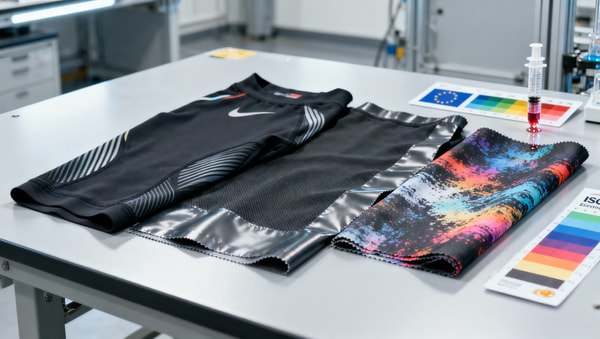
Suppliers of spandex blends, TPU-coated fabrics, or sensor-integrated knits must now provide updated, REACH-compliant declarations of conformity. As the restriction now applies to any elastic component within a garment—not just plastic accessories—material-level verification becomes mandatory, not optional.
Supply Chain & Compliance Service Providers
Laboratories offering REACH testing, certification consultants, and customs brokers report rising inquiry volumes for phthalate screening packages tailored to smart apparel. Demand is shifting from generic textile testing toward granular, fabric-layer-specific analysis—particularly for bonded seams, conductive trims, and haptic actuator housings embedded in stretch fabrics.
What Enterprises and Practitioners Should Monitor and Do Now
Track official status of the draft amendment
The proposal remains under public consultation until 31 July 2026. Final adoption is not guaranteed, but ECHA’s prior alignment with the EU Commission on endocrine-disrupting substances suggests high likelihood of progression. Stakeholders should subscribe to ECHA’s official register updates and monitor for Commission-level endorsement announcements.
Identify and prioritize high-risk product categories
VR haptic suits and AI fitness bodysuits are explicitly named in the draft. Firms should audit current and planned SKUs for elastic content >0.1% by weight—especially those using thermoplastic elastomers (TPE), polyurethane laminates, or coated spandex. Prioritize retesting for items with imminent EU shipments scheduled June–September 2026.
Distinguish policy signal from enforceable requirement
As of 4 May 2026, this remains a draft—not law. No new legal obligation exists yet. However, brand-led retesting mandates reflect commercial risk mitigation, not regulatory enforcement. Companies should treat client requests as operational imperatives while maintaining clear records of test scope, sampling method, and laboratory accreditation (e.g., ISO/IEC 17025).
Prepare upstream communication and documentation protocols
Manufacturers should request updated Declarations of Conformity from elastic yarn and laminate suppliers—specifying DEHP/BBP/DBP/DIBP levels below 0.1% w/w. Internal quality control checklists should include phthalate verification points at incoming material, in-process assembly, and final goods stages.
Editorial Perspective / Industry Observation
Observably, this draft functions less as an imminent regulatory deadline and more as a calibrated policy signal—indicating how EU authorities interpret ‘articles’ under REACH in the context of emerging wearable tech. Analysis shows ECHA is deliberately extending precedent from toy safety logic into performance apparel, treating elasticity not as a functional trait but as a potential exposure vector. From an industry perspective, the timing aligns with broader EU efforts to classify certain smart textiles as ‘products with intentional release’—a classification that could trigger future obligations beyond phthalates. Current attention should focus on verification readiness, not panic-driven reformulation.
This amendment does not yet change legal requirements—but it has already altered commercial expectations. For Chinese smart sportswear exporters, the draft represents a formalization of de facto compliance thresholds that leading EU brands have quietly enforced since early 2025. It is better understood as a consolidation of market-driven standards into prospective regulation, rather than a sudden new burden.
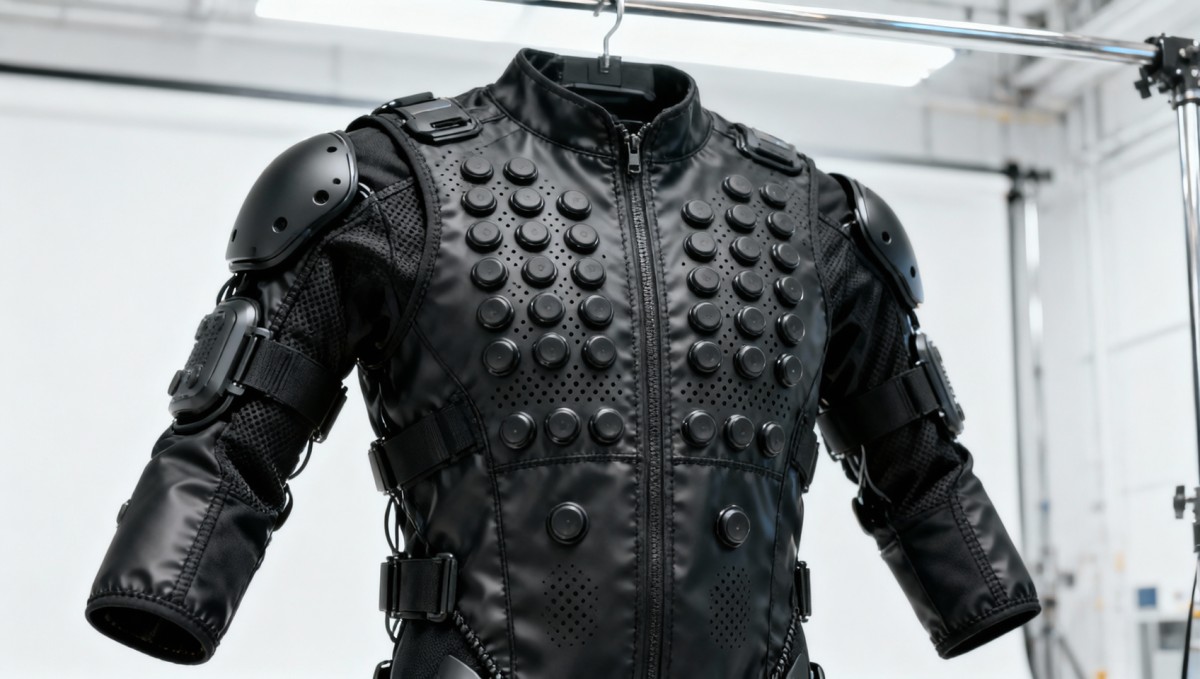
Source: European Chemicals Agency (ECHA), Draft Annex XVII Revision Proposal, published 4 May 2026. Public consultation period open until 31 July 2026. Note: Final adoption, effective date, and transitional provisions remain pending and require ongoing monitoring.
Search News
Hot Articles
- Indoor PlaygroundLiaoning Tieren Appoints Shin Jeong-won; K-League Training Gear Sourcing Shift PossibleMay 06, 2026
- Indoor PlaygroundNBA LED Interactive Court System Enters Mass ProductionMay 06, 2026
- Smart Campus TechIOC Selects Chinese University’s Athlete Support Model as Global Procurement BenchmarkMay 06, 2026
Popular Tags
Need ExpertConsultation?
Connect with our specialized leisureengineering team for procurementstrategies.
Recommended News
 May 06, 2026EU Proposes Stricter Phthalate Testing for VR Haptic SuitsEU proposes stricter phthalate testing for VR haptic suits—DEHP, BBP, DBP, DIBP limits now target smart athletic apparel. Act now to avoid EU shipment delays & rejections.● Theme Park Strategist
 May 05, 2026EU Tightens REACH Rules for Sportswear Colorfastness & PhthalatesEU tightens REACH rules for sportswear: stricter phthalates limits (0.01%) & mandatory colorfastness testing — critical for VR haptic suits, smart athletic apparel & esports wear exporters.● Theme Park Strategist
 May 04, 2026Tianma Sports’ 0.42‰ Complaint Rate Sets New B2B Quality BenchmarkTianma Sports’ 0.42‰ complaint rate redefines B2B quality in sportswear—backed by pre-shipment risk control, QR traceability & 3-tier QC. See why global buyers are benchmarking against it.● Theme Park Strategist
 May 03, 2026NBA VR Viewing Pods Face NTSC Compatibility Demand in Latin AmericaNBA VR viewing pods face urgent NTSC compatibility demands in Latin America—learn how manufacturers, certifiers, and channel partners can respond fast.● Theme Park Strategist
 May 03, 2026Guangdong Super League VR Booth Drives SEA InquiriesGuangdong Super League VR booth sparks 17 SEA distributor inquiries—focus on Tagalog/Vietnamese UI, offline stability & PSE/PSB certification readiness.● Theme Park Strategist
 May 02, 2026Langlangshan VR Attractions Seek PEGI 12+ Certification After Annecy NominationLanglangshan VR Attractions seek PEGI 12+ certification after Annecy nomination—key for EU theme parks, VR hardware vendors & IP licensors targeting compliant immersive experiences.● Theme Park Strategist
 May 02, 2026Wu Yize’s World Snooker Championship Run Boosts VR Viewing Pod DemandVR viewing pod demand surges 210% amid Wu Yize’s World Snooker Championship semi-final run — key for hotels, bars & esports venues seeking certified immersive solutions.● Theme Park Strategist
 May 01, 2026Langlangshan VR Rides Gain IP Licensing Momentum After Annecy InclusionLanglangshan VR Rides: IP licensing surges after Annecy 2026 selection—unlock co-dev opportunities for VR arcade & motion-based systems in SEA/LATAM.● Theme Park Strategist
 May 01, 2026Volvo China Open Boosts Golf Simulator Exports to Middle EastVolvo China Open drives Middle East demand for certified golf simulators — USGA/EGF-compliant, Arabic UI, and rapid-delivery indoor simulation systems now in high inquiry.● Theme Park Strategist
 May 01, 2026Wu Yize vs. Selby Sparks VR Viewing Booth Export SurgeWu Yize vs. Selby Sparks VR Viewing Booth Export Surge: CE/UKCA-compliant VR cabins see 210% export inquiry surge amid snooker-driven global demand.● Theme Park Strategist
 Apr 30, 2026VR Sports Viewing Capsules Face New EU Latency Rules Post-PSG–Bayern MatchVR Sports Viewing Capsules face new EU latency rules after PSG–Bayern’s record 12-goal match — discover how ≤80ms RED compliance impacts exporters, OEMs & AI-driven live sports tech.● Theme Park Strategist
 Apr 30, 2026Snooker World Championship: VR Viewing Pods, Remote Commentary Systems See Export InquiriesSnooker World Championship sparks global export inquiries for VR viewing pods & AI remote commentary systems—UKCA-certified, Betfred-integrated, multilingual.● Theme Park Strategist
 Apr 30, 2026Zheng Qinwen’s Madrid Exit Spurs EU RFQs for Tennis Training RobotsZheng Qinwen’s Madrid exit sparks EU RFQs for tennis training robots — discover how Chinese robotics exporters can meet CE/MD compliance & seize new academy demand.● Theme Park Strategist
 Apr 30, 2026Kenya's Marathon Record Break Sparks Global Demand for TrackSense Pro ChipsTrackSense Pro chips fuel Kenya’s marathon record—now driving global demand. Certified for precision timing (±0.01s), IP68, CE-RED & FCC—discover why African and Gulf markets are fast-tracking procurement.● Theme Park Strategist
 Apr 29, 2026Are Premium Arcade Games Worth It? A Cost vs Revenue LookArcade games can deliver strong ROI when premium quality boosts uptime, pricing power, and repeat play. See how finance teams compare cost vs revenue before investing.● Theme Park Strategist
 Apr 29, 2026How to Choose Arcade Games That Keep Players Coming BackArcade games that keep players coming back can boost dwell time, revenue, and loyalty. Discover how to choose high-replay machines that fit your venue and drive long-term results.● Theme Park Strategist
 Apr 29, 2026VR Sports Viewing Booth Demand Rises After Wu Yize vs. SelbyVR Sports Viewing Booth demand surges globally after Wu Yize’s win over Selby—key for exporters, OEMs & cert providers in ME, AU, CA.● Theme Park Strategist
 Apr 29, 2026NBA 3-2-1 Lottery Reform Drives VR Viewing Hardware DemandNBA 3-2-1 Lottery reform fuels VR viewing hardware demand—boosting sales of commercial VR pods, immersive systems & remote commentary terminals across North America, ME & SEA.● Theme Park Strategist
 Apr 28, 2026Global VR Fitness Device Export Prices Rise 12% — China Leads in Delivery ReliabilityVR fitness device export prices surge 12% globally — China leads in delivery reliability. Discover key compliance shifts, market impacts & strategic actions for exporters, OEMs & logistics providers.● Theme Park Strategist
 Apr 28, 2026Snooker World Championship 'China Derby' Drives VR Viewing DemandSnooker World Championship 'China Derby' drives surging VR viewing demand—boosting exports of VR pods, low-latency streaming & Dolby Atmos-certified AI audio solutions globally.● Theme Park Strategist
 Apr 28, 2026BWF 15-Point System to Launch in 2027: Impacts on Timing, Broadcast & Data SystemsBWF 15-point system launching in 2027 — impacts timing displays, broadcast encoders & data platforms. Discover compliance steps for OEMs, venues & AI video providers.● Theme Park Strategist
 Apr 27, 2026Snooker World Championship 'China Derby' Drives VR Viewing DemandVR viewing demand surges after Snooker World Championship 'China Derby' — key opportunity for VR hardware, localization & compliance firms in UK/EU markets.● Theme Park Strategist
 Apr 27, 2026Global VR Fitness Equipment Export Prices Rise 12.3% QoQVR fitness equipment export prices surge 12.3% QoQ — discover why IPX5, ISO 20685, and cloud readiness now drive premium pricing & market share.● Theme Park Strategist
 Apr 27, 2026SASO Updates EMC Rules for VR & Immersive Fitness Devices in Saudi ArabiaSASO EMC updates for VR & immersive fitness devices in Saudi Arabia—Class B compliance mandatory from 25 Apr 2026. Act now to avoid delays & ensure market access.● Theme Park Strategist