IOC Selects Chinese University’s Athlete Support Model as Global Procurement Benchmark
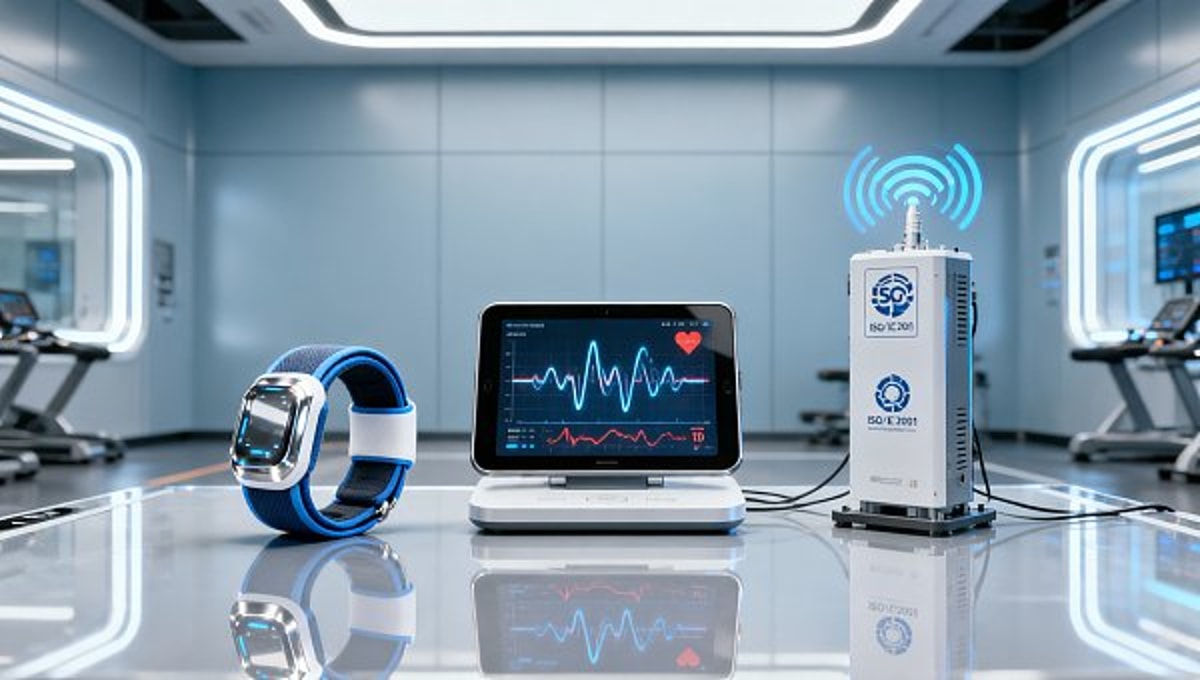
On May 2, 2026, the International Olympic Committee (IOC) published the final edition of its 2025/26 Olympic Case Study Program, designating ‘Accompanying Youth Elite Athletes’ as the annual thematic focus. The integrated solution developed by Capital University of Physical Education and Sports — combining AI-powered psychological coaching with wearable load monitoring — has been formally cited as a global procurement reference model for universities. This development signals implications for edtech providers, sports health technology vendors, data security service providers, and international procurement intermediaries.
Event Overview
On May 2, 2026, the International Olympic Committee (IOC) released the finalized 2025/26 Olympic Case Study Program. The document identifies ‘Accompanying Youth Elite Athletes’ as the core theme for the 2025/26 cycle. It explicitly references the ‘AI Psychological Coaching + Wearable Load Monitoring’ integrated solution from Capital University of Physical Education and Sports (Beijing) as a demonstration case for university-level procurement worldwide. According to the IOC publication, national sports authorities in Brazil, Mexico, and Indonesia have initiated localized tendering processes, with particular emphasis on compliance with ISO/IEC 27001 information security certification requirements.
Which Subsectors Are Affected
Edtech Solution Providers
Providers of AI-driven coaching or mental performance platforms may face increased demand for interoperability with athlete monitoring hardware and third-party validation of data governance frameworks. The IOC’s citation elevates expectations around clinical-grade validation, real-time feedback latency, and multi-language psychological assessment modules — not just algorithmic capability.
Sports Health Technology Manufacturers
Manufacturers of wearable sensors used in athletic load monitoring — particularly those targeting elite youth development programs — are now under closer scrutiny regarding data handling architecture. The explicit mention of ISO/IEC 27001 compliance as a tender evaluation criterion means that device firmware, cloud ingestion pipelines, and local data storage configurations must be audit-ready, not merely certified at the corporate level.
Data Security Certification & Audit Services
Firms offering ISO/IEC 27001 implementation support, gap analysis, or surveillance auditing for hardware-software-integrated systems may see rising inquiries from sports tech vendors preparing for tenders in Brazil, Mexico, and Indonesia. Demand is likely to concentrate on audits covering end-to-end athlete data flows — from sensor edge processing through API gateways to coach-facing dashboards.
International Procurement Intermediaries
Consultancies and agencies supporting foreign vendors in public-sector sports tenders may need to adjust their pre-bid guidance. The IOC’s designation introduces a de facto benchmark: solutions referenced in IOC case studies are increasingly treated as baseline comparators in national procurement documentation — even when not explicitly mandated.
What Relevant Enterprises or Practitioners Should Focus On
Monitor official tender documents for ISO/IEC 27001 scope specificity
Current procurement notices from Brazil, Mexico, and Indonesia refer to ISO/IEC 27001 but do not yet specify whether certification must cover the full system stack (e.g., embedded firmware, mobile app, cloud backend) or only organizational management. Practitioners should track subsequent tender amendments and pre-bid clarification responses for scope definition.
Verify alignment between IOC case study criteria and domestic regulatory expectations
The IOC’s selection emphasizes integration of psychological support and physical load metrics. However, national sports ministries may prioritize different functional weightings — e.g., biomechanical accuracy over behavioral analytics. Vendors should cross-reference IOC-described use cases against locally published athlete development frameworks before investing in localization.
Distinguish between IOC endorsement and binding procurement requirement
The IOC’s inclusion of the Chinese university’s solution constitutes a case study reference, not a technical specification or mandatory standard. Analysis shows that national tenders referencing IOC materials often treat them as illustrative rather than prescriptive — meaning deviations from the cited architecture remain permissible if equivalency is demonstrated via evidence-based validation.
Prepare for accelerated timelines in tender response cycles
Observably, countries initiating tenders shortly after IOC case study publication — such as Brazil and Mexico — are compressing evaluation windows. Suppliers should pre-validate documentation packages for ISO/IEC 27001 scope statements, third-party test reports, and athlete consent workflow diagrams to reduce bid preparation time.
Editorial Perspective / Industry Observation
This IOC designation is best understood as a policy signal rather than an operational mandate. From an industry perspective, it reflects growing institutional attention to the convergence of mental wellness infrastructure and objective workload quantification in youth athlete development — a convergence previously addressed in silos. The fact that a university-developed, non-commercial prototype was selected over vendor-led platforms suggests procurement bodies are prioritizing pedagogical coherence and longitudinal data integrity over feature density. Current observation indicates this case study is accelerating alignment among national sports authorities on minimum viable data governance standards — but implementation remains decentralized and subject to local capacity constraints.
Conclusion
The IOC’s 2025/26 case study selection does not establish new technical standards, nor does it trigger immediate global compliance obligations. Rather, it crystallizes an emerging expectation: that athlete support technologies must demonstrate verifiable integration across psychological and physiological domains — backed by auditable information security practices. For industry stakeholders, the event is more meaningfully interpreted as a directional marker for procurement trend evolution than as a discrete regulatory milestone.
Information Sources
Main source: International Olympic Committee, 2025/26 Olympic Case Study Program (final edition, published May 2, 2026).
Points requiring ongoing observation: National tender specifications issued by Brazil, Mexico, and Indonesia — particularly definitions of ISO/IEC 27001 applicability scope and validation pathways for AI-based psychological coaching components.
Search News
Hot Articles
- Indoor PlaygroundLiaoning Tieren Appoints Shin Jeong-won; K-League Training Gear Sourcing Shift PossibleMay 06, 2026
- Indoor PlaygroundNBA LED Interactive Court System Enters Mass ProductionMay 06, 2026
- Smart Campus TechIOC Selects Chinese University’s Athlete Support Model as Global Procurement BenchmarkMay 06, 2026
Popular Tags
Need ExpertConsultation?
Connect with our specialized leisureengineering team for procurementstrategies.
Recommended News
 May 06, 2026IOC Selects Chinese University’s Athlete Support Model as Global Procurement BenchmarkIOC adopts Chinese university's AI psychological coaching + wearable load monitoring model as global procurement benchmark — a strategic opportunity for edtech, sports health tech, and data security providers.● Institutional Buyer
 May 05, 2026Liaoning Tieren Appoints Korean Coach Xu Zhengyuan, Signals Shift in K-League Equipment ProcurementLiaoning Tieren appoints Korean coach Xu Zhengyuan — sparking interest in K-League equipment procurement and KFA 2026-certified smart training tech.● Institutional Buyer
 May 05, 2026Physics lab apparatus: where low-cost kits usually fall shortPhysics lab apparatus buying on price alone often leads to poor accuracy, weak durability, and higher lifecycle costs. Learn what low-cost kits miss and how to source safer, better-value solutions.● Institutional Buyer
 May 05, 2026School laboratory equipment: what should be replaced firstSchool laboratory equipment replacement starts with safety-critical assets. Learn what to replace first to improve compliance, reduce downtime, and maximize tight budgets.● Institutional Buyer
 May 05, 2026Thermal receipt printers: hidden upkeep costs before large rolloutThermal receipt printers may look affordable, but hidden upkeep costs can erode rollout budgets. Learn how to reduce downtime, control maintenance, and choose smarter for scale.● Institutional Buyer
 May 05, 2026Human anatomy models that improve hands-on teaching, not storageHuman anatomy models built for hands-on teaching, not storage. Discover durable, classroom-ready options that improve engagement, simplify setup, and support smarter education sourcing.● Institutional Buyer
 May 05, 2026Ceiling mount projector brackets: where installation mistakes happenCeiling mount projector brackets: discover where installation mistakes happen, how to avoid safety and alignment issues, and the checklist that helps teams deliver smoother AV projects.● Institutional Buyer
 May 05, 2026Barcode scanners for library: common issues with older systemsBarcode scanners for library upgrades can solve slow checkouts, read errors, and compatibility issues in older systems. Learn what fails first and how to choose a reliable replacement.● Institutional Buyer
 May 05, 2026What to check before ordering wholesale projector screensWholesale projector screens buyers should check material, gain, aspect ratio, installation, and supplier consistency before ordering. Reduce sourcing risk and choose reliable commercial solutions.● Institutional Buyer
 May 05, 2026Geography globes wholesale: what makes one model classroom-readyGeography globes wholesale buyers: discover what makes a model truly classroom-ready, from durability and readability to safety, compliance, and reliable bulk supply.● Institutional Buyer
 May 05, 2026Microscope slides wholesale: where quality gaps usually show upMicroscope slides wholesale buyers should watch for hidden quality gaps in flatness, edge finishing, cleanliness, and batch consistency—learn how to reduce waste and choose reliable suppliers.● Institutional Buyer
 May 05, 2026POS touch screens: what affects response speed and lifespanPOS touch screens directly impact checkout speed, uptime, and total cost. Learn what affects response speed and lifespan to choose the right solution for every business scenario.● Institutional Buyer
 May 04, 2026Kindergarten Furniture Bulk Orders and the Safety Details MissedKindergarten furniture bulk buyers: discover the hidden safety checks suppliers often miss, from emissions and stability to ergonomics and compliance, before placing large orders.● Institutional Buyer
 May 04, 2026School Desks and Chairs Wholesale: Matching Age to Size CorrectlySchool desks and chairs wholesale guide: learn how to match age to size correctly for better comfort, safety, compliance, and smarter school furniture purchasing.● Institutional Buyer
 May 04, 2026Library Bookshelves Wholesale: How Much Load Is Really Enough?Library bookshelves wholesale guide: learn how much load is truly enough for safety, durability, and compliance. Compare ratings, avoid costly mistakes, and choose the right shelving with confidence.● Institutional Buyer
 May 04, 2026Smart Interactive Whiteboards: Which Features Get Used Daily?Smart interactive whiteboards: discover which features teams and teachers actually use daily, from touch accuracy and wireless casting to easy collaboration, ROI, and smarter buying decisions.● Institutional Buyer
 May 04, 2026Student Chairs With Writing Pad: Which Sizes Fit Best?Student chairs with writing pad: discover which sizes best support comfort, posture, room capacity, and tablet use. Compare fit options for schools, universities, and training spaces.● Institutional Buyer
 May 03, 2026Beijing Women's FC Win Spurs AI Training System Export to UKBeijing Women's FC win sparks UK demand for AI sports training systems — real-time analytics, GDPR/ISO 27001 compliance & Heathrow logistics insights revealed.● Institutional Buyer
 May 01, 2026Park Trash Cans That Cut Maintenance Instead of Adding ItPark trash cans that reduce labor, resist weather, and stay cleaner longer. Learn which designs, materials, and features help lower maintenance costs across parks and outdoor spaces.● Institutional Buyer
 May 01, 2026Park Drinking Fountains That Hold Up Better in Public SpacesPark drinking fountains built for public spaces need durability, hygiene, and low maintenance. Discover how to choose vandal-resistant models that cut long-term costs.● Institutional Buyer
 May 01, 2026Restaurant POS Systems That Reduce Training Time at the CounterRestaurant POS systems that cut counter training time: compare intuitive workflows, role-based controls, and error-reducing features to speed onboarding and improve service consistency.● Institutional Buyer
 Apr 30, 20262026 Shanghai Smart Campus Expo: VR EdTech Gains ITU & ISO/IEC 23053 Dual CertificationVR EdTech gains ITU & ISO/IEC 23053 dual certification at 2026 Shanghai Smart Campus Expo—key for global smart PE tenders in UAE, Thailand & ASEAN.● Institutional Buyer
 Apr 29, 20262026 Shanghai Smart Campus Expo: VR EdTech Gains ITU & ISO/IEC Dual CertVR EdTech gains ITU & ISO/IEC dual cert at 2026 Shanghai Smart Campus Expo—key for exporters, integrators & compliance providers.● Institutional Buyer
 Apr 28, 20262026 Shanghai Smart Campus Expo: VR Teaching Devices Gain ITU & ISO/IEC 23053 CertificationVR teaching devices certified to ITU & ISO/IEC 23053 at 2026 Shanghai Smart Campus Expo—unlock EU tenders, interoperability, and global edtech growth.● Institutional Buyer