NBA Adopts New LED Interactive Court Floors in 2026–27 Season
On May 3, 2026, the NBA officially announced the phased deployment of next-generation LED interactive floor systems across all 30 team arenas starting with the 2026–27 season. This development signals material implications for global sports infrastructure suppliers, LED manufacturing exporters, and venue technology integrators — particularly those engaged in certified hardware supply chains serving international arena projects.
Event Overview
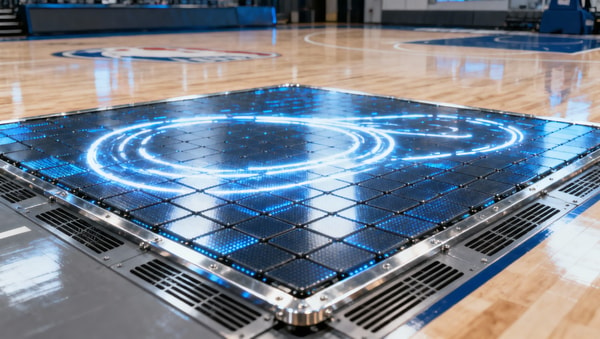
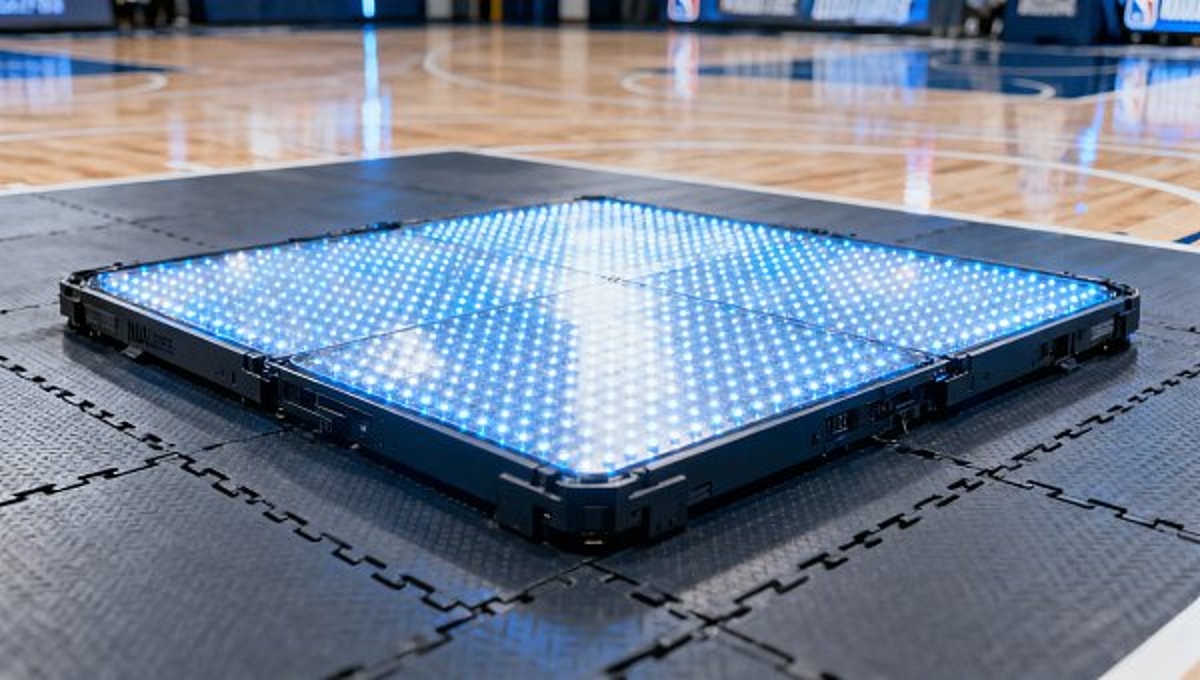
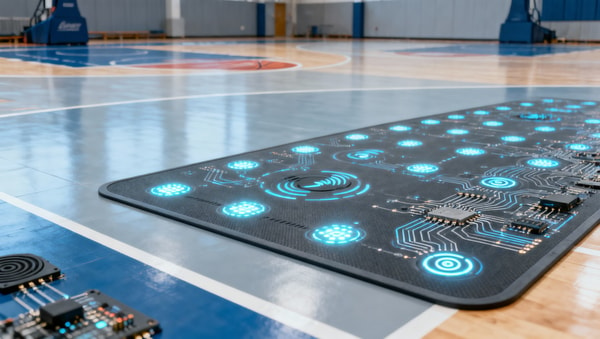
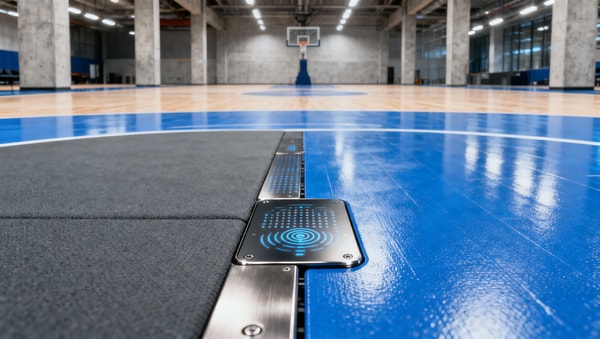
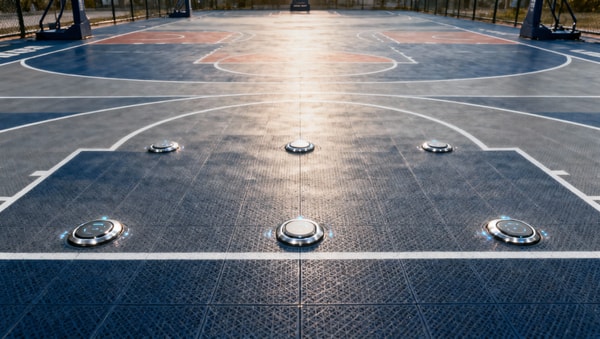
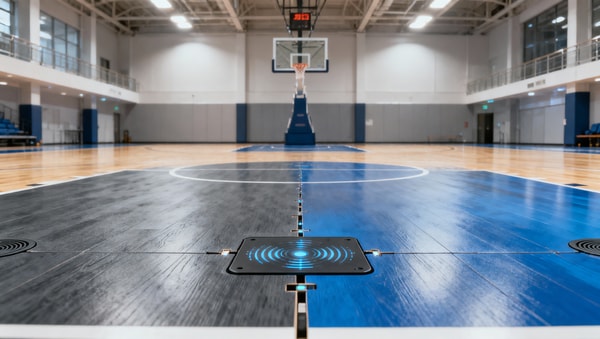
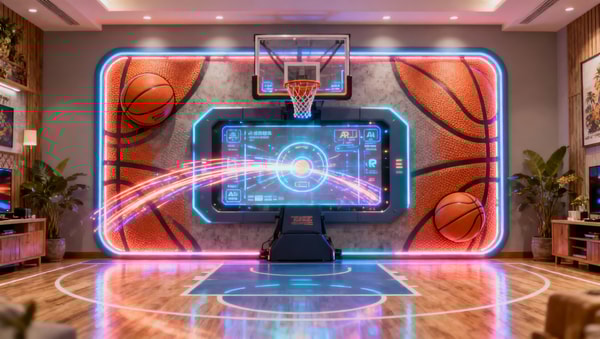
On May 3, 2026, the NBA confirmed that its 2026–27 season will mark the first league-wide rollout of a new LED interactive floor system. The system supports AR-enabled fan engagement and real-time player performance data projection. Five Chinese manufacturers have received initial NBA certification; three are based in Dongguan, two in Ningbo. All five have completed both UL 1598C and ANSI E1.27-4 certifications.
Industries Affected by This Development
LED Hardware Exporters
Exporters of certified LED floor modules face heightened demand signals from emerging-market arena projects. The NBA’s endorsement functions as a de facto technical benchmark — especially for venues targeting premium-tier multimedia capabilities. Impact manifests primarily in tender eligibility, lead time expectations, and documentation requirements for export compliance.
Venue Technology Integrators
Integrators bidding on new arena builds in Latin America and Southeast Asia may now encounter stricter specification alignment with NBA-certified hardware. The certification status of suppliers becomes a more decisive factor in system architecture decisions, particularly where interoperability with broadcast or AR platforms is required.
Sports Infrastructure Component Suppliers
Suppliers providing sub-assemblies — such as thermal management layers, structural mounting frames, or power distribution modules — may see downstream specification tightening. NBA-certified floor deployments require tighter tolerances for heat dissipation, mechanical stability under dynamic load, and electromagnetic compatibility — all reflected in updated procurement language from integrators.
Supply Chain Certification Service Providers
Third-party testing and certification firms specializing in UL and ANSI E-series standards may observe increased inbound inquiries from Chinese manufacturers seeking parallel validation pathways. Demand could rise for support in documentation harmonization, test plan alignment, and audit readiness — especially for facilities targeting multiple regional regulatory gateways.
What Enterprises and Practitioners Should Monitor and Do Now
Track official NBA technical annexes and vendor onboarding updates
The NBA has not yet published detailed interface specifications, maintenance protocols, or lifecycle validation criteria for the LED floor system. Enterprises should monitor official communications for supplementary technical annexes — particularly any updates on software integration requirements or firmware update policies.
Assess exposure to Latin American and Southeast Asian arena pipeline projects
Since the announcement explicitly links NBA certification to enhanced export positioning in these regions, companies should cross-reference their active tenders or pipeline opportunities against publicly reported new arena developments (e.g., Mexico City Arena expansion, Jakarta Sports Complex Phase II) — prioritizing engagements where certified hardware is referenced in RFPs.
Distinguish between certification status and commercial deployment timelines
NBA certification is a prerequisite, not a guarantee of order volume. The phased rollout means full league-wide deployment will occur over multiple seasons. Enterprises should avoid conflating certification achievement with immediate revenue uplift — instead focusing on how certification strengthens competitive differentiation during pre-bid technical evaluations.
Review current UL 1598C and ANSI E1.27-4 compliance documentation
Manufacturers holding these certifications should verify whether their existing test reports cover the specific configuration (e.g., pixel pitch, luminance uniformity under motion, ingress protection rating) required for interactive floor applications. Minor deviations may necessitate supplemental testing — especially if legacy reports were generated for static signage rather than dynamic, load-bearing surfaces.
Editorial Perspective / Industry Observation
Observably, this announcement functions less as an immediate market shift and more as a formalized technical signaling mechanism. The NBA’s choice to name certified manufacturers — rather than issue a generic call for proposals — elevates third-party verification into a visible differentiator for global buyers. Analysis shows that the emphasis on dual UL/ANSI certification reflects growing convergence between electrical safety and entertainment technology standards. From an industry standpoint, this is best understood not as a product launch, but as a calibration point: it confirms that high-end venue tech procurement is increasingly anchored to internationally recognized test-based benchmarks — with China-based manufacturers now positioned as validated contributors, not just cost-competitive alternatives.
Conclusion
This announcement marks a milestone in the institutional recognition of standardized, safety-validated LED infrastructure for elite sports venues. Its primary industry significance lies in reinforcing certification as a threshold requirement — not just a differentiator — for participation in next-generation arena technology supply chains. It is more accurately interpreted as a validation signal for compliant manufacturers than as an immediate catalyst for large-scale orders. Current understanding should center on its role in shaping specification expectations across emerging markets — not on near-term sales acceleration.
Source Attribution
Main source: Official NBA press release dated May 3, 2026.
Areas requiring ongoing observation: Detailed technical specifications for the LED floor system, timeline for full 30-arena deployment, and public tender references citing NBA certification as a mandatory requirement in Latin America or Southeast Asia.
Search News
Hot Articles
- Indoor PlaygroundLiaoning Tieren Appoints Shin Jeong-won; K-League Training Gear Sourcing Shift PossibleMay 06, 2026
- Indoor PlaygroundNBA LED Interactive Court System Enters Mass ProductionMay 06, 2026
- Smart Campus TechIOC Selects Chinese University’s Athlete Support Model as Global Procurement BenchmarkMay 06, 2026
Popular Tags
Need ExpertConsultation?
Connect with our specialized leisureengineering team for procurementstrategies.
Recommended News
 May 06, 2026Liaoning Tieren Appoints Shin Jeong-won; K-League Training Gear Sourcing Shift PossibleLiaoning Tieren appoints K-League coach Shin Jeong-won — sparking Korean demand for ISO 10993-certified smart athletic wear, especially heart-rate & GPS training vests.● Theme Park Strategist
 May 06, 2026NBA LED Interactive Court System Enters Mass ProductionNBA LED interactive court system enters mass production in Q3 2026 — a breakthrough for smart sports venues, AR fan engagement, and global LED display suppliers.● Theme Park Strategist
 May 06, 2026NBA Adopts New LED Interactive Court Floors in 2026–27 SeasonNBA LED interactive court floors launch in 2026–27: AR fan engagement, real-time stats & certified hardware — game-changing for global sports tech suppliers.● Theme Park Strategist
 May 06, 2026HuaiBA Youth Basketball Arena Adopts Domestic Smart Floor SystemHuaiBA Youth Basketball Arena's domestic smart floor system sets a new benchmark—featuring real-time pressure sensing & acoustic feedback for global sports infrastructure buyers.● Theme Park Strategist
 May 06, 2026Swedish Team’s Historic Win Spurs EU Demand for Chinese AI Ping-Pong MachinesAI ping-pong machines surge in EU demand after Sweden’s historic win over China—explore CE-compliant Chinese smart training tech now.● Theme Park Strategist
 May 06, 2026Snooker World Championship Boosts Billiards Table DemandSnooker World Championship drives global demand for billiards tables—especially smart-scoring & carbon-fiber models with FIBA-compatibility and multilingual UI.● Theme Park Strategist
 May 06, 2026FIBA 2026 Basketball Court Standards: LED Lighting & Acoustic Flooring Now MandatoryFIBA 2026 mandates LED lighting uniformity ≥0.8 & acoustic flooring ≥35 dB—key for exporters targeting CE, SASO, GOST markets. Act now to align.● Theme Park Strategist
 May 05, 2026FIBA 2026 Court Guidelines Enforce LED Uniformity & Floor AcousticsFIBA 2026 Court Guidelines mandate LED uniformity ≥0.8 & floor acoustics ≥35 dB @ 63 Hz—key for exporters targeting Qatar, Indonesia, Mexico tenders.● Theme Park Strategist
 May 05, 2026Sweden’s 26-Year Win Over China Spurs EU Demand for SpinMaster X9SpinMaster X9 AI table tennis robot surges in EU demand after Sweden’s historic 26-year win over China—CE & TÜV-certified units now priority for clubs and suppliers.● Theme Park Strategist
 May 05, 2026Wu Yize’s Snooker Final Surge Drives 37% Global Inquiry Spike for Regulation TablesRegulation snooker tables see 37% global B2B inquiry surge amid Wu Yize’s historic World Championship final — act now on WPBSA-compliant demand from UAE, KSA, Brazil & Thailand.● Theme Park Strategist
 May 05, 2026HuaiBA Basketball Arena Adopts Chinese Smart Flooring, Triggers SASO 5853 Acoustic TestingHuaiBA Basketball Arena adopts Chinese smart flooring—triggers SASO 5853 acoustic testing. Key insight for sports flooring exporters, GCC compliance, and ISO 10137 vibration analysis.● Theme Park Strategist
 May 04, 2026HuaiBA Basketball Court in Jinan Adopts Chinese Smart FlooringHuaiBA Basketball Court in Jinan adopts Chinese smart flooring — a breakthrough for ISO 20342 & SASO 5853-compliant sports surfaces in GCC markets.● Theme Park Strategist
 May 03, 2026CBA Game Triggers SASO 5853 Acoustic Certification Demand for Smart Basketball FloorsCBA game sparks SASO 5853 acoustic certification demand for smart basketball floors—key for GCC exporters, labs & specifiers. Act now.● Theme Park Strategist
 May 03, 2026Raptors G6 Barrett Buzzer-Beater Triggers FCC Part 15B Re-Testing for Commercial Rim-Vibration ModulesRaptors G6 Barrett buzzer-beater exposed FCC Part 15B compliance gaps for commercial rim-vibration modules—urgent re-testing now required across US, CA, MX markets.● Theme Park Strategist
 May 02, 20262026 Jiujiang Guokong Cup Tennis Open Spurs ASEAN Demand for AI Ball MachinesAI ball machines surge 165% amid 2026 Jiujiang Guokong Cup — urgent ASEAN MRA certification needed for Thailand/Vietnam exports.● Theme Park Strategist
 May 02, 2026China's Speed Relay Record Boosts EN 15613-Compliant Climbing Gear ExportsEN 15613-compliant climbing gear exports surge 140% after China’s Dubai speed relay record—key insights for manufacturers, labs & logistics providers.● Theme Park Strategist
 May 01, 2026Playground Borders That Reduce Mess and Keep Zones ClearPlayground borders reduce mess, define activity zones, and improve maintenance control. Discover durable, site-smart solutions for safer, cleaner, more organized play areas.● Theme Park Strategist
 May 01, 2026Inclusive Playground Features Families Notice Right AwayInclusive playground features families notice first: step-free access, stable surfacing, sensory balance, and shared play. Use this practical guide to evaluate safer, truly welcoming spaces.● Theme Park Strategist
 May 01, 2026Toddler Playground Layout Mistakes That Limit Safe PlayToddler playground layout mistakes can quietly increase risk. Learn how better zoning, circulation, and visibility create safer, compliant play spaces for every project.● Theme Park Strategist
 May 01, 2026What Makes a Sensory Playground Feel Inclusive in Real UseSensory playground design feels truly inclusive when access, calm zones, shared play, and caregiver comfort work in real use. Discover what makes spaces more welcoming.● Theme Park Strategist
 May 01, 2026How Playground Swings Affect Safety Zones and Site PlanningPlayground swings shape safety zones, circulation, and site efficiency. Learn how to plan compliant, high-performing layouts that reduce redesign risk and improve project value.● Theme Park Strategist
 Apr 30, 2026CBA Game Sparks Southeast Asia Demand for Chinese Interactive Playground WallsCBA game sparks urgent demand for Chinese basketball-themed interactive playground walls across Southeast Asia—AR, pressure-sensor tech, SNI/IEC-certified.● Theme Park Strategist
 Apr 30, 2026Vietnam Mandates Anti-Pinch Sensors for Indoor Playground EquipmentAnti-pinch sensors now mandatory for indoor playground equipment in Vietnam — comply by July 1, 2026 to avoid customs rejection and market access delays.● Theme Park Strategist
 Apr 30, 2026When a playground consultant saves more than an in-house planPlayground consultant advice can prevent costly design errors, compliance gaps, and vendor mistakes. See when expert support beats an in-house plan and protects budget.● Theme Park Strategist