China's Speed Relay Record Boosts EN 15613-Compliant Climbing Gear Exports
On April 29, 2026, China’s national speed climbing team set a new world record in the relay event at the Dubai World Cup — triggering a 140% month-on-month surge in European import orders for EN 15613:2022–certified climbing equipment. This development signals heightened demand across export-oriented manufacturers, testing labs, and logistics providers serving the European climbing gear market — particularly those engaged in production or certification of artificial wall holds, quickdraws, and bouldering mats.
Event Overview
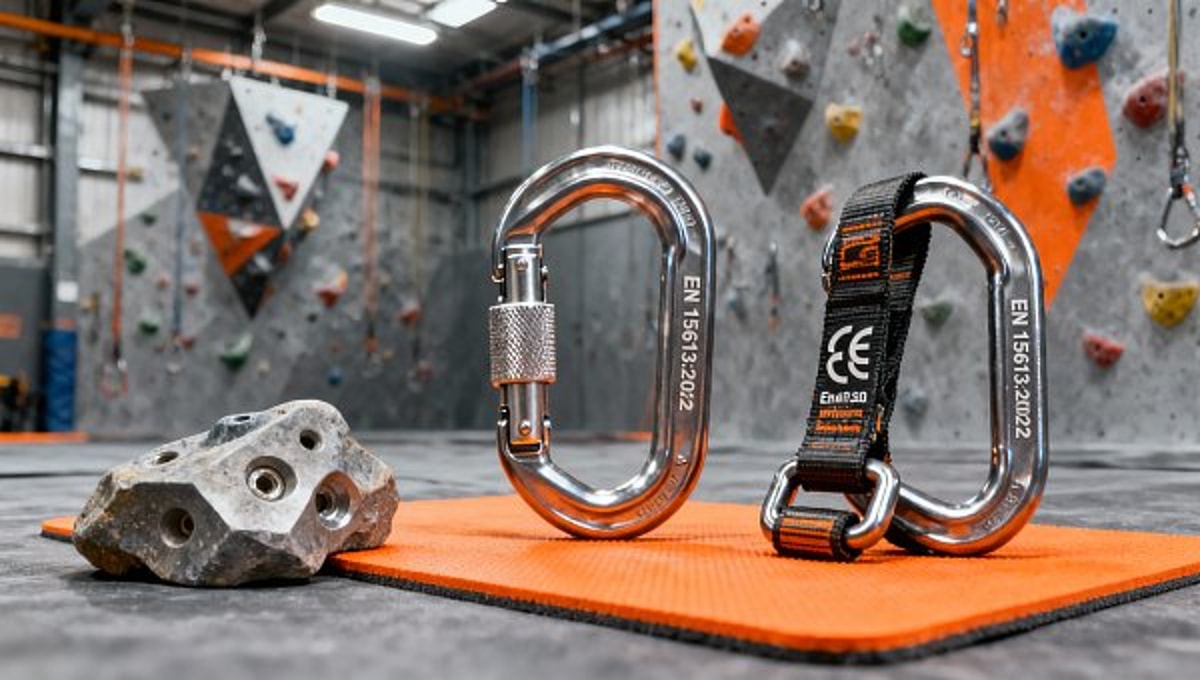
On April 29, 2026, the Chinese national climbing team broke the speed relay world record at the IFSC World Cup stop in Dubai. Following the event, European importers significantly increased purchase orders for climbing equipment certified to EN 15613:2022 (Safety requirements for artificial climbing walls and associated protection equipment). According to publicly available data from TÜV Germany, order volume for compliant holds, quickdraws, and crash pads rose 140% month-on-month. The report also states that only 37% of surveyed Chinese suppliers have completed full-scope testing under the updated standard; common gaps include dynamic impact absorption performance and metal fatigue life evaluation.
Industries Affected
Export-Oriented Manufacturing Enterprises
Manufacturers exporting climbing holds, quickdraws, or bouldering mats to the EU are directly affected due to tightened conformity requirements. EN 15613:2022 compliance is now functionally mandatory for market access — not merely a competitive differentiator. Impact manifests in increased pre-shipment testing costs, extended lead times for certification renewal, and potential order delays if test reports lack required parameters.
Testing and Certification Service Providers
Labs and third-party certification bodies supporting Chinese exporters face rising demand for EN 15613:2022 full-scope testing — especially for dynamic impact absorption and cyclic fatigue tests on metal components. Current capacity constraints may emerge, as only a limited number of accredited labs in China offer validated protocols for these two specific test categories.
Raw Material and Component Suppliers
Suppliers of aluminum alloys, nylon webbing, EVA foam, and stainless steel hardware used in certified products are indirectly impacted. Buyers increasingly request material-level test documentation aligned with EN 15613:2022 sub-clauses — particularly tensile strength retention after abrasion and compression-set resistance in foam layers. Absence of traceable material certifications may trigger rework or rejection at final product testing stage.
International Freight and Compliance Logistics Providers
Forwarders and customs consultants handling EU-bound climbing gear shipments must now verify inclusion of valid EN 15613:2022 test reports in commercial documentation. Incomplete or outdated reports risk detention at EU ports — especially under strengthened market surveillance under Regulation (EU) 2019/1020. Documentation alignment has become a critical handover checkpoint between exporter and logistics partner.
What Enterprises and Practitioners Should Monitor and Do Now
Confirm current certification scope against EN 15613:2022 Annex A test list
Verify whether existing test reports cover all 12 mandatory clauses — with priority attention to Clause 6.4 (dynamic impact absorption) and Clause 7.3 (metal component fatigue life). Reports issued before Q1 2025 likely omit at least one of these.
Prioritize procurement of certified raw materials with documented mechanical properties
Where applicable, obtain supplier declarations or test summaries for base materials — especially for aluminum alloy grades used in holds and stainless steel grades in carabiner gates — referencing EN 15613:2022 Table 3 and Table 4 requirements.
Engage accredited labs early for gap analysis — not just retesting
Instead of initiating full retesting immediately, request a formal gap assessment from an EN ISO/IEC 17025–accredited lab. This identifies missing test items without duplicating already-passed evaluations — optimizing time and cost ahead of anticipated Q3 2026 EU market surveillance rounds.
Review Incoterms and liability clauses in new export contracts
Explicitly assign responsibility for maintaining up-to-date EN 15613:2022 compliance — including costs of corrective testing and documentation updates — within sales agreements. Avoid open-ended conformity warranties that extend beyond the date of original test report issuance.
Editorial Perspective / Industry Observation
Observably, this is less a sudden regulatory shift and more a demand-led acceleration of existing compliance pressure. The Dubai record did not change EN 15613:2022 itself — but it amplified buyer sensitivity to certification credibility in high-visibility product categories. Analysis shows that importers are now using world-record-linked media exposure as a justification to tighten audit frequency and reject borderline reports. From an industry standpoint, the 140% order increase reflects pent-up demand meeting newly enforced gatekeeping — not organic growth alone. It is better understood as a short-term inflection point in certification discipline, rather than a long-term market expansion signal.
Conclusion
This event underscores how sporting achievement can act as a catalyst for technical compliance rigor in adjacent supply chains. For stakeholders, it is neither a transient news item nor a definitive market boom — but a concrete indicator that EN 15613:2022 implementation is transitioning from voluntary alignment to operational necessity in EU-bound climbing gear trade. A measured, documentation-first response remains more effective than reactive scaling.
Source Attribution
Main source: TÜV Germany’s public market surveillance bulletin, April 2026 edition (referencing post-Dubai order data and supplier testing status).
Points requiring ongoing observation: Actual enforcement intensity by EU Member State market surveillance authorities post-July 2026; potential updates to EN 15613 harmonized standards under the New Legislative Framework.
Search News
Hot Articles
- Watch OEM & SmartwatchesZheng Qinwen’s Madrid Exit Delays EU Orders for Smart Tennis WearablesMay 02, 2026
- Indoor Playground2026 Jiujiang Guokong Cup Tennis Open Spurs ASEAN Demand for AI Ball MachinesMay 02, 2026
- Stationery & UniformsKenya Marathon Record Break Sparks Carbon-Plate Shoe Export Surge to AfricaMay 02, 2026
Popular Tags
Need ExpertConsultation?
Connect with our specialized leisureengineering team for procurementstrategies.
Recommended News
 May 02, 20262026 Jiujiang Guokong Cup Tennis Open Spurs ASEAN Demand for AI Ball MachinesAI ball machines surge 165% amid 2026 Jiujiang Guokong Cup — urgent ASEAN MRA certification needed for Thailand/Vietnam exports.● Theme Park Strategist
 May 02, 2026China's Speed Relay Record Boosts EN 15613-Compliant Climbing Gear ExportsEN 15613-compliant climbing gear exports surge 140% after China’s Dubai speed relay record—key insights for manufacturers, labs & logistics providers.● Theme Park Strategist
 May 01, 2026Playground Borders That Reduce Mess and Keep Zones ClearPlayground borders reduce mess, define activity zones, and improve maintenance control. Discover durable, site-smart solutions for safer, cleaner, more organized play areas.● Theme Park Strategist
 May 01, 2026Inclusive Playground Features Families Notice Right AwayInclusive playground features families notice first: step-free access, stable surfacing, sensory balance, and shared play. Use this practical guide to evaluate safer, truly welcoming spaces.● Theme Park Strategist
 May 01, 2026Toddler Playground Layout Mistakes That Limit Safe PlayToddler playground layout mistakes can quietly increase risk. Learn how better zoning, circulation, and visibility create safer, compliant play spaces for every project.● Theme Park Strategist
 May 01, 2026What Makes a Sensory Playground Feel Inclusive in Real UseSensory playground design feels truly inclusive when access, calm zones, shared play, and caregiver comfort work in real use. Discover what makes spaces more welcoming.● Theme Park Strategist
 May 01, 2026How Playground Swings Affect Safety Zones and Site PlanningPlayground swings shape safety zones, circulation, and site efficiency. Learn how to plan compliant, high-performing layouts that reduce redesign risk and improve project value.● Theme Park Strategist
 Apr 30, 2026CBA Game Sparks Southeast Asia Demand for Chinese Interactive Playground WallsCBA game sparks urgent demand for Chinese basketball-themed interactive playground walls across Southeast Asia—AR, pressure-sensor tech, SNI/IEC-certified.● Theme Park Strategist
 Apr 30, 2026Vietnam Mandates Anti-Pinch Sensors for Indoor Playground EquipmentAnti-pinch sensors now mandatory for indoor playground equipment in Vietnam — comply by July 1, 2026 to avoid customs rejection and market access delays.● Theme Park Strategist
 Apr 30, 2026When a playground consultant saves more than an in-house planPlayground consultant advice can prevent costly design errors, compliance gaps, and vendor mistakes. See when expert support beats an in-house plan and protects budget.● Theme Park Strategist
 Apr 30, 2026A smarter playground layout starts with traffic flowPlayground layout starts with traffic flow. Discover how smarter circulation improves safety, accessibility, capacity, and long-term commercial performance.● Theme Park Strategist
 Apr 30, 2026Playground certification steps that delay launch datesPlayground certification delays can add weeks to launch dates. Learn the key bottlenecks, hidden compliance risks, and practical steps to keep projects on schedule.● Theme Park Strategist
 Apr 30, 2026Playground climbers that keep kids challenged without bottlenecksPlayground climbers that reduce bottlenecks keep more kids engaged, improve flow, and suit schools, resorts, parks, and leisure venues. Learn what to specify before you buy.● Theme Park Strategist
 Apr 30, 2026What playground inspection reports often reveal too latePlayground inspection reports often reveal hidden risks too late. Learn how to catch design, installation, and safety issues earlier to avoid delays, rework, and costly project setbacks.● Theme Park Strategist
 Apr 30, 2026Playground accessibility details that change real usabilityPlayground accessibility details shape real usability beyond ramps. Explore transfer points, sensory zones, sightlines, and circulation tips that help buyers choose truly inclusive play spaces.● Theme Park Strategist
 Apr 30, 2026Playground shade structures that improve comfort in hot seasonsPlayground shade structures improve comfort, safety, and usability in hot seasons. Explore smart, durable solutions for schools, parks, and commercial projects.● Theme Park Strategist
 Apr 30, 2026Commercial slides and the maintenance issues often overlookedCommercial slides often fail on maintenance, not design. Learn the overlooked wear, cleaning, access, and compliance issues that affect safety, uptime, and long-term cost.● Theme Park Strategist
 Apr 30, 2026Why playground theme matters more than many layouts suggestPlayground theme shapes engagement, brand value, and repeat visits more than many layouts suggest. Learn how to choose the right concept for hotels, malls, and family venues.● Theme Park Strategist
 Apr 30, 2026Outdoor play structures that stay engaging across age groupsOutdoor play structures that engage ages 2–12: discover how schools, parks, and resorts can choose safer, durable, multi-age designs that boost replay value and buyer confidence.● Theme Park Strategist
 Apr 30, 2026Choosing a playground contractor without missing red flagsPlayground contractor selection made smarter: learn how to spot red flags early, reduce safety and cost risks, and choose a reliable partner with confidence.● Theme Park Strategist
 Apr 30, 2026Playground planning errors that create costly redesigns laterPlayground planning mistakes can trigger costly redesigns, delays, and compliance issues. Learn how to avoid common risks and deliver safer, smarter projects on budget.● Theme Park Strategist
 Apr 30, 2026How playground fencing affects safety without feeling restrictivePlayground fencing shapes safety, visibility, and comfort. Discover how to choose secure, open-feel fencing that protects children without making play spaces feel closed in.● Theme Park Strategist
 Apr 29, 2026Adventure Playground Safety Mistakes to Avoid Before InstallationAdventure playground safety mistakes can delay opening and raise liability. Learn the key pre-installation checks for materials, site planning, surfacing, and compliance.● Theme Park Strategist
 Apr 29, 2026Chinese Tennis Robot Demand Rises in Europe After Zheng Qinwen's Madrid RunChinese tennis robot demand surges in Europe after Zheng Qinwen's Madrid Open run—CE-certified AI training systems now sought by German & Spanish academies.● Theme Park Strategist