2026 Hangzhou Basketball Friendly Spurs LED Screen Demand
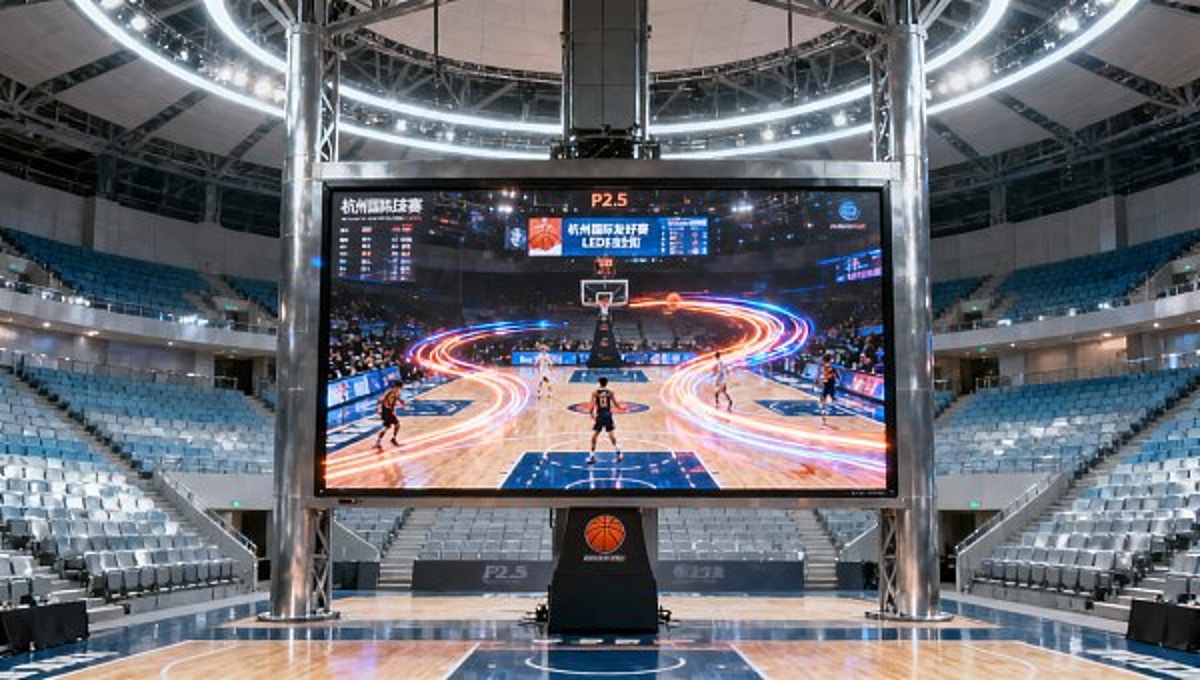
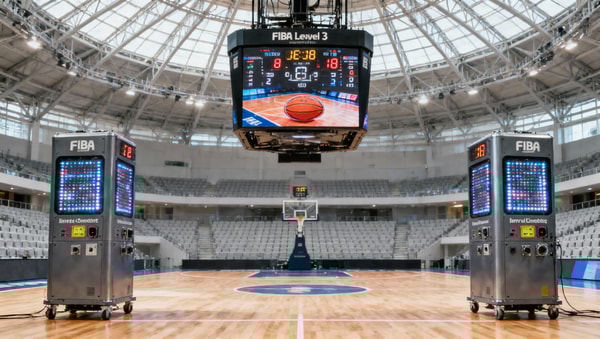
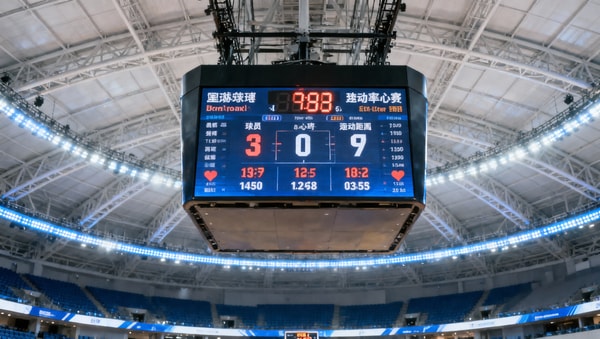
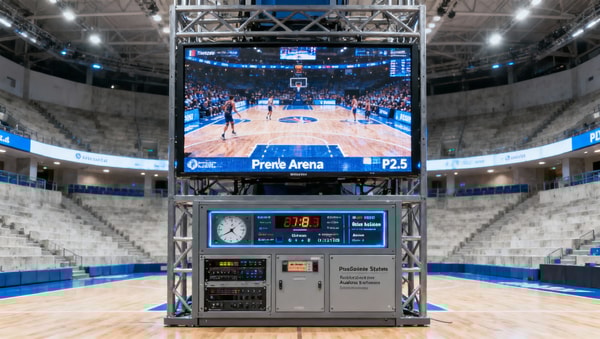
China Basketball Association’s April 27, 2026 announcement of the June 2026 Hangzhou men’s basketball friendly has triggered a surge in export inquiries for commercial smart-court LED systems—particularly P2.5 main displays and player-tracking optical modules—among Australian and Dutch buyers. This development highlights implications for LED display manufacturing, semiconductor procurement, and international trade logistics sectors, as supply constraints on a key driver IC are now delaying deliveries and reshaping sourcing strategies.
Event Overview
On April 27, 2026, the Chinese Basketball Association officially confirmed that Hangzhou will host an international men’s basketball friendly in June 2026. Following the announcement, Australian and Dutch procurement entities registered a 190% increase in inquiry volume for P2.5-grade intelligent court LED main screens and integrated player-tracking light-sensing modules. However, global inventory of the MBI5252E LED driver IC is critically low; domestic module manufacturers have extended standard lead times from four weeks to eight weeks. Some customers have shifted orders to Korean alternative solutions.
Industries Affected
Direct Export Trading Firms
These firms face heightened demand volatility: sudden spikes in technical specifications (e.g., P2.5 resolution, real-time optical tracking compatibility) require rapid validation of compliance and certification documentation for export markets. The extended IC lead time also compresses order-to-shipment windows, increasing pressure on quotation accuracy and contract terms.
Raw Material Procurement Entities
Procurement teams sourcing MBI5252E or functionally equivalent driver ICs are encountering constrained availability and longer allocation cycles. The shortage affects not only cost forecasting but also multi-tier BOM planning—especially where dual-sourcing strategies were previously unimplemented.
LED Module Manufacturing Facilities
Domestic OEM/ODM module makers are experiencing production scheduling disruptions. With standard delivery timelines doubled, capacity utilization planning must now account for extended WIP cycles and increased buffer stock requirements for non-IC components—raising working capital needs without corresponding revenue acceleration.
Supply Chain & Logistics Service Providers
Firms offering customs brokerage, freight forwarding, or bonded warehousing for LED display exports face tighter coordination windows. Longer IC procurement lead times shift critical path dependencies upstream, requiring earlier shipment booking and more frequent cross-border documentation updates—particularly for EU and ANZ market entries with strict conformity marking requirements.
Key Considerations and Recommended Actions
Monitor official event-related procurement guidelines
While the CBA announcement confirms timing and location, no public tender documents or technical specification packages have been released. Exporters should track official channels—including provincial sports bureau notices and Hangzhou Municipal Government procurement portals—for formal RFQ/RFP issuance, which may include mandatory local content or certification clauses.
Track MBI5252E availability and validated alternatives
The current shortage centers on one specific IC model. Buyers should verify whether substitute drivers (e.g., Macroblock’s MBI5253E or compatible offerings from Silan Microelectronics or ISSI) meet the optical timing and grayscale depth requirements for player-tracking modules—not just static display use. Third-party test reports, not datasheet claims alone, should inform substitution decisions.
Assess viability of regional diversification for IC supply
With some customers shifting orders to Korean-based module suppliers, it is prudent to benchmark lead times, minimum order quantities (MOQs), and tariff treatment under Korea-China or Korea-Australia FTAs. Note: Korean-sourced modules may carry different CE/RCM certification pathways, affecting time-to-market in target regions.
Prepare contingency communication protocols with end buyers
Extended lead times directly impact buyer project timelines—especially for venue commissioning or broadcast integration. Proactive disclosure of revised delivery windows, supported by documented IC allocation evidence (e.g., distributor allocation letters), helps preserve contractual goodwill and reduces dispute risk during fulfillment delays.
Editorial Perspective / Industry Observation
Observably, this incident functions less as an isolated supply shock and more as a stress test for the commercial LED ecosystem’s responsiveness to short-notice, high-profile sporting events. The 190% inquiry surge reflects growing reliance on standardized, export-ready smart-court infrastructure—but the MBI5252E bottleneck reveals persistent fragility in single-source, mid-tier driver IC dependencies. Analysis shows that while the Hangzhou event itself is a near-term catalyst, the underlying issue—limited diversification in display driver IC supply chains—is structural and cross-regional. It is therefore more accurate to interpret this development as an early warning signal rather than a transient disruption.
Conclusion
This update underscores how localized sporting events can rapidly expose systemic dependencies across the LED display value chain—from component sourcing to certified module assembly and international compliance. For stakeholders, the immediate implication is operational: delivery timelines have meaningfully lengthened, and sourcing flexibility has become a measurable competitive factor. More broadly, it signals that resilience in smart venue hardware supply chains hinges increasingly on IC-level visibility and multi-region procurement agility—not just panel or system integration capability. Current conditions are better understood as a supply-chain inflection point, not a one-off delay.
Information Sources
Primary source: China Basketball Association official announcement, April 27, 2026.
Additional context: Public procurement data and distributor allocation notices cited in industry trade briefings (April 2026).
Note: FTA-specific tariff treatment for Korean-sourced modules and formal technical specs for Hangzhou venue requirements remain pending official release and are subject to ongoing observation.
Search News
Hot Articles
- Watch OEM & SmartwatchesZheng Qinwen’s Madrid Exit Delays EU Orders for Smart Tennis WearablesMay 02, 2026
- Indoor Playground2026 Jiujiang Guokong Cup Tennis Open Spurs ASEAN Demand for AI Ball MachinesMay 02, 2026
- Stationery & UniformsKenya Marathon Record Break Sparks Carbon-Plate Shoe Export Surge to AfricaMay 02, 2026
Popular Tags
Need ExpertConsultation?
Connect with our specialized leisureengineering team for procurementstrategies.
Recommended News
 May 02, 20262026 Hangzhou Basketball Friendly Spurs LED Screen Demand2026 Hangzhou Basketball Friendly Spurs LED Screen Demand: Urgent global need for P2.5 smart-court displays & player-tracking modules—act now amid MBI5252E IC shortage.● Pro Audio Engineer
 May 02, 2026Iran’s 2026 World Cup Qualification Triggers FCC Part 15B Re-testing DemandFCC Part 15B re-testing demand surges for LED fan displays after Iran’s 2026 World Cup qualification — act now to avoid U.S./Mexico/Canada customs delays.● Pro Audio Engineer
 Apr 29, 2026China's LED Timing Screens Gain Traction After Thomas CupLED timing screens for sports venues—featuring BWF API integration, multilingual UI & PSE/SIRIM certification—are gaining export demand in Malaysia and Indonesia after Thomas Cup exposure.● Pro Audio Engineer
 Apr 28, 20262026 FIBA Women's World Cup Draw Sparks LED Timing Screen Upgrade DemandFIBA Women's World Cup 2026 draw fuels urgent demand for FIBA Level 3 LED timing screens in Australia—HDMI 2.1a, GenLock & HDR10+ ready.● Pro Audio Engineer
 Apr 28, 2026France to Host 2031 FIBA Basketball World Cup: LED Venue Screens & Timing Systems Export OpportunityLED venue screens & timing systems export opportunity: France to host 2031 FIBA Basketball World Cup—unlock EU procurement for certified sports AV suppliers.● Pro Audio Engineer
 Apr 27, 20262026 FIBA Women's World Cup Draw Sets LED Timing Screen Requirements2026 FIBA Women's World Cup LED timing screen requirements are live — bilingual display, biometric visualization & FIBA API integration now mandatory for official venues.● Pro Audio Engineer
 Apr 27, 2026France to Host 2031 FIBA Basketball World Cup: LED Arena Screens & Smart Timing Systems Export OpportunityLED arena screens & smart timing systems export opportunity: France’s 2031 FIBA Basketball World Cup mandates P2.5 LED displays and AI foul detection—act now to align with 2029 compliance deadlines.● Pro Audio Engineer
 Apr 26, 2026FIFA Adopts Chinese Mini-LED Displays for 2026 World Cup VAR SystemFIFA adopts Chinese Mini-LED displays for 2026 World Cup VAR — ultra-HD, HDR10+, -20°C–60°C rugged performance. Key insight for AV exporters & certifiers.● Pro Audio Engineer
 Apr 26, 20262026 FIBA Women's World Cup Draw Spurs LED Timing Screen Export DemandFIBA Women's World Cup 2026 draw fuels global demand for certified LED timing screens—explore export opportunities, compliance essentials & multilingual UI requirements now.● Pro Audio Engineer
 Apr 25, 2026FIFA Adopts Chinese MicroLED Displays for 2026 World Cup VAR SystemFIFA VAR system adopts Chinese MicroLED displays for 2026 World Cup — ultra-low-latency, 240Hz+ certified tech. Game-changing for sports display exporters & broadcast integrators.● Pro Audio Engineer
 Apr 25, 20262026 FIBA Women's World Cup Draw Sparks Demand for Certified Arena Lighting & Timing SystemsFIBA Women's World Cup 2026 draw fuels global demand for certified arena lighting & timing systems—get FIBA-compliant, multi-standard solutions now.● Pro Audio Engineer
 Apr 25, 2026CCTV5 Snooker Broadcast Drives 37% Surge in Stage Lighting Export InquiriesCCTV5 snooker broadcast drives 37% surge in stage lighting export inquiries—UK, Germany & Australia lead demand for DMX512 & broadcast-ready LED fixtures.● Pro Audio Engineer
 Apr 24, 2026CCTV5 Snooker Broadcast Drives 37% Surge in Global Lighting Export InquiriesCCTV5 snooker broadcast drives 37% global lighting export inquiries—UK, Germany & UAE lead demand for stage lighting, DMX512 & LED follow-spots.● Pro Audio Engineer
 Apr 23, 20262026 FIBA Women's World Cup Draw Opens Export Window for Arena Lighting & Timing SystemsFIBA Women's World Cup 2026 draw unlocks export opportunities for FIBA Level 3 arena lighting & ITU-certified timing systems — act now.● Pro Audio Engineer
 Apr 23, 2026CCTV5 Snooker Broadcast Drives 37% Surge in Stage Lighting Export InquiriesCCTV5 snooker broadcast sparks 37% surge in global stage lighting export inquiries—UAE, Mexico & Indonesia lead demand for DMX512/IP65-compliant Chinese LED fixtures.● Pro Audio Engineer
 Apr 22, 2026Guangdong vs. Shanxi CBA Game Highlights Smart Arena LightingGuangdong vs. Shanxi CBA game showcased smart arena lighting — HDR-ready, UL/GB-certified, and proven for broadcast excellence. Key for lighting makers & stadium developers.● Pro Audio Engineer
 Apr 22, 2026CCTV5 Snooker Broadcast Drives 37% Rise in Lighting Export InquiriesCCTV5斯诺克直播引爆海外采购潮!LED摇头灯、DMX控制系统等专业舞台灯光出口询盘激增37%,低延迟与EMC Class B成关键门槛。立即洞察趋势→● Pro Audio Engineer
 Apr 21, 2026CCTV5 Snooker Broadcast Drives 37% Surge in Stage Lighting Export InquiriesCCTV5 snooker broadcast sparks 37% surge in global stage lighting export inquiries—key demand from Brazil, KSA & Indonesia for IP65, 20k-hr LED moving heads.● Pro Audio Engineer
 Apr 21, 2026Guangdong vs. Shanxi CBA Game Highlights Domestic Smart Arena LightingGuangdong vs. Shanxi CBA game spotlighted domestic smart arena lighting—EN 12193:2023-compliant, flicker-free 4K LED system powering global stadium upgrades.● Pro Audio Engineer
 Apr 20, 2026Guangdong vs. Shanxi CBA Game Highlights Domestic Smart Arena LightingGuangdong vs. Shanxi CBA game spotlighted China-made smart arena lighting—FIBA-certified, broadcast-ready LED system with <0.1s dimming & 5600K stability.● Pro Audio Engineer
 Apr 18, 2026JIS T 0601-2-77:2026 Enforces Tighter Laser Brightness Limits in JapanJIS T 0601-2-77:2026 enforces tighter laser brightness limits in Japan—35% stricter + instantaneous peak detection. Critical for stage laser exporters, integrators & distributors.● Pro Audio Engineer
 Apr 17, 2026JIS T 0601-2-77:2026 Enforces Stricter Laser Limits for Stage Equipment in JapanJIS T 0601-2-77:2026 enforces stricter laser limits for stage equipment in Japan — 35% lower MPE, AI beam monitoring required. Act now to comply.● Pro Audio Engineer
 Apr 16, 2026JIS T 0601-2-77:2026 Enforces New Audience Laser Limits in JapanJIS T 0601-2-77:2026 enforces strict new audience laser limits in Japan — ≤1.0 mW/cm² (0.25s). Critical for pro audio, stage lighting & laser exporters. Act now to ensure compliance.● Pro Audio Engineer
 Apr 17, 2026Stage lighting truss compatibility issues nobody checks before ordering hotel equipmentAvoid costly rework: Verify stage lighting truss compatibility with hotel equipment, amusement equipment, sensory playgrounds & commercial furniture—before you order.● Pro Audio Engineer