Wu Yize’s Snooker Final Surge Drives 37% Global Inquiry Spike for Regulation Tables
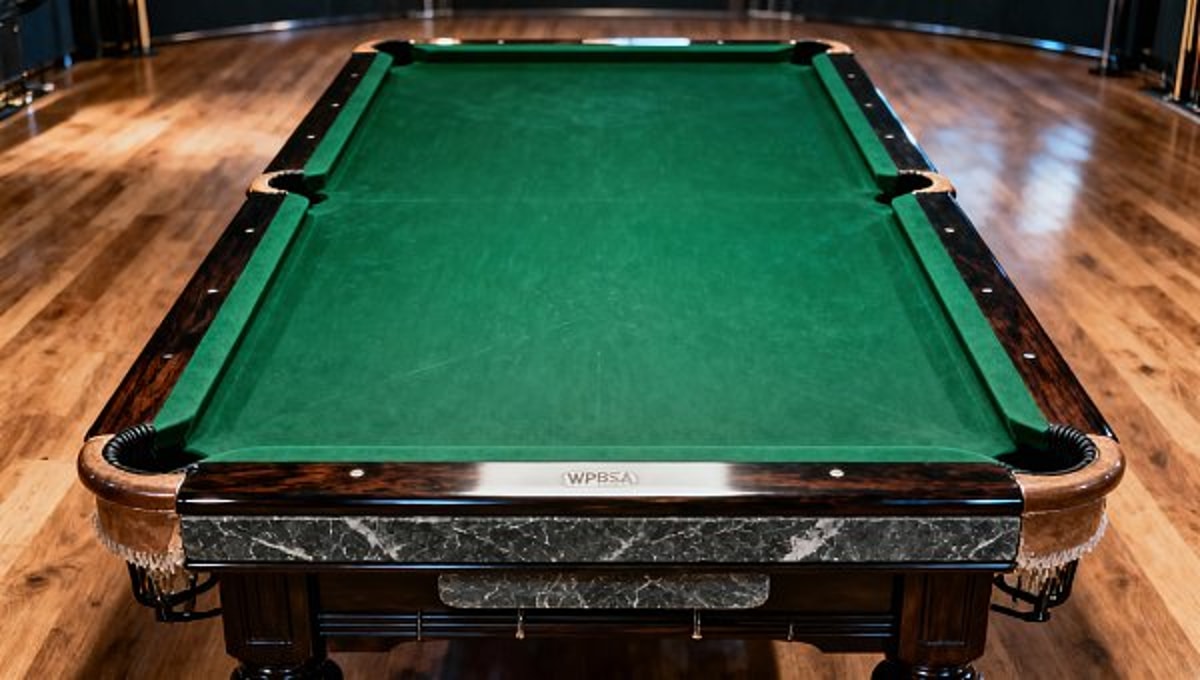
On May 4, 2026, Chinese snooker player Wu Yize led Shaun Murphy 17–9 in the World Snooker Championship final — a record for Chinese players at the event — triggering a measurable uptick in global B2B demand for regulation snooker tables. This development warrants attention from manufacturers, exporters, and supply chain service providers specializing in precision cue sports equipment, particularly those engaged in international trade of WPBSA-compliant tables.
Event Overview
According to Snooker Scene (UK), published on May 4, 2026, Wu Yize held a 17–9 lead over Shaun Murphy in the World Snooker Championship final at the Crucible Theatre. Alibaba.com’s international platform data showed a 37% week-on-week increase in B2B inquiries for ‘regulation snooker table’ within the preceding 24 hours. Inquiries originated primarily from importers in Saudi Arabia, the UAE, Thailand, and Brazil, with technical specifications — including slate flatness (≤0.05 mm/m) and cushion rubber rebound coefficient (≥0.82) — explicitly highlighted.
Which Sub-Sectors Are Affected
Direct Exporters & Trade Enterprises
These firms face immediate pressure to respond to time-sensitive, specification-driven RFQs. The surge reflects short-term demand elasticity tied to high-visibility sporting events — not sustained market expansion. Impact manifests as higher inquiry volume, tighter technical validation requirements, and compressed response windows for quotation and compliance documentation.
Manufacturers & Precision Component Suppliers
Firms producing or assembling regulation tables — especially those supplying slate, cushion rubber, or frame assemblies — are seeing downstream specification scrutiny intensify. Inquiries now routinely reference WPBSA-standard metrics, implying buyers are vetting suppliers based on verifiable metrology (e.g., certified flatness reports) rather than brand or catalog claims alone.
Logistics & Certification Support Providers
Freight forwarders and third-party testing labs handling export documentation — particularly for CE/UKCA marking, material safety certifications, or dimensional verification — report increased requests for expedited verification of slate flatness and rubber performance data. These services are no longer optional add-ons but prerequisites for quotation eligibility in targeted markets.
What Relevant Businesses Should Monitor & Do Now
Track official tournament outcome and post-final reporting
The current 37% inquiry lift is measured *during* the final (not after). Whether this translates into confirmed orders depends on the match result, media coverage duration, and follow-up retail/consumer activity. Firms should monitor Snooker Scene, WPBSA statements, and regional sports media through May 10–15 for signal confirmation.
Prioritize technical documentation readiness for key parameters
Ensure internal test reports for slate flatness (measured per ISO 1101 or equivalent) and cushion rubber rebound (per ASTM D3574 or WPBSA-referenced protocols) are updated, translated, and accessible. Buyers in Saudi Arabia and the UAE increasingly require bilingual (English–Arabic) summaries; Thai and Brazilian importers request localized compliance notes.
Segment inbound RFQs by origin and specification emphasis
Not all inquiries carry equal weight: Those from UAE-based distributors often include warehouse-ready packaging specs; Brazilian RFQs frequently reference INMETRO labeling thresholds. Filtering by geography and technical depth helps allocate engineering and sales resources efficiently — avoiding blanket responses.
Verify inventory and component lead times for high-precision subassemblies
Slate sourcing (especially 25–30 mm Italian or Belgian marble-grade) and certified rebound rubber have extended lead times. Manufacturers should cross-check current stock levels against typical order-to-ship cycles for regulation tables (typically 8–12 weeks) and flag potential bottlenecks before quoting.
Editorial Observation / Industry Perspective
Observably, this is a demand signal — not yet a demand shift. The 37% inquiry increase reflects event-driven buyer attention, not structural growth in snooker infrastructure investment. Analysis shows such spikes typically peak within 48–72 hours of major match milestones and decay rapidly unless reinforced by domestic policy (e.g., new national training facility tenders) or retailer-led promotions. From an industry perspective, it highlights how tightly global B2B procurement for precision sporting goods is coupled to elite competition visibility — and how quickly technical due diligence has become table stakes in emerging markets.
Current evidence suggests this is best understood as a short-term procurement pulse, amplified by real-time digital sourcing behavior. It does not indicate a broad-based revival in snooker’s commercial footprint — but it does confirm that specification literacy among international buyers is rising, and that WPBSA standards are becoming a functional filter in cross-border sourcing workflows.
Concluding, this event underscores a growing reality: For manufacturers of regulation snooker tables, competitive differentiation increasingly hinges not only on build quality but on the transparency, traceability, and portability of technical compliance data across markets. The value lies less in the spike itself, and more in what it reveals about evolving buyer expectations.
Source: Snooker Scene (UK), May 4, 2026 edition; Alibaba.com International Platform B2B inquiry analytics (May 3–4, 2026 window).
Note: Tournament final outcome (completed score, winner) and subsequent order conversion rates remain pending official confirmation and are under observation.
Search News
Hot Articles
- Indoor PlaygroundFIBA 2026 Court Guidelines Enforce LED Uniformity & Floor AcousticsMay 05, 2026
- Stationery & UniformsShandong Lions Reject Tao Hanlin’s Retirement — Implications for Sportswear OEMsMay 05, 2026
- Smart Campus TechLiaoning Tieren Appoints Korean Coach Xu Zhengyuan, Signals Shift in K-League Equipment ProcurementMay 05, 2026
Popular Tags
Need ExpertConsultation?
Connect with our specialized leisureengineering team for procurementstrategies.
Recommended News
 May 05, 2026FIBA 2026 Court Guidelines Enforce LED Uniformity & Floor AcousticsFIBA 2026 Court Guidelines mandate LED uniformity ≥0.8 & floor acoustics ≥35 dB @ 63 Hz—key for exporters targeting Qatar, Indonesia, Mexico tenders.● Theme Park Strategist
 May 05, 2026Sweden’s 26-Year Win Over China Spurs EU Demand for SpinMaster X9SpinMaster X9 AI table tennis robot surges in EU demand after Sweden’s historic 26-year win over China—CE & TÜV-certified units now priority for clubs and suppliers.● Theme Park Strategist
 May 05, 2026Wu Yize’s Snooker Final Surge Drives 37% Global Inquiry Spike for Regulation TablesRegulation snooker tables see 37% global B2B inquiry surge amid Wu Yize’s historic World Championship final — act now on WPBSA-compliant demand from UAE, KSA, Brazil & Thailand.● Theme Park Strategist
 May 05, 2026HuaiBA Basketball Arena Adopts Chinese Smart Flooring, Triggers SASO 5853 Acoustic TestingHuaiBA Basketball Arena adopts Chinese smart flooring—triggers SASO 5853 acoustic testing. Key insight for sports flooring exporters, GCC compliance, and ISO 10137 vibration analysis.● Theme Park Strategist
 May 04, 2026HuaiBA Basketball Court in Jinan Adopts Chinese Smart FlooringHuaiBA Basketball Court in Jinan adopts Chinese smart flooring — a breakthrough for ISO 20342 & SASO 5853-compliant sports surfaces in GCC markets.● Theme Park Strategist
 May 03, 2026CBA Game Triggers SASO 5853 Acoustic Certification Demand for Smart Basketball FloorsCBA game sparks SASO 5853 acoustic certification demand for smart basketball floors—key for GCC exporters, labs & specifiers. Act now.● Theme Park Strategist
 May 03, 2026Raptors G6 Barrett Buzzer-Beater Triggers FCC Part 15B Re-Testing for Commercial Rim-Vibration ModulesRaptors G6 Barrett buzzer-beater exposed FCC Part 15B compliance gaps for commercial rim-vibration modules—urgent re-testing now required across US, CA, MX markets.● Theme Park Strategist
 May 02, 20262026 Jiujiang Guokong Cup Tennis Open Spurs ASEAN Demand for AI Ball MachinesAI ball machines surge 165% amid 2026 Jiujiang Guokong Cup — urgent ASEAN MRA certification needed for Thailand/Vietnam exports.● Theme Park Strategist
 May 02, 2026China's Speed Relay Record Boosts EN 15613-Compliant Climbing Gear ExportsEN 15613-compliant climbing gear exports surge 140% after China’s Dubai speed relay record—key insights for manufacturers, labs & logistics providers.● Theme Park Strategist
 May 01, 2026Playground Borders That Reduce Mess and Keep Zones ClearPlayground borders reduce mess, define activity zones, and improve maintenance control. Discover durable, site-smart solutions for safer, cleaner, more organized play areas.● Theme Park Strategist
 May 01, 2026Inclusive Playground Features Families Notice Right AwayInclusive playground features families notice first: step-free access, stable surfacing, sensory balance, and shared play. Use this practical guide to evaluate safer, truly welcoming spaces.● Theme Park Strategist
 May 01, 2026Toddler Playground Layout Mistakes That Limit Safe PlayToddler playground layout mistakes can quietly increase risk. Learn how better zoning, circulation, and visibility create safer, compliant play spaces for every project.● Theme Park Strategist
 May 01, 2026What Makes a Sensory Playground Feel Inclusive in Real UseSensory playground design feels truly inclusive when access, calm zones, shared play, and caregiver comfort work in real use. Discover what makes spaces more welcoming.● Theme Park Strategist
 May 01, 2026How Playground Swings Affect Safety Zones and Site PlanningPlayground swings shape safety zones, circulation, and site efficiency. Learn how to plan compliant, high-performing layouts that reduce redesign risk and improve project value.● Theme Park Strategist
 Apr 30, 2026CBA Game Sparks Southeast Asia Demand for Chinese Interactive Playground WallsCBA game sparks urgent demand for Chinese basketball-themed interactive playground walls across Southeast Asia—AR, pressure-sensor tech, SNI/IEC-certified.● Theme Park Strategist
 Apr 30, 2026Vietnam Mandates Anti-Pinch Sensors for Indoor Playground EquipmentAnti-pinch sensors now mandatory for indoor playground equipment in Vietnam — comply by July 1, 2026 to avoid customs rejection and market access delays.● Theme Park Strategist
 Apr 30, 2026When a playground consultant saves more than an in-house planPlayground consultant advice can prevent costly design errors, compliance gaps, and vendor mistakes. See when expert support beats an in-house plan and protects budget.● Theme Park Strategist
 Apr 30, 2026A smarter playground layout starts with traffic flowPlayground layout starts with traffic flow. Discover how smarter circulation improves safety, accessibility, capacity, and long-term commercial performance.● Theme Park Strategist
 Apr 30, 2026Playground certification steps that delay launch datesPlayground certification delays can add weeks to launch dates. Learn the key bottlenecks, hidden compliance risks, and practical steps to keep projects on schedule.● Theme Park Strategist
 Apr 30, 2026Playground climbers that keep kids challenged without bottlenecksPlayground climbers that reduce bottlenecks keep more kids engaged, improve flow, and suit schools, resorts, parks, and leisure venues. Learn what to specify before you buy.● Theme Park Strategist
 Apr 30, 2026What playground inspection reports often reveal too latePlayground inspection reports often reveal hidden risks too late. Learn how to catch design, installation, and safety issues earlier to avoid delays, rework, and costly project setbacks.● Theme Park Strategist
 Apr 30, 2026Playground accessibility details that change real usabilityPlayground accessibility details shape real usability beyond ramps. Explore transfer points, sensory zones, sightlines, and circulation tips that help buyers choose truly inclusive play spaces.● Theme Park Strategist
 Apr 30, 2026Playground shade structures that improve comfort in hot seasonsPlayground shade structures improve comfort, safety, and usability in hot seasons. Explore smart, durable solutions for schools, parks, and commercial projects.● Theme Park Strategist
 Apr 30, 2026Commercial slides and the maintenance issues often overlookedCommercial slides often fail on maintenance, not design. Learn the overlooked wear, cleaning, access, and compliance issues that affect safety, uptime, and long-term cost.● Theme Park Strategist