NBA to Deploy LED Interactive Court System in 2026–27 Season
On May 4, 2026, the NBA announced the league-wide rollout of a next-generation LED interactive floor system for the 2026–27 season — a development with direct implications for LED manufacturing, sports venue infrastructure, and real-time display technology supply chains. The initiative signals a shift toward integrated smart-venue hardware, drawing attention from manufacturers compliant with UL 8750 and ANSI E1.17 standards, particularly those engaged in ODM partnerships for high-specification LED floor tiles.
Event Overview
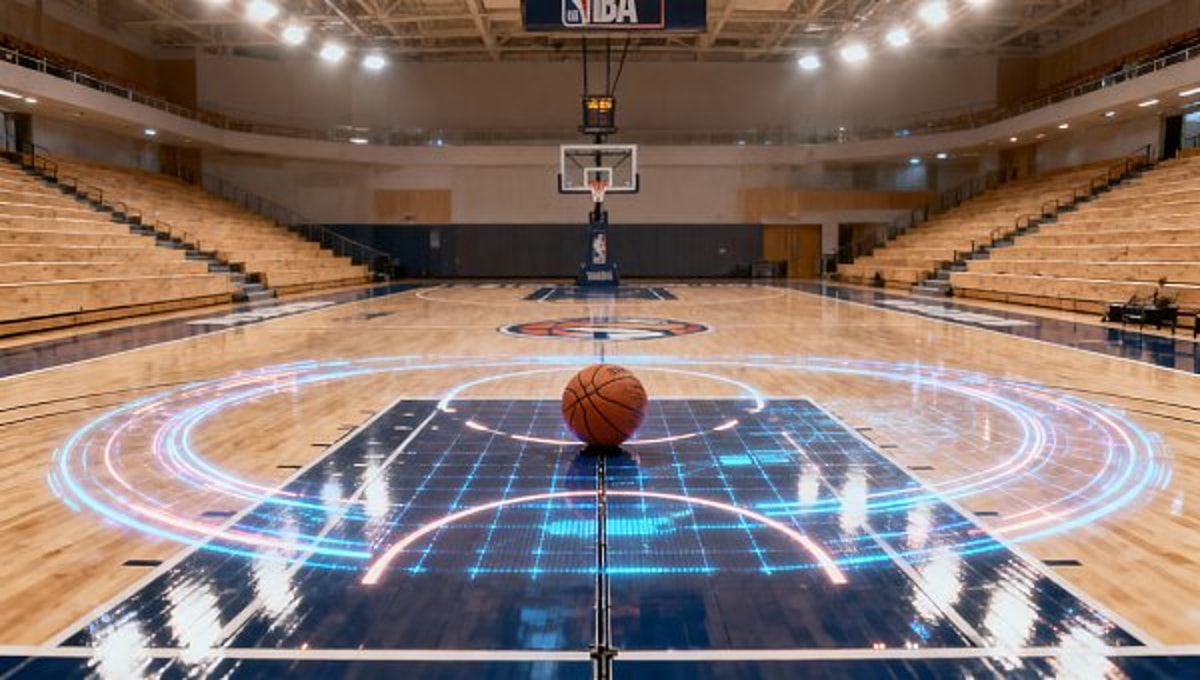
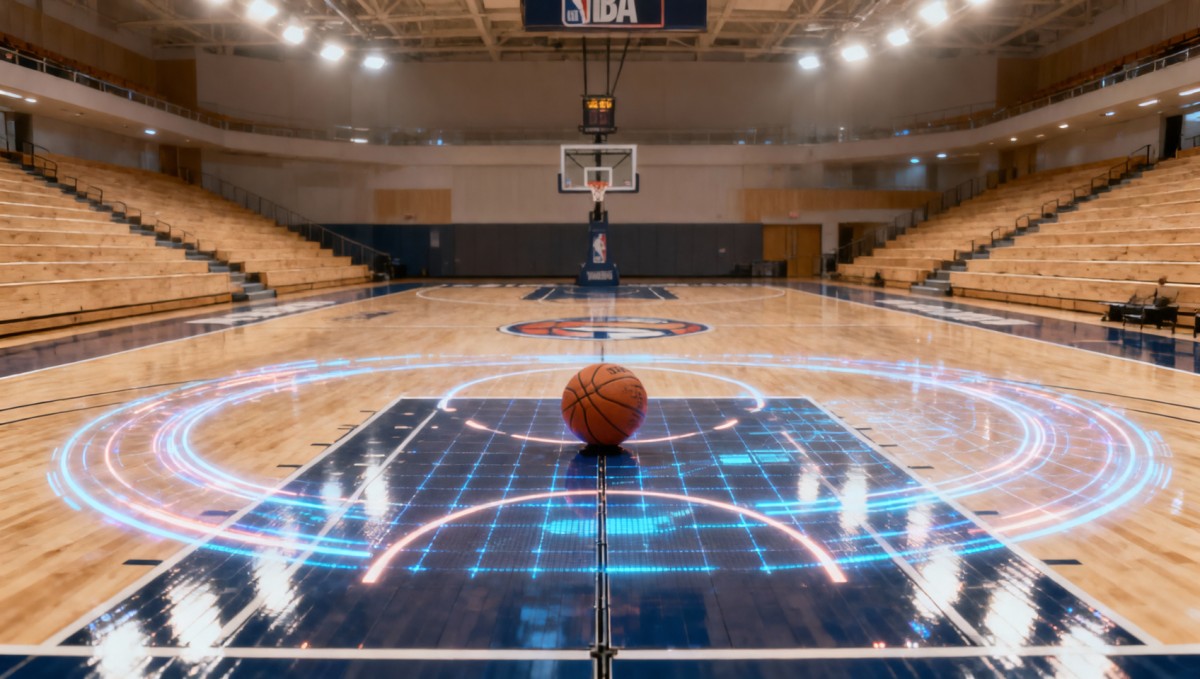
On May 4, 2026, the NBA confirmed that the 2026–27 season will feature full deployment of a new LED interactive floor system across select arenas. The system includes real-time AR projection, player trajectory tracking, and audience-responsive lighting effects. Initial pilot installations will occur at Little Caesars Arena (Detroit) and Kaseya Center (Miami). The system must comply with UL 8750 LED lighting safety standards and ANSI E1.17 stage electrical specifications. Chinese LED floor tile manufacturers have received official ODM technical white paper invitations from U.S. partners.
Industries Affected
LED Floor Tile Manufacturers (ODM Focus)
Manufacturers producing structural LED floor tiles — especially those already certified to UL 8750 and ANSI E1.17 — face both opportunity and technical scrutiny. The NBA’s specification requirements go beyond standard commercial LED flooring, emphasizing mechanical durability under dynamic load, low-latency signal synchronization, and seamless integration with arena-wide AV systems. Demand may rise for tiles with embedded sensors and IP67-rated encapsulation.
Venue Infrastructure Integrators
Firms specializing in sports arena AV/IT integration are directly impacted by the need to retrofit or commission new signal distribution architecture — including fiber-optic backbone upgrades, synchronized timing protocols (e.g., SMPTE 2059), and power-over-ethernet (PoE++) compatibility. Integration complexity increases due to real-time AR rendering latency constraints and multi-source data fusion (tracking + lighting + broadcast feed).
Sports Technology Suppliers (Tracking & AR)
Providers of optical or inertial player-tracking systems — and AR content engines designed for live venue projection — must align outputs with the floor system’s spatial calibration framework. Compatibility with NBA’s official data pipeline (e.g., Second Spectrum feeds) and low-jitter rendering APIs becomes a differentiator. Non-standard SDKs or proprietary projection mapping tools may require re-engineering.
Standards Compliance & Certification Services
Third-party testing labs and certification bodies accredited for UL 8750 and ANSI E1.17 are likely to see increased demand for validation of LED floor assemblies under combined electrical, thermal, and mechanical stress conditions. Testing scope now extends beyond static luminance/safety to include electromagnetic interference (EMI) under high-frequency PWM dimming and multi-node network resilience.
What Relevant Enterprises or Practitioners Should Monitor and Do
Track Official Technical Documentation Releases
Monitor updates from the NBA’s Facilities & Technology division and the designated ODM white paper revisions. Early versions may omit details on communication protocols (e.g., Art-Net v5 vs. sACN), thermal derating curves, or maintenance access requirements — all critical for bill-of-materials planning.
Prioritize Compliance Readiness for UL 8750 + ANSI E1.17 Dual Certification
Confirm whether existing LED floor product lines meet both standards concurrently — particularly regarding conductor insulation ratings under sustained 60°C ambient and grounding continuity during impact loading. Retesting may be required if current certifications were obtained separately or under legacy editions.
Distinguish Between Pilot Deployment Scope and Full Rollout Requirements
The initial pilots at Detroit and Miami venues involve limited zones (e.g., sideline areas only), not full-court coverage. Avoid overextending production capacity based on early announcements; instead, prepare modular sub-system designs scalable from pilot-scale (≤500 m²) to full-court (≥800 m²) configurations.
Initiate Cross-Functional Alignment with AV Integration Partners
Engage proactively with U.S.-based arena integrators to map signal flow diagrams and power topology requirements. Clarify responsibilities for timing master clock sourcing, network switch redundancy, and failover behavior during AR engine downtime — contractual boundaries here affect warranty scope and service SLAs.
Editorial Perspective / Industry Observation
Observably, this announcement functions primarily as a formalized specification signal — not an immediate procurement trigger. The NBA has not disclosed volume targets, vendor selection timelines, or phased rollout milestones beyond the two named pilot venues. Analysis shows the emphasis lies in establishing interoperability baselines rather than committing to a single supplier ecosystem. From an industry perspective, the value lies less in near-term orders and more in the de facto standardization pressure it exerts on LED floor performance benchmarks — especially around latency, uniformity, and field-replaceability. Current readiness hinges less on scaling output and more on documentation rigor and cross-standard compliance verification.
Conclusion: This NBA initiative is best understood as a forward-looking infrastructure specification milestone — one that refines technical expectations for high-performance LED floor systems without yet defining commercial execution pathways. For suppliers, the priority remains alignment with published safety and electrical standards, responsiveness to white paper updates, and structured engagement with integration stakeholders — not speculative capacity expansion.
Information Sources: NBA Official Announcement (May 4, 2026); UL 8750 Standard (2025 Edition); ANSI E1.17 – 2023 Entertainment Technology – Electrical Safety Standards; ODM white paper invitation (undated, distributed to pre-qualified Chinese manufacturers). Note: Full technical specifications, vendor selection process, and rollout schedule beyond pilot venues remain pending official release and require ongoing observation.
Search News
Hot Articles
- Indoor PlaygroundFIBA 2026 Court Guidelines Enforce LED Uniformity & Floor AcousticsMay 05, 2026
- Stationery & UniformsShandong Lions Reject Tao Hanlin’s Retirement — Implications for Sportswear OEMsMay 05, 2026
- Smart Campus TechLiaoning Tieren Appoints Korean Coach Xu Zhengyuan, Signals Shift in K-League Equipment ProcurementMay 05, 2026
Popular Tags
Need ExpertConsultation?
Connect with our specialized leisureengineering team for procurementstrategies.
Recommended News
 May 05, 2026NBA to Deploy LED Interactive Court System in 2026–27 SeasonNBA LED interactive court system launch in 2026–27: Real-time AR, player tracking & audience lighting—key opportunity for UL 8750/ANSI E1.17-compliant LED floor tile ODMs.● Pro Audio Engineer
 May 02, 20262026 Hangzhou Basketball Friendly Spurs LED Screen Demand2026 Hangzhou Basketball Friendly Spurs LED Screen Demand: Urgent global need for P2.5 smart-court displays & player-tracking modules—act now amid MBI5252E IC shortage.● Pro Audio Engineer
 May 02, 2026Iran’s 2026 World Cup Qualification Triggers FCC Part 15B Re-testing DemandFCC Part 15B re-testing demand surges for LED fan displays after Iran’s 2026 World Cup qualification — act now to avoid U.S./Mexico/Canada customs delays.● Pro Audio Engineer
 Apr 29, 2026China's LED Timing Screens Gain Traction After Thomas CupLED timing screens for sports venues—featuring BWF API integration, multilingual UI & PSE/SIRIM certification—are gaining export demand in Malaysia and Indonesia after Thomas Cup exposure.● Pro Audio Engineer
 Apr 28, 20262026 FIBA Women's World Cup Draw Sparks LED Timing Screen Upgrade DemandFIBA Women's World Cup 2026 draw fuels urgent demand for FIBA Level 3 LED timing screens in Australia—HDMI 2.1a, GenLock & HDR10+ ready.● Pro Audio Engineer
 Apr 28, 2026France to Host 2031 FIBA Basketball World Cup: LED Venue Screens & Timing Systems Export OpportunityLED venue screens & timing systems export opportunity: France to host 2031 FIBA Basketball World Cup—unlock EU procurement for certified sports AV suppliers.● Pro Audio Engineer
 Apr 27, 20262026 FIBA Women's World Cup Draw Sets LED Timing Screen Requirements2026 FIBA Women's World Cup LED timing screen requirements are live — bilingual display, biometric visualization & FIBA API integration now mandatory for official venues.● Pro Audio Engineer
 Apr 27, 2026France to Host 2031 FIBA Basketball World Cup: LED Arena Screens & Smart Timing Systems Export OpportunityLED arena screens & smart timing systems export opportunity: France’s 2031 FIBA Basketball World Cup mandates P2.5 LED displays and AI foul detection—act now to align with 2029 compliance deadlines.● Pro Audio Engineer
 Apr 26, 2026FIFA Adopts Chinese Mini-LED Displays for 2026 World Cup VAR SystemFIFA adopts Chinese Mini-LED displays for 2026 World Cup VAR — ultra-HD, HDR10+, -20°C–60°C rugged performance. Key insight for AV exporters & certifiers.● Pro Audio Engineer
 Apr 26, 20262026 FIBA Women's World Cup Draw Spurs LED Timing Screen Export DemandFIBA Women's World Cup 2026 draw fuels global demand for certified LED timing screens—explore export opportunities, compliance essentials & multilingual UI requirements now.● Pro Audio Engineer
 Apr 25, 2026FIFA Adopts Chinese MicroLED Displays for 2026 World Cup VAR SystemFIFA VAR system adopts Chinese MicroLED displays for 2026 World Cup — ultra-low-latency, 240Hz+ certified tech. Game-changing for sports display exporters & broadcast integrators.● Pro Audio Engineer
 Apr 25, 20262026 FIBA Women's World Cup Draw Sparks Demand for Certified Arena Lighting & Timing SystemsFIBA Women's World Cup 2026 draw fuels global demand for certified arena lighting & timing systems—get FIBA-compliant, multi-standard solutions now.● Pro Audio Engineer
 Apr 25, 2026CCTV5 Snooker Broadcast Drives 37% Surge in Stage Lighting Export InquiriesCCTV5 snooker broadcast drives 37% surge in stage lighting export inquiries—UK, Germany & Australia lead demand for DMX512 & broadcast-ready LED fixtures.● Pro Audio Engineer
 Apr 24, 2026CCTV5 Snooker Broadcast Drives 37% Surge in Global Lighting Export InquiriesCCTV5 snooker broadcast drives 37% global lighting export inquiries—UK, Germany & UAE lead demand for stage lighting, DMX512 & LED follow-spots.● Pro Audio Engineer
 Apr 23, 20262026 FIBA Women's World Cup Draw Opens Export Window for Arena Lighting & Timing SystemsFIBA Women's World Cup 2026 draw unlocks export opportunities for FIBA Level 3 arena lighting & ITU-certified timing systems — act now.● Pro Audio Engineer
 Apr 23, 2026CCTV5 Snooker Broadcast Drives 37% Surge in Stage Lighting Export InquiriesCCTV5 snooker broadcast sparks 37% surge in global stage lighting export inquiries—UAE, Mexico & Indonesia lead demand for DMX512/IP65-compliant Chinese LED fixtures.● Pro Audio Engineer
 Apr 22, 2026Guangdong vs. Shanxi CBA Game Highlights Smart Arena LightingGuangdong vs. Shanxi CBA game showcased smart arena lighting — HDR-ready, UL/GB-certified, and proven for broadcast excellence. Key for lighting makers & stadium developers.● Pro Audio Engineer
 Apr 22, 2026CCTV5 Snooker Broadcast Drives 37% Rise in Lighting Export InquiriesCCTV5斯诺克直播引爆海外采购潮!LED摇头灯、DMX控制系统等专业舞台灯光出口询盘激增37%,低延迟与EMC Class B成关键门槛。立即洞察趋势→● Pro Audio Engineer
 Apr 21, 2026CCTV5 Snooker Broadcast Drives 37% Surge in Stage Lighting Export InquiriesCCTV5 snooker broadcast sparks 37% surge in global stage lighting export inquiries—key demand from Brazil, KSA & Indonesia for IP65, 20k-hr LED moving heads.● Pro Audio Engineer
 Apr 21, 2026Guangdong vs. Shanxi CBA Game Highlights Domestic Smart Arena LightingGuangdong vs. Shanxi CBA game spotlighted domestic smart arena lighting—EN 12193:2023-compliant, flicker-free 4K LED system powering global stadium upgrades.● Pro Audio Engineer
 Apr 20, 2026Guangdong vs. Shanxi CBA Game Highlights Domestic Smart Arena LightingGuangdong vs. Shanxi CBA game spotlighted China-made smart arena lighting—FIBA-certified, broadcast-ready LED system with <0.1s dimming & 5600K stability.● Pro Audio Engineer
 Apr 18, 2026JIS T 0601-2-77:2026 Enforces Tighter Laser Brightness Limits in JapanJIS T 0601-2-77:2026 enforces tighter laser brightness limits in Japan—35% stricter + instantaneous peak detection. Critical for stage laser exporters, integrators & distributors.● Pro Audio Engineer
 Apr 17, 2026JIS T 0601-2-77:2026 Enforces Stricter Laser Limits for Stage Equipment in JapanJIS T 0601-2-77:2026 enforces stricter laser limits for stage equipment in Japan — 35% lower MPE, AI beam monitoring required. Act now to comply.● Pro Audio Engineer
 Apr 16, 2026JIS T 0601-2-77:2026 Enforces New Audience Laser Limits in JapanJIS T 0601-2-77:2026 enforces strict new audience laser limits in Japan — ≤1.0 mW/cm² (0.25s). Critical for pro audio, stage lighting & laser exporters. Act now to ensure compliance.● Pro Audio Engineer