Abacus learning toys still matter when math goes digital
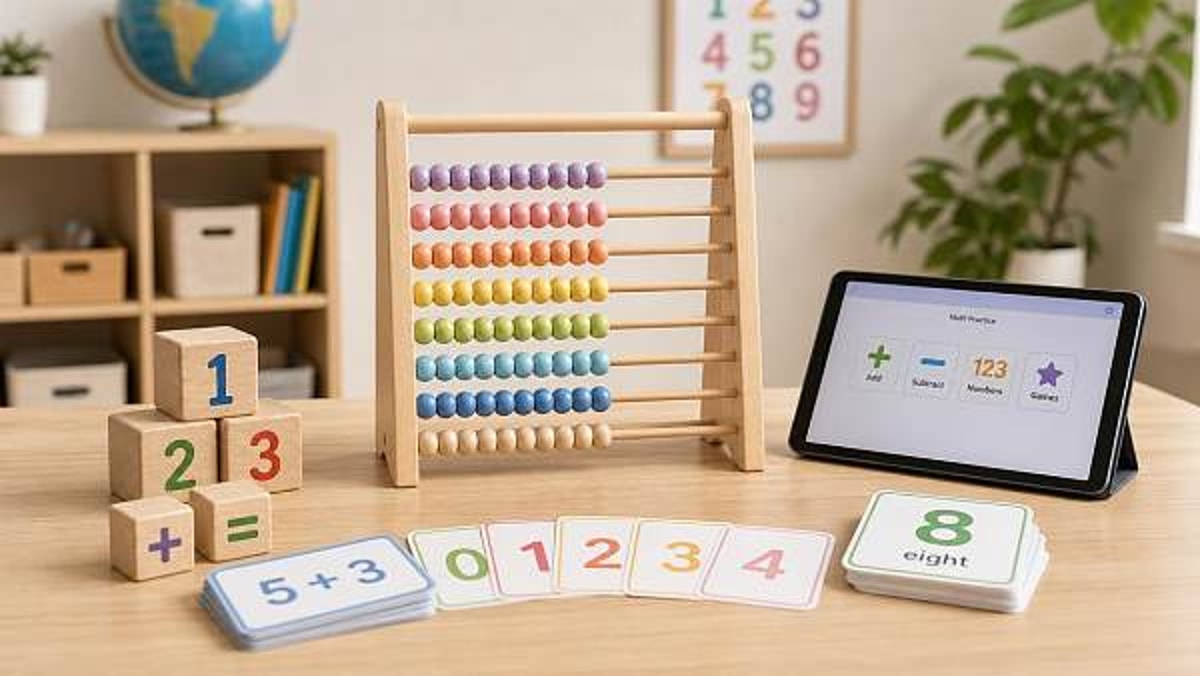
In an era of apps, screens, and AI-powered tutoring, abacus learning toys still hold unique value for early math development. More than nostalgic tools, they help children build number sense, concentration, and hands-on problem-solving skills that digital platforms often overlook. For educators, buyers, and parents researching effective learning solutions, understanding why these tactile tools remain relevant can reveal what truly supports foundational math confidence.
Why the conversation around early math tools is changing
The market for children’s learning products has shifted sharply in recent years. Digital learning has expanded fast, especially in homes and schools looking for scalable, low-friction instruction. At the same time, many educators and buyers are reconsidering whether screen-based math practice alone is enough for early learners. This is where abacus learning toys have regained attention. The change is not driven by nostalgia. It is driven by a growing recognition that foundational math skills depend on physical interaction, pattern recognition, and repeated sensory engagement.
Across educational supply channels, demand is moving from “more technology” toward “better learning outcomes through balanced tools.” That shift matters for curriculum planners, school buyers, specialty retailers, and product developers. In the broader commercial sourcing landscape, products that support measurable developmental value, safety compliance, and durable use are receiving more serious evaluation. Abacus learning toys fit this trend because they are simple, low-tech, and yet highly aligned with the need for hands-on cognitive learning.
The key trend signals keeping abacus learning toys relevant
Several signals explain why abacus learning toys remain part of current educational purchasing decisions. First, there is stronger interest in tactile learning materials for early childhood and primary education. Second, parents and teachers are more aware of screen fatigue and the limits of passive digital interaction. Third, buyers increasingly look for products that support both structured lessons and free exploration. Finally, schools and institutions want tools that are durable, reusable, and easy to integrate into mixed learning environments.
Importantly, this is not an either-or situation between analog and digital math tools. The stronger market direction is blended learning. In that model, apps may provide repetition, tracking, or adaptive questioning, while abacus learning toys support concrete understanding of quantity, place value, and arithmetic movement. That complementarity is one of the biggest reasons these products still matter.
What is driving renewed interest in hands-on math tools
The renewed relevance of abacus learning toys comes from more than educational philosophy. It also reflects practical realities in classrooms, homes, and commercial procurement. Early learners often need to see and touch quantity before abstract symbols make sense. When children slide beads, they are not just “playing”; they are connecting movement to counting, grouping, and operation logic. This type of embodied learning remains difficult to fully replace with flat-screen interfaces.
Another driver is attention quality. Digital systems can be engaging, but they can also fragment concentration through sound, animation, and fast switching. In contrast, abacus learning toys tend to slow the learning process in a useful way. They encourage focus, sequencing, and self-correction. That matters in a market where attention resilience is becoming as valuable as content exposure.
Procurement logic is changing too. Educational buyers are not only comparing price points. They are evaluating product longevity, safety materials, classroom maintenance, and cross-age usability. A well-made abacus can serve multiple groups, support different math stages, and withstand repeated handling. That gives it commercial relevance even in highly digitized learning environments.
Core forces behind this shift
- A stronger focus on number sense rather than memorization alone
- Concern about excessive screen time in early childhood settings
- Demand for products that support inclusive and multisensory learning
- Institutional preference for reusable, low-maintenance teaching resources
- Interest in STEM foundations beginning with concrete mathematical thinking
How the shift affects educators, buyers, retailers, and manufacturers
The continued value of abacus learning toys does not affect every stakeholder in the same way. For educators, the main impact is instructional. They need tools that help children move from concrete manipulation to mental calculation. For parents, the impact is practical: they want learning products that are effective without creating more screen dependence. For retailers and distributors, the shift creates a category opportunity around purposeful educational toys rather than novelty items. For manufacturers, the market now expects better quality signaling, compliance clarity, and use-case positioning.
This means simple products can no longer rely on simple selling. Even traditional learning tools need stronger product narratives. Buyers want to know how the toy supports math readiness, what age band it suits, whether the materials are child-safe, and how it fits into broader educational programs. In a competitive sourcing environment, abacus learning toys with clear pedagogical value and reliable manufacturing standards stand out more than generic versions.
What buyers should watch when evaluating abacus learning toys today
Not every abacus product on the market delivers the same educational value. As sourcing becomes more professionalized, buyers should move beyond appearance and unit cost. The first consideration is design quality. Bead movement should be smooth but stable, the frame should be durable, and the scale should match the intended age group. An oversized product for preschool use differs from a more compact version for structured arithmetic practice.
Second, material and compliance standards matter. For educational environments, buyers should assess whether finishes, edges, coatings, and structural integrity meet relevant safety expectations. Third, product communication matters more than before. Suppliers that explain learning outcomes, use scenarios, and curriculum compatibility are more likely to succeed in today’s market. In other words, the commercial future of abacus learning toys depends not only on manufacturing, but also on evidence-based positioning.
Another important shift is packaging for institutional use. Schools may need bulk ordering, storage efficiency, and easy integration into teaching kits. Retail channels may need giftable presentation and clearer age guidance. The same core product can serve multiple channels, but only if suppliers understand these different demand contexts.
Why digital math growth does not make tactile tools obsolete
A common market assumption is that once digital tutoring improves, physical manipulatives will become secondary. The current direction suggests something more nuanced. As digital content becomes abundant, the differentiator is not access to exercises but depth of comprehension. Many early learners can tap correct answers without fully internalizing quantity relationships. Abacus learning toys help close that gap because they make arithmetic visible and physical.
This is especially relevant in the early stages of math confidence. Children who understand grouping, sequencing, and exchange through touch often transition more smoothly into symbolic math. That makes tactile resources strategically useful, not old-fashioned. In commercial terms, products that support foundational transfer skills may become more important as digital tools handle more routine practice.
For information researchers, this trend offers a practical takeaway: the question is no longer whether learning should be digital or physical. The better question is which parts of mathematical development benefit most from each format. That framework creates a stronger basis for purchasing, curriculum planning, and product innovation.
What the next phase of demand may look like
Looking ahead, demand for abacus learning toys is likely to become more selective rather than simply larger. Buyers may favor products that align with broader trends in educational supplies: sustainability, verified safety, modular learning systems, and clearer developmental positioning. Generic low-cost products may remain in circulation, but premium and institution-ready versions could gain share where trust and learning outcomes matter more.
There is also room for hybrid product strategy. Some brands may connect physical abacus use with printed guides, teacher support materials, or optional digital extensions that track progress without replacing tactile work. This kind of ecosystem thinking fits the larger direction of modern educational sourcing, where the value lies in integrated use rather than isolated products.
Signals worth monitoring
- Growing institutional preference for multisensory learning kits
- More buyer scrutiny of product safety and material transparency
- Greater emphasis on foundational numeracy in early education programs
- Stronger demand for tools that reduce reliance on constant screen exposure
- Supplier differentiation through educational guidance, not just price
Practical judgment points for businesses and researchers
If you are assessing whether abacus learning toys still matter, the strongest conclusion is that they matter differently now. Their role is no longer based on tradition alone. It is based on where tactile learning fits inside a more complex educational ecosystem. For businesses, this means product strategy should emphasize validated use cases, durable quality, and audience-specific messaging. For researchers and buyers, it means evaluating whether a product helps build real number sense rather than just offering a familiar form.
In sourcing discussions, it is useful to ask a focused set of questions: Does the product support concrete-to-abstract math learning? Is it appropriate for the target age and learning context? Does the supplier communicate safety, durability, and educational intent clearly? Can the product work in both home and institutional settings? These questions provide a more reliable judgment framework than simply comparing digital features against physical simplicity.
Final takeaway
Abacus learning toys remain relevant because the market is rediscovering a basic truth: effective early math learning is not only about faster access to content, but about deeper engagement with quantity, structure, and reasoning. As digital tools continue to expand, tactile resources are becoming more strategically important in the places where children need physical interaction to understand abstract ideas. That shift affects educators, commercial buyers, retailers, and manufacturers alike.
For organizations that want to judge the trend’s impact on their own business, the next step is to confirm three points: where hands-on math tools fit within their target learning environment, what product standards buyers now expect, and how clearly the educational value can be communicated. Those answers will reveal whether abacus learning toys are just another catalog item or a meaningful part of the future learning mix.
Search News
Hot Articles
Popular Tags
Need ExpertConsultation?
Connect with our specialized leisureengineering team for procurementstrategies.
Recommended News
 May 06, 2026Basketball hoops for school: portable convenience vs fixed stabilityBasketball hoops for school: compare portable convenience and fixed stability to choose safer, smarter, and more cost-effective solutions for campus courts.● Theme Park Strategist
 May 06, 2026Montessori wooden toys and the question of long-term durabilityMontessori wooden toys: discover what really determines long-term durability, safety, and value, and learn how buyers can choose options built for repeated use.● Theme Park Strategist
 May 06, 2026Wholesale ping pong tables for schools: what wears out firstWholesale ping pong tables for schools: learn what wears out first, from casters to locks, and use this buyer-focused guide to cut replacement costs and choose safer, longer-lasting tables.● Theme Park Strategist
 May 06, 2026Gymnastic mats wholesale: thickness claims vs real shock absorptionGymnastic mats wholesale buyers: learn why thickness claims alone can mislead. Compare real shock absorption, foam density, rebound control, and sourcing checks before you buy.● Theme Park Strategist
 May 06, 2026Abacus learning toys still matter when math goes digitalAbacus learning toys still matter in digital math, helping children build number sense, focus, and hands-on problem-solving. See why educators, parents, and buyers still choose them.● Theme Park Strategist
 May 06, 2026Liaoning Tieren Appoints Shin Jeong-won; K-League Training Gear Sourcing Shift PossibleLiaoning Tieren appoints K-League coach Shin Jeong-won — sparking Korean demand for ISO 10993-certified smart athletic wear, especially heart-rate & GPS training vests.● Theme Park Strategist
 May 06, 2026NBA LED Interactive Court System Enters Mass ProductionNBA LED interactive court system enters mass production in Q3 2026 — a breakthrough for smart sports venues, AR fan engagement, and global LED display suppliers.● Theme Park Strategist
 May 06, 2026NBA Adopts New LED Interactive Court Floors in 2026–27 SeasonNBA LED interactive court floors launch in 2026–27: AR fan engagement, real-time stats & certified hardware — game-changing for global sports tech suppliers.● Theme Park Strategist
 May 06, 2026HuaiBA Youth Basketball Arena Adopts Domestic Smart Floor SystemHuaiBA Youth Basketball Arena's domestic smart floor system sets a new benchmark—featuring real-time pressure sensing & acoustic feedback for global sports infrastructure buyers.● Theme Park Strategist
 May 06, 2026Swedish Team’s Historic Win Spurs EU Demand for Chinese AI Ping-Pong MachinesAI ping-pong machines surge in EU demand after Sweden’s historic win over China—explore CE-compliant Chinese smart training tech now.● Theme Park Strategist
 May 06, 2026Snooker World Championship Boosts Billiards Table DemandSnooker World Championship drives global demand for billiards tables—especially smart-scoring & carbon-fiber models with FIBA-compatibility and multilingual UI.● Theme Park Strategist
 May 06, 2026FIBA 2026 Basketball Court Standards: LED Lighting & Acoustic Flooring Now MandatoryFIBA 2026 mandates LED lighting uniformity ≥0.8 & acoustic flooring ≥35 dB—key for exporters targeting CE, SASO, GOST markets. Act now to align.● Theme Park Strategist
 May 05, 2026FIBA 2026 Court Guidelines Enforce LED Uniformity & Floor AcousticsFIBA 2026 Court Guidelines mandate LED uniformity ≥0.8 & floor acoustics ≥35 dB @ 63 Hz—key for exporters targeting Qatar, Indonesia, Mexico tenders.● Theme Park Strategist
 May 05, 2026Sweden’s 26-Year Win Over China Spurs EU Demand for SpinMaster X9SpinMaster X9 AI table tennis robot surges in EU demand after Sweden’s historic 26-year win over China—CE & TÜV-certified units now priority for clubs and suppliers.● Theme Park Strategist
 May 05, 2026Wu Yize’s Snooker Final Surge Drives 37% Global Inquiry Spike for Regulation TablesRegulation snooker tables see 37% global B2B inquiry surge amid Wu Yize’s historic World Championship final — act now on WPBSA-compliant demand from UAE, KSA, Brazil & Thailand.● Theme Park Strategist
 May 05, 2026HuaiBA Basketball Arena Adopts Chinese Smart Flooring, Triggers SASO 5853 Acoustic TestingHuaiBA Basketball Arena adopts Chinese smart flooring—triggers SASO 5853 acoustic testing. Key insight for sports flooring exporters, GCC compliance, and ISO 10137 vibration analysis.● Theme Park Strategist
 May 04, 2026HuaiBA Basketball Court in Jinan Adopts Chinese Smart FlooringHuaiBA Basketball Court in Jinan adopts Chinese smart flooring — a breakthrough for ISO 20342 & SASO 5853-compliant sports surfaces in GCC markets.● Theme Park Strategist
 May 03, 2026CBA Game Triggers SASO 5853 Acoustic Certification Demand for Smart Basketball FloorsCBA game sparks SASO 5853 acoustic certification demand for smart basketball floors—key for GCC exporters, labs & specifiers. Act now.● Theme Park Strategist
 May 03, 2026Raptors G6 Barrett Buzzer-Beater Triggers FCC Part 15B Re-Testing for Commercial Rim-Vibration ModulesRaptors G6 Barrett buzzer-beater exposed FCC Part 15B compliance gaps for commercial rim-vibration modules—urgent re-testing now required across US, CA, MX markets.● Theme Park Strategist
 May 02, 20262026 Jiujiang Guokong Cup Tennis Open Spurs ASEAN Demand for AI Ball MachinesAI ball machines surge 165% amid 2026 Jiujiang Guokong Cup — urgent ASEAN MRA certification needed for Thailand/Vietnam exports.● Theme Park Strategist
 May 02, 2026China's Speed Relay Record Boosts EN 15613-Compliant Climbing Gear ExportsEN 15613-compliant climbing gear exports surge 140% after China’s Dubai speed relay record—key insights for manufacturers, labs & logistics providers.● Theme Park Strategist
 May 01, 2026Playground Borders That Reduce Mess and Keep Zones ClearPlayground borders reduce mess, define activity zones, and improve maintenance control. Discover durable, site-smart solutions for safer, cleaner, more organized play areas.● Theme Park Strategist
 May 01, 2026Inclusive Playground Features Families Notice Right AwayInclusive playground features families notice first: step-free access, stable surfacing, sensory balance, and shared play. Use this practical guide to evaluate safer, truly welcoming spaces.● Theme Park Strategist
 May 01, 2026Toddler Playground Layout Mistakes That Limit Safe PlayToddler playground layout mistakes can quietly increase risk. Learn how better zoning, circulation, and visibility create safer, compliant play spaces for every project.● Theme Park Strategist