Gymnastic mats wholesale: thickness claims vs real shock absorption
In gymnastic mats wholesale, thickness is often treated as a shortcut for safety, yet real shock absorption depends on far more than millimeter claims. For technical evaluators comparing suppliers, understanding foam density, rebound control, surface construction, and test standards is essential to avoid costly specification errors. This article examines how to verify impact performance beyond marketing language and make sourcing decisions with greater confidence.
For institutional buyers, sports facility planners, school procurement teams, and commercial sourcing specialists, the problem is familiar: two mats may both be labeled 40 mm, yet one feels stable under repeated drills while the other bottoms out after a few months. In gymnastic mats wholesale, those differences affect injury risk, replacement cycles, claim exposure, and long-term operating cost.
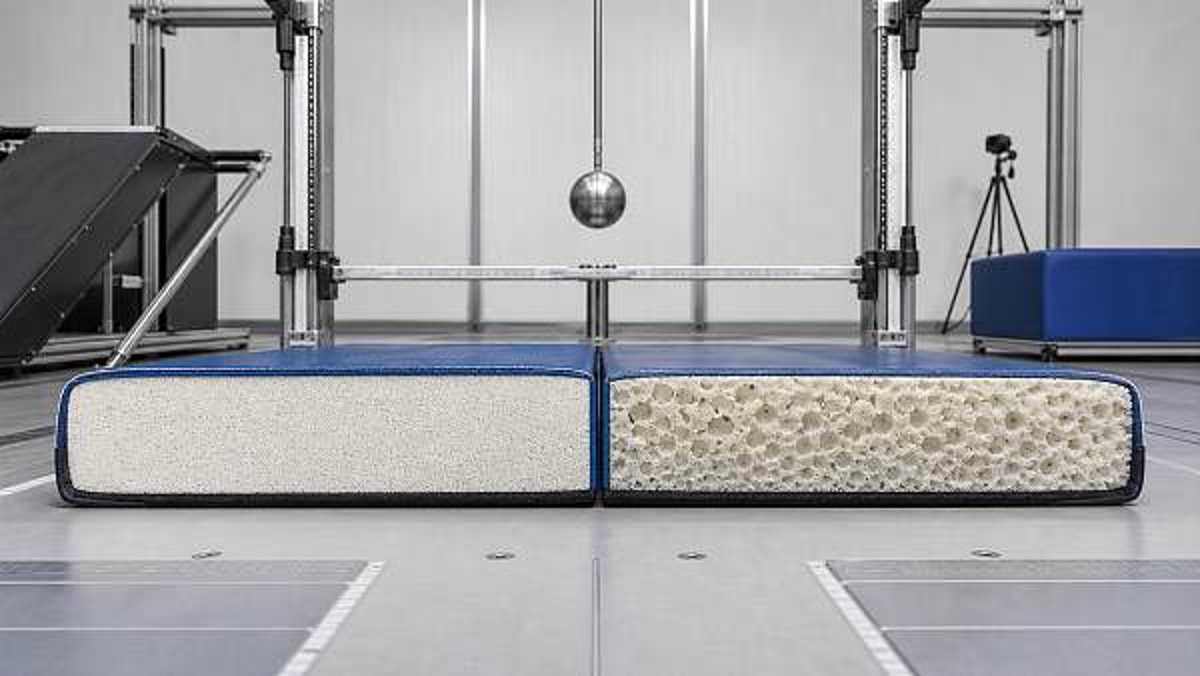
Technical evaluation therefore needs to move from surface-level dimensional claims to measurable performance. A mat is not just a slab of foam. It is a layered impact-management system made up of core material, cover friction, seam construction, bond quality, and manufacturing consistency. Even a deviation of 5% to 10% in foam density can change how force is dispersed under dynamic loads.
Why thickness alone is a weak indicator in gymnastic mats wholesale
Thickness matters, but only as one variable among several. A 30 mm mat built with high-density cross-linked foam may outperform a 40 mm mat made from low-density recycled fill in certain low-to-moderate impact applications. In gymnastic mats wholesale, relying on thickness alone can lead buyers to overestimate protection and underestimate material fatigue.
The difference between cushioning and impact management
Cushioning is what users feel on first contact. Impact management is what the mat does with energy over milliseconds of compression and recovery. A soft mat may feel comfortable, but if it compresses too quickly and reaches the subfloor, its effective shock absorption is poor. Conversely, a firmer mat can deliver better protection if it controls deceleration over the full compression cycle.
Technical evaluators should separate at least 4 dimensions during supplier review: initial softness, compression resistance, rebound speed, and recovery after repeated impacts. These factors influence use cases differently. For example, preschool movement zones, school PE rooms, martial arts warm-up areas, and club gymnastics stations each require different balance points between firmness and deformation.
Common reasons thickness claims become misleading
- Nominal thickness is measured before cover tension and after production, but field thickness may vary by ±2 mm to ±5 mm.
- Foam structure may include airier cells that add height without proportional energy absorption.
- Low-cost mats can use mixed-density cores, where only the top layer feels substantial.
- Compression set after 3 to 6 months of use may reduce effective thickness even when the original claim was accurate.
A technically sound sourcing process asks not only “How thick is it?” but also “How does that thickness behave under load, over time, and across production batches?” That is a much better question for commercial buyers who need repeatable procurement standards across 50, 200, or 1,000 units.
What technical buyers should request first
Before sample approval, request a data pack covering foam type, density range, hardness range, compression test method, cover material specification, and recommended application category. In gymnastic mats wholesale, this first filter removes vendors that can describe dimensions but cannot explain performance behavior.
The table below shows why identical thickness values can correspond to very different commercial outcomes.
The practical takeaway is clear: equal thickness does not equal equal protection. In gymnastic mats wholesale, shock absorption is a material-performance question, not a dimension-only question.
The core variables that determine real shock absorption
When technical evaluators compare suppliers, 5 variables deserve close attention: foam density, foam type, indentation hardness, energy return, and top-surface construction. These determine whether the mat disperses force, stabilizes the athlete, and maintains performance over 12 to 36 months of commercial use.
Foam density and cell structure
Density is usually one of the strongest indicators of how a foam core will behave under repeated loading. Higher density does not automatically mean safer, but it usually means greater resistance to premature collapse. Common commercial ranges vary widely, from roughly 30 kg/m³ in entry-level general mats to above 120 kg/m³ in more demanding applications.
Cell structure also matters. Open-cell foam tends to feel softer and more breathable, while closed-cell or cross-linked structures may provide tighter control and lower water absorption. For gyms, schools, and multipurpose institutions, this difference affects not only impact feel but also cleaning, moisture behavior, and service life.
Rebound control and athlete stability
A mat that returns energy too quickly may create instability during landing drills, balance work, or transitional movements. Excessive rebound can feel impressive in a showroom sample but become problematic in daily use. Technical buyers should evaluate how quickly the surface recovers after a standardized drop or body-weight compression sequence of at least 20 to 30 repetitions.
What to observe during sample testing
- Does the heel or knee sink abruptly after first contact?
- Does the user feel a hard subfloor response under concentrated load?
- Does the landing area wobble or shift laterally?
- Does the foam recover in under 2 seconds, or remain visibly compressed?
These observations are simple, but they often identify weak construction faster than a marketing brochure can conceal it. In gymnastic mats wholesale, field behavior is often more revealing than product copy.
Surface cover, friction, and seam integrity
Shock absorption does not come from foam alone. Surface PVC, PU, vinyl, or textile-reinforced covers influence grip, sliding behavior, hygiene, and deformation. A cover that is too stiff can restrict foam compression. One that is too loose can create ripples, trip points, and seam stress.
Pay attention to cover thickness, anti-slip texture, weld quality, zipper placement, and seam reinforcement. In medium-to-high traffic educational or club environments, seam failure often appears before core failure. A mat with a sound core but weak edge stitching may still produce unacceptable lifecycle cost within 9 to 18 months.
The following comparison helps evaluators translate material variables into procurement implications.
A supplier that can discuss these variables in detail is usually easier to qualify than one focused only on visible dimensions. That matters in gymnastic mats wholesale, where repeatability across production runs is often more valuable than a low initial quote.
How to verify supplier claims with practical test methods
Technical evaluation does not always require a full laboratory program, but it does require structure. Buyers should build a 3-stage verification process covering document review, sample inspection, and limited-use simulation. This reduces the risk of approving a mat that performs well in a static sample but degrades quickly in commercial use.
Stage 1: document review
Ask for material specifications, tolerance ranges, recommended application settings, and any available internal or third-party test information. If a supplier claims strong shock absorption but cannot define density, hardness, or intended use category, that is a warning sign. At minimum, technical evaluators should request 6 checkpoints before moving forward.
- Foam type and density range
- Nominal thickness and allowed tolerance
- Cover material and thickness
- Construction method for seams and base
- Recommended usage frequency per week
- Packaging and storage conditions
Stage 2: physical sample inspection
Inspect at least 2 to 3 samples from the same production lot if possible. Check dimensional consistency, edge finish, odor, bond integrity, zipper function, and visible compression recovery. A single showroom sample is often not enough for gymnastic mats wholesale decisions involving larger procurement volumes.
Useful inspection benchmarks
- Thickness variation across the surface should be controlled and documented.
- Seams should remain flat under moderate bending.
- Cover adhesion or enclosure fit should not create bunching.
- After repeated compression, visible permanent indentation should remain limited.
Stage 3: limited-use simulation
A practical simulation can be completed within 3 to 7 days. Use repeated step, kneel, landing, and carry cycles that reflect the intended environment. For school or institutional supply, it is useful to mimic handling abuse as well as sports use, since many mats fail during storage, stacking, dragging, or transport rather than during impact alone.
For buyers managing distributed commercial projects, a short but disciplined simulation often reveals more than a polished catalog. In gymnastic mats wholesale, verification is not about making the process difficult; it is about preventing specification drift between purchase order and on-site performance.
Procurement risks, specification mistakes, and how to avoid them
The most common sourcing error is to issue an RFQ based on dimensions only. A specification such as “gym mat, 40 mm, blue” is too weak for meaningful supplier comparison. It invites substitution, uneven quality, and disputes after delivery. Better procurement language defines at least 5 areas: application, core behavior, cover behavior, tolerances, and acceptance method.
Typical mistakes in gymnastic mats wholesale
- Using one specification for all training zones despite different impact profiles.
- Approving a soft sample without checking long-term compression set.
- Ignoring mat underside friction and resulting floor movement.
- Comparing offers without clarifying whether density is nominal or actual tested range.
- Focusing on unit price while overlooking replacement interval and freight efficiency.
These mistakes can raise total cost materially. A mat that is 12% cheaper at purchase may become more expensive if replacement occurs after 12 months instead of 24 to 36 months. For commercial buyers, lifecycle thinking is often more valuable than the lowest initial quotation.
A stronger RFQ framework
To improve comparability, define the intended use first. Is the product for beginner gymnastics, PE classes, tumbling support, fall zones, or general activity spaces? Then state target thickness, preferred density range, surface type, anti-slip expectations, folding or non-folding format, and acceptable dimensional tolerance.
You should also specify logistics and maintenance requirements. For example, if the mats will be cleaned daily, cover chemistry and seam sealing become more important. If the project includes 300 to 500 units across multiple sites, packaging dimensions, carton labeling, and batch traceability deserve explicit mention.
Recommended specification elements
- Primary use scenario and user age range
- Thickness and density target with tolerance
- Surface finish, grip level, and cleaning expectations
- Durability expectations under weekly use frequency
- Sample approval and batch consistency requirements
This approach gives technical evaluators a defensible basis for supplier selection. It also helps sourcing teams align with facility managers, safety coordinators, and finance teams before the final order is placed.
What a reliable sourcing partner should provide
In B2B procurement, the best supplier is rarely the one with the shortest brochure or the most aggressive thickness claim. A reliable partner in gymnastic mats wholesale should be able to explain where each mat fits, what trade-offs exist, and how specifications can be adjusted for budget, usage frequency, and installation environment.
Commercial support that matters to evaluators
- Clear technical sheets with measurable ranges, not vague adjectives
- Sample support for side-by-side comparison within 7 to 14 days where feasible
- Production consistency controls for repeat orders
- Guidance on matching product grade to training intensity
- Transparent communication on lead times, packaging, and defect handling
For organizations sourcing across commercial education, recreation, leisure, or institutional fitness projects, this level of support reduces rework and speeds approval. It also creates better internal reporting, because technical decisions can be traced back to specific criteria instead of marketing language.
Real shock absorption is a performance outcome shaped by material science, construction quality, and use-case matching. Thickness remains relevant, but it should never stand alone as the main buying criterion. In gymnastic mats wholesale, technical evaluators gain better results when they compare density, rebound control, cover behavior, seam durability, and verification methods as one integrated system.
If you are reviewing suppliers for schools, clubs, institutional facilities, or multi-site commercial projects, a disciplined sourcing framework will protect both user safety and budget efficiency. To discuss application-specific requirements, request a tailored specification checklist, compare sample options, or explore broader commercial sourcing solutions, contact GCT today and get a more confident path from evaluation to procurement.
Search News
Hot Articles
Popular Tags
Need ExpertConsultation?
Connect with our specialized leisureengineering team for procurementstrategies.
Recommended News
 May 06, 2026Basketball hoops for school: portable convenience vs fixed stabilityBasketball hoops for school: compare portable convenience and fixed stability to choose safer, smarter, and more cost-effective solutions for campus courts.● Theme Park Strategist
 May 06, 2026Montessori wooden toys and the question of long-term durabilityMontessori wooden toys: discover what really determines long-term durability, safety, and value, and learn how buyers can choose options built for repeated use.● Theme Park Strategist
 May 06, 2026Wholesale ping pong tables for schools: what wears out firstWholesale ping pong tables for schools: learn what wears out first, from casters to locks, and use this buyer-focused guide to cut replacement costs and choose safer, longer-lasting tables.● Theme Park Strategist
 May 06, 2026Gymnastic mats wholesale: thickness claims vs real shock absorptionGymnastic mats wholesale buyers: learn why thickness claims alone can mislead. Compare real shock absorption, foam density, rebound control, and sourcing checks before you buy.● Theme Park Strategist
 May 06, 2026Abacus learning toys still matter when math goes digitalAbacus learning toys still matter in digital math, helping children build number sense, focus, and hands-on problem-solving. See why educators, parents, and buyers still choose them.● Theme Park Strategist
 May 06, 2026Liaoning Tieren Appoints Shin Jeong-won; K-League Training Gear Sourcing Shift PossibleLiaoning Tieren appoints K-League coach Shin Jeong-won — sparking Korean demand for ISO 10993-certified smart athletic wear, especially heart-rate & GPS training vests.● Theme Park Strategist
 May 06, 2026NBA LED Interactive Court System Enters Mass ProductionNBA LED interactive court system enters mass production in Q3 2026 — a breakthrough for smart sports venues, AR fan engagement, and global LED display suppliers.● Theme Park Strategist
 May 06, 2026NBA Adopts New LED Interactive Court Floors in 2026–27 SeasonNBA LED interactive court floors launch in 2026–27: AR fan engagement, real-time stats & certified hardware — game-changing for global sports tech suppliers.● Theme Park Strategist
 May 06, 2026HuaiBA Youth Basketball Arena Adopts Domestic Smart Floor SystemHuaiBA Youth Basketball Arena's domestic smart floor system sets a new benchmark—featuring real-time pressure sensing & acoustic feedback for global sports infrastructure buyers.● Theme Park Strategist
 May 06, 2026Swedish Team’s Historic Win Spurs EU Demand for Chinese AI Ping-Pong MachinesAI ping-pong machines surge in EU demand after Sweden’s historic win over China—explore CE-compliant Chinese smart training tech now.● Theme Park Strategist
 May 06, 2026Snooker World Championship Boosts Billiards Table DemandSnooker World Championship drives global demand for billiards tables—especially smart-scoring & carbon-fiber models with FIBA-compatibility and multilingual UI.● Theme Park Strategist
 May 06, 2026FIBA 2026 Basketball Court Standards: LED Lighting & Acoustic Flooring Now MandatoryFIBA 2026 mandates LED lighting uniformity ≥0.8 & acoustic flooring ≥35 dB—key for exporters targeting CE, SASO, GOST markets. Act now to align.● Theme Park Strategist
 May 05, 2026FIBA 2026 Court Guidelines Enforce LED Uniformity & Floor AcousticsFIBA 2026 Court Guidelines mandate LED uniformity ≥0.8 & floor acoustics ≥35 dB @ 63 Hz—key for exporters targeting Qatar, Indonesia, Mexico tenders.● Theme Park Strategist
 May 05, 2026Sweden’s 26-Year Win Over China Spurs EU Demand for SpinMaster X9SpinMaster X9 AI table tennis robot surges in EU demand after Sweden’s historic 26-year win over China—CE & TÜV-certified units now priority for clubs and suppliers.● Theme Park Strategist
 May 05, 2026Wu Yize’s Snooker Final Surge Drives 37% Global Inquiry Spike for Regulation TablesRegulation snooker tables see 37% global B2B inquiry surge amid Wu Yize’s historic World Championship final — act now on WPBSA-compliant demand from UAE, KSA, Brazil & Thailand.● Theme Park Strategist
 May 05, 2026HuaiBA Basketball Arena Adopts Chinese Smart Flooring, Triggers SASO 5853 Acoustic TestingHuaiBA Basketball Arena adopts Chinese smart flooring—triggers SASO 5853 acoustic testing. Key insight for sports flooring exporters, GCC compliance, and ISO 10137 vibration analysis.● Theme Park Strategist
 May 04, 2026HuaiBA Basketball Court in Jinan Adopts Chinese Smart FlooringHuaiBA Basketball Court in Jinan adopts Chinese smart flooring — a breakthrough for ISO 20342 & SASO 5853-compliant sports surfaces in GCC markets.● Theme Park Strategist
 May 03, 2026CBA Game Triggers SASO 5853 Acoustic Certification Demand for Smart Basketball FloorsCBA game sparks SASO 5853 acoustic certification demand for smart basketball floors—key for GCC exporters, labs & specifiers. Act now.● Theme Park Strategist
 May 03, 2026Raptors G6 Barrett Buzzer-Beater Triggers FCC Part 15B Re-Testing for Commercial Rim-Vibration ModulesRaptors G6 Barrett buzzer-beater exposed FCC Part 15B compliance gaps for commercial rim-vibration modules—urgent re-testing now required across US, CA, MX markets.● Theme Park Strategist
 May 02, 20262026 Jiujiang Guokong Cup Tennis Open Spurs ASEAN Demand for AI Ball MachinesAI ball machines surge 165% amid 2026 Jiujiang Guokong Cup — urgent ASEAN MRA certification needed for Thailand/Vietnam exports.● Theme Park Strategist
 May 02, 2026China's Speed Relay Record Boosts EN 15613-Compliant Climbing Gear ExportsEN 15613-compliant climbing gear exports surge 140% after China’s Dubai speed relay record—key insights for manufacturers, labs & logistics providers.● Theme Park Strategist
 May 01, 2026Playground Borders That Reduce Mess and Keep Zones ClearPlayground borders reduce mess, define activity zones, and improve maintenance control. Discover durable, site-smart solutions for safer, cleaner, more organized play areas.● Theme Park Strategist
 May 01, 2026Inclusive Playground Features Families Notice Right AwayInclusive playground features families notice first: step-free access, stable surfacing, sensory balance, and shared play. Use this practical guide to evaluate safer, truly welcoming spaces.● Theme Park Strategist
 May 01, 2026Toddler Playground Layout Mistakes That Limit Safe PlayToddler playground layout mistakes can quietly increase risk. Learn how better zoning, circulation, and visibility create safer, compliant play spaces for every project.● Theme Park Strategist