Montessori wooden toys and the question of long-term durability
Are montessori wooden toys built to last, or do they simply look timeless? For buyers, educators, and parents researching long-term value, durability is more than a marketing claim—it affects safety, cost efficiency, and everyday usability. This article examines how material quality, craftsmanship, and usage patterns influence the lifespan of montessori wooden toys in real-world settings.
For B2B buyers in educational supply chains, children’s retail, hospitality family zones, and institutional learning environments, the durability question is not only about product lifespan. It also influences replacement frequency, maintenance workload, liability exposure, and the consistency of the user experience over 12, 24, or even 36 months of use. When montessori wooden toys are selected for high-touch settings, durability becomes a procurement criterion rather than a design preference.
Well-made wooden learning toys can perform for years, but not all products age the same way. Wood species, moisture control, joinery, edge finishing, coating quality, and storage conditions all affect whether a toy remains safe and functional after hundreds of handling cycles. For information researchers comparing options, the real issue is how to distinguish decorative wooden toys from genuinely durable montessori wooden toys built for repeated use.
Why durability matters beyond appearance
In commercial and institutional environments, toys face a very different usage pattern from home settings. A single object tray or stacking set in a preschool, hotel kids’ club, or showroom play area may be handled 20 to 50 times per day. Over 1 year, that can mean several thousand contact cycles, which quickly exposes weak glue lines, soft timber, poor sanding, or unstable paint finishes.
This is why buyers should evaluate montessori wooden toys through a lifecycle lens. A lower initial unit price may look attractive, but if replacement is needed every 6 to 9 months, the total cost of ownership often exceeds a better-made item that lasts 2 to 4 years. For schools, specialty retailers, and procurement teams managing recurring budgets, this difference has measurable impact.
Long-term value in real-use environments
Durability supports value in at least 4 practical ways: safer daily handling, fewer replacements, better visual retention, and more reliable classroom or retail presentation. In sectors such as office and educational supplies, products are often judged not just on function, but on whether they maintain shape, color, and tactile quality after repeated use by different age groups.
- Lower breakage rates reduce unplanned replacement orders.
- Stable finishes help preserve brand perception in premium retail environments.
- Smoother edges and solid construction reduce safety complaints.
- Consistent product quality simplifies multi-site procurement decisions.
Common buyer concerns during research
Information researchers typically compare 5 core factors: wood hardness, coating durability, part sizing, assembly method, and cleaning tolerance. A toy may look robust in product images, yet fail in daily use if pieces warp in humid conditions or painted markings fade after 30 to 60 wipe-down cycles. This is especially relevant for institutional buyers who need reusable, easy-to-sanitize products.
The table below outlines how durability concerns translate into practical buying risks for montessori wooden toys across different use settings.
The key takeaway is that durability expectations should be matched to the use case. A toy designed for occasional domestic use may still underperform in a commercial nursery, museum shop demonstration area, or educational procurement program. Buyers should therefore define expected handling volume before comparing prices.
What determines the lifespan of montessori wooden toys
The lifespan of montessori wooden toys is shaped by 3 broad variables: material selection, manufacturing quality, and environmental exposure. None of these factors should be viewed in isolation. Strong hardwood can still fail if moisture content is unstable, and an attractive finish can still degrade if it is too thin or poorly cured.
Wood species and density
Dense hardwoods generally resist dents better than softwoods. Beech, rubberwood, maple, and birch are commonly used because they offer a balanced combination of hardness, machining consistency, and visual appeal. Softer woods may lower cost, but they can show edge damage faster, especially on blocks, sorting trays, and puzzle inserts that are repeatedly dropped from desk or shelf height.
For practical sourcing, buyers often compare whether the product uses solid wood, plywood, MDF, or mixed construction. Solid wood tends to age better in high-contact pieces, while well-made plywood may perform adequately for panels or base boards. However, low-grade composite cores can swell or chip more easily when exposed to humidity above roughly 60% or frequent damp wiping.
Moisture stability and warping risk
Moisture control matters more than many first-time buyers expect. If wood is not properly dried before machining, components may warp, crack, or loosen after shipment. In global trade, products often move across climate zones in 3 to 6 weeks of storage and transport. That means moisture stability is essential for toys intended for export, warehousing, and later use in heated or air-conditioned interiors.
Craftsmanship, joinery, and finishing
Good craftsmanship is visible in more than appearance. Rounded edges, uniform drilling, accurate fit tolerances, and secure joinery all improve long-term performance. A toy with a tolerance gap that is too tight can chip under pressure; one that is too loose may feel low quality from the start. In simple learning objects, precision often matters within small millimeter ranges because repeated insertion and removal create friction points.
Finishing also affects durability. Water-based coatings are widely used in children’s products, but durability depends on layer consistency and curing quality. Thin, uneven coatings may wear out after dozens of cleaning cycles, while properly applied finishes can better resist abrasion, staining, and handling oils. For buyers, asking about coating type and cleaning compatibility is more useful than relying on generic “eco-friendly” claims alone.
Design complexity and failure points
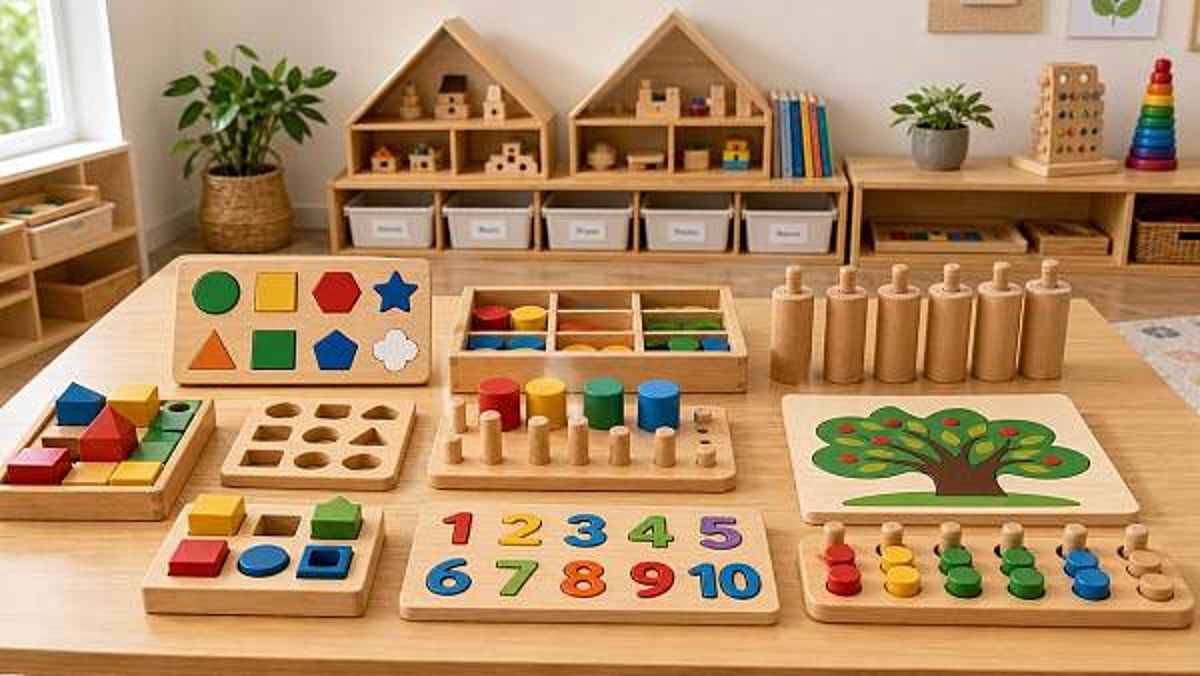
Not all montessori wooden toys carry the same structural risk. Simple blocks, cylinders, boards, and trays usually outlast products with magnets, strings, hinges, or multiple bonded layers. Every extra mechanism introduces one more failure point. In institutional settings, lower-complexity products often provide the best durability-to-maintenance ratio over 18 to 36 months.
The following table helps buyers compare how different construction choices influence expected durability performance.
In short, durability is rarely created by one premium feature. It is the result of a controlled manufacturing system where wood, machining, coating, and final inspection are aligned with the intended usage intensity.
How buyers can assess durability before placing an order
A reliable sourcing process should evaluate more than the sample’s visual finish. Buyers in office and educational supplies, children’s concept retail, and hospitality procurement should use a structured review with at least 5 checkpoints: materials, safety finish, structural integrity, cleaning tolerance, and packaging protection. This approach reduces the risk of approving attractive samples that do not hold up in scaled use.
A practical 5-step evaluation method
- Review the bill of materials and identify where solid wood, plywood, or composite is used.
- Inspect sanding quality on edges, corners, holes, and hand-contact surfaces.
- Test fit and friction on moving or insertable parts across 20 to 30 repeated cycles.
- Perform a controlled wipe test using a standard damp cloth for 30 cycles.
- Check packaging resilience for export, warehousing, and last-mile delivery.
Even a basic in-house review can identify early warning signs such as rough grain, visible glue squeeze-out, inconsistent color layers, or loose dowels. For larger orders, pre-shipment inspection is especially useful when products include multiple small components or painted educational markings.
Questions worth asking suppliers
The right supplier questions often reveal more than the catalog. Buyers should ask how the toys perform after repeated handling, how surfaces should be cleaned, what packing method is used to reduce transit rubbing, and whether replacement parts are available for sets with loose components. Lead times are also relevant; a fast 7-day promise may be less valuable than a 3- to 4-week schedule with better process control.
- What cleaning method is recommended for daily maintenance?
- How are edges finished and checked during final inspection?
- Which components are most likely to wear first in normal use?
- Can the supplier support repeat orders with consistent material matching?
Durability and total cost of ownership
For commercial buyers, product durability should be tied to cost planning. If a low-cost set needs replacing twice within 24 months, while a better set lasts the full period with only minor maintenance, the second option may deliver stronger value even at a 20% to 35% higher initial price. This is especially true when replacement involves staff time, freight, inventory gaps, and customer dissatisfaction.
This logic applies across multiple sectors served by GCT’s sourcing audience. Educational buyers need stable classroom tools, hospitality operators need child-friendly products that remain presentable, and specialty retailers benefit from items that preserve shelf appeal during demonstrations. In each case, longevity supports operational efficiency as much as product quality.
Maintenance, usage patterns, and realistic lifespan expectations
Even well-made montessori wooden toys do not last indefinitely without care. Usage intensity, storage conditions, and maintenance routines all influence service life. A carefully chosen toy stored in a dry indoor environment and cleaned correctly may remain functional for 3 to 5 years in moderate use. The same product may age much faster in a damp, high-traffic area with poor storage discipline.
Environmental factors that shorten service life
The 4 most common environmental stressors are humidity, direct sunlight, rough cleaning chemicals, and uncontrolled impact. Prolonged UV exposure can fade colors or dry out coatings. Excess moisture can distort flat boards or loosen bonded parts. Aggressive disinfection routines, if not aligned with the finish, may cause early dulling or color lift after repeated cycles.
For schools, hotel family spaces, and concept stores, simple handling protocols can make a visible difference. Storing toys off the floor, rotating sets weekly, and removing damaged pieces early can extend useful life while maintaining presentation and safety standards.
Simple maintenance practices that help
- Use a slightly damp cloth instead of soaking or spraying directly onto wood.
- Allow full air drying before stacking or boxing items.
- Inspect edges, pegs, and joints every 30 to 60 days in shared-use environments.
- Separate heavily worn pieces from circulation before they affect the rest of the set.
These are low-cost interventions, but they matter. In practice, maintenance discipline often determines whether montessori wooden toys remain premium-looking educational tools or become visibly worn assets that require early replacement.
Who should prioritize higher-durability specifications
Not every buyer needs the same specification level. Home users may accept some cosmetic wear if the toy remains safe and usable. However, buyers sourcing for nurseries, training centers, children’s retail programs, libraries, and hospitality environments should prioritize stronger materials and finish performance from the start. In these channels, toys function as both learning tools and visible assets within a commercial experience.
For that reason, information researchers should compare sample quality, cleaning tolerance, packaging, and repeat-order consistency before final selection. A durable product is not only the one that survives shipping; it is the one that still performs after months of real interaction.
Final considerations for sourcing decisions
The answer to the durability question is clear: montessori wooden toys can be highly durable, but only when the product is engineered for repeated use rather than designed mainly for visual appeal. Buyers should look past surface aesthetics and focus on wood stability, construction quality, finish resilience, and realistic maintenance demands.
For procurement teams, educators, and commercial researchers, the strongest purchasing decisions come from matching durability level to use intensity, not from assuming all wooden toys perform equally. If you are evaluating sourcing options for educational supplies, children’s retail assortments, or family-oriented commercial spaces, a structured review process will reduce risk and improve long-term value.
Global Commercial Trade supports professional buyers seeking clearer sourcing intelligence across commercial experience sectors. To discuss supplier evaluation criteria, product positioning, or category-specific sourcing strategies for montessori wooden toys, contact us today to get a tailored solution or learn more about practical procurement guidance.
Search News
Hot Articles
Popular Tags
Need ExpertConsultation?
Connect with our specialized leisureengineering team for procurementstrategies.
Recommended News
 May 06, 2026Basketball hoops for school: portable convenience vs fixed stabilityBasketball hoops for school: compare portable convenience and fixed stability to choose safer, smarter, and more cost-effective solutions for campus courts.● Theme Park Strategist
 May 06, 2026Montessori wooden toys and the question of long-term durabilityMontessori wooden toys: discover what really determines long-term durability, safety, and value, and learn how buyers can choose options built for repeated use.● Theme Park Strategist
 May 06, 2026Wholesale ping pong tables for schools: what wears out firstWholesale ping pong tables for schools: learn what wears out first, from casters to locks, and use this buyer-focused guide to cut replacement costs and choose safer, longer-lasting tables.● Theme Park Strategist
 May 06, 2026Gymnastic mats wholesale: thickness claims vs real shock absorptionGymnastic mats wholesale buyers: learn why thickness claims alone can mislead. Compare real shock absorption, foam density, rebound control, and sourcing checks before you buy.● Theme Park Strategist
 May 06, 2026Abacus learning toys still matter when math goes digitalAbacus learning toys still matter in digital math, helping children build number sense, focus, and hands-on problem-solving. See why educators, parents, and buyers still choose them.● Theme Park Strategist
 May 06, 2026Liaoning Tieren Appoints Shin Jeong-won; K-League Training Gear Sourcing Shift PossibleLiaoning Tieren appoints K-League coach Shin Jeong-won — sparking Korean demand for ISO 10993-certified smart athletic wear, especially heart-rate & GPS training vests.● Theme Park Strategist
 May 06, 2026NBA LED Interactive Court System Enters Mass ProductionNBA LED interactive court system enters mass production in Q3 2026 — a breakthrough for smart sports venues, AR fan engagement, and global LED display suppliers.● Theme Park Strategist
 May 06, 2026NBA Adopts New LED Interactive Court Floors in 2026–27 SeasonNBA LED interactive court floors launch in 2026–27: AR fan engagement, real-time stats & certified hardware — game-changing for global sports tech suppliers.● Theme Park Strategist
 May 06, 2026HuaiBA Youth Basketball Arena Adopts Domestic Smart Floor SystemHuaiBA Youth Basketball Arena's domestic smart floor system sets a new benchmark—featuring real-time pressure sensing & acoustic feedback for global sports infrastructure buyers.● Theme Park Strategist
 May 06, 2026Swedish Team’s Historic Win Spurs EU Demand for Chinese AI Ping-Pong MachinesAI ping-pong machines surge in EU demand after Sweden’s historic win over China—explore CE-compliant Chinese smart training tech now.● Theme Park Strategist
 May 06, 2026Snooker World Championship Boosts Billiards Table DemandSnooker World Championship drives global demand for billiards tables—especially smart-scoring & carbon-fiber models with FIBA-compatibility and multilingual UI.● Theme Park Strategist
 May 06, 2026FIBA 2026 Basketball Court Standards: LED Lighting & Acoustic Flooring Now MandatoryFIBA 2026 mandates LED lighting uniformity ≥0.8 & acoustic flooring ≥35 dB—key for exporters targeting CE, SASO, GOST markets. Act now to align.● Theme Park Strategist
 May 05, 2026FIBA 2026 Court Guidelines Enforce LED Uniformity & Floor AcousticsFIBA 2026 Court Guidelines mandate LED uniformity ≥0.8 & floor acoustics ≥35 dB @ 63 Hz—key for exporters targeting Qatar, Indonesia, Mexico tenders.● Theme Park Strategist
 May 05, 2026Sweden’s 26-Year Win Over China Spurs EU Demand for SpinMaster X9SpinMaster X9 AI table tennis robot surges in EU demand after Sweden’s historic 26-year win over China—CE & TÜV-certified units now priority for clubs and suppliers.● Theme Park Strategist
 May 05, 2026Wu Yize’s Snooker Final Surge Drives 37% Global Inquiry Spike for Regulation TablesRegulation snooker tables see 37% global B2B inquiry surge amid Wu Yize’s historic World Championship final — act now on WPBSA-compliant demand from UAE, KSA, Brazil & Thailand.● Theme Park Strategist
 May 05, 2026HuaiBA Basketball Arena Adopts Chinese Smart Flooring, Triggers SASO 5853 Acoustic TestingHuaiBA Basketball Arena adopts Chinese smart flooring—triggers SASO 5853 acoustic testing. Key insight for sports flooring exporters, GCC compliance, and ISO 10137 vibration analysis.● Theme Park Strategist
 May 04, 2026HuaiBA Basketball Court in Jinan Adopts Chinese Smart FlooringHuaiBA Basketball Court in Jinan adopts Chinese smart flooring — a breakthrough for ISO 20342 & SASO 5853-compliant sports surfaces in GCC markets.● Theme Park Strategist
 May 03, 2026CBA Game Triggers SASO 5853 Acoustic Certification Demand for Smart Basketball FloorsCBA game sparks SASO 5853 acoustic certification demand for smart basketball floors—key for GCC exporters, labs & specifiers. Act now.● Theme Park Strategist
 May 03, 2026Raptors G6 Barrett Buzzer-Beater Triggers FCC Part 15B Re-Testing for Commercial Rim-Vibration ModulesRaptors G6 Barrett buzzer-beater exposed FCC Part 15B compliance gaps for commercial rim-vibration modules—urgent re-testing now required across US, CA, MX markets.● Theme Park Strategist
 May 02, 20262026 Jiujiang Guokong Cup Tennis Open Spurs ASEAN Demand for AI Ball MachinesAI ball machines surge 165% amid 2026 Jiujiang Guokong Cup — urgent ASEAN MRA certification needed for Thailand/Vietnam exports.● Theme Park Strategist
 May 02, 2026China's Speed Relay Record Boosts EN 15613-Compliant Climbing Gear ExportsEN 15613-compliant climbing gear exports surge 140% after China’s Dubai speed relay record—key insights for manufacturers, labs & logistics providers.● Theme Park Strategist
 May 01, 2026Playground Borders That Reduce Mess and Keep Zones ClearPlayground borders reduce mess, define activity zones, and improve maintenance control. Discover durable, site-smart solutions for safer, cleaner, more organized play areas.● Theme Park Strategist
 May 01, 2026Inclusive Playground Features Families Notice Right AwayInclusive playground features families notice first: step-free access, stable surfacing, sensory balance, and shared play. Use this practical guide to evaluate safer, truly welcoming spaces.● Theme Park Strategist
 May 01, 2026Toddler Playground Layout Mistakes That Limit Safe PlayToddler playground layout mistakes can quietly increase risk. Learn how better zoning, circulation, and visibility create safer, compliant play spaces for every project.● Theme Park Strategist