Language lab equipment features that improve speaking practice
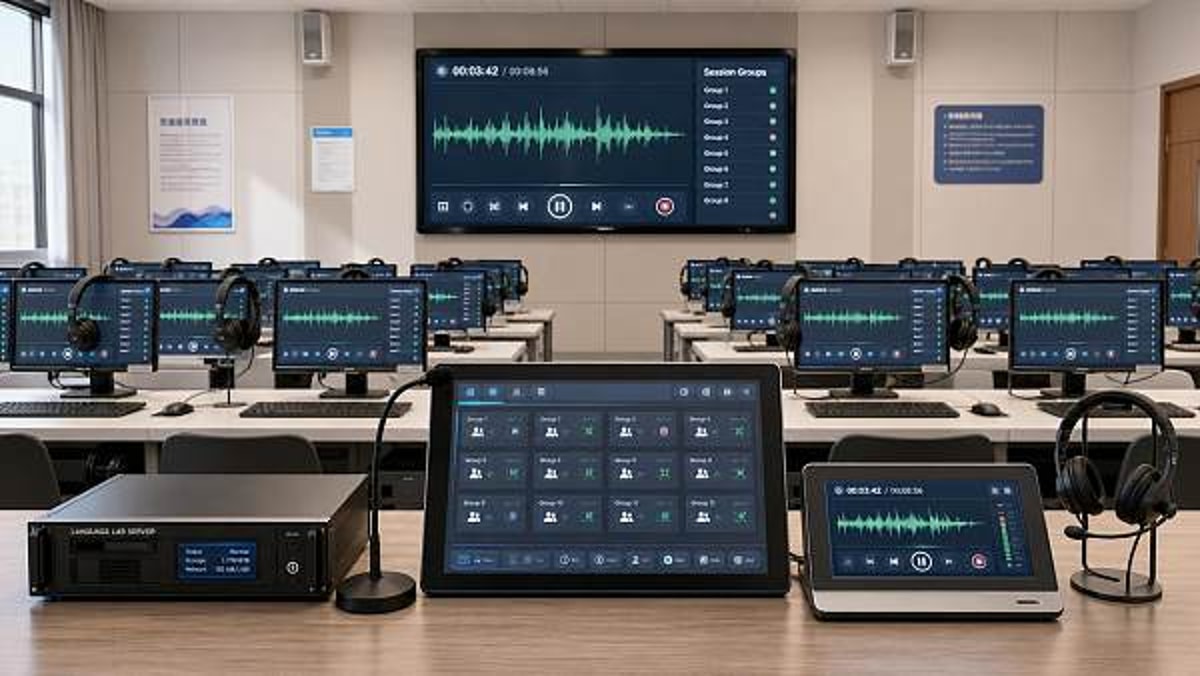
Choosing the right language lab equipment can make a measurable difference in speaking practice, especially for schools and training centers focused on fluency, confidence, and real-time interaction. From audio clarity to recording, monitoring, and collaborative features, the best systems help learners speak more often and improve more effectively. This article explores the key equipment features that support better oral language outcomes.
Why speaking outcomes depend on the learning scenario
When buyers research language lab equipment, they often begin with a checklist of functions: headsets, teacher console, recording, or group discussion tools. Yet the stronger question is not simply which features exist, but which features matter most in a specific teaching environment. A primary school language room, a university self-access center, a corporate communication program, and a test-preparation institute all use speaking practice differently. The right fit depends on class size, supervision needs, learner age, target language level, assessment requirements, and whether sessions are teacher-led or self-directed.
This is why scenario-based evaluation matters. The same language lab equipment can feel excellent in one context and inefficient in another. For information researchers, procurement teams, and academic decision-makers, understanding use cases first reduces the risk of overspending on low-impact features or missing functions that directly influence oral participation.
Core language lab equipment features that improve speaking practice
Before comparing scenarios, it helps to identify the features that most consistently affect speaking quality. These are not just technical specifications; they shape how often learners talk, how clearly they hear models, and how accurately instructors give feedback.
- High speech intelligibility audio, with low distortion and reliable noise isolation
- Individual recording for pronunciation review, fluency tracking, and formative assessment
- Teacher monitoring and intervention tools for live correction without interrupting the whole class
- Pairing and grouping functions that support role-play, dialogue work, and collaborative speaking tasks
- Simple user interface that reduces setup time and keeps learners focused on speaking rather than controls
- Content sharing and model playback for imitation, shadowing, and guided repetition
- Session recording storage and export options for progress review and reporting
- Stable network or local system performance to avoid audio lag, broken sessions, or lost recordings
For any buyer evaluating language lab equipment, the practical objective is clear: increase speaking frequency, improve feedback loops, and support realistic interaction. The details below show how those goals shift by application.
Typical application scenarios and what each one should prioritize
Not every institution needs the same balance of control, flexibility, analytics, and collaboration. The table below highlights how common scenarios differ.
Scenario 1: K-12 classrooms need control, simplicity, and consistent participation
In school settings, the strongest speaking outcomes usually come from frequent low-pressure practice. Students need to hear clearly, repeat often, and receive correction without public embarrassment. In this scenario, language lab equipment should prioritize teacher visibility over advanced customization. A teacher must be able to broadcast a model phrase, listen to individual students, pair learners quickly, and move between whole-class and small-group speaking activities in seconds.
The best fit often includes durable microphones, comfortable headsets for long use, and intuitive interfaces with minimal clicks. Noise isolation is particularly important in younger classrooms because even moderate room noise can reduce pronunciation accuracy and concentration. Recording is still valuable, but it should be easy enough for students to use without technical assistance. In this environment, reliable classroom management tools matter more than highly specialized analytics.
Best feature priorities for schools
- Live monitoring for immediate correction
- Fast pair/group switching for dialogue activities
- Strong headset durability and hygiene-friendly design
- Clear teacher broadcast and repeat-play functions
Scenario 2: University language centers need flexibility and self-directed speaking tools
Higher education settings tend to serve mixed users: scheduled classes, self-study learners, language majors, exchange students, and oral testing programs. Here, language lab equipment should support both guided instruction and independent access. Speaking practice is no longer limited to controlled drills. Students may need debate recording, oral presentation rehearsal, phonetics work, or peer discussion in multiple languages.
Because of this variety, flexibility becomes essential. Systems should support user accounts, saved recordings, easy retrieval of past sessions, and compatibility with institutional networks. A university buyer should also look closely at audio archiving, teacher feedback annotation, and room scheduling compatibility. If a lab serves hundreds of users each week, workflow efficiency becomes a core feature, not a minor convenience.
Another important point is autonomy. University learners benefit from tools that let them compare their own speech against model audio, repeat difficult sections, and track improvement over time. In this scenario, language lab equipment becomes both a teaching asset and a language performance archive.
Scenario 3: Test-preparation centers need recording precision and exam realism
For exam-focused institutions, speaking practice is often tied to strict formats, time pressure, and measurable performance criteria. Whether the target is an international English test or an institutional oral exam, the equipment should reproduce real assessment conditions as closely as possible. This means accurate microphone capture, stable timing controls, simple recording submission, and rapid teacher review.
In this setting, collaboration features still matter, but not at the expense of individual response quality. Buyers should ask whether the language lab equipment supports prompt-based recording, controlled preparation time, and easy comparison between attempts. Students improve faster when they can hear exactly where pacing, pronunciation, grammar control, or response structure breaks down. Therefore, playback clarity and fast file access are often more valuable than visually impressive interfaces.
What exam centers should verify first
- Audio consistency across all booths or terminals
- Accurate task timing and automatic recording management
- Easy teacher review for large student volumes
- Minimal latency and low risk of lost files
Scenario 4: Corporate and vocational training need real-life communication simulation
In professional training environments, speaking practice is usually linked to outcomes such as customer interaction, hospitality service, frontline communication, sales calls, aviation English, or interview readiness. This is where language lab equipment should support role-play and scenario training rather than textbook repetition alone. Learners need to practice under conditions that resemble the workplace: interruptions, problem-solving, turn-taking, and tone control.
For example, a hospitality training center may need pair conversation features to simulate guest check-in dialogues, while a customer service program may need call-style audio setups and recording for supervisor review. Reporting functions become more important here because training managers often need proof of participation, progress data, and performance samples. A system that captures realistic oral interactions can add value far beyond language teaching by supporting broader workforce readiness goals.
How feature priorities change by user type and organization scale
A small private training center may focus on affordability and fast setup, while a multi-campus institution may prioritize centralized management, integration, and standardization. The same applies to user profiles. Younger learners require simpler controls. Advanced learners demand more recording independence. Administrators want asset durability and maintenance support. Teachers want fewer technical interruptions during live sessions.
Common mistakes when matching language lab equipment to speaking goals
One frequent mistake is buying based on feature quantity instead of teaching relevance. A lab may offer extensive options, but if teachers only need fast grouping, simple recording, and clear monitoring, complexity can reduce usage. Another mistake is undervaluing headset and microphone quality. Speaking improvement depends heavily on clean audio input and output. Weak capture quality can distort pronunciation feedback and frustrate both students and instructors.
Some institutions also overlook operational issues such as teacher training, technical support, maintenance cycles, and software updates. Even high-quality language lab equipment will underperform if staff cannot use it confidently or if session reliability is inconsistent. Finally, buyers sometimes focus on a single use case and forget future flexibility. If a lab may later support blended learning, self-access sessions, or oral testing, those possibilities should influence present-day decisions.
Practical checklist for scenario-based selection
To narrow down the right language lab equipment, information researchers can use a simple sequence of questions before comparing suppliers or technical proposals.
- What kind of speaking tasks dominate the program: repetition, conversation, testing, presentation, or role-play?
- How much live teacher control is required during class?
- Do learners need self-access recording and review outside scheduled sessions?
- How important are reporting, archiving, and progress documentation?
- What level of durability, support, and scalability is needed for the expected usage volume?
This approach keeps procurement aligned with actual speaking outcomes rather than generic technology appeal.
FAQ about language lab equipment for speaking practice
Which feature matters most for oral fluency improvement?
There is no single universal feature, but the most influential combination is clear audio, easy recording, and fast teacher feedback. Fluency improves when learners can speak often, review performance, and receive correction without delay.
Is advanced language lab equipment always better for schools?
Not necessarily. In many school environments, simpler systems with excellent stability and strong classroom control produce better speaking participation than feature-heavy platforms that slow teachers down.
What should a buyer compare first between suppliers?
Start with audio quality, recording workflow, teacher monitoring tools, maintenance support, and fit for your specific learning scenario. After that, compare integration options, reporting, and scalability.
Final guidance for making the right choice
The best language lab equipment is not the system with the longest specification sheet. It is the one that fits your teaching reality, increases meaningful speaking time, and supports the type of oral performance your learners actually need. Schools benefit from simplicity and supervision. Universities need flexibility and archive functions. Exam centers need recording precision and test realism. Corporate programs need scenario simulation and measurable review.
For organizations evaluating suppliers through a broader sourcing lens, especially in modern education and institutional procurement, a scenario-first review leads to more durable decisions. Define the speaking use case, map the feature priorities, and then request demonstrations built around your real classroom or training workflow. That is the most reliable way to identify language lab equipment that will improve speaking practice in measurable, practical terms.
Search News
Hot Articles
Popular Tags
Need ExpertConsultation?
Connect with our specialized leisureengineering team for procurementstrategies.
Recommended News
 May 06, 2026Tablet charging carts with locking doors still need these checksTablet charging carts with locking doors still need key checks. Learn how to evaluate ventilation, power safety, mobility, and compatibility before you buy.● Institutional Buyer
 May 06, 2026Document cameras for teachers: image quality or software first?Document cameras for teachers: should you prioritize image quality or software? Explore a practical checklist to compare clarity, workflow, compatibility, and long-term value.● Institutional Buyer
 May 06, 2026Smart podiums for classrooms that fit hybrid teaching betterSmart podiums for classrooms designed for hybrid teaching: compare integration, durability, ergonomics, and serviceability to choose scalable solutions that cut support issues and improve teaching efficiency.● Institutional Buyer
 May 06, 2026Chromebook charging stations and the airflow issue many missChromebook charging stations often look efficient, but airflow is the hidden factor that impacts battery life, safety, and charging performance. Learn what smart buyers should inspect before choosing.● Institutional Buyer
 May 06, 2026Language lab equipment features that improve speaking practiceLanguage lab equipment features can dramatically improve speaking practice. Discover which tools best fit schools, universities, exam centers, and training programs.● Institutional Buyer
 May 06, 2026Wireless presentation systems that solve lag in larger roomsWireless presentation systems for larger rooms: discover how to reduce lag, improve stability, strengthen security, and ensure smooth sharing across enterprise AV and IT environments.● Institutional Buyer
 May 06, 2026Tablet charging carts and the hidden issue of cable wearTablet charging carts face a hidden reliability risk: cable wear. Learn how smarter evaluation can reduce downtime, lower maintenance costs, and improve long-term device performance.● Institutional Buyer
 May 06, 2026Scientific calculators wholesale: when cheaper models cost moreScientific calculators wholesale is not just about the lowest quote. Learn how defects, compliance, batch consistency, and supplier reliability affect true cost—and how smarter sourcing protects margin.● Institutional Buyer
 May 06, 2026IOC Selects Chinese University’s Athlete Support Model as Global Procurement BenchmarkIOC adopts Chinese university's AI psychological coaching + wearable load monitoring model as global procurement benchmark — a strategic opportunity for edtech, sports health tech, and data security providers.● Institutional Buyer
 May 05, 2026Liaoning Tieren Appoints Korean Coach Xu Zhengyuan, Signals Shift in K-League Equipment ProcurementLiaoning Tieren appoints Korean coach Xu Zhengyuan — sparking interest in K-League equipment procurement and KFA 2026-certified smart training tech.● Institutional Buyer
 May 05, 2026Physics lab apparatus: where low-cost kits usually fall shortPhysics lab apparatus buying on price alone often leads to poor accuracy, weak durability, and higher lifecycle costs. Learn what low-cost kits miss and how to source safer, better-value solutions.● Institutional Buyer
 May 05, 2026School laboratory equipment: what should be replaced firstSchool laboratory equipment replacement starts with safety-critical assets. Learn what to replace first to improve compliance, reduce downtime, and maximize tight budgets.● Institutional Buyer
 May 05, 2026Thermal receipt printers: hidden upkeep costs before large rolloutThermal receipt printers may look affordable, but hidden upkeep costs can erode rollout budgets. Learn how to reduce downtime, control maintenance, and choose smarter for scale.● Institutional Buyer
 May 05, 2026Human anatomy models that improve hands-on teaching, not storageHuman anatomy models built for hands-on teaching, not storage. Discover durable, classroom-ready options that improve engagement, simplify setup, and support smarter education sourcing.● Institutional Buyer
 May 05, 2026Ceiling mount projector brackets: where installation mistakes happenCeiling mount projector brackets: discover where installation mistakes happen, how to avoid safety and alignment issues, and the checklist that helps teams deliver smoother AV projects.● Institutional Buyer
 May 05, 2026Barcode scanners for library: common issues with older systemsBarcode scanners for library upgrades can solve slow checkouts, read errors, and compatibility issues in older systems. Learn what fails first and how to choose a reliable replacement.● Institutional Buyer
 May 05, 2026What to check before ordering wholesale projector screensWholesale projector screens buyers should check material, gain, aspect ratio, installation, and supplier consistency before ordering. Reduce sourcing risk and choose reliable commercial solutions.● Institutional Buyer
 May 05, 2026Geography globes wholesale: what makes one model classroom-readyGeography globes wholesale buyers: discover what makes a model truly classroom-ready, from durability and readability to safety, compliance, and reliable bulk supply.● Institutional Buyer
 May 05, 2026Microscope slides wholesale: where quality gaps usually show upMicroscope slides wholesale buyers should watch for hidden quality gaps in flatness, edge finishing, cleanliness, and batch consistency—learn how to reduce waste and choose reliable suppliers.● Institutional Buyer
 May 05, 2026POS touch screens: what affects response speed and lifespanPOS touch screens directly impact checkout speed, uptime, and total cost. Learn what affects response speed and lifespan to choose the right solution for every business scenario.● Institutional Buyer
 May 04, 2026Kindergarten Furniture Bulk Orders and the Safety Details MissedKindergarten furniture bulk buyers: discover the hidden safety checks suppliers often miss, from emissions and stability to ergonomics and compliance, before placing large orders.● Institutional Buyer
 May 04, 2026School Desks and Chairs Wholesale: Matching Age to Size CorrectlySchool desks and chairs wholesale guide: learn how to match age to size correctly for better comfort, safety, compliance, and smarter school furniture purchasing.● Institutional Buyer
 May 04, 2026Library Bookshelves Wholesale: How Much Load Is Really Enough?Library bookshelves wholesale guide: learn how much load is truly enough for safety, durability, and compliance. Compare ratings, avoid costly mistakes, and choose the right shelving with confidence.● Institutional Buyer
 May 04, 2026Smart Interactive Whiteboards: Which Features Get Used Daily?Smart interactive whiteboards: discover which features teams and teachers actually use daily, from touch accuracy and wireless casting to easy collaboration, ROI, and smarter buying decisions.● Institutional Buyer