Tablet charging carts and the hidden issue of cable wear
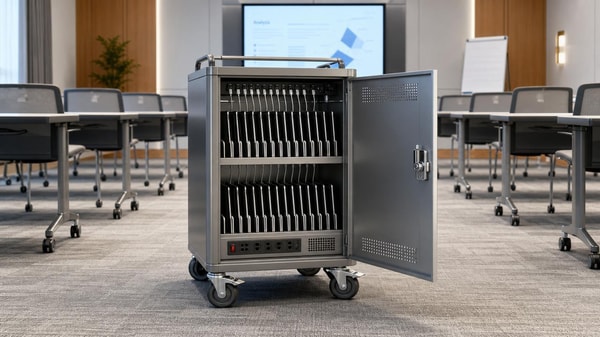
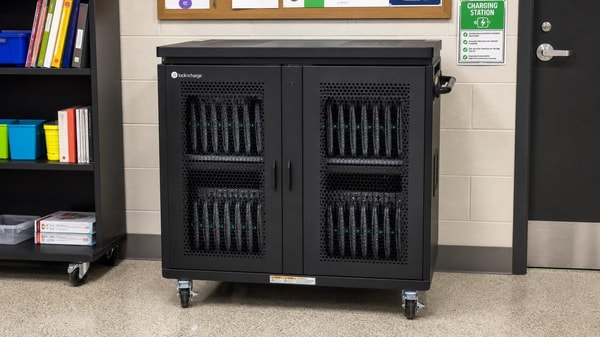
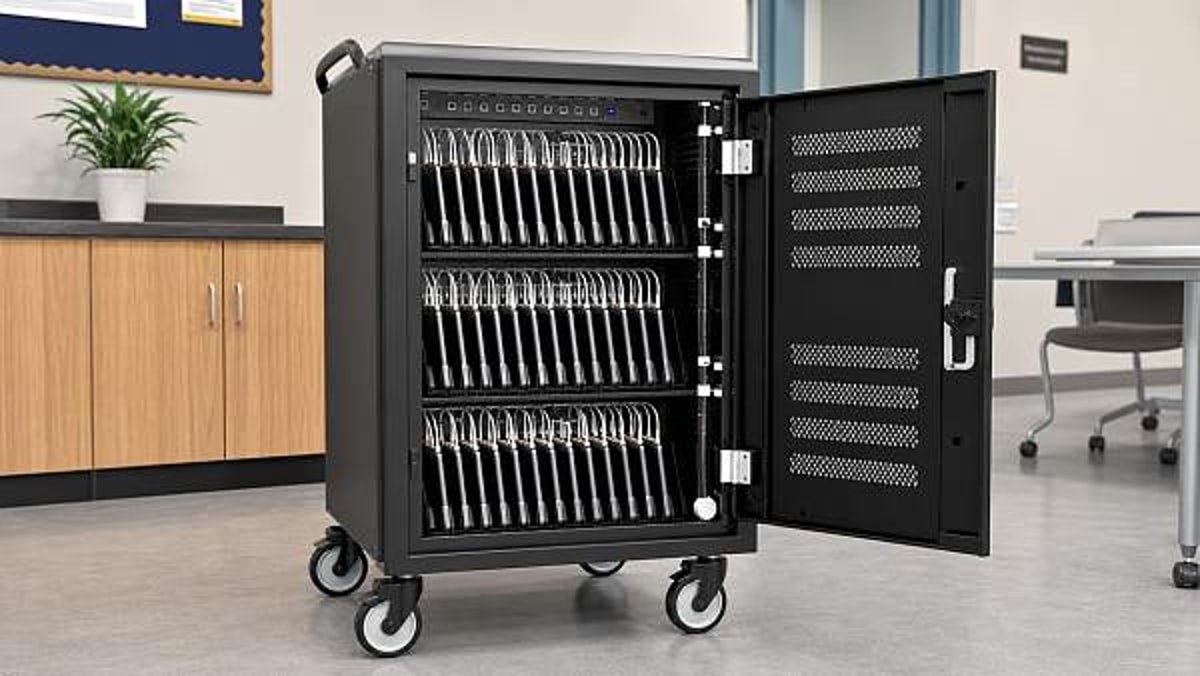
Tablet charging carts are designed to simplify device management, but one overlooked problem can quietly increase maintenance costs and shorten product lifespan: cable wear. For technical evaluators, understanding how daily loading, routing, and repeated movement affect internal cables is essential when comparing tablet charging carts for schools, offices, and shared commercial environments.
Why cable wear is becoming a more important evaluation signal
The market for tablet charging carts is changing in a subtle but meaningful way. In the past, buyers often focused on charging capacity, locking systems, ventilation, and external mobility. Today, technical evaluators are increasingly asked to judge lifecycle reliability, service burden, and hidden operating costs. That shift matters because the weakest point in many tablet charging carts is not the frame, door, or power strip. It is the cable system that works quietly inside the unit every day.
This change is being driven by broader commercial expectations. Shared devices are now used more intensively across education, training centers, hospitality operations, visitor experiences, healthcare support environments, and smart office programs. Devices are checked in and out more frequently, charging cycles are tighter, and users often connect tablets quickly without careful cable handling. Under these conditions, internal cable wear moves from a minor maintenance issue to a strategic product-quality indicator.
For organizations sourcing tablet charging carts at scale, cable durability is no longer just a technical detail. It affects uptime, replacement planning, user satisfaction, and even safety compliance reviews. In other words, the evaluation standard is shifting from “Does the cart charge devices?” to “How well does the cart keep charging reliably after months or years of repeated use?”
The usage environment has changed faster than many cart designs
One of the strongest trend signals in this category is the mismatch between modern usage intensity and older charging cart design assumptions. Many tablet charging carts were originally developed for more controlled routines: devices returned at set times, supervised connection practices, and relatively consistent cable paths. That operating model is fading.
In current commercial and institutional settings, carts are expected to support flexible workflows. A smart campus may use the same unit across multiple rooms. A corporate training department may wheel carts between departments. A hotel or event venue may deploy tablets for check-in, conference registration, and guest engagement within the same day. Each of these scenarios increases mechanical stress on connectors, strain-relief points, and cable routing channels.
The result is a more demanding operating profile. Frequent plugging and unplugging, misaligned device insertion, rushed storage, and cart movement over uneven surfaces all create micro-damage. Over time, that damage appears as frayed insulation, bent connector tips, intermittent charging, loose cable anchoring, and service complaints that are difficult to trace at first.
Key trend signals technical evaluators should recognize
What is driving the hidden cable wear problem
Cable wear in tablet charging carts rarely comes from one dramatic failure. It usually develops through repeated low-level stress. That is why the problem is often underestimated during early product comparisons. A cart can appear well built on the outside while still exposing internal cables to poor bending angles, sharp routing turns, compression points, or constant movement at the connector head.
Several factors are shaping this issue across the market. First, thinner and more compact cart designs sometimes reduce internal routing space. Second, mixed-device fleets can create port alignment challenges when one cart format is used with different tablet cases or connector positions. Third, pressure to simplify cable organization may lead to tight bundling that looks neat but increases heat concentration and mechanical fatigue. Fourth, low-skill end users often interact with the final few centimeters of cable, which is exactly where strain is most concentrated.
Technical evaluators should therefore look beyond power delivery specifications. The real question is whether the internal cable environment supports repeated use without forcing the cable to work against the design of the cart itself.
Common drivers behind accelerated cable wear
- Tight routing channels that force repeated bending at narrow radii
- Poorly positioned shelves that cause connectors to twist during insertion
- Insufficient strain relief near USB or USB-C connector ends
- Cart movement that transfers vibration to unsecured cable bundles
- Maintenance designs that make cable replacement slow or disruptive
- Mixed charging accessories, cases, or adapters that alter the expected cable path
The impact is spreading across more than maintenance teams
The consequences of cable wear are no longer confined to repair technicians. In many organizations, the ripple effect reaches procurement, IT support, operations managers, compliance reviewers, and end users. This is one reason tablet charging carts are being assessed with more lifecycle rigor than before.
When cables degrade, the first visible symptom is often inconsistent charging. That can appear to be a battery issue, a user error, or a tablet hardware fault. As a result, troubleshooting time expands. Devices may be removed from service unnecessarily. Spare stock may be used to cover avoidable downtime. In commercial settings where customer experience matters, unreliable device readiness can also affect front-line operations.
For technical evaluators, this means a charging cart decision now influences broader service performance. The cart is not just storage and power infrastructure; it is part of the reliability chain for digital workflows.
Who feels the impact most
How evaluation criteria for tablet charging carts are evolving
A notable market direction is the move from feature-led comparison to stress-path evaluation. In practical terms, buyers are no longer satisfied with broad claims such as “organized cable management” or “durable construction.” They want to know how the cable path behaves under real conditions: repeated docking, device case variation, user haste, vibration, and maintenance intervention.
This change creates an opportunity for more disciplined assessment. Instead of ranking tablet charging carts only by capacity and charging speed, technical evaluators can score them against failure-prevention design. For example, does the shelf design reduce side-load on the connector? Can cables be replaced individually without dismantling major parts of the cart? Are bend points protected? Is the cable length tuned to the actual device position, or is excess slack left to snag and twist?
In sectors served by GCT, these questions are becoming more relevant because purchasing decisions increasingly connect operational continuity with supplier credibility. A well-designed tablet charging cart signals not only engineering quality but also a stronger understanding of commercial usage realities.
Practical evaluation checkpoints
- Inspect the connector approach angle from cable to tablet port
- Check whether cable anchoring isolates motion from the connector tip
- Review access for field replacement without specialized disassembly
- Assess whether internal routing avoids pinch points during door closure or shelf movement
- Ask how the design performs with protective cases and mixed tablet dimensions
- Evaluate mobility-related stress if the cart will move between commercial zones
What suppliers and buyers should watch next
The next stage of competition in tablet charging carts will likely favor designs that reduce hidden failure points rather than simply adding visible features. This does not require dramatic innovation. In many cases, the differentiator will be disciplined mechanical design: better strain relief, clearer routing separation, modular cable kits, easier maintenance access, and shelf geometry that aligns with real device behavior.
Buyers should also watch how suppliers communicate evidence. Stronger vendors will increasingly provide detailed internal-layout visuals, maintenance procedures, compatibility guidance, and explanations of how their tablet charging carts handle repetitive use. Weak suppliers may continue to rely on capacity-based marketing while offering little insight into wear mechanisms.
Another signal worth tracking is the growing expectation for service-friendly design in B2B equipment procurement. In hospitality, education, office, and mixed public environments, equipment that can be quickly restored to full operation has a strategic advantage. As a result, cable replacement time may become a more meaningful procurement metric than many organizations currently realize.
A practical response framework for technical evaluators
If your organization is comparing tablet charging carts, the most useful response is to turn cable wear from an afterthought into a structured review category. That means combining physical inspection, scenario-based questioning, and lifecycle costing. Rather than asking only whether cables are “managed,” ask how the design prevents repeated stress, how faults are isolated, and how quickly worn parts can be replaced.
A mature evaluation process should also reflect the actual deployment environment. A stationary office cart, a high-turnover school cart, and a mobile hospitality cart do not face identical risks. The same charging cart can perform very differently depending on movement frequency, user discipline, tablet case thickness, and support staffing. This is why context-based evaluation is now more valuable than generic specification comparison.
Conclusion: hidden wear is now a visible decision factor
The most important market shift around tablet charging carts is not a new charging standard or a new cabinet style. It is the growing recognition that hidden cable wear can shape reliability, maintenance cost, and long-term value more than many headline features. For technical evaluators, that changes the decision framework.
When reviewing tablet charging carts, focus on the full chain of change: heavier shared use, more mobile deployment, longer expected service life, and stronger demand for supportability. These changes affect how internal cables age, how quickly faults appear, and how expensive they are to resolve. The best purchasing decisions will come from identifying those wear mechanisms early, testing supplier answers carefully, and matching cart design to the real operating environment.
If a business wants to judge how this trend affects its own sourcing plan, the priority questions are clear: How often will the cart move? How disciplined are users when docking devices? How easy is cable replacement? And does the supplier demonstrate genuine understanding of cable wear inside tablet charging carts, or only promote surface-level features? The answers will reveal which products are built for durable commercial use and which may create hidden costs later.
Search News
Hot Articles
Popular Tags
Need ExpertConsultation?
Connect with our specialized leisureengineering team for procurementstrategies.
Recommended News
 May 06, 2026Tablet charging carts with locking doors still need these checksTablet charging carts with locking doors still need key checks. Learn how to evaluate ventilation, power safety, mobility, and compatibility before you buy.● Institutional Buyer
 May 06, 2026Document cameras for teachers: image quality or software first?Document cameras for teachers: should you prioritize image quality or software? Explore a practical checklist to compare clarity, workflow, compatibility, and long-term value.● Institutional Buyer
 May 06, 2026Smart podiums for classrooms that fit hybrid teaching betterSmart podiums for classrooms designed for hybrid teaching: compare integration, durability, ergonomics, and serviceability to choose scalable solutions that cut support issues and improve teaching efficiency.● Institutional Buyer
 May 06, 2026Chromebook charging stations and the airflow issue many missChromebook charging stations often look efficient, but airflow is the hidden factor that impacts battery life, safety, and charging performance. Learn what smart buyers should inspect before choosing.● Institutional Buyer
 May 06, 2026Language lab equipment features that improve speaking practiceLanguage lab equipment features can dramatically improve speaking practice. Discover which tools best fit schools, universities, exam centers, and training programs.● Institutional Buyer
 May 06, 2026Wireless presentation systems that solve lag in larger roomsWireless presentation systems for larger rooms: discover how to reduce lag, improve stability, strengthen security, and ensure smooth sharing across enterprise AV and IT environments.● Institutional Buyer
 May 06, 2026Tablet charging carts and the hidden issue of cable wearTablet charging carts face a hidden reliability risk: cable wear. Learn how smarter evaluation can reduce downtime, lower maintenance costs, and improve long-term device performance.● Institutional Buyer
 May 06, 2026Scientific calculators wholesale: when cheaper models cost moreScientific calculators wholesale is not just about the lowest quote. Learn how defects, compliance, batch consistency, and supplier reliability affect true cost—and how smarter sourcing protects margin.● Institutional Buyer
 May 06, 2026IOC Selects Chinese University’s Athlete Support Model as Global Procurement BenchmarkIOC adopts Chinese university's AI psychological coaching + wearable load monitoring model as global procurement benchmark — a strategic opportunity for edtech, sports health tech, and data security providers.● Institutional Buyer
 May 05, 2026Liaoning Tieren Appoints Korean Coach Xu Zhengyuan, Signals Shift in K-League Equipment ProcurementLiaoning Tieren appoints Korean coach Xu Zhengyuan — sparking interest in K-League equipment procurement and KFA 2026-certified smart training tech.● Institutional Buyer
 May 05, 2026Physics lab apparatus: where low-cost kits usually fall shortPhysics lab apparatus buying on price alone often leads to poor accuracy, weak durability, and higher lifecycle costs. Learn what low-cost kits miss and how to source safer, better-value solutions.● Institutional Buyer
 May 05, 2026School laboratory equipment: what should be replaced firstSchool laboratory equipment replacement starts with safety-critical assets. Learn what to replace first to improve compliance, reduce downtime, and maximize tight budgets.● Institutional Buyer
 May 05, 2026Thermal receipt printers: hidden upkeep costs before large rolloutThermal receipt printers may look affordable, but hidden upkeep costs can erode rollout budgets. Learn how to reduce downtime, control maintenance, and choose smarter for scale.● Institutional Buyer
 May 05, 2026Human anatomy models that improve hands-on teaching, not storageHuman anatomy models built for hands-on teaching, not storage. Discover durable, classroom-ready options that improve engagement, simplify setup, and support smarter education sourcing.● Institutional Buyer
 May 05, 2026Ceiling mount projector brackets: where installation mistakes happenCeiling mount projector brackets: discover where installation mistakes happen, how to avoid safety and alignment issues, and the checklist that helps teams deliver smoother AV projects.● Institutional Buyer
 May 05, 2026Barcode scanners for library: common issues with older systemsBarcode scanners for library upgrades can solve slow checkouts, read errors, and compatibility issues in older systems. Learn what fails first and how to choose a reliable replacement.● Institutional Buyer
 May 05, 2026What to check before ordering wholesale projector screensWholesale projector screens buyers should check material, gain, aspect ratio, installation, and supplier consistency before ordering. Reduce sourcing risk and choose reliable commercial solutions.● Institutional Buyer
 May 05, 2026Geography globes wholesale: what makes one model classroom-readyGeography globes wholesale buyers: discover what makes a model truly classroom-ready, from durability and readability to safety, compliance, and reliable bulk supply.● Institutional Buyer
 May 05, 2026Microscope slides wholesale: where quality gaps usually show upMicroscope slides wholesale buyers should watch for hidden quality gaps in flatness, edge finishing, cleanliness, and batch consistency—learn how to reduce waste and choose reliable suppliers.● Institutional Buyer
 May 05, 2026POS touch screens: what affects response speed and lifespanPOS touch screens directly impact checkout speed, uptime, and total cost. Learn what affects response speed and lifespan to choose the right solution for every business scenario.● Institutional Buyer
 May 04, 2026Kindergarten Furniture Bulk Orders and the Safety Details MissedKindergarten furniture bulk buyers: discover the hidden safety checks suppliers often miss, from emissions and stability to ergonomics and compliance, before placing large orders.● Institutional Buyer
 May 04, 2026School Desks and Chairs Wholesale: Matching Age to Size CorrectlySchool desks and chairs wholesale guide: learn how to match age to size correctly for better comfort, safety, compliance, and smarter school furniture purchasing.● Institutional Buyer
 May 04, 2026Library Bookshelves Wholesale: How Much Load Is Really Enough?Library bookshelves wholesale guide: learn how much load is truly enough for safety, durability, and compliance. Compare ratings, avoid costly mistakes, and choose the right shelving with confidence.● Institutional Buyer
 May 04, 2026Smart Interactive Whiteboards: Which Features Get Used Daily?Smart interactive whiteboards: discover which features teams and teachers actually use daily, from touch accuracy and wireless casting to easy collaboration, ROI, and smarter buying decisions.● Institutional Buyer