Chromebook charging stations and the airflow issue many miss
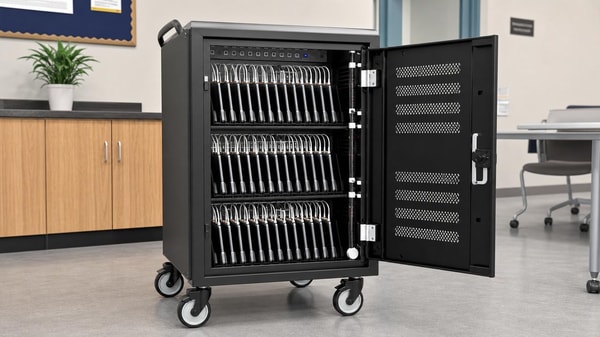
When evaluating chromebook charging stations, many teams focus on capacity, cable management, and security, but overlook a critical factor: airflow. Poor ventilation can accelerate battery wear, increase device temperatures, and reduce charging efficiency in high-density deployments. For technical evaluators, understanding how airflow design affects safety, performance, and long-term maintenance is essential before selecting the right charging solution.
Airflow has moved from a minor detail to a frontline evaluation signal
A noticeable shift is taking place in education, shared office environments, training centers, and institutional device fleets: chromebook charging stations are no longer being judged only by storage count or locking mechanisms. As deployments become denser and charging cycles become more frequent, thermal behavior is gaining attention as a practical risk factor. This change is especially relevant for technical evaluators who are responsible for uptime, safety review, device lifecycle planning, and support workload.
Several market signals explain this shift. First, Chromebook programs have matured. Early-stage buyers often prioritized affordability and basic charging convenience. Now, many organizations are in refresh cycles and have enough operating history to see where hidden costs emerge. One of those costs is heat buildup inside enclosed carts, cabinets, and lockers. Second, higher charging density means more simultaneous current flow in a confined space. Third, institutions are under stronger pressure to extend hardware life rather than replace devices quickly. In that environment, airflow is no longer a design bonus; it becomes a selection criterion tied to total cost of ownership.
For Global Commercial Trade audiences, this is part of a broader procurement trend seen across commercial equipment categories: buyers increasingly assess how design details influence operational resilience. In the same way that hospitality and commercial interiors now value thermal management in back-of-house equipment, buyers of chromebook charging stations are beginning to ask whether charging infrastructure supports long-term device health instead of simply organizing power cords.
What is changing in the way buyers assess chromebook charging stations
The old evaluation model centered on visible features: number of bays, external dimensions, wheel quality, lock type, and power strip arrangement. The new model adds questions that are less visible but more consequential: How does heat escape during full-load charging? Are vents placed where devices actually release heat? Does cable routing block air channels? Is the enclosure designed for passive ventilation only, or does it depend on low ambient room temperature to stay within safe operating conditions?
This shift does not mean every buyer now needs a laboratory-style thermal report. It means technical evaluation is becoming more operational. Instead of asking whether a unit can technically charge 30 or 40 devices, teams are asking whether it can do so repeatedly in a real room, during peak hours, with varying device states, and without creating maintenance issues. That is a more advanced and more realistic way to evaluate chromebook charging stations.
Why the airflow issue is becoming more visible now
The airflow issue is not new, but several operational changes are making it harder to ignore. Devices are often stored immediately after use, which means they may already be warm before charging begins. USB-C charging ecosystems have also standardized deployment patterns, allowing many devices to charge at the same time in relatively compact spaces. In addition, many institutions place charging solutions in closets, corners, libraries, and multipurpose rooms where surrounding ventilation may already be limited. In such conditions, a poorly ventilated station compounds the room’s thermal limitations.
Another important factor is the growing emphasis on device longevity. Heat is one of the most persistent enemies of battery condition over time. Technical evaluators may not see immediate failure, but they often experience a slower problem: shorter battery runtime, more uneven charging behavior, increased support tickets, and faster decline in fleet consistency. These issues rarely appear on day one, which is why airflow has historically been underestimated in chromebook charging stations. Yet over a multi-year deployment, they become highly visible in operating budgets and maintenance planning.
There is also a governance dimension. Procurement and facilities teams are becoming more aligned on safety, sustainability, and lifecycle efficiency. A charging station that looks compact and secure may still create avoidable thermal stress. As cross-functional review becomes more common, thermal design is more likely to be challenged during evaluation.
The hidden impact on different stakeholders
The airflow performance of chromebook charging stations affects more than the IT department. Its impact spreads across procurement, facilities, support teams, and end users. Technical evaluators should understand these ripple effects because many buying decisions now involve shared accountability.
What technical evaluators should now inspect more carefully
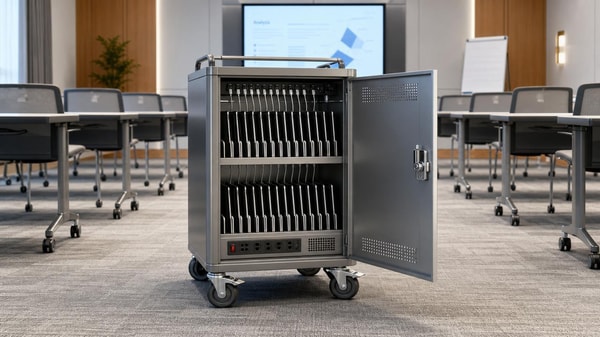
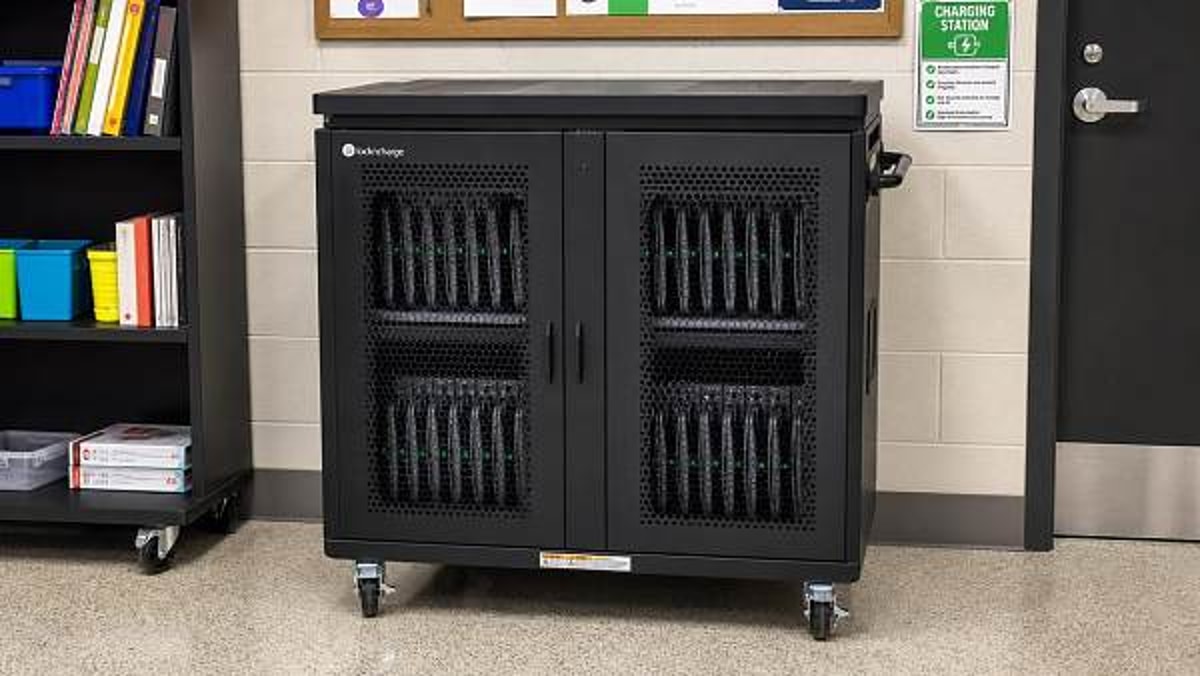
The trend is clear: evaluation needs to move beyond brochure features. For chromebook charging stations, airflow should be assessed through physical design logic and intended use conditions. A vent opening by itself says very little. Evaluators should look at whether air can enter and exit effectively when all devices are present, cables are connected, and doors are closed. Shelf spacing, rear clearance, side perforation patterns, internal power brick placement, and door construction all influence thermal behavior.
It is also wise to examine how closely the station matches the actual Chromebook form factor in the fleet. A station that is technically compatible may still fit devices too tightly once protective cases are included. Tight fit reduces air movement around each unit and can create uneven heat zones. This is a common mismatch in real deployments and one that often escapes notice during paper-based comparison.
Another important signal is maintainability. Dust accumulation, blocked vents, and cramped cable compartments all reduce effective airflow over time. A well-designed charging solution should not only ventilate well when new but remain serviceable after months of daily use. Easy access for cleaning and inspection is therefore part of thermal evaluation, not just a convenience feature.
Key evaluation questions
When comparing chromebook charging stations, ask questions such as:
- Does the airflow path remain open when every slot is occupied?
- Are cables or adapters likely to obstruct vents or trap heat?
- Can the unit operate safely in rooms with modest ambient ventilation?
- Is there enough spacing for devices with sleeves, cases, or varied thickness?
- Can support staff inspect and clean ventilation areas without major disassembly?
A broader market direction: compact design is no longer enough
One of the strongest product trends across commercial equipment is the push to make products smaller, cleaner, and easier to place in shared spaces. That trend is understandable, but in chromebook charging stations it can create a trade-off. Highly compact designs may improve footprint efficiency while silently reducing thermal margin. For technical evaluators, the important question is not whether compactness is good or bad, but whether space efficiency has been achieved without compromising airflow.
This is where sourcing quality matters. Suppliers that understand commercial deployment realities often design around real-world charging patterns instead of only showroom appearance. In a B2B sourcing context, buyers should increasingly favor vendors who can explain thermal reasoning, installation assumptions, and maintenance access rather than simply listing capacity. That reflects a wider procurement direction across institutional and specialty commercial categories: intelligent design credibility is becoming a trust signal.
How to respond to the trend without overcomplicating the buying process
The best response is not to turn every purchase into an engineering study. It is to upgrade the evaluation checklist so airflow receives structured attention. Organizations reviewing chromebook charging stations can add a short thermal review stage that includes enclosure inspection, room-placement assumptions, loaded demonstration where possible, and discussion of service access. This creates a more balanced process without slowing procurement excessively.
It is also useful to distinguish between low-risk and high-risk deployment profiles. A lightly used station in a well-ventilated media room may tolerate simpler designs. A full-capacity station used daily in a warm storage area requires much stronger airflow discipline. This risk-based approach helps technical evaluators avoid both underestimating and overengineering the requirement.
Signals worth monitoring over the next buying cycle
Looking ahead, technical evaluators should watch for several signals. One is whether vendors begin providing clearer deployment guidance for ambient conditions, device spacing, and full-load charging assumptions. Another is whether institutions start including thermal and serviceability checkpoints in bid documents. A third is whether sustainability and lifecycle policies create stronger demand for charging solutions that help preserve battery performance over time.
These signals matter because they indicate a maturing market. As chromebook charging stations become more standardized in educational and institutional environments, selection criteria tend to shift from obvious features to operational quality. Airflow is part of that evolution. Buyers that adapt early are more likely to avoid avoidable replacement cost and support friction.
Final judgment: treat airflow as a business risk filter, not just a product feature
The key industry change is straightforward: chromebook charging stations are being evaluated in a more mature, lifecycle-focused way, and airflow is one of the clearest indicators of that shift. It influences safety, charging consistency, service effort, and asset longevity. For technical evaluators, the opportunity is not simply to buy a better cabinet or cart. It is to make a more accurate decision about operational fit.
If your organization wants to judge how this trend affects its own sourcing decisions, start by confirming a few practical questions: Where will the station actually be installed? How often will devices be returned warm and charged at full density? How much battery-life consistency matters over the next three to five years? And can the supplier explain how the airflow design performs under realistic use conditions? Those answers will do more to improve decision quality than capacity numbers alone.
In today’s market, the best chromebook charging stations are not only secure and organized. They are designed with enough airflow intelligence to support the long-term commercial reality of shared device fleets.
Search News
Hot Articles
Popular Tags
Need ExpertConsultation?
Connect with our specialized leisureengineering team for procurementstrategies.
Recommended News
 May 06, 2026Tablet charging carts with locking doors still need these checksTablet charging carts with locking doors still need key checks. Learn how to evaluate ventilation, power safety, mobility, and compatibility before you buy.● Institutional Buyer
 May 06, 2026Document cameras for teachers: image quality or software first?Document cameras for teachers: should you prioritize image quality or software? Explore a practical checklist to compare clarity, workflow, compatibility, and long-term value.● Institutional Buyer
 May 06, 2026Smart podiums for classrooms that fit hybrid teaching betterSmart podiums for classrooms designed for hybrid teaching: compare integration, durability, ergonomics, and serviceability to choose scalable solutions that cut support issues and improve teaching efficiency.● Institutional Buyer
 May 06, 2026Chromebook charging stations and the airflow issue many missChromebook charging stations often look efficient, but airflow is the hidden factor that impacts battery life, safety, and charging performance. Learn what smart buyers should inspect before choosing.● Institutional Buyer
 May 06, 2026Language lab equipment features that improve speaking practiceLanguage lab equipment features can dramatically improve speaking practice. Discover which tools best fit schools, universities, exam centers, and training programs.● Institutional Buyer
 May 06, 2026Wireless presentation systems that solve lag in larger roomsWireless presentation systems for larger rooms: discover how to reduce lag, improve stability, strengthen security, and ensure smooth sharing across enterprise AV and IT environments.● Institutional Buyer
 May 06, 2026Tablet charging carts and the hidden issue of cable wearTablet charging carts face a hidden reliability risk: cable wear. Learn how smarter evaluation can reduce downtime, lower maintenance costs, and improve long-term device performance.● Institutional Buyer
 May 06, 2026Scientific calculators wholesale: when cheaper models cost moreScientific calculators wholesale is not just about the lowest quote. Learn how defects, compliance, batch consistency, and supplier reliability affect true cost—and how smarter sourcing protects margin.● Institutional Buyer
 May 06, 2026IOC Selects Chinese University’s Athlete Support Model as Global Procurement BenchmarkIOC adopts Chinese university's AI psychological coaching + wearable load monitoring model as global procurement benchmark — a strategic opportunity for edtech, sports health tech, and data security providers.● Institutional Buyer
 May 05, 2026Liaoning Tieren Appoints Korean Coach Xu Zhengyuan, Signals Shift in K-League Equipment ProcurementLiaoning Tieren appoints Korean coach Xu Zhengyuan — sparking interest in K-League equipment procurement and KFA 2026-certified smart training tech.● Institutional Buyer
 May 05, 2026Physics lab apparatus: where low-cost kits usually fall shortPhysics lab apparatus buying on price alone often leads to poor accuracy, weak durability, and higher lifecycle costs. Learn what low-cost kits miss and how to source safer, better-value solutions.● Institutional Buyer
 May 05, 2026School laboratory equipment: what should be replaced firstSchool laboratory equipment replacement starts with safety-critical assets. Learn what to replace first to improve compliance, reduce downtime, and maximize tight budgets.● Institutional Buyer
 May 05, 2026Thermal receipt printers: hidden upkeep costs before large rolloutThermal receipt printers may look affordable, but hidden upkeep costs can erode rollout budgets. Learn how to reduce downtime, control maintenance, and choose smarter for scale.● Institutional Buyer
 May 05, 2026Human anatomy models that improve hands-on teaching, not storageHuman anatomy models built for hands-on teaching, not storage. Discover durable, classroom-ready options that improve engagement, simplify setup, and support smarter education sourcing.● Institutional Buyer
 May 05, 2026Ceiling mount projector brackets: where installation mistakes happenCeiling mount projector brackets: discover where installation mistakes happen, how to avoid safety and alignment issues, and the checklist that helps teams deliver smoother AV projects.● Institutional Buyer
 May 05, 2026Barcode scanners for library: common issues with older systemsBarcode scanners for library upgrades can solve slow checkouts, read errors, and compatibility issues in older systems. Learn what fails first and how to choose a reliable replacement.● Institutional Buyer
 May 05, 2026What to check before ordering wholesale projector screensWholesale projector screens buyers should check material, gain, aspect ratio, installation, and supplier consistency before ordering. Reduce sourcing risk and choose reliable commercial solutions.● Institutional Buyer
 May 05, 2026Geography globes wholesale: what makes one model classroom-readyGeography globes wholesale buyers: discover what makes a model truly classroom-ready, from durability and readability to safety, compliance, and reliable bulk supply.● Institutional Buyer
 May 05, 2026Microscope slides wholesale: where quality gaps usually show upMicroscope slides wholesale buyers should watch for hidden quality gaps in flatness, edge finishing, cleanliness, and batch consistency—learn how to reduce waste and choose reliable suppliers.● Institutional Buyer
 May 05, 2026POS touch screens: what affects response speed and lifespanPOS touch screens directly impact checkout speed, uptime, and total cost. Learn what affects response speed and lifespan to choose the right solution for every business scenario.● Institutional Buyer
 May 04, 2026Kindergarten Furniture Bulk Orders and the Safety Details MissedKindergarten furniture bulk buyers: discover the hidden safety checks suppliers often miss, from emissions and stability to ergonomics and compliance, before placing large orders.● Institutional Buyer
 May 04, 2026School Desks and Chairs Wholesale: Matching Age to Size CorrectlySchool desks and chairs wholesale guide: learn how to match age to size correctly for better comfort, safety, compliance, and smarter school furniture purchasing.● Institutional Buyer
 May 04, 2026Library Bookshelves Wholesale: How Much Load Is Really Enough?Library bookshelves wholesale guide: learn how much load is truly enough for safety, durability, and compliance. Compare ratings, avoid costly mistakes, and choose the right shelving with confidence.● Institutional Buyer
 May 04, 2026Smart Interactive Whiteboards: Which Features Get Used Daily?Smart interactive whiteboards: discover which features teams and teachers actually use daily, from touch accuracy and wireless casting to easy collaboration, ROI, and smarter buying decisions.● Institutional Buyer