Hotel & Catering Equipment Lists Often Miss These Basics
Many Hotel & Catering Equipment checklists look complete on paper, yet critical basics are often overlooked until delays, compliance issues, or costly rework appear on site. For project managers and engineering leads, understanding these hidden gaps early is essential to keeping hospitality projects on schedule, on budget, and fully operational from day one.
Why “basic” gaps are becoming a bigger risk in Hotel & Catering Equipment projects
The Hotel & Catering Equipment sector is changing in ways that make overlooked basics more expensive than before. In the past, a missing drain point, an undersized power line, or a late ventilation revision might have been treated as a site inconvenience. Today, those same issues can disrupt opening schedules, trigger compliance concerns, delay commissioning, and weaken the guest experience from the first day of operation.
Several market signals explain this shift. Hospitality investors are compressing project timelines, kitchens are becoming more multi-functional, energy and food safety standards are under closer review, and operators expect equipment to support both labor efficiency and premium presentation. As a result, Hotel & Catering Equipment planning now sits at the intersection of design intent, utility engineering, workflow logic, compliance, and lifecycle cost.
For project managers, this means the old checklist mindset is no longer enough. What matters is not only whether a combi oven, refrigeration unit, buffet line, dishwashing system, or preparation station appears on the list. The real question is whether each item has been coordinated with the physical space, service model, maintenance access, safety obligations, and operational sequence it depends on.
The trend behind the problem: equipment lists are expanding, but coordination depth is not
One of the most important changes in Hotel & Catering Equipment procurement is that equipment schedules are getting longer while project teams are getting less time for detailed coordination. More properties now combine restaurant service, banquet production, grab-and-go retail, room service support, staff dining, and event flexibility within the same back-of-house footprint. That adds equipment variety, but not always planning discipline.
At the same time, owners increasingly expect visible kitchens, sustainable operations, digital monitoring, and premium material finishes. These expectations raise the stakes for every “basic” technical detail. A beautiful kitchen pass or display counter can fail operationally if lighting generates heat, if cable routes are exposed, or if service clearance was never validated. In other words, the market is moving toward higher performance environments, but many Hotel & Catering Equipment lists still behave like static procurement documents instead of integrated project tools.
The basics most Hotel & Catering Equipment lists still miss
The most common omissions are rarely glamorous, but they are consistently disruptive. Project teams often focus on brand, capacity, and finish level while underestimating installation realities. In current hospitality projects, the following basics are the ones most likely to create downstream issues:
1. Utility alignment, not just utility presence
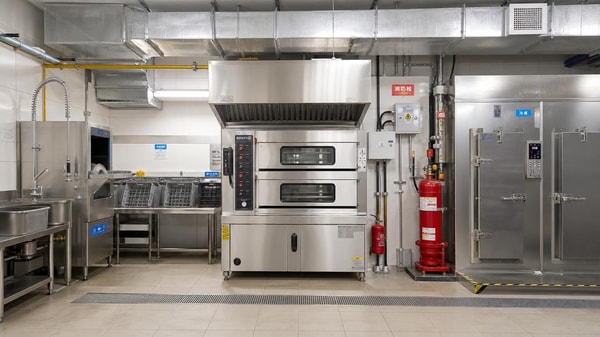
It is not enough to confirm gas, water, drainage, or power “somewhere nearby.” Hotel & Catering Equipment requires precise points, load validation, route coordination, isolation access, and compatibility with final equipment specifications. Small errors in location or capacity often force site improvisation, which then affects safety, cleaning, and maintainability.
2. Maintenance clearance and replacement access
Many lists identify equipment dimensions but ignore door swing, panel removal, condenser cleaning access, lifting path, and future replacement route. This is especially critical in basements, rooftop service zones, and compact urban hotels where access is constrained from the beginning.
3. Operational flow between zones
A technically complete Hotel & Catering Equipment package can still fail if receiving, cold storage, preparation, cooking, plating, warewashing, waste handling, and staff circulation do not connect logically. Workflow basics matter more now because staffing models are leaner and service expectations are higher.
4. Compliance evidence and market suitability
Teams sometimes assume that a product being widely sold means it fits the target market. In reality, certification alignment, food-contact material suitability, electrical frequency, fire-related requirements, and sanitation expectations vary. For internationally sourced Hotel & Catering Equipment, documentation readiness is not a side issue; it is a project gate.
5. Heat, noise, and ventilation interaction
Open kitchens, café concepts, and compact foodservice zones have made environmental basics far more important. Heat rejection, grease control, air balance, and acoustic behavior influence both guest comfort and staff productivity. Equipment lists that ignore these interactions create hidden operational penalties even when installation is technically completed.
What is driving these blind spots in the current market
The persistence of these omissions is not simply a matter of poor discipline. It reflects structural changes in how hospitality projects are planned and sourced. Hotel & Catering Equipment decisions are now spread across owners, operators, consultants, designers, MEP engineers, contractors, and international suppliers. The more distributed the decision-making becomes, the easier it is for basics to fall between responsibilities.
Another driver is the growing use of mixed procurement models. Some equipment is specified by brand, some by performance criteria, some by local substitute, and some through late-stage value engineering. This creates mismatch risk. A revised piece of Hotel & Catering Equipment may fit the budget, yet no longer fit the drain position, hood arrangement, loading pattern, or service route assumed earlier in the design.
There is also a wider market tendency to prioritize visible front-of-house investment over invisible back-of-house resilience. However, in hospitality, operational weakness quickly becomes a guest-facing problem. Delays in breakfast service, uneven banquet output, slow dish return, temperature inconsistency, or frequent equipment downtime all trace back to supposedly basic planning decisions.
Who feels the impact most strongly
The consequences of incomplete Hotel & Catering Equipment lists are not shared equally. Some roles absorb the pressure earlier and more directly than others. For project managers and engineering leads, understanding this helps prioritize coordination effort where it matters most.
What project teams should watch now in Hotel & Catering Equipment planning
Looking ahead, the strongest teams will not just ask what equipment is needed. They will ask what assumptions each item carries. This is where trend awareness becomes practical. A Hotel & Catering Equipment schedule should increasingly be treated as a live coordination document tied to design, compliance, logistics, and operations.
The first signal to monitor is specification drift. If supplier substitutions, value engineering, or phased procurement are likely, teams should identify which equipment items are most sensitive to dimensional, power, ventilation, or drainage changes. These are the items most likely to trigger cascading revisions.
The second signal is operational complexity. Properties with banquet, all-day dining, specialty restaurant, and delivery support under one roof need tighter workflow validation than properties with simpler service patterns. The more formats a kitchen supports, the less room there is for generic equipment planning.
The third signal is serviceability over time. Hospitality assets are being asked to perform longer and more efficiently. That raises the importance of spare parts access, technician access, cleaning access, and local support capability when evaluating Hotel & Catering Equipment suppliers.
A practical decision framework for the next project phase
For project leaders, the most useful response is not to build a bigger checklist, but to improve checkpoint quality. The following framework helps turn trend awareness into better project control.
How better sourcing intelligence changes the outcome
As global sourcing expands, the role of reliable market intelligence becomes more important in Hotel & Catering Equipment decisions. Buyers and project teams need more than catalogs and quotations. They need visibility into supplier capability, documentation maturity, customization limits, lead time realism, and after-sales support. This is especially true when a project combines premium hospitality design with strict operational demands.
That is why better sourcing discipline should begin before purchase orders are issued. Teams should compare not only equipment features, but also integration readiness. Can the supplier provide coordinated shop drawings? Are utility requirements clear and stable? Is OEM or ODM customization likely to affect approvals or spare parts planning? These questions increasingly determine whether Hotel & Catering Equipment performs as intended in real project conditions.
Final judgment: the missing basics are now strategic, not minor
The biggest change in the Hotel & Catering Equipment market is not simply new technology or broader product choice. It is the rising cost of under-coordination. Basics that once seemed routine now carry strategic weight because they affect compliance, schedule, labor efficiency, energy use, maintainability, and guest-facing performance all at once.
For project managers and engineering leads, the most useful next step is to review current equipment schedules through a trend lens: where are assumptions still vague, where could substitutions create technical mismatch, and which items have the highest impact on utilities, ventilation, workflow, or compliance? If a business wants to judge how these market changes will affect its own hospitality project, those are the questions worth confirming first.
Search News
Hot Articles
Popular Tags
Need ExpertConsultation?
Connect with our specialized leisureengineering team for procurementstrategies.
Recommended News
 May 04, 2026Commercial Water Softeners: Sizing Mistakes That Raise CostsCommercial water softeners sizing mistakes can quietly raise salt, water, and maintenance costs. Learn the most common errors and smarter sizing tips for long-term commercial efficiency.● Hospitality Sourcing Dir
 May 04, 2026Hotel & Catering Equipment Lists Often Miss These BasicsHotel & Catering Equipment lists often miss critical basics like utilities, compliance, workflow, and maintenance access. Learn how to avoid delays, rework, and costly project risks.● Hospitality Sourcing Dir
 May 03, 2026Commercial pizza ovens that save labor may cost more to ventCommercial pizza ovens can cut labor, but venting, code compliance, and installation may raise total costs. See the key checks before you buy.● Hospitality Sourcing Dir
 May 03, 2026Commercial juicers: cold press or centrifugal for daily serviceCommercial juicers: compare cold press and centrifugal models for daily service. Discover the best fit for speed, juice quality, yield, cleaning, and operating costs.● Hospitality Sourcing Dir
 May 03, 2026Commercial water boilers: recovery time matters more than listed capacityCommercial water boilers perform best when recovery time matches peak demand. Learn why faster reheating beats listed capacity for reliable, efficient commercial hot water service.● Hospitality Sourcing Dir
 May 03, 2026Cotton candy machines wholesale: small details that affect cleaning timeCotton candy machines wholesale guide: discover the small design details that cut cleaning time, reduce labor costs, and improve hygiene for busy commercial operations.● Hospitality Sourcing Dir
 May 03, 2026Dough sheeters wholesale: thickness control is where quality showsDough sheeters wholesale buyers: see why thickness control defines real quality, repeatability, and long-term value. Compare key evaluation points for smarter sourcing.● Hospitality Sourcing Dir
 May 03, 2026Slushy machines wholesale: what causes flavor crossover problemsSlushy machines wholesale buyers should understand what causes flavor crossover, from poor sealing to weak cleaning design, to protect drink quality and choose more reliable equipment.● Hospitality Sourcing Dir
 May 03, 2026Commercial bread slicers: slice consistency affects more than looksCommercial bread slicers do more than improve appearance—they boost portion control, reduce waste, and support faster service. Learn what drives slice consistency before you buy.● Hospitality Sourcing Dir
 May 03, 2026Wood fired pizza ovens need more space than most plans allowWood fired pizza ovens often require more space than expected. Learn how to avoid redesigns, protect workflow, and plan compliant, high-performance hospitality projects.● Hospitality Sourcing Dir
 May 03, 2026Commercial pizza ovens: gas or electric for steady outputCommercial pizza ovens: compare gas vs. electric for steady output, faster recovery, precise control, and smarter installation choices across real kitchen scenarios.● Hospitality Sourcing Dir
 May 03, 2026Commercial popcorn machines: kettle size vs serving rush realityCommercial popcorn machines should be chosen by real rush-hour output, not kettle size alone. Learn how to match serving peaks, staffing, and workflow for smarter buying.● Hospitality Sourcing Dir
 May 03, 2026Commercial insect killers: indoor placement changes results fastCommercial insect killers perform very differently based on indoor placement. Discover how small positioning changes can boost control, reduce pest activity, and improve operational results fast.● Hospitality Sourcing Dir
 May 03, 2026Hotel & Catering Equipment lists often hide installation costsHotel & Catering Equipment lists often hide installation costs. Learn where budgets slip, what to verify early, and how to compare total installed value before approval.● Hospitality Sourcing Dir
 May 03, 2026Bakery display cases: glass fogging, lighting, and product appealBakery display cases guide: compare anti-fog glass, lighting quality, and temperature stability to boost product appeal, hygiene, and sales with smarter sourcing decisions.● Hospitality Sourcing Dir
 May 03, 2026Commercial milkshake mixers: when motor power changes drink textureCommercial milkshake mixers directly shape texture, aeration, and consistency. Learn how motor power affects shake quality and choose the right mixer for your menu and volume.● Hospitality Sourcing Dir
 May 03, 2026Hot dog rollers that clean faster can cut downtime more than expectedHot dog rollers that clean faster can reduce downtime, improve sanitation, and save labor. Learn which features matter most before you buy for busy commercial service.● Hospitality Sourcing Dir
 May 03, 2026Conveyor pizza ovens or deck ovens for high-volume service?Conveyor pizza ovens vs deck ovens: discover which option delivers better throughput, consistency, labor efficiency, and site-fit for high-volume commercial pizza service.● Hospitality Sourcing Dir
 May 03, 2026Shawarma machines commercial buyers compare heat control firstShawarma machines commercial buyers compare heat control first. Learn how gas, electric, and multi-zone systems affect consistency, efficiency, safety, and sourcing decisions.● Hospitality Sourcing Dir
 May 02, 2026Stainless steel GN pans with reinforced corners last longer in busy kitchensStainless steel GN pans with reinforced corners help busy kitchens reduce warping, improve hygiene, and cut replacement costs. See why buyers choose longer-lasting performance.● Hospitality Sourcing Dir
 May 02, 2026Commercial induction cookers: power ratings that mislead first-time buyersCommercial induction cookers are not as simple as wattage labels suggest. Learn how to compare real performance, efficiency, pan fit, and reliability before you buy.● Hospitality Sourcing Dir
 May 02, 2026Beverage dispensers wholesale: what causes dripping after heavy useBeverage dispensers wholesale guide: learn what causes dripping after heavy use, how to spot seal, valve, and pressure issues, and choose durable suppliers with confidence.● Hospitality Sourcing Dir
 May 02, 2026Disposable wooden cutlery and the taste issue customers noticeDisposable wooden cutlery can affect taste, texture, and customer perception. Learn what causes woody aftertaste, how to test suppliers, and how to choose better options.● Hospitality Sourcing Dir
 May 02, 2026Sushi display cases: curved glass looks better, but is it practical?Sushi display cases with curved glass look premium, but are they practical? Compare visibility, cleaning, temperature control, and ROI before you buy.● Hospitality Sourcing Dir