Commercial Water Softeners: Sizing Mistakes That Raise Costs
Choosing the right commercial water softeners size is not just a technical detail—it directly affects operating costs, equipment lifespan, and project performance. For project managers and engineering leads, even small sizing mistakes can lead to higher salt consumption, wasted water, and avoidable maintenance. This article explains the most common errors and how to size systems more accurately for long-term commercial efficiency.
What commercial water softeners do and why sizing matters
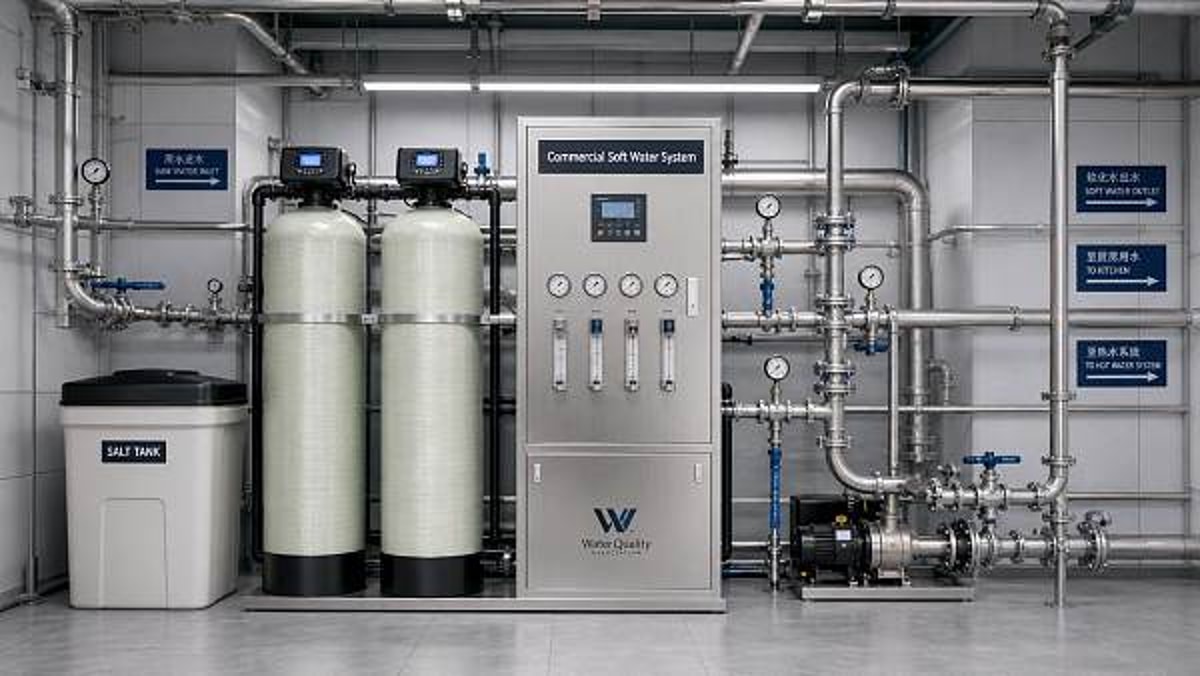
Commercial water softeners remove hardness minerals, mainly calcium and magnesium, from incoming water through an ion exchange process. In hotels, foodservice operations, schools, offices, leisure facilities, and specialty retail environments, hard water creates scale on boilers, dishwashers, steamers, glassware washers, laundry systems, cooling loops, and hot water lines. Over time, scaling reduces heat transfer efficiency, shortens equipment life, increases detergent use, and raises maintenance frequency.
For project leaders, the issue is not simply whether to install commercial water softeners, but whether the system is matched to real operating conditions. An undersized unit regenerates too often, uses more salt and water, and may still allow hardness leakage during peak demand. An oversized unit can also waste money through higher capital cost, oversized brine systems, poor regeneration efficiency, and unnecessary footprint in already crowded plant rooms. Good sizing connects water quality, flow profile, business hours, and equipment protection goals into one practical design decision.
This is especially important in commercial projects where multiple stakeholders are involved. Procurement may focus on initial price, operations may focus on uptime, and engineering teams may focus on hydraulic integration. The sizing decision sits at the intersection of all three. When it is done well, commercial water softeners become a low-drama utility asset. When it is done poorly, they become a hidden source of avoidable operating expense.
Why the industry is paying closer attention
Across the broader commercial sector, buyers are under pressure to reduce lifecycle cost rather than simply minimize purchase price. Hospitality groups want consistent guest experience, campuses need predictable maintenance budgets, and mixed-use commercial developments are expected to hit tighter sustainability and efficiency targets. In that context, commercial water softeners are no longer viewed as minor add-ons. They influence energy use, water use, cleaning outcomes, and service reliability across many connected systems.
Global sourcing has also changed the conversation. Project teams now compare multiple OEM and ODM offers, often across different standards and sizing assumptions. One supplier may size by average daily volume, another by peak hour demand, and a third by resin capacity under ideal laboratory conditions. Without a disciplined review method, decision-makers may compare unlike-for-like proposals and choose a system that looks economical on paper but performs poorly in operation.
For organizations managing premium commercial experiences, such as hotels, high-end dining environments, education facilities, or leisure venues, poor water treatment can affect far more than utilities. It can damage front-of-house presentation, guest satisfaction, and the reliability of expensive downstream equipment. That is why accurate sizing of commercial water softeners deserves the same disciplined attention as HVAC, kitchen ventilation, or hot water generation.
The most common sizing mistakes that raise costs
Using average demand instead of peak demand
A common mistake is to size commercial water softeners using daily average water use only. In real buildings, demand is not flat. Hotels have morning peaks, restaurants have meal-service peaks, campuses have sharp occupancy-driven cycles, and leisure venues may have heavy weekend variation. A system sized to average flow can become overwhelmed during critical periods, causing pressure drop, hardness breakthrough, and frequent regeneration. The result is not only poorer water quality but also increased operating cost.
Ignoring hardness variability and feedwater changes
Some designs assume a single hardness level based on a basic water report. In practice, municipal blending, seasonal source changes, and regional supply variations can shift hardness considerably. If the sizing model uses a lower-than-real hardness value, the softener’s effective capacity drops immediately. This creates more frequent regeneration cycles and higher salt use than expected. For sites with variable feedwater, a conservative sizing basis or continuous monitoring approach is often more appropriate.
Treating all water uses as equally critical
Not every application needs the same softened water volume. In many projects, only priority loads such as boilers, combi ovens, dishwashers, laundry, or domestic hot water require full protection. If designers include all building water loads without segmentation, commercial water softeners may be oversized. If they exclude high-impact equipment, systems may be undersized where it matters most. Smart zoning and application mapping often produce a more accurate and more economical design.
Overlooking regeneration strategy
Sizing is not only about resin volume. It is also about how and when regeneration occurs. Time-clock regeneration may be acceptable in simple applications, but demand-initiated control often delivers better salt and water efficiency in variable commercial environments. Designers who focus only on tank size may miss the fact that control logic, duplex arrangements, and reserve capacity assumptions strongly affect lifecycle cost.
Failing to account for future expansion
Another frequent error is designing for current occupancy only. A hotel may add banquet capacity, a campus may open another wing, or a catering site may extend operating hours. Commercial water softeners that appear correctly sized on day one may become restrictive within a short period if project teams do not include realistic growth assumptions. Future-proofing does not always mean oversizing heavily; it may mean selecting modular duplex or triplex systems that can scale efficiently.
A practical sizing framework for project managers and engineering leads
A reliable sizing exercise starts with four inputs: feedwater hardness, peak flow rate, daily treated water volume, and critical service continuity requirements. These should then be linked to the site’s operating pattern. A restaurant with short, intense washdown periods needs a different sizing logic from a hotel laundry with extended processing hours. Likewise, a school with daytime-only operation differs from a healthcare or hospitality site with near-continuous use.
For commercial water softeners, project teams should ask three basic questions. First, what is the required service flow during the busiest hour? Second, how much softened water must be delivered between regenerations? Third, can the facility tolerate downtime during regeneration, or is twin-alternating or duplex operation necessary? These questions prevent a narrow focus on equipment brochure capacity and move the discussion toward real building performance.
Typical commercial scenarios and their sizing priorities
Different facilities place different demands on commercial water softeners. Understanding the operating profile helps teams avoid generic specifications that do not fit actual use.
For project stakeholders in these sectors, the lesson is clear: commercial water softeners should be tied to use-case mapping, not generic building size alone. A smaller building with intensive foodservice can need a more robust softening design than a larger office site with limited critical loads.
How sizing mistakes show up in operating costs
The financial effect of poor sizing is often distributed across several budgets, which is why it can be missed during project review. Salt usage increases when regeneration happens too often or inefficiently. Water costs rise when backwash and brine cycles are more frequent than necessary. Energy costs rise because scaled heat exchangers and boilers work harder. Maintenance costs increase as valves, injectors, and downstream equipment face more stress. In customer-facing environments, there can also be quality costs such as spotted glassware, reduced laundry finish, or inconsistent steam equipment performance.
This budget fragmentation matters for engineering leads. A softener that looks acceptable in a capex spreadsheet may create hidden opex penalties across facilities management, housekeeping, catering, and utilities. Evaluating commercial water softeners through lifecycle cost gives a much more reliable basis for decision-making than headline purchase price alone.
Practical recommendations before approving a design
Before signing off on commercial water softeners, project teams should request a sizing rationale, not just a model number. The supplier should state the design hardness, service flow, daily consumption estimate, regeneration assumptions, salt dose basis, and redundancy approach. If these numbers are unclear, the proposal is not ready for approval.
It is also wise to compare offers on a normalized basis. Ask each supplier to calculate expected annual salt use, annual water use for regeneration, pressure drop at design flow, and service continuity during regeneration. This reveals whether two proposals are truly comparable. In international sourcing environments, where terminology and conventions differ, this step is essential.
Where project complexity is higher, consider modular commercial water softeners with staged capacity. They often support better maintenance planning and future expansion than a single oversized vessel. In critical facilities, duplex or duty-standby arrangements usually justify their added cost through better resilience and lower service disruption risk.
A balanced approach for long-term commercial efficiency
The best commercial water softeners are not simply the largest or the cheapest units. They are the systems sized to the building’s real demand pattern, actual water quality, operational priorities, and expansion horizon. For project managers and engineering decision-makers, accurate sizing is a practical way to protect asset life, improve utility efficiency, and reduce surprise maintenance over the life of the facility.
In commercial environments shaped by performance, reliability, and brand experience, water treatment should be treated as a strategic infrastructure decision. If your team is evaluating commercial water softeners for hospitality, campus, leisure, office, or specialty retail projects, use a data-based sizing review before procurement is finalized. That extra discipline at design stage can prevent years of unnecessary cost after handover.
Search News
Hot Articles
Popular Tags
Need ExpertConsultation?
Connect with our specialized leisureengineering team for procurementstrategies.
Recommended News
 May 04, 2026Commercial Water Softeners: Sizing Mistakes That Raise CostsCommercial water softeners sizing mistakes can quietly raise salt, water, and maintenance costs. Learn the most common errors and smarter sizing tips for long-term commercial efficiency.● Hospitality Sourcing Dir
 May 04, 2026Hotel & Catering Equipment Lists Often Miss These BasicsHotel & Catering Equipment lists often miss critical basics like utilities, compliance, workflow, and maintenance access. Learn how to avoid delays, rework, and costly project risks.● Hospitality Sourcing Dir
 May 03, 2026Commercial pizza ovens that save labor may cost more to ventCommercial pizza ovens can cut labor, but venting, code compliance, and installation may raise total costs. See the key checks before you buy.● Hospitality Sourcing Dir
 May 03, 2026Commercial juicers: cold press or centrifugal for daily serviceCommercial juicers: compare cold press and centrifugal models for daily service. Discover the best fit for speed, juice quality, yield, cleaning, and operating costs.● Hospitality Sourcing Dir
 May 03, 2026Commercial water boilers: recovery time matters more than listed capacityCommercial water boilers perform best when recovery time matches peak demand. Learn why faster reheating beats listed capacity for reliable, efficient commercial hot water service.● Hospitality Sourcing Dir
 May 03, 2026Cotton candy machines wholesale: small details that affect cleaning timeCotton candy machines wholesale guide: discover the small design details that cut cleaning time, reduce labor costs, and improve hygiene for busy commercial operations.● Hospitality Sourcing Dir
 May 03, 2026Dough sheeters wholesale: thickness control is where quality showsDough sheeters wholesale buyers: see why thickness control defines real quality, repeatability, and long-term value. Compare key evaluation points for smarter sourcing.● Hospitality Sourcing Dir
 May 03, 2026Slushy machines wholesale: what causes flavor crossover problemsSlushy machines wholesale buyers should understand what causes flavor crossover, from poor sealing to weak cleaning design, to protect drink quality and choose more reliable equipment.● Hospitality Sourcing Dir
 May 03, 2026Commercial bread slicers: slice consistency affects more than looksCommercial bread slicers do more than improve appearance—they boost portion control, reduce waste, and support faster service. Learn what drives slice consistency before you buy.● Hospitality Sourcing Dir
 May 03, 2026Wood fired pizza ovens need more space than most plans allowWood fired pizza ovens often require more space than expected. Learn how to avoid redesigns, protect workflow, and plan compliant, high-performance hospitality projects.● Hospitality Sourcing Dir
 May 03, 2026Commercial pizza ovens: gas or electric for steady outputCommercial pizza ovens: compare gas vs. electric for steady output, faster recovery, precise control, and smarter installation choices across real kitchen scenarios.● Hospitality Sourcing Dir
 May 03, 2026Commercial popcorn machines: kettle size vs serving rush realityCommercial popcorn machines should be chosen by real rush-hour output, not kettle size alone. Learn how to match serving peaks, staffing, and workflow for smarter buying.● Hospitality Sourcing Dir
 May 03, 2026Commercial insect killers: indoor placement changes results fastCommercial insect killers perform very differently based on indoor placement. Discover how small positioning changes can boost control, reduce pest activity, and improve operational results fast.● Hospitality Sourcing Dir
 May 03, 2026Hotel & Catering Equipment lists often hide installation costsHotel & Catering Equipment lists often hide installation costs. Learn where budgets slip, what to verify early, and how to compare total installed value before approval.● Hospitality Sourcing Dir
 May 03, 2026Bakery display cases: glass fogging, lighting, and product appealBakery display cases guide: compare anti-fog glass, lighting quality, and temperature stability to boost product appeal, hygiene, and sales with smarter sourcing decisions.● Hospitality Sourcing Dir
 May 03, 2026Commercial milkshake mixers: when motor power changes drink textureCommercial milkshake mixers directly shape texture, aeration, and consistency. Learn how motor power affects shake quality and choose the right mixer for your menu and volume.● Hospitality Sourcing Dir
 May 03, 2026Hot dog rollers that clean faster can cut downtime more than expectedHot dog rollers that clean faster can reduce downtime, improve sanitation, and save labor. Learn which features matter most before you buy for busy commercial service.● Hospitality Sourcing Dir
 May 03, 2026Conveyor pizza ovens or deck ovens for high-volume service?Conveyor pizza ovens vs deck ovens: discover which option delivers better throughput, consistency, labor efficiency, and site-fit for high-volume commercial pizza service.● Hospitality Sourcing Dir
 May 03, 2026Shawarma machines commercial buyers compare heat control firstShawarma machines commercial buyers compare heat control first. Learn how gas, electric, and multi-zone systems affect consistency, efficiency, safety, and sourcing decisions.● Hospitality Sourcing Dir
 May 02, 2026Stainless steel GN pans with reinforced corners last longer in busy kitchensStainless steel GN pans with reinforced corners help busy kitchens reduce warping, improve hygiene, and cut replacement costs. See why buyers choose longer-lasting performance.● Hospitality Sourcing Dir
 May 02, 2026Commercial induction cookers: power ratings that mislead first-time buyersCommercial induction cookers are not as simple as wattage labels suggest. Learn how to compare real performance, efficiency, pan fit, and reliability before you buy.● Hospitality Sourcing Dir
 May 02, 2026Beverage dispensers wholesale: what causes dripping after heavy useBeverage dispensers wholesale guide: learn what causes dripping after heavy use, how to spot seal, valve, and pressure issues, and choose durable suppliers with confidence.● Hospitality Sourcing Dir
 May 02, 2026Disposable wooden cutlery and the taste issue customers noticeDisposable wooden cutlery can affect taste, texture, and customer perception. Learn what causes woody aftertaste, how to test suppliers, and how to choose better options.● Hospitality Sourcing Dir
 May 02, 2026Sushi display cases: curved glass looks better, but is it practical?Sushi display cases with curved glass look premium, but are they practical? Compare visibility, cleaning, temperature control, and ROI before you buy.● Hospitality Sourcing Dir