Digital Signage for Restaurants: What Drives Real Menu Sales?
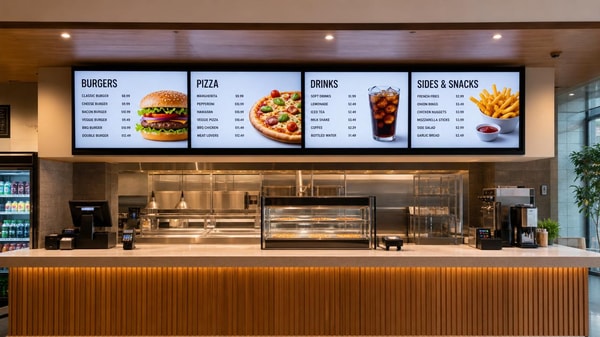
Digital signage for restaurants is no longer just a modern display upgrade—it is a strategic sales tool that can influence ordering behavior, highlight high-margin items, and improve menu clarity in real time. For buyers and operators researching what truly drives menu performance, the short answer is this: screens alone do not increase sales. Real results come from the combination of content strategy, menu engineering, screen placement, timing, system integration, and ongoing optimization. When these factors align, digital signage for restaurants can improve average ticket size, speed up decisions, and make promotions far more effective.
For information-stage readers, the most important question is not whether digital menu boards look more modern than printed boards. It is whether they can measurably change customer choices and justify investment. The answer depends on how well the signage supports business goals such as upselling, reducing menu friction, promoting profitable items, adapting to dayparts, and maintaining consistency across locations.
What is the real search intent behind “digital signage for restaurants”?
People searching this topic are usually not looking for a basic definition. They want to understand what actually makes digital signage perform in a restaurant setting. That includes what drives menu sales, what influences customer behavior, which features matter most, and how to evaluate whether a system will deliver business value rather than just visual appeal.
In other words, the real intent is commercial and practical. Readers want evidence-based guidance that helps them assess use cases, compare options, reduce risk, and identify the factors that turn a digital menu from a display expense into a revenue tool.
What actually drives menu sales on digital signage?
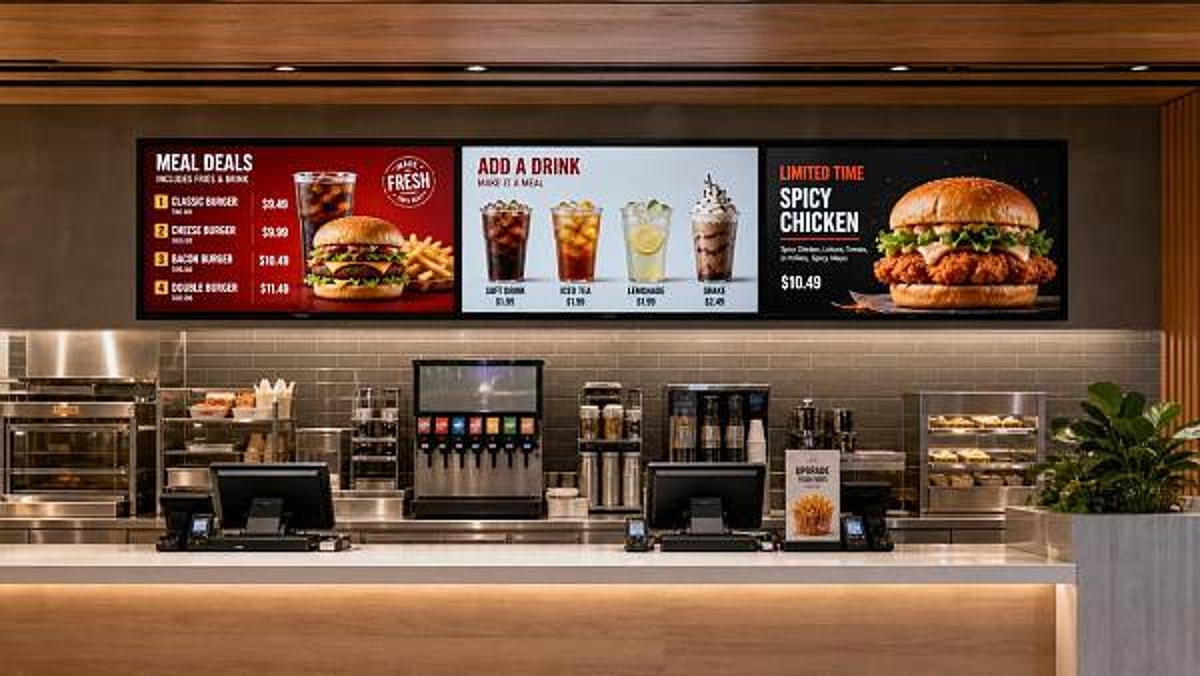
The strongest sales driver is not the screen itself. It is menu design translated into dynamic visual communication. Restaurants that see better results usually make it easier for customers to notice, understand, and choose the items the business most wants to sell. That often means promoting high-margin combinations, featured add-ons, limited-time offers, and visually appealing signature dishes.
Digital signage for restaurants works best when it reduces decision fatigue. A crowded static menu can slow ordering and push customers toward familiar low-margin choices. A well-structured digital board can guide attention toward a smaller number of priority items, creating a clearer path to purchase. Simplicity, contrast, pricing hierarchy, and image quality all affect what customers notice first.
Another major factor is relevance. The most effective digital menu boards change according to breakfast, lunch, dinner, late-night service, weather, inventory conditions, or local promotions. That flexibility allows restaurants to keep offers timely and aligned with demand patterns. Relevance increases the chance that the right message reaches the right customer at the right moment.
Speed also matters. In quick-service and fast-casual environments, customers often make decisions within seconds. Content that is too dense, animated, or difficult to scan may hurt performance. The best-performing signage balances attractiveness with readability, helping people order quickly without feeling rushed or confused.
Why do some restaurant digital menu boards increase revenue while others do not?
The gap usually comes down to execution. Many operators invest in screens but treat them as electronic posters. They upload a static menu, add a few animations, and expect sales to rise automatically. That rarely works. Digital signage creates value when it is connected to a clear merchandising strategy.
If a restaurant has not identified its most profitable items, bundle opportunities, or promotion priorities, the signage has no meaningful selling role. It simply displays information. By contrast, when operators use menu engineering data to decide what deserves visual emphasis, the screens start functioning as a sales channel.
Another common issue is poor placement. If customers cannot easily view the screen from the ordering line, drive-thru queue, waiting area, or self-service kiosk zone, then even strong content has limited impact. Visibility, sightline angle, mounting height, brightness, and glare control all influence performance.
There is also the problem of operational inconsistency. If pricing is outdated, unavailable items remain on-screen, or promotions differ from what staff can fulfill, trust drops quickly. In restaurant environments, accurate content is not only a branding issue but also a sales issue. Customers are more likely to complete purchases and accept upsells when the information feels reliable and current.
Which content elements influence ordering behavior most?
Not all content on a digital menu board has equal sales impact. In most restaurant settings, five elements matter most: hierarchy, visuals, pricing presentation, promotional framing, and motion control.
Hierarchy determines what customers see first. High-performing digital signage for restaurants usually gives prime screen space to featured items, profitable combos, or new products rather than treating every menu item equally. Eye-level content and center-weighted layout often outperform evenly distributed grids.
Visuals matter because food is an emotional purchase. Strong product photography can increase appeal, but only when used selectively. Too many images can make menus look cluttered or lower perceived quality. The best approach is to support hero items with crisp, appetizing images while preserving readability for the full menu.
Pricing presentation affects both speed and perceived value. Simple prices, clearly grouped meals, and bundled comparisons help customers understand value quickly. If the board makes trade-ups obvious, such as a combo for a small incremental increase, customers are more likely to spend more without feeling pressured.
Promotional framing can shift demand dramatically. Messages such as “most popular,” “chef’s pick,” “limited today,” or “perfect with fries and a drink” provide cues that reduce uncertainty and encourage add-ons. The key is moderation. Overpromotion creates noise and weakens credibility.
Motion control is often misunderstood. Movement can attract attention, but too much animation hurts readability and slows decision-making. Subtle transitions, timed highlight zones, or rotating promotional panels generally work better than fast-moving or highly decorative effects.
How does screen placement affect menu sales?
Placement has a direct influence on whether digital signage changes buying behavior. In restaurants, there are usually several high-value zones: the approach area, queue line, point of order, pickup area, and in some formats, drive-thru lanes or table-service waiting zones.
At the approach or queue area, signage can prime demand before the customer reaches the counter. This is often the best place to promote premium items, seasonal offers, and bundles because customers still have time to consider options. By the time they arrive at the point of order, they may already have a preferred choice in mind.
At the ordering point, the screen should focus on clarity and fast comprehension. This is where menu categories, prices, and core decision information need to be immediately visible. If the board cycles too slowly or requires too much scanning, customers may default to lower-value habitual orders.
Pickup areas and waiting zones are useful for secondary selling. They can advertise desserts, beverages, loyalty offers, or future visit promotions. While these placements may not always affect the current transaction, they can increase attachment rates over time and reinforce campaign messaging.
For drive-thru operations, readability, brightness, and decision flow are especially important. Drivers have limited time and attention. A drive-thru digital board should emphasize top sellers, simple combos, and clear price communication rather than visual complexity.
What role does timing play in digital signage performance?
Timing is one of the biggest advantages of digital over print. Restaurants rarely sell the same menu in the same way all day. Daypart scheduling allows operators to present breakfast items in the morning, lunch combos at midday, snack promotions in the afternoon, and family meals in the evening, all without manual replacement.
But timing goes beyond dayparts. Weather-based promotions can be highly effective, such as cold beverages on hot days or comfort meals in rainy conditions. Event-based scheduling also matters, especially in high-traffic urban, travel, or entertainment locations where customer demand patterns shift around local events.
Timing also affects promotional fatigue. If the same featured item stays on-screen for too long, it can become invisible to repeat customers. Rotating emphasis strategically helps maintain freshness while still preserving menu familiarity.
The most advanced restaurant operators connect digital signage schedules to sales data and inventory signals. If a product needs support, if a particular add-on is underperforming, or if stock constraints require substitution, digital signage can respond much faster than static materials.
How should restaurants measure whether digital signage is working?
For buyers and operators, one of the most important evaluation points is measurement. A restaurant should not judge digital signage only by aesthetics or customer comments. It should track business outcomes. The most useful metrics usually include average order value, item mix, add-on rate, combo conversion, promotion redemption, decision speed, and in some formats, queue throughput.
Before installation, operators should establish a baseline. Which items are currently underperforming? Which products have the best margins? Which add-ons are not being attached often enough? Once the digital system is live, content changes should be tied to measurable hypotheses. For example, does highlighting a premium combo increase upgrade rates? Does moving desserts to a pickup-area screen increase attachment?
A/B testing is especially valuable. Even simple tests such as changing image size, price grouping, or promotional wording can reveal what drives customer response. Over time, the strongest digital signage programs become iterative merchandising systems rather than one-time screen deployments.
It is also important to separate correlation from causation. Sales may rise due to seasonality, staffing changes, location traffic, or unrelated campaigns. A disciplined review process helps determine whether the signage itself is influencing performance.
What features matter most when evaluating digital signage for restaurants?
From a procurement or research perspective, not every feature deserves equal weight. Buyers should prioritize the capabilities that directly affect revenue, usability, and operational control.
Content management simplicity is critical. Restaurant teams need to update prices, remove unavailable items, switch dayparts, and launch promotions quickly. If the CMS is difficult to use, the system will not stay current, and sales opportunities will be lost.
Scheduling flexibility matters because timing is a major driver of relevance. The ability to automate daypart changes, location-specific content, and campaign windows reduces manual work and improves consistency.
Integration potential is another key consideration. Systems that can connect with POS, inventory, loyalty platforms, or central brand controls provide far more strategic value than isolated displays. Integration enables more accurate pricing, faster updates, and stronger campaign coordination.
Display quality and durability are also important. Restaurants often deal with heat, grease, brightness challenges, and long operating hours. Commercial-grade screens with adequate brightness, viewing angles, and reliability are essential for stable performance.
Multi-location governance becomes crucial for chains and franchise systems. Brand teams may need centralized control while allowing local operators some flexibility. A good solution supports both consistency and localization.
What concerns do buyers and operators usually have before investing?
The most common concern is return on investment. Buyers want to know how quickly the system can pay back through higher ticket sizes, better promotion performance, labor savings from easier updates, or reduced print replacement costs. The answer varies by format, but ROI is usually strongest where there is high transaction volume, frequent promotion changes, or a clear opportunity to improve menu engineering.
Another concern is content burden. Many operators worry that digital signage will require constant design work. In reality, the workload depends on how the system is set up. A well-designed content framework with reusable templates can reduce maintenance significantly. The problem is not the technology itself but the lack of a structured content process.
Operational risk is also a valid concern. Screen outages, outdated prices, poor synchronization across locations, or weak staff training can undermine credibility. That is why vendor support, remote monitoring, and update reliability should be part of the buying decision.
Some buyers also question whether digital screens fit every restaurant concept. That is a fair concern. In highly artisanal, intimate, or heritage-driven environments, signage must align with brand atmosphere. The best implementations do not make every venue look the same; they adapt technology to the dining experience.
Where does digital signage create the most value across restaurant types?
Quick-service restaurants often see the clearest impact because ordering decisions are fast, menus are broad, and upsell opportunities are frequent. In this format, digital signage can improve speed, visibility, and attachment rates while enabling agile promotion management.
Fast-casual restaurants also benefit because they often combine menu complexity with a brand-led customer experience. Here, digital displays can support both appetite appeal and operational flexibility, especially when seasonal items and premium customizations are part of the model.
Cafés, bakeries, dessert brands, and beverage-led concepts can use digital signage very effectively for impulse-selling. Limited-time visuals, bundle suggestions, and daypart transitions are particularly powerful in these environments.
Full-service restaurants may use digital signage more selectively, often for waiting areas, bar zones, self-ordering extensions, or promotional communication rather than primary menu display. The value depends on service style and brand positioning.
How should readers form a practical decision framework?
If you are researching digital signage for restaurants, the best decision framework starts with sales goals rather than hardware. First, identify which commercial outcomes matter most: larger average tickets, better upsells, more effective promotions, improved menu clarity, faster ordering, or lower update costs.
Second, examine whether your menu structure supports those goals. If your pricing, item hierarchy, and category logic are weak, screens will not fix the core issue. Digital signage amplifies good menu strategy; it does not replace it.
Third, assess your operational readiness. Can your team keep content accurate? Do you need central control across locations? Will the system need integration with existing platforms? Are you prepared to test and optimize rather than install and ignore?
Finally, evaluate vendors and solutions based on business fit. A visually impressive system that is hard to update or poorly aligned with restaurant workflows may underperform a simpler platform that enables fast, disciplined merchandising.
Conclusion: What truly drives real menu sales?
Digital signage for restaurants drives real menu sales when it does three things well: it directs attention to the right products, it makes decisions easier for customers, and it allows operators to adapt messaging quickly based on time, demand, and business priorities. The revenue lift does not come from digitization alone. It comes from purposeful content, strong placement, disciplined timing, reliable operations, and measurement.
For information-stage readers, the clearest takeaway is this: treat digital signage as a menu performance system, not a screen purchase. When aligned with menu engineering and customer behavior, it can become a highly practical tool for increasing profitable sales. When deployed without strategy, it risks becoming an expensive display with limited commercial effect.
The restaurants that gain the most value are not necessarily those with the most screens. They are the ones that understand what they want customers to notice, choose, and add to the order—and then use digital signage to make those decisions easier, faster, and more profitable.
Search News
Hot Articles
Popular Tags
Need ExpertConsultation?
Connect with our specialized leisureengineering team for procurementstrategies.
Recommended News
 May 04, 2026Wholesale LED Menu Boards: Brightness Is Not the Only MetricWholesale LED menu boards are about more than brightness. Discover how color consistency, viewing angle, power efficiency, and reliability impact long-term performance and smarter sourcing.● Hospitality Sourcing Dir
 May 04, 2026Digital Signage for Restaurants: What Drives Real Menu Sales?Digital signage for restaurants drives real menu sales through smarter content, screen placement, timing, and optimization. Learn what truly boosts upsells, AOV, and menu performance.● Hospitality Sourcing Dir
 May 03, 2026Hotel pool lounge chairs: materials that survive sun and chlorineHotel pool lounge chairs buying guide: compare aluminum, resin, sling, and hardware materials that resist sun, chlorine, and heavy use for longer life and lower maintenance.● Hospitality Sourcing Dir
 May 03, 2026Outdoor rattan dining sets: which weave lasts in commercial useOutdoor rattan dining sets: discover which commercial weave lasts longest. Compare flat vs half-round options for durability, cleaning efficiency, and lower lifecycle cost.● Hospitality Sourcing Dir
 May 03, 2026Commercial patio umbrellas need more than UV fabric outdoorsCommercial patio umbrellas need more than UV fabric. Discover how wind stability, corrosion resistance, frame strength, and maintenance impact safer, longer-lasting outdoor projects.● Hospitality Sourcing Dir
 May 02, 2026Folding event tables that stay stable on uneven banquet floorsFolding event tables that stay stable on uneven banquet floors help reduce wobble, speed setup, and improve guest experience. Discover key features buyers should compare.● Hospitality Sourcing Dir
 May 02, 2026Banquet chairs wholesale: stacking height can change storage costsBanquet chairs wholesale decisions should consider stacking height, because smarter storage, faster handling, and lower transport costs can significantly improve long-term venue profitability.● Hospitality Sourcing Dir
 May 02, 2026When wholesale melamine plates look premium and when they do notWholesale melamine plates can look refined or cheap. Learn how finish, weight, design, and supplier quality affect premium appeal before you source for hospitality or retail.● Hospitality Sourcing Dir
 May 01, 2026Restaurant Booth Seating That Saves Space Without Feeling TightRestaurant booth seating that saves space without feeling cramped—discover smart dimensions, durable specs, and layout tips to boost comfort, traffic flow, and revenue.● Hospitality Sourcing Dir
 May 01, 2026How to Choose Commercial Bar Stools for High-Traffic VenuesCommercial bar stools for high-traffic venues: learn how to compare durability, safety, comfort, maintenance, and supplier reliability to choose seating that lasts and performs.● Hospitality Sourcing Dir
 Apr 28, 2026Why Hotel Tables Often Fail at Edges, Bases, and Surface FinishHotel tables often fail at edges, bases, and surface finish. Compare hotel furniture, custom furniture, luxury furniture, hotel chairs, hotel beds, and hotel equipment before you buy.● Hospitality Sourcing Dir
 Apr 28, 2026Hotel Tables With Stone Tops or Wood Tops: Which Performs Better?Hotel tables with stone tops or wood tops? Compare ROI, durability, and style across hotel furniture, custom furniture, hotel chairs, and hotel beds to choose smarter.● Hospitality Sourcing Dir
 Apr 28, 2026The Best Hotel Chairs Balance Comfort, Stackability, and DurabilityHotel chairs that balance comfort, stackability, and durability. Explore hotel furniture, custom furniture, hotel tables, hotel beds, and luxury furniture solutions for hospitality buyers.● Hospitality Sourcing Dir
 Apr 28, 2026Hotel Chairs: What Causes Wobbling, Cracks, and Early Wear?Hotel chairs buying guide: learn what causes wobbling, cracks, and early wear, and how to compare hotel furniture, custom furniture, hotel tables, hotel beds, and luxury furniture for lasting value.● Hospitality Sourcing Dir
 Apr 21, 2026Hotel tables that stay stable on uneven flooringHotel tables that stay stable on uneven flooring: a practical guide for hospitality procurement covering hotel furniture, commercial furniture, luxury furniture, and specs that reduce wobble, risk, and maintenance.● Hospitality Sourcing Dir
 Apr 21, 2026Round or rectangular hotel tables for tighter layouts?Hotel tables for tight layouts: compare round vs rectangular hotel furniture for better flow, seating, and hospitality procurement decisions. Find the best fit for compact hotel room furniture.● Hospitality Sourcing Dir
 Apr 21, 2026Why hotel chairs fail early in banquet spacesHotel chairs in banquet spaces fail early due to stacking, impact, and weak specs. Learn how hotel furniture and commercial furniture choices cut costs and improve hospitality procurement.● Hospitality Sourcing Dir
 Apr 21, 2026Hotel chairs that look elegant and still hold upHotel chairs that blend luxury furniture appeal with commercial furniture durability. Discover how hotel furniture works with hotel tables, hotel desks, and hotel room furniture for smarter hospitality procurement.● Hospitality Sourcing Dir
 Apr 23, 2026How to Choose Commercial Furniture That LastsCommercial furniture buying guide for hotels, schools, and leisure venues—covering hotel tables, playground safety, sensory playgrounds, and durable amusement equipment.● Hospitality Sourcing Dir
 Apr 23, 2026When Commercial Furniture Fails in High-Traffic VenuesLearn why commercial furniture fails in busy venues and how to choose safer hotel tables, playground borders, sensory playground solutions, amusement equipment, and hotel equipment that last.● Hospitality Sourcing Dir
 Apr 20, 2026Hotel tables with edge seams that trap moisture and moldHotel tables, park benches & commercial furniture with mold-trapping edge seams? Discover seamless, moisture-resistant hotel furniture solutions—luxury, custom, and compliant.● Hospitality Sourcing Dir
 Apr 20, 2026Hotel chairs rated for 100,000 cycles—but tested how?Discover how top hotel chairs, park benches & commercial furniture are truly tested for 100,000 cycles—backed by BIFMA, EN & GB/T standards. Get verified luxury furniture insights.● Hospitality Sourcing Dir
 Apr 19, 2026Hotel tables that warp under daily cleaning chemicalsHotel tables, hotel chairs, hotel beds & park benches—discover why chemical warping fails luxury furniture & commercial furniture specs. Get expert OEM insights on durable hotel furniture & equipment.● Hospitality Sourcing Dir
 Apr 19, 2026Hotel chairs with hidden wear patterns no one tests forHotel chairs, luxury furniture & commercial furniture buyers: uncover hidden wear patterns in hotel chairs, hotel beds, and custom furniture—before failure hits ROI.● Hospitality Sourcing Dir