Indoor bleachers seating: fixed or retractable for tighter spaces?
When planning spectator areas in compact venues, choosing the right indoor bleachers seating can directly impact safety, flexibility, and long-term project value. For project managers handling schools, sports halls, and multipurpose facilities, the decision between fixed and retractable systems is not just about capacity—it also affects circulation, maintenance, compliance, and space efficiency.
What is the real difference between fixed and retractable indoor bleachers seating?
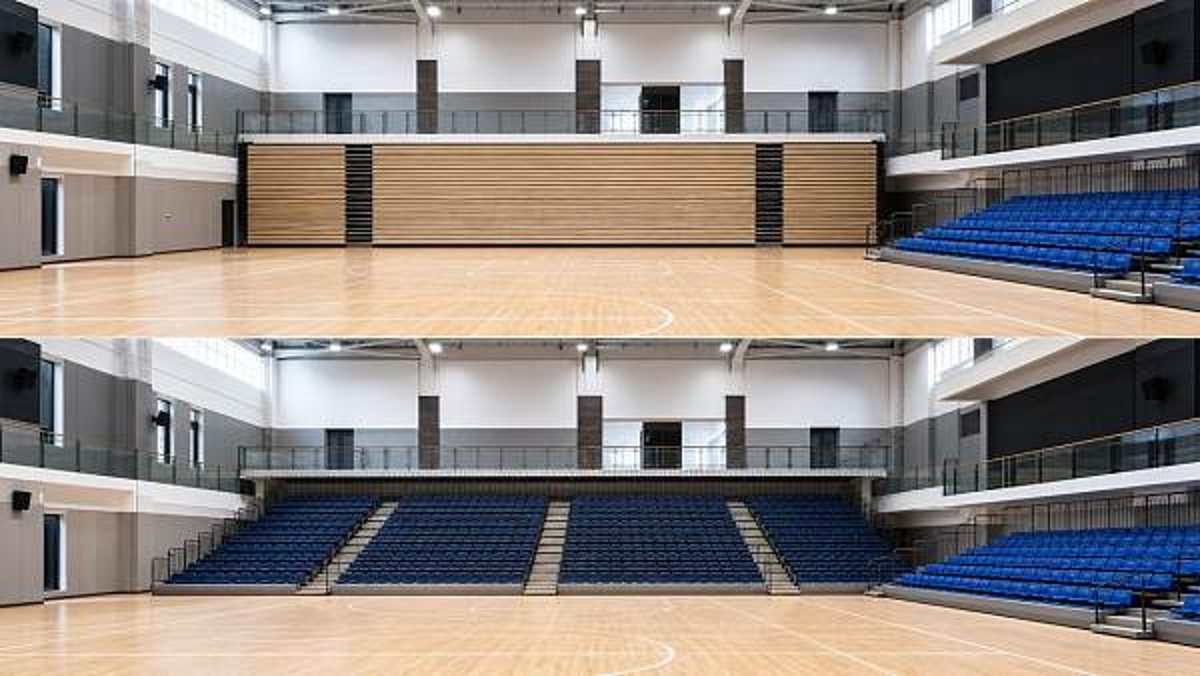
At a basic level, fixed indoor bleachers seating is permanently installed in one position, while retractable systems can extend for events and fold back when floor space is needed for other uses. That sounds simple, but for project delivery teams, the difference is operational rather than purely structural.
Fixed seating is usually selected when the venue has a single primary use, stable attendance patterns, and no strong need to free up floor area. Retractable indoor bleachers seating is more common in schools, training halls, community arenas, and event spaces where one room may host sports, examinations, ceremonies, performances, and rental activities in the same month.
From a project management perspective, the key distinction is not only mobility. Retractable systems introduce moving parts, storage geometry, operating clearance, power or manual deployment considerations, and stricter maintenance routines. Fixed systems reduce that complexity but permanently consume space. In tighter sites, this trade-off often becomes the central design decision.
Why does indoor bleachers seating become a bigger issue in compact venues?
In small or constrained buildings, every square meter carries multiple responsibilities. Spectator seating must support visibility, safe access, egress, and comfort without undermining circulation routes, emergency planning, or the venue’s alternate uses. That is why indoor bleachers seating often becomes a coordination challenge across architecture, MEP, fire safety, and operations.
For example, a fixed solution may appear cheaper during procurement, but if it blocks multipurpose use of the floor, the venue may lose scheduling flexibility and revenue potential. On the other hand, a retractable system may preserve floor utility, yet require stronger operator training, more careful wall coordination, and a lifecycle budget for inspections and parts replacement.
Project managers should therefore evaluate indoor bleachers seating as a space strategy, not just as a seating package. In compact facilities, the right choice can improve utilization rates, event programming, and user safety for years. The wrong choice can lock the building into avoidable inefficiencies.
Which option is usually better for schools, sports halls, and multipurpose facilities?
There is no universal winner, but usage pattern gives the strongest clue. If the venue runs daily physical education, community programs, assemblies, and indoor sports, retractable indoor bleachers seating usually delivers better value because it supports frequent reconfiguration. The ability to recover open floor area can outweigh the higher initial system cost.
Fixed seating tends to make more sense when spectator demand is consistent and the room is not expected to switch functions often. A dedicated competition hall, for instance, may benefit from permanent seating because operations are simpler, structural design is straightforward, and maintenance risks are lower.
In educational and civic projects, however, many facilities are expected to do more with less space. That is why retractable indoor bleachers seating has become attractive in smart campus design and urban community facilities. It allows one room to serve as a court, presentation hall, and event venue without adding building footprint.
Still, project leaders should not assume that retractable is automatically better for all multipurpose rooms. If staff availability is low, operating discipline is weak, or maintenance budgets are uncertain, a simpler fixed arrangement may reduce long-term operational risk.
What should project managers compare first before deciding?
Before comparing brands or quotations, define the decision around use case, constraints, and compliance. The following table helps organize the first-round evaluation of indoor bleachers seating for tight-space projects.
In early planning, focus on six questions: How often will the space change function? What clear floor area must be recovered? What spectator capacity is mandatory? Who will operate the system? What codes apply to aisle width, guardrails, and egress? And what is the realistic maintenance model after handover? These questions usually narrow the choice faster than a pure product comparison.
Is retractable indoor bleachers seating always the smartest choice for tighter spaces?
Not always. Retractable indoor bleachers seating is often promoted as the best answer for compact venues, but it only performs well when the building and operations team can fully support it. A tight space does not automatically mean a retractable solution will fit without compromise.
First, the stored depth against the wall must be compatible with doors, acoustic panels, sports equipment, electrical outlets, and circulation routes. Second, when deployed, the unit must still provide compliant access and safe sightlines. Third, the venue team must be able to extend, secure, inspect, and close the system consistently.
There are also cases where a compact venue benefits more from a reduced-capacity fixed arrangement than from a retractable system that is difficult to service. If the venue’s program only occasionally needs open floor area, the premium for retractability may not deliver enough operational return. The best answer is not the most flexible product on paper; it is the option that fits real use, staffing, and risk control.
What safety and compliance issues should never be overlooked?
With indoor bleachers seating, safety starts long before installation. Project managers should confirm applicable local and international requirements related to structural loading, fire performance, anti-slip surfaces, guardrails, aisle geometry, accessibility, and evacuation. In many markets, seating systems for schools and public venues face especially strict scrutiny because they serve mixed-age users and high occupancy levels.
For fixed systems, the major concerns often include anchoring, stair detailing, edge protection, and clear travel paths. For retractable systems, add pinch-point protection, locking integrity, synchronized movement, service access, and safe operation procedures. If powered deployment is specified, electrical safety, emergency stop functions, and user authorization become part of the risk profile.
It is also important to verify accessibility early. Wheelchair positions, companion seating, route continuity, and inclusive viewing should be resolved in the layout stage rather than treated as an afterthought. In high-quality commercial environments, compliance is not only about passing inspection. It directly supports brand trust, user comfort, and legal resilience.
How do cost, lifecycle value, and maintenance really compare?
A common mistake is to compare indoor bleachers seating only by purchase price. Fixed systems typically cost less upfront and may involve fewer moving components, which can reduce maintenance exposure. However, if permanent seating limits the room’s versatility, the hidden cost appears in lower utilization, scheduling conflicts, or the need for additional rentable space elsewhere in the facility.
Retractable systems generally require a higher capital budget, more detailed coordination, and ongoing servicing. Yet in a compact venue with dense programming, their lifecycle value can be stronger because one hall can perform the role of several rooms. That can influence staffing efficiency, booking flexibility, and even future expansion needs.
The right comparison model should include at least these elements:
- Procurement and installation cost
- Structural and architectural coordination cost
- Expected service life and replacement parts availability
- Inspection and preventive maintenance frequency
- Operational labor and training needs
- Value of recovered floor space and added event flexibility
For commercial buyers and procurement leads, lifecycle clarity often matters more than a lower initial quote. Reliable sourcing, documented testing, and long-term support can protect project value better than choosing the cheapest system.
What mistakes do buyers make when specifying indoor bleachers seating?
One frequent mistake is specifying capacity before confirming circulation and egress. In compact venues, adding more seats does not always improve value if access becomes awkward or code margins disappear. Another mistake is treating retractable indoor bleachers seating as a standard commodity. In reality, wall conditions, floor tolerances, storage depth, and operator workflow can all affect suitability.
Buyers also sometimes underestimate post-installation responsibilities. Even a high-quality system can become a risk if inspection schedules, spare parts, and staff accountability are unclear. For global sourcing projects, documentation quality is another major factor. Technical submittals, compliance certificates, maintenance manuals, and installation references should be reviewed with the same care as pricing.
Finally, some teams fail to align seating choice with the business model of the venue. If the facility depends on diverse programming, the ability to convert space quickly may justify retractable seating. If the venue is dedicated and attendance is predictable, simplicity may be the stronger investment logic.
How can a project team make the final choice with more confidence?
A confident decision usually comes from matching indoor bleachers seating to a documented operating scenario rather than to assumptions. Start by mapping the venue calendar, user groups, peak occupancy, and non-sport events. Then test both fixed and retractable options against floor recovery needs, code pathways, maintenance resources, and total cost over time.
If the venue is compact, heavily shared, and expected to host multiple program types each week, retractable indoor bleachers seating will often be the stronger strategic choice. If the room is dedicated, staffing is limited, and simplicity is critical, fixed seating may deliver a more dependable result. The goal is not to follow a trend, but to secure the best balance of safety, flexibility, and operational control.
If you need to confirm a practical direction before sourcing, prioritize these questions in supplier discussions: required seating capacity, stored and deployed dimensions, code compliance evidence, maintenance schedule, operator training scope, spare parts support, installation lead time, and references from comparable school, arena, or multipurpose projects. Those answers will reveal far more than brochure claims and help you choose the right indoor bleachers seating solution for tighter spaces.
Search News
Hot Articles
Popular Tags
Need ExpertConsultation?
Connect with our specialized leisureengineering team for procurementstrategies.
Recommended News
 May 06, 2026Indoor bleachers seating: fixed or retractable for tighter spaces?Indoor bleachers seating for tight spaces: compare fixed vs. retractable options for schools and multipurpose venues, with insights on safety, flexibility, lifecycle value, and smarter project planning.● Hospitality Sourcing Dir
 May 06, 2026Outdoor stadium seating mistakes that raise maintenance costsOutdoor stadium seating mistakes can quietly raise maintenance costs. Learn how better material, drainage, fixing, and service planning cuts repairs and protects long-term venue value.● Hospitality Sourcing Dir
 May 04, 2026Wholesale LED Menu Boards: Brightness Is Not the Only MetricWholesale LED menu boards are about more than brightness. Discover how color consistency, viewing angle, power efficiency, and reliability impact long-term performance and smarter sourcing.● Hospitality Sourcing Dir
 May 04, 2026Digital Signage for Restaurants: What Drives Real Menu Sales?Digital signage for restaurants drives real menu sales through smarter content, screen placement, timing, and optimization. Learn what truly boosts upsells, AOV, and menu performance.● Hospitality Sourcing Dir
 May 03, 2026Hotel pool lounge chairs: materials that survive sun and chlorineHotel pool lounge chairs buying guide: compare aluminum, resin, sling, and hardware materials that resist sun, chlorine, and heavy use for longer life and lower maintenance.● Hospitality Sourcing Dir
 May 03, 2026Outdoor rattan dining sets: which weave lasts in commercial useOutdoor rattan dining sets: discover which commercial weave lasts longest. Compare flat vs half-round options for durability, cleaning efficiency, and lower lifecycle cost.● Hospitality Sourcing Dir
 May 03, 2026Commercial patio umbrellas need more than UV fabric outdoorsCommercial patio umbrellas need more than UV fabric. Discover how wind stability, corrosion resistance, frame strength, and maintenance impact safer, longer-lasting outdoor projects.● Hospitality Sourcing Dir
 May 02, 2026Folding event tables that stay stable on uneven banquet floorsFolding event tables that stay stable on uneven banquet floors help reduce wobble, speed setup, and improve guest experience. Discover key features buyers should compare.● Hospitality Sourcing Dir
 May 02, 2026Banquet chairs wholesale: stacking height can change storage costsBanquet chairs wholesale decisions should consider stacking height, because smarter storage, faster handling, and lower transport costs can significantly improve long-term venue profitability.● Hospitality Sourcing Dir
 May 02, 2026When wholesale melamine plates look premium and when they do notWholesale melamine plates can look refined or cheap. Learn how finish, weight, design, and supplier quality affect premium appeal before you source for hospitality or retail.● Hospitality Sourcing Dir
 May 01, 2026Restaurant Booth Seating That Saves Space Without Feeling TightRestaurant booth seating that saves space without feeling cramped—discover smart dimensions, durable specs, and layout tips to boost comfort, traffic flow, and revenue.● Hospitality Sourcing Dir
 May 01, 2026How to Choose Commercial Bar Stools for High-Traffic VenuesCommercial bar stools for high-traffic venues: learn how to compare durability, safety, comfort, maintenance, and supplier reliability to choose seating that lasts and performs.● Hospitality Sourcing Dir
 Apr 28, 2026Why Hotel Tables Often Fail at Edges, Bases, and Surface FinishHotel tables often fail at edges, bases, and surface finish. Compare hotel furniture, custom furniture, luxury furniture, hotel chairs, hotel beds, and hotel equipment before you buy.● Hospitality Sourcing Dir
 Apr 28, 2026Hotel Tables With Stone Tops or Wood Tops: Which Performs Better?Hotel tables with stone tops or wood tops? Compare ROI, durability, and style across hotel furniture, custom furniture, hotel chairs, and hotel beds to choose smarter.● Hospitality Sourcing Dir
 Apr 28, 2026The Best Hotel Chairs Balance Comfort, Stackability, and DurabilityHotel chairs that balance comfort, stackability, and durability. Explore hotel furniture, custom furniture, hotel tables, hotel beds, and luxury furniture solutions for hospitality buyers.● Hospitality Sourcing Dir
 Apr 28, 2026Hotel Chairs: What Causes Wobbling, Cracks, and Early Wear?Hotel chairs buying guide: learn what causes wobbling, cracks, and early wear, and how to compare hotel furniture, custom furniture, hotel tables, hotel beds, and luxury furniture for lasting value.● Hospitality Sourcing Dir
 Apr 21, 2026Hotel tables that stay stable on uneven flooringHotel tables that stay stable on uneven flooring: a practical guide for hospitality procurement covering hotel furniture, commercial furniture, luxury furniture, and specs that reduce wobble, risk, and maintenance.● Hospitality Sourcing Dir
 Apr 21, 2026Round or rectangular hotel tables for tighter layouts?Hotel tables for tight layouts: compare round vs rectangular hotel furniture for better flow, seating, and hospitality procurement decisions. Find the best fit for compact hotel room furniture.● Hospitality Sourcing Dir
 Apr 21, 2026Why hotel chairs fail early in banquet spacesHotel chairs in banquet spaces fail early due to stacking, impact, and weak specs. Learn how hotel furniture and commercial furniture choices cut costs and improve hospitality procurement.● Hospitality Sourcing Dir
 Apr 21, 2026Hotel chairs that look elegant and still hold upHotel chairs that blend luxury furniture appeal with commercial furniture durability. Discover how hotel furniture works with hotel tables, hotel desks, and hotel room furniture for smarter hospitality procurement.● Hospitality Sourcing Dir
 Apr 23, 2026How to Choose Commercial Furniture That LastsCommercial furniture buying guide for hotels, schools, and leisure venues—covering hotel tables, playground safety, sensory playgrounds, and durable amusement equipment.● Hospitality Sourcing Dir
 Apr 23, 2026When Commercial Furniture Fails in High-Traffic VenuesLearn why commercial furniture fails in busy venues and how to choose safer hotel tables, playground borders, sensory playground solutions, amusement equipment, and hotel equipment that last.● Hospitality Sourcing Dir
 Apr 20, 2026Hotel tables with edge seams that trap moisture and moldHotel tables, park benches & commercial furniture with mold-trapping edge seams? Discover seamless, moisture-resistant hotel furniture solutions—luxury, custom, and compliant.● Hospitality Sourcing Dir
 Apr 20, 2026Hotel chairs rated for 100,000 cycles—but tested how?Discover how top hotel chairs, park benches & commercial furniture are truly tested for 100,000 cycles—backed by BIFMA, EN & GB/T standards. Get verified luxury furniture insights.● Hospitality Sourcing Dir