Outdoor stadium seating mistakes that raise maintenance costs
Outdoor stadium seating decisions can quietly drive long-term maintenance costs far beyond the initial budget. For project managers and engineering leads, avoiding common specification, material, drainage, and installation mistakes is essential to protect lifecycle value, safety, and operational uptime. This article highlights the most costly errors and shows how smarter planning can reduce repairs, extend service life, and improve asset performance.
In commercial venues, sports parks, school arenas, leisure complexes, and mixed-use public facilities, outdoor stadium seating is not just a capital purchase. It becomes a 10- to 20-year asset that affects labor planning, seasonal shutdowns, safety inspections, fan experience, and replacement cycles. For project teams responsible for procurement, design coordination, and handover quality, the biggest maintenance problems usually begin long before the first event day.
The most expensive errors are rarely dramatic at the start. They show up later as loose fixings after 18 months, standing water after every storm, UV-faded surfaces in 3 to 5 years, or repeated seat replacements that turn a low-bid package into a high-cost operational burden. Understanding these failure points helps buyers source more durable systems and align specification choices with real site conditions.
Why maintenance costs escalate in outdoor stadium seating projects
Outdoor stadium seating is exposed to a harsher operating environment than many decision-makers assume during tender stage. UV radiation, thermal movement, airborne pollutants, wind-driven rain, cleaning chemicals, and high-frequency public use all act on the system at the same time. When one weak point is overlooked, the maintenance load often spreads across the full seating zone within 2 to 4 seasons.
For project managers, the cost issue is not only the price of replacement parts. It includes access equipment, labor hours, disruption to venue bookings, inspection rework, and risk management. A seat that costs relatively little to buy can become costly if it requires 3 service visits per year, frequent bolt tightening, or difficult part matching across multiple suppliers.
The hidden lifecycle cost drivers
- Incorrect material selection for UV, moisture, or coastal exposure
- Underspecified brackets, anchors, and hardware in high-load zones
- Poor water drainage under benches, risers, or plinth details
- Inconsistent installation tolerances greater than typical acceptable ranges such as ±3 mm to ±5 mm
- Limited spare-part planning for a 5- to 10-year maintenance horizon
- Failure to match cleaning methods with seat shell and finish chemistry
These factors are especially relevant in B2B sourcing environments where design consultants, general contractors, fabricators, and operators may all influence the final package. Without a clear lifecycle brief, outdoor stadium seating can be specified for initial appearance rather than serviceability, which increases total ownership cost over time.
How small specification gaps become recurring maintenance issues
A common example is selecting seat shells by color and unit price while giving limited attention to polymer grade, wall thickness, fixing geometry, or vandal resistance. Another is assuming all galvanized steel performs equally, despite large differences between dry inland sites and marine or high-humidity zones. Even a 1 to 2 mm reduction in coating integrity at exposed edges can accelerate corrosion once water ingress begins.
Project teams should treat outdoor stadium seating like a coordinated system, not a list of separate parts. The shell, bracket, fastener, support frame, concrete interface, drainage path, and maintenance access route all contribute to how often the facility will need repair intervention.
Mistake 1: Choosing materials by upfront cost instead of exposure conditions
Material mismatch is one of the fastest ways to increase maintenance frequency. Outdoor stadium seating installed in sun-intensive climates, freeze-thaw regions, or coastal areas should not be sourced under the same assumptions. A lower initial price may look attractive in procurement comparison, but if fading, embrittlement, or corrosion appears in year 2 or 3, the long-term cost profile changes sharply.
What project teams often overlook
Polymer performance
Seat shells for outdoor stadium seating should be reviewed for UV stability, impact behavior at low temperatures, and resistance to staining or chemical cleaning agents. In many public venues, temperature swings can exceed 30°C across seasonal cycles. Materials that look similar in a sample room may age very differently after 24 to 36 months of exposure.
Metal support durability
Steel frames, aluminum components, and fixing plates should be assessed in relation to humidity, chlorides, and runoff patterns. Corrosion usually starts at interfaces, edges, weld zones, and damaged coatings. If a project is within a coastal belt or exposed to salt-laden air, maintenance intervals can shorten significantly unless the protective system is upgraded.
The comparison below shows how exposure-based thinking can guide more reliable sourcing decisions for outdoor stadium seating packages.
The key takeaway is simple: maintenance performance improves when material selection starts with the site exposure map, not the shortest quotation line. For commercial buyers managing leisure parks, educational arenas, or municipal venues, this reduces emergency replacements and protects availability during peak use periods.
Mistake 2: Ignoring drainage, runoff, and debris pathways
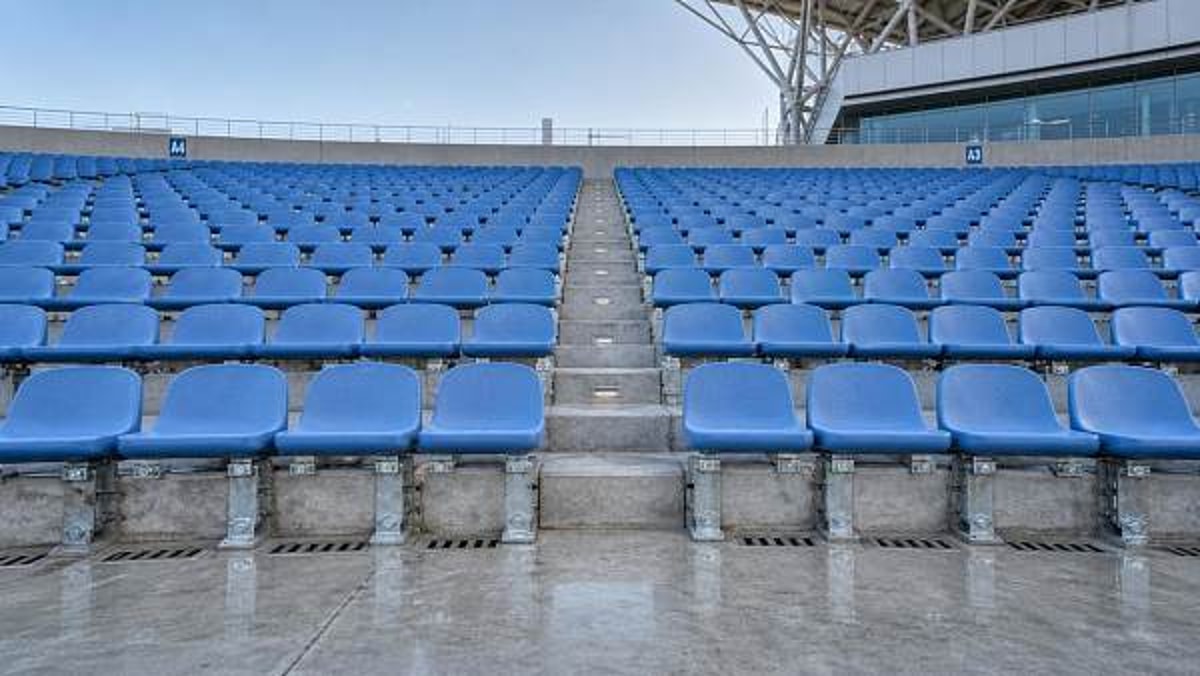
Water is one of the most underestimated threats to outdoor stadium seating. Even when the seats themselves are durable, trapped moisture around supports, risers, anchor points, or under-structure cavities can drive corrosion, algae growth, staining, and freeze-related damage. In many projects, poor drainage is responsible for repeated maintenance callouts within the first 12 to 24 months.
Typical drainage design oversights
- Flat or under-sloped surfaces where water pools after rainfall
- Seat support layouts that trap leaves, litter, and fine debris
- Anchor and base details that hold moisture against metal interfaces
- Insufficient clearance for cleaning tools and washdown access
- No defined runoff route away from spectator circulation areas
For project teams, drainage should be reviewed in 3 layers: surface flow, interface drying, and cleaning access. If even one of these layers fails, maintenance effort rises. Crews spend more time clearing buildup, corrosion progresses faster, and seating zones become visually degraded long before the structural life is over.
Questions to raise before approval
- After a standard rainfall event, where does water sit for more than 30 minutes?
- Can crews inspect and clean all support interfaces without partial disassembly?
- Are there concealed areas where wet debris can remain for 7 days or longer?
- Will winter freeze-thaw movement affect anchors, sealants, or coatings?
When outdoor stadium seating is integrated with cast concrete terraces or steel grandstand systems, these questions should be resolved before fabrication release. Fixing drainage after installation is usually much more expensive than correcting it in shop drawings or mock-up review.
Mistake 3: Underestimating fixing systems, load paths, and installation quality
Many maintenance problems blamed on “product quality” actually begin with fixing design or installation control. Outdoor stadium seating experiences dynamic loading, repetitive use, occasional misuse, and vibration from crowd movement. If anchors, brackets, or support spacing are not matched to the real load path, loosening and deformation can emerge quickly.
High-risk installation mistakes
Inconsistent anchor setting
Anchor performance depends on substrate condition, hole preparation, edge distance, and torque control. When these variables differ from row to row, maintenance teams often see localized failures rather than system-wide defects. That makes troubleshooting slower and more expensive because the fault appears random.
Poor tolerance management
If support points are misaligned beyond practical tolerance bands such as ±3 mm, installers may force connections during fit-up. That creates residual stress in shells and brackets. The result may not appear immediately, but after repeated loading cycles the seating can crack, squeak, loosen, or shift.
The table below outlines common installation control points that help reduce future maintenance interventions.
A disciplined installation checklist can reduce the risk of call-backs in the first year, which is when many owners begin to lose confidence in a seating package. For large venues with 2,000 to 20,000 seats, even a small defect rate can create a major operational burden if inspection and repair access require lifts, barriers, or off-hour labor.
Mistake 4: Failing to plan maintenance access, spare parts, and service intervals
Outdoor stadium seating should be procured with a maintenance strategy, not only an installation plan. Many project teams finalize colors, layout, and quantity but do not define parts standardization, inspection frequency, or future replacement logic. This creates avoidable downtime when a venue needs fast repair before tournaments, school events, or commercial bookings.
What a practical maintenance plan should include
- A baseline inspection cycle, often every 6 or 12 months depending on usage intensity
- Spare components for high-touch failure items such as fixings, caps, or selected shell units
- Clear replacement procedures that do not require removing large adjacent sections
- Cleaning guidance matched to the shell finish and support material
- A documentation package with as-built layouts and part identification
Without this framework, even minor defects become procurement delays. Teams may spend 2 to 6 weeks identifying a matching component, especially if the seating package was sourced through multiple channels or changed during value engineering. For global commercial buyers, standardized documentation is a direct cost-control tool.
Procurement questions that reduce future service costs
Can parts be replaced individually?
Modular repairability matters. If one damaged unit forces removal of a long seating run, labor cost rises sharply. Ask suppliers whether individual shells, brackets, or numbered positions can be serviced independently within a typical 15- to 30-minute maintenance window.
Is the spare-part strategy defined at handover?
For outdoor stadium seating in commercial-use environments, it is often sensible to hold a small percentage of spare components at completion, especially for custom colors or region-specific fixings. This does not need to be excessive. The goal is service continuity, not overstocking.
A smarter sourcing framework for project managers and engineering leads
The best way to lower maintenance cost is to shift the decision framework earlier in the project. Instead of judging outdoor stadium seating by unit price alone, compare options across exposure fit, installation risk, serviceability, and supply continuity. This is especially important in commercial developments where multiple stakeholders influence the final specification.
A 5-step review process before purchase order
- Map the venue environment: UV level, moisture exposure, coastal risk, cleaning regime, and usage frequency.
- Review the full assembly: shell, support, bracket, anchor, coating, and drainage interface.
- Check installation controls: tolerances, substrate readiness, mock-up requirements, and sign-off stages.
- Define the service model: inspection cycle, spare stock, replacement access, and documentation handover.
- Confirm supply reliability: lead time, part continuity, and change management if substitutions occur.
This type of sourcing discipline is increasingly relevant across hospitality-adjacent venues, educational campuses, amusement and leisure facilities, and institutional sports infrastructure. Buyers are under pressure to deliver attractive commercial environments, but they also need assets that stay operational without excessive maintenance labor.
What good outdoor stadium seating procurement looks like
A strong procurement package includes clear environmental assumptions, coordinated installation requirements, practical service provisions, and realistic lifecycle expectations. It also avoids vague substitutions that dilute the original performance intent. In many projects, the difference between a stable 10-year maintenance profile and a recurring repair problem is not dramatic design innovation. It is disciplined technical coordination.
For project leaders, that means asking better questions during supplier review, mock-up approval, and pre-handover inspection. The earlier maintenance risks are identified, the less likely the venue is to face seat failures, corrosion spots, drainage issues, or emergency closures during high-demand periods.
Outdoor stadium seating should support long-term venue performance, not create a hidden maintenance liability. The most costly mistakes usually involve four preventable areas: poor material matching, weak drainage planning, inadequate fixing control, and missing service strategy. When these issues are addressed early, owners gain longer service life, fewer repair events, and better operational reliability.
For commercial buyers, engineering leads, and project managers sourcing seating for public, educational, leisure, or mixed-use venues, a lifecycle-focused approach delivers better value than a lowest-price comparison. If you are evaluating outdoor stadium seating for an upcoming project, contact GCT to discuss sourcing criteria, supplier coordination, and tailored solutions that align durability, maintenance efficiency, and commercial performance.
Search News
Hot Articles
Popular Tags
Need ExpertConsultation?
Connect with our specialized leisureengineering team for procurementstrategies.
Recommended News
 May 06, 2026Indoor bleachers seating: fixed or retractable for tighter spaces?Indoor bleachers seating for tight spaces: compare fixed vs. retractable options for schools and multipurpose venues, with insights on safety, flexibility, lifecycle value, and smarter project planning.● Hospitality Sourcing Dir
 May 06, 2026Outdoor stadium seating mistakes that raise maintenance costsOutdoor stadium seating mistakes can quietly raise maintenance costs. Learn how better material, drainage, fixing, and service planning cuts repairs and protects long-term venue value.● Hospitality Sourcing Dir
 May 04, 2026Wholesale LED Menu Boards: Brightness Is Not the Only MetricWholesale LED menu boards are about more than brightness. Discover how color consistency, viewing angle, power efficiency, and reliability impact long-term performance and smarter sourcing.● Hospitality Sourcing Dir
 May 04, 2026Digital Signage for Restaurants: What Drives Real Menu Sales?Digital signage for restaurants drives real menu sales through smarter content, screen placement, timing, and optimization. Learn what truly boosts upsells, AOV, and menu performance.● Hospitality Sourcing Dir
 May 03, 2026Hotel pool lounge chairs: materials that survive sun and chlorineHotel pool lounge chairs buying guide: compare aluminum, resin, sling, and hardware materials that resist sun, chlorine, and heavy use for longer life and lower maintenance.● Hospitality Sourcing Dir
 May 03, 2026Outdoor rattan dining sets: which weave lasts in commercial useOutdoor rattan dining sets: discover which commercial weave lasts longest. Compare flat vs half-round options for durability, cleaning efficiency, and lower lifecycle cost.● Hospitality Sourcing Dir
 May 03, 2026Commercial patio umbrellas need more than UV fabric outdoorsCommercial patio umbrellas need more than UV fabric. Discover how wind stability, corrosion resistance, frame strength, and maintenance impact safer, longer-lasting outdoor projects.● Hospitality Sourcing Dir
 May 02, 2026Folding event tables that stay stable on uneven banquet floorsFolding event tables that stay stable on uneven banquet floors help reduce wobble, speed setup, and improve guest experience. Discover key features buyers should compare.● Hospitality Sourcing Dir
 May 02, 2026Banquet chairs wholesale: stacking height can change storage costsBanquet chairs wholesale decisions should consider stacking height, because smarter storage, faster handling, and lower transport costs can significantly improve long-term venue profitability.● Hospitality Sourcing Dir
 May 02, 2026When wholesale melamine plates look premium and when they do notWholesale melamine plates can look refined or cheap. Learn how finish, weight, design, and supplier quality affect premium appeal before you source for hospitality or retail.● Hospitality Sourcing Dir
 May 01, 2026Restaurant Booth Seating That Saves Space Without Feeling TightRestaurant booth seating that saves space without feeling cramped—discover smart dimensions, durable specs, and layout tips to boost comfort, traffic flow, and revenue.● Hospitality Sourcing Dir
 May 01, 2026How to Choose Commercial Bar Stools for High-Traffic VenuesCommercial bar stools for high-traffic venues: learn how to compare durability, safety, comfort, maintenance, and supplier reliability to choose seating that lasts and performs.● Hospitality Sourcing Dir
 Apr 28, 2026Why Hotel Tables Often Fail at Edges, Bases, and Surface FinishHotel tables often fail at edges, bases, and surface finish. Compare hotel furniture, custom furniture, luxury furniture, hotel chairs, hotel beds, and hotel equipment before you buy.● Hospitality Sourcing Dir
 Apr 28, 2026Hotel Tables With Stone Tops or Wood Tops: Which Performs Better?Hotel tables with stone tops or wood tops? Compare ROI, durability, and style across hotel furniture, custom furniture, hotel chairs, and hotel beds to choose smarter.● Hospitality Sourcing Dir
 Apr 28, 2026The Best Hotel Chairs Balance Comfort, Stackability, and DurabilityHotel chairs that balance comfort, stackability, and durability. Explore hotel furniture, custom furniture, hotel tables, hotel beds, and luxury furniture solutions for hospitality buyers.● Hospitality Sourcing Dir
 Apr 28, 2026Hotel Chairs: What Causes Wobbling, Cracks, and Early Wear?Hotel chairs buying guide: learn what causes wobbling, cracks, and early wear, and how to compare hotel furniture, custom furniture, hotel tables, hotel beds, and luxury furniture for lasting value.● Hospitality Sourcing Dir
 Apr 21, 2026Hotel tables that stay stable on uneven flooringHotel tables that stay stable on uneven flooring: a practical guide for hospitality procurement covering hotel furniture, commercial furniture, luxury furniture, and specs that reduce wobble, risk, and maintenance.● Hospitality Sourcing Dir
 Apr 21, 2026Round or rectangular hotel tables for tighter layouts?Hotel tables for tight layouts: compare round vs rectangular hotel furniture for better flow, seating, and hospitality procurement decisions. Find the best fit for compact hotel room furniture.● Hospitality Sourcing Dir
 Apr 21, 2026Why hotel chairs fail early in banquet spacesHotel chairs in banquet spaces fail early due to stacking, impact, and weak specs. Learn how hotel furniture and commercial furniture choices cut costs and improve hospitality procurement.● Hospitality Sourcing Dir
 Apr 21, 2026Hotel chairs that look elegant and still hold upHotel chairs that blend luxury furniture appeal with commercial furniture durability. Discover how hotel furniture works with hotel tables, hotel desks, and hotel room furniture for smarter hospitality procurement.● Hospitality Sourcing Dir
 Apr 23, 2026How to Choose Commercial Furniture That LastsCommercial furniture buying guide for hotels, schools, and leisure venues—covering hotel tables, playground safety, sensory playgrounds, and durable amusement equipment.● Hospitality Sourcing Dir
 Apr 23, 2026When Commercial Furniture Fails in High-Traffic VenuesLearn why commercial furniture fails in busy venues and how to choose safer hotel tables, playground borders, sensory playground solutions, amusement equipment, and hotel equipment that last.● Hospitality Sourcing Dir
 Apr 20, 2026Hotel tables with edge seams that trap moisture and moldHotel tables, park benches & commercial furniture with mold-trapping edge seams? Discover seamless, moisture-resistant hotel furniture solutions—luxury, custom, and compliant.● Hospitality Sourcing Dir
 Apr 20, 2026Hotel chairs rated for 100,000 cycles—but tested how?Discover how top hotel chairs, park benches & commercial furniture are truly tested for 100,000 cycles—backed by BIFMA, EN & GB/T standards. Get verified luxury furniture insights.● Hospitality Sourcing Dir