Custom Housekeeping Uniforms: What Fabrics and Features Hold Up in Daily Hotel Use?
Custom Housekeeping Uniforms: What Fabrics and Features Hold Up in Daily Hotel Use?
In hotels, housekeeping teams work through long shifts, tight room turnover windows, and repeated washing cycles.
That makes fabric choice a practical buying decision, not a cosmetic one.
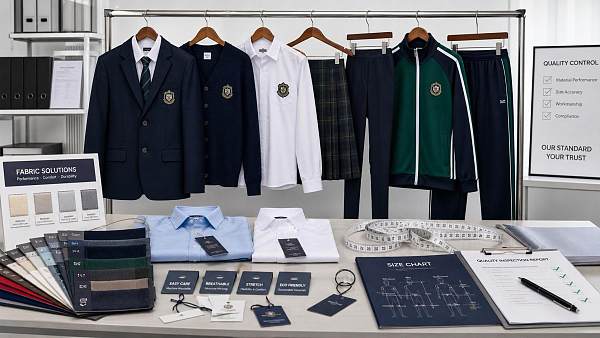
The best custom housekeeping uniforms balance durability, comfort, easy care, and a polished brand image.
In daily hotel use, weak fabric specs show up fast through fading, shrinkage, stains, and restricted movement.
A stronger sourcing strategy starts with understanding how housekeeping garments actually perform on the floor.
Why Fabric Performance Matters More Than Initial Price
Housekeeping uniforms face one of the toughest wear cycles in hospitality.
They rub against carts, bed frames, cleaning tools, and chemical residues every day.
They also go through industrial laundering far more often than front office garments.
So lower-cost uniforms can become expensive when replacement cycles shorten.
From a procurement view, the real question is cost per wear, not just unit price.
This is where custom housekeeping uniforms with the right fabric blend usually outperform generic stock options.
Best Fabrics for Custom Housekeeping Uniforms
Not every fabric behaves well under hotel conditions.
The most reliable custom housekeeping uniforms usually use proven blends rather than single-fiber constructions.
Polyester-Cotton Blends
A poly-cotton blend remains the standard choice for daily hotel housekeeping.
Polyester adds strength, color retention, and wrinkle resistance.
Cotton improves breathability and softens the hand feel.
A 65/35 polyester-cotton blend is often a practical starting point.
It holds shape well while staying comfortable across long shifts.
Higher-Polyester Performance Blends
For heavy-use properties, higher-polyester blends can work even better.
These fabrics usually resist abrasion, shrinkage, and frequent wash stress more effectively.
They are useful in resorts, large city hotels, and properties with outsourced industrial laundry.
The tradeoff is lower natural breathability, so fabric weight and construction need closer review.
Mechanical Stretch or Spandex Blends
Housekeeping work involves bending, lifting, reaching, and pushing throughout the shift.
That makes stretch a useful feature in custom housekeeping uniforms.
A small amount of spandex, often 2% to 5%, improves mobility.
Mechanical stretch fabrics can deliver similar comfort with less risk of heat damage in laundering.
This matters when uniforms must survive repeated high-temperature wash cycles.
What to Avoid
Pure cotton can feel comfortable at first, but often shrinks, wrinkles, and fades faster.
Very lightweight fabrics may look neat on delivery, then wear out at stress points quickly.
Low-grade synthetics can trap heat and create discomfort, especially in humid service environments.
Key Fabric Specifications That Affect Daily Use
Fabric type alone is not enough.
Several technical details strongly influence how custom housekeeping uniforms perform over time.
- Fabric weight: Midweight fabrics usually balance durability and comfort better than very light options.
- Weave density: Tighter construction improves abrasion resistance and shape retention.
- Colorfastness: Essential for dark tones, branded trims, and repeated chemical exposure.
- Shrinkage rate: Pre-shrunk or wash-tested fabrics reduce sizing problems after rollout.
- Pilling resistance: Important for preserving a clean, professional look.
- Chemical tolerance: Cleaning agents can weaken poor-quality yarns faster than expected.
In actual sourcing, these specs often matter more than marketing claims about premium fabric.
Features That Help Custom Housekeeping Uniforms Last Longer
Good custom housekeeping uniforms are not defined by fabric alone.
Construction details have a direct effect on service life and daily usability.
Reinforced Stress Areas
Side seams, underarms, pocket corners, and knee zones usually fail first.
Reinforced stitching in those areas extends garment life noticeably.
Functional Pocket Layout
Pockets need to fit real tools, not just visual design expectations.
A practical layout may include space for notepads, gloves, pens, room lists, or small devices.
Poorly placed pockets can snag, sag, or limit movement.
Easy-Care Closures
Zippers, snaps, and concealed plackets often outlast decorative buttons in heavy-use environments.
They also reduce breakage during laundering and speed up dressing time.
Ventilation and Comfort Panels
Breathable panels under the arms or across the back improve comfort in warm properties.
That can help maintain a professional appearance late in the shift.
Stain Resistance, Wrinkle Control, and Appearance Retention
Hotel housekeeping uniforms need to stay presentable even under pressure.
That is why finish treatments deserve close attention.
- Stain-release finishes help soils wash out more effectively.
- Wrinkle-resistant treatments reduce pressing needs and speed garment turnaround.
- Anti-fade performance protects darker brand colors after repeated laundry cycles.
- Soil-hiding color choices can also reduce visible wear between washes.
Still, finishes should support the fabric, not cover up a weak base material.
The most dependable custom housekeeping uniforms combine stable fabric construction with practical finishing.
Fit, Branding, and Staff Acceptance
Even durable uniforms can fail if staff dislike wearing them.
That creates hidden replacement pressure and inconsistent appearance across the team.
Custom housekeeping uniforms should allow easy movement without looking oversized or untidy.
Adjustable waists, inclusive sizing, and well-tested cuts improve adoption quickly.
Branding should stay subtle and durable.
Embroidery, trim color, or coordinated aprons often work better than large printed logos.
What to Ask Suppliers Before Ordering
A strong sourcing decision depends on clear pre-order checks.
When comparing custom housekeeping uniforms, ask for evidence that matches actual hotel use.
- Request fabric composition, weight, and finish details.
- Ask for wash-test results after multiple industrial laundry cycles.
- Check seam strength, shrinkage, and colorfastness reports.
- Review sample garments in movement, not just on hangers.
- Confirm replacement lead times for repeat orders.
- Verify consistency across size runs and production batches.
This is especially important for multi-property rollouts where uniform consistency affects both operations and brand standards.
A Practical Buying Framework
For most hotels, the best custom housekeeping uniforms share a few core traits.
- Poly-cotton or performance blends with proven wash durability.
- Midweight construction that resists tearing without feeling heavy.
- Functional features that support movement and tool access.
- Appearance retention through stain-release and anti-wrinkle performance.
- Supplier capability to maintain quality over repeat commercial orders.
In practice, the right specification is rarely the cheapest starting option.
It is the option that stays wearable, presentable, and easy to manage over time.
That is the real value case behind better custom housekeeping uniforms.
A careful sample review, wash trial, and feature check will usually lead to a stronger long-term purchasing decision.
Search News
Hot Articles
- Indoor PlaygroundHow to Choose Animatronic Haunted House Props for High-Throughput AttractionsOct 08, 2026
- Fashion & Gem JewelryThermal Diamond Testers: How They Work and When They Can Misidentify StonesOct 07, 2026
- Commercial KitchenWhat Is Driving Demand for Commercial Hospitality Projects Across the GCC?Oct 06, 2026
Popular Tags
Need ExpertConsultation?
Connect with our specialized leisureengineering team for procurementstrategies.
Recommended News
 Sep 21, 2026How Schools Can Cut Printing Costs When Buying Ink Cartridges in BulkSchool ink cartridges wholesale made smarter: cut printing costs with fleet planning, cost-per-page comparisons, reliable suppliers, and inventory controls.● Institutional Buyer
 Sep 17, 2026How to Source Wholesale Packing Tape Without Compromising Carton Seal StrengthWholesale packing tape sourcing guide: compare adhesive, backing, carton conditions, and real-world trials to reduce costs while maintaining reliable carton seal strength.● Institutional Buyer
 Sep 05, 2026How to Buy Geometry Sets in Bulk for Schools: A Practical Procurement ChecklistGeometry sets bulk buying guide for schools: compare safety, quality, compliance, packaging, supplier reliability, and total cost for smarter procurement.● Institutional Buyer
 Aug 31, 2026Microscope Slides Market Outlook: Demand Drivers, Segments, and Sourcing RisksExplore the microscope slides market: key demand drivers, product segments, quality risks, and sourcing strategies for reliable laboratory supply.● Institutional Buyer
 Aug 30, 2026Microscope Slides HS Code: How Importers Classify Laboratory Glass Slides CorrectlyMicroscope slides HS code guide: learn how to classify laboratory glass slides accurately, verify materials, avoid customs delays, and improve import compliance.● Institutional Buyer
 Aug 29, 2026How to Choose Graduation Tassels With Year Charms for Large School OrdersGraduation tassels with year charm: learn how to specify colors, materials, packaging, proofs, and delivery timelines for accurate large school orders.● Institutional Buyer
 Aug 11, 2026How to Choose Alphabet Educational Posters for Different Classroom Age GroupsAlphabet educational posters should match how each age group learns. Discover how to choose safer, clearer, curriculum-ready designs for preschool to primary classrooms.● Institutional Buyer
 Aug 05, 2026How to Evaluate a Marching Band Uniform Manufacturer for Quality and On-Time DeliveryMarching band uniform manufacturer selection starts with delivery risk. Learn how to compare quality, sizing, compliance, and capacity for reliable, on-time orders.● Institutional Buyer
 Jul 20, 2026How to Evaluate a Stationery Distributor for Bulk Office and School Supply PurchasingStationery distributor selection affects cost, delivery, and compliance. Learn how to evaluate suppliers for bulk office and school supply purchasing with confidence.● Institutional Buyer
 Jul 18, 2026How to Choose Custom Hotel Uniforms: Fabric, Branding, Comfort, and DurabilityCustom hotel uniforms guide: learn how to choose the right fabric, branding, comfort, and durability to improve staff performance, strengthen hotel image, and reduce long-term costs.● Institutional Buyer
 Jul 15, 2026How to Choose a Clear Pencil Cases Manufacturer for School and Retail OrdersClear pencil cases manufacturer selection made simple: learn how to compare quality, compliance, customization, pricing, and lead times for school and retail orders.● Institutional Buyer
 Jul 14, 2026How to Evaluate a Hole Punches Wholesale Supplier for Quality, MOQ, and Lead TimeHole punches wholesale supplier selection starts with quality, MOQ, and lead time. Learn practical checks, warning signs, and sourcing tips to reduce risk and buy smarter.● Institutional Buyer
 Jul 13, 2026Wholesale Erasers and Sharpeners: How to Compare Materials, Packaging, and MOQWholesale erasers and sharpeners buying guide: compare materials, packaging, and MOQ to cut risk, improve quality, and choose suppliers with better value.● Institutional Buyer
 Jul 10, 2026Custom Housekeeping Uniforms: What Fabrics and Features Hold Up in Daily Hotel Use?Custom housekeeping uniforms that last: discover the best fabrics, stretch, stain resistance, and hotel-ready features to cut replacement costs and keep staff polished daily.● Institutional Buyer
 Jul 08, 2026Fast Warm Up Laminator Buying Guide: Speed, Film Thickness, and Use Case ExplainedFast warm up laminator buying guide covering warm-up speed, film thickness, and real use cases. Compare specs, avoid buying mistakes, and choose the right model with confidence.● Institutional Buyer
 Jul 08, 2026How to Choose School Supplies for Campuses by Grade Level, Budget, and Daily UseSchool supplies for campuses made simple: learn how to choose by grade level, budget, durability, and daily use to reduce waste, improve sourcing, and support every classroom.● Institutional Buyer
 Jul 05, 2026How to Choose Branded Office Stationery for Corporate Use and Budget ControlBranded office stationery buying guide: learn how to balance quality, customization, supplier comparison, and budget control for consistent branding and smarter corporate sourcing.● Institutional Buyer
 Jul 01, 2026Paper Guillotines Buying Guide: Manual vs Electric, Cut Size, and Safety FeaturesPaper guillotines buying guide covering manual vs electric models, cut size, and safety features. Compare costs, productivity, and key specs to choose the right machine.● Institutional Buyer
 Jun 29, 2026Bingo Cages and Balls: Sizes, Materials, and What Affects Game VisibilityBingo cages and balls guide: compare sizes, materials, contrast, and durability to improve visibility, fairness, and long-term value in commercial and event play.● Institutional Buyer
 Jun 25, 2026School Uniforms in Europe: Materials, Sizing, and Compliance Points for Bulk OrdersSchool uniforms Europe sourcing guide: compare materials, sizing accuracy, and EU compliance points for bulk orders to reduce risk, improve durability, and choose suppliers with confidence.● Institutional Buyer
 Jun 23, 2026Wholesale Playing Cards Casino Buying Guide: Paper Stock, Finish, Security, and MOQWholesale playing cards casino buying guide covering paper stock, finish, security features, and MOQ. Compare suppliers smarter, reduce sourcing risk, and choose casino-grade decks with confidence.● Institutional Buyer
 Jun 22, 2026Eco Friendly Office Stationery: What to Check Before Buying for Daily Business UseEco friendly office stationery buying guide for businesses: learn how to check materials, certifications, durability, supplier reliability, and total cost before choosing daily office supplies.● Institutional Buyer
 Jun 21, 2026How to Choose Custom Promotional Pens for Trade Shows, Schools, and Corporate GiveawaysCustom promotional pens: learn how to choose the right styles for trade shows, schools, and corporate giveaways with tips on quality, branding, durability, and sourcing.● Institutional Buyer
 Jun 16, 2026Microscope Slides Wholesale Buying Guide: Glass Types, Sizes, and MOQ FactorsMicroscope slides wholesale buying guide covering glass types, standard sizes, MOQ factors, and quality risks—compare smarter, reduce waste, and choose reliable bulk supply.● Institutional Buyer