How Schools Can Cut Printing Costs When Buying Ink Cartridges in Bulk
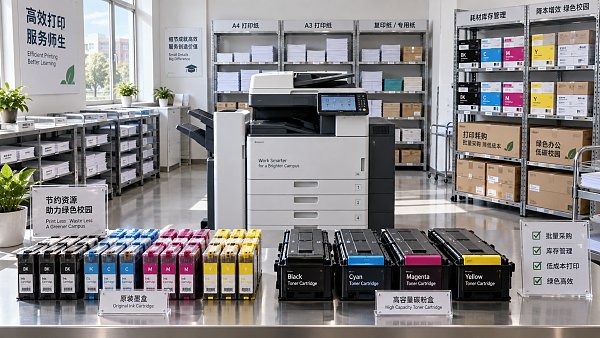
A school can lower printing costs through bulk purchasing, but only when the order is built around its actual printer fleet, print volume, storage capacity, and supplier controls. Buying the lowest-priced cartridge case without those checks often shifts cost elsewhere: unusable stock, emergency orders, printer downtime, poor print quality, or cartridges that expire before they are installed.
The practical approach is to treat school ink cartridges wholesale as a managed supply decision rather than a one-time volume discount. Start with a verified list of devices and consumption patterns, consolidate compatible demand, compare cost per usable page instead of cartridge price, and set replenishment rules that prevent both shortages and excessive stock. This gives procurement teams a clearer basis for choosing original, compatible, or remanufactured options and negotiating terms that support the school year.
Find the real source of printing spend before placing a bulk order
Ink and toner invoices rarely tell the whole story. A campus may appear to spend heavily on cartridges because several departments order independently, each keeping small emergency supplies. Another school may have a few high-volume multifunction printers that consume most of the budget, while numerous desktop printers create administrative complexity rather than material volume. These are different problems and should not receive the same purchasing response.
Begin by collecting a usable snapshot of the current environment. The record does not need to be complicated, but it should be accurate enough to support a purchasing decision:
- Printer make, model, location, and department owner
- Cartridge or toner SKU used by each device
- Whether the device uses separate colour cartridges, combined tri-colour cartridges, drums, maintenance boxes, or other consumables
- Approximate pages printed each month, preferably separated into black-and-white and colour
- Typical cartridge replacement frequency and recurring stock-out points
- Known print issues, service calls, or cartridges rejected by a printer
- Existing inventory, including opened boxes and slow-moving cartridges
Usage information is especially valuable when it reveals mismatches. For example, a low-volume colour inkjet in an office may consume cartridges faster than expected because infrequent use triggers cleaning cycles or printhead maintenance. A high-volume laser printer may use relatively inexpensive toner per page but require a separate drum unit after a stated interval. Treating both supplies as identical “cartridges” can produce misleading budget comparisons.
Reduce the printer-fleet problem before negotiating unit prices
Bulk buying works best when a school has concentrated demand across a manageable number of cartridge families. Where every classroom or department has a different small printer, the procurement challenge is not simply getting a larger discount. It is controlling fragmentation.
Before committing to a long buying cycle, identify devices that are obsolete, rarely used, difficult to support, or dependent on expensive proprietary consumables. The goal is not necessarily to replace equipment immediately. It may be enough to stop purchasing reserve cartridges for a device that is being phased out, move routine jobs to a shared printer, or direct colour-heavy work to a device designed for that volume.
This matters because an apparently attractive wholesale catalogue can encourage accumulation of low-turnover items. A single bulk case for a rarely used model may tie up funds for months and become dead stock when the printer fails or is replaced. Consolidating demand around common devices gives the school stronger buying leverage and makes stock easier to redistribute between departments.
Separate essential printing from convenience printing
Not all printing interruptions have the same operational impact. Student records, attendance documents, examination materials, safeguarding paperwork, enrolment forms, and finance documents may need uninterrupted access to a designated printer. Staff handouts, draft materials, or routine internal documents can usually be routed elsewhere when supplies run low.
Classifying devices by criticality helps determine where buffer stock is justified. Keep a small approved reserve for essential devices, particularly when a compatible cartridge is not locally available at short notice. For noncritical devices, a central supply point and standard ordering route usually provide better control than holding cartridges in every room.
Compare cartridges by usable cost per page, not box price
A low purchase price does not automatically mean a lower cost. The more useful comparison is the expected cost per page, adjusted for the actual print conditions at the school. Manufacturers usually provide a page-yield figure, but it is based on standardised coverage assumptions. A page containing a few lines of black text consumes far less than a full-colour worksheet, poster, photograph, or presentation handout.
A simple working calculation is:
Cartridge cost per page = purchase price ÷ stated page yield
Use this figure to compare standard-yield and high-yield cartridges within the same printer family. Then review whether the yield is likely to reflect the school’s real output. If teachers frequently print colour backgrounds, large graphics, or borderless materials, actual yield may be materially lower than the published estimate. A supplier should be able to state the yield basis clearly rather than presenting only a broad “high capacity” claim.
High-yield cartridges are often sensible for heavily used administrative printers, but they are not a universal answer. They can be a poor purchase for an infrequently used inkjet, where stored ink may age before use or the printer may fail before the cartridge is consumed. Larger packs should follow demonstrated throughput, not an assumption that buying more is always cheaper.
Choose original, compatible, or remanufactured supplies by risk level
Schools frequently face pressure to reduce the cost of branded consumables, especially where budgets are distributed across departments. Compatible and remanufactured products can be considered, but the decision should be connected to device importance and supplier accountability, not solely to the discount offered.
Original cartridges may be preferable for newer equipment, printers used for high-stakes documents, specialist colour output, or devices covered by service arrangements with specific consumable requirements. They can also simplify troubleshooting because the cartridge source is less likely to be questioned when a fault occurs.
Compatible products are newly made alternatives designed for a named printer family. Remanufactured products are previously used cartridges that have been collected, rebuilt, refilled, and tested. Either category may be appropriate where performance is proven, but schools should avoid treating the terms as interchangeable. Ask the supplier exactly which product type is being quoted.
A sensible introduction process is to trial a limited quantity on selected noncritical devices before placing a full-school commitment. Review installation success, printer recognition, output density, colour consistency where relevant, leakage, and replacement frequency. Keep records by cartridge batch and printer model. This is not about creating a burdensome test programme; it is about making sure a lower-cost option does not generate hidden support work for IT staff or office teams.
Questions that expose weak supplier offers
Price lists alone do not show whether a wholesale source can support an institution. Procurement teams should request item-level information and clear answers to operational questions:
- Is the product original, compatible, or remanufactured?
- Which exact printer models and regional cartridge codes are supported?
- What stated page yield applies, and under what coverage standard?
- How is the product packaged and protected during delivery?
- What is the process for a cartridge that is not recognised, leaks, or produces unacceptable output?
- Can replacements be supplied from a consistent product specification rather than an unannounced substitute?
- What stock availability can be confirmed for core SKUs during the school term?
- Are delivery schedules, minimum order quantities, and invoicing arrangements suitable for central purchasing?
Ambiguous compatibility language is a warning sign. A cartridge described as “for use with” a broad series should still be checked against the precise device model. Printer names often look similar while using different cartridge chips, physical formats, or regional variants.
Set inventory rules that fit term-time demand
Overstocking is a common side effect of bulk purchasing. It happens when the volume discount becomes the main measure of success and nobody assigns responsibility for monitoring consumption. Supplies may then sit in cupboards across multiple buildings, while another department orders the same item again because existing stock cannot be located.
A central register for core cartridges can be simple: item code, compatible printer models, stock on hand, minimum stock level, typical monthly usage, storage location, and reorder point. The key is that the register reflects physical stock rather than just purchase history.
Set the reorder point using expected consumption during supplier lead time plus a reasonable buffer for essential devices. For instance, if a high-volume administrative printer normally uses a cartridge within a short operating cycle, reorder before the final unit is installed. For low-use models, avoid applying the same rule. One sealed backup may be enough, and in some cases no reserve is justified where delivery is reliable.
Storage conditions matter, particularly for ink cartridges. Keep unopened products in their original packaging, away from heat, direct sunlight, moisture, and extreme temperature changes. Rotate stock so older sealed units are issued first. Do not remove protective seals early merely to organise shelves; the packaging helps protect the cartridge until installation.
Build contract terms around continuity, not only discount tiers
Bulk pricing is more useful when the school can actually access the agreed products when demand arises. A quotation should therefore be reviewed alongside supply continuity. Ask whether prices are fixed for a defined period, whether substitutions require approval, and how supply interruptions are communicated. A slightly higher quoted unit cost may be justified when it comes with predictable fulfilment, clear replacement handling, and fewer emergency purchases.
Delivery arrangements should match how stock is controlled. Central delivery supports tighter inventory management, while campus-level delivery can reduce internal handling for large sites. Either model can work, but receiving staff need a way to verify that delivered SKU codes, quantities, and packaging match the order before items are dispersed.
For a mixed printer fleet, it is often more practical to negotiate a core basket of high-use supplies than to seek a single fixed price for every possible cartridge. Core items can be purchased on planned schedules; low-volume or legacy cartridges can remain on an approved ad hoc route. This avoids forcing large commitments on unpredictable stock.
Watch for costs that a cartridge quote does not reveal
Printing spend rises when consumption is unmanaged, even when cartridges are purchased well. Defaulting suitable devices to duplex black-and-white printing, restricting unnecessary colour output, and directing large jobs to the most economical printer can reduce demand without limiting legitimate classroom or administrative work. These controls should be practical: staff need to understand which printer is intended for which type of job, or they will bypass the process when time is limited.
Also include related consumables in the budget review. Laser devices may require drums, waste-toner containers, fusers, or maintenance kits; inkjet devices can require printhead or maintenance components. A cartridge with a low per-page figure may not represent the full operating cost if associated parts are nearing replacement intervals.
When a printer begins using cartridges unusually quickly, do not assume the supplier is at fault. Check print settings, recurring cleaning cycles, page coverage, firmware changes, damaged cartridges, and whether users have shifted high-coverage jobs to that device. Comparing current consumption with previous usage by printer model can distinguish a genuine product issue from a change in printing behaviour.
Questions procurement teams often raise
Should a school buy a year’s supply at once?
Only for fast-moving, stable SKUs with predictable usage and suitable storage. A full-year quantity can be inefficient for low-volume printers, equipment nearing replacement, or ink cartridges with uncertain consumption patterns. Scheduled releases against an agreed price can provide similar budget control with less stock risk.
Can one cartridge specification cover several printers?
Sometimes, but compatibility must be verified by exact model. Do not rely on similar printer names or cartridge appearance. Confirm the manufacturer cartridge code, regional version where relevant, and any device-specific chip requirement before consolidating an order.
What should happen when a bulk cartridge fails?
Isolate the cartridge, retain its packaging and batch details, record the printer model and fault symptoms, and follow the supplier’s return procedure promptly. A supplier arrangement should make replacement responsibility clear; otherwise, the school may absorb the cost and lose the evidence needed to identify a recurring batch issue.
Search News
Hot Articles
- Stationery & UniformsHow Schools Can Cut Printing Costs When Buying Ink Cartridges in BulkSep 21, 2026
- Jewelry Packaging & DisplayHow to Evaluate a Luxury Retail Packaging Supplier for Premium Brand ConsistencySep 20, 2026
- Commercial KitchenHow to Select a Spiral Dough Mixer for Bakery Batch Size and Dough HydrationSep 19, 2026
Popular Tags
Need ExpertConsultation?
Connect with our specialized leisureengineering team for procurementstrategies.
Recommended News
 Sep 21, 2026How Schools Can Cut Printing Costs When Buying Ink Cartridges in BulkSchool ink cartridges wholesale made smarter: cut printing costs with fleet planning, cost-per-page comparisons, reliable suppliers, and inventory controls.● Institutional Buyer
 Sep 17, 2026How to Source Wholesale Packing Tape Without Compromising Carton Seal StrengthWholesale packing tape sourcing guide: compare adhesive, backing, carton conditions, and real-world trials to reduce costs while maintaining reliable carton seal strength.● Institutional Buyer
 Sep 05, 2026How to Buy Geometry Sets in Bulk for Schools: A Practical Procurement ChecklistGeometry sets bulk buying guide for schools: compare safety, quality, compliance, packaging, supplier reliability, and total cost for smarter procurement.● Institutional Buyer
 Aug 31, 2026Microscope Slides Market Outlook: Demand Drivers, Segments, and Sourcing RisksExplore the microscope slides market: key demand drivers, product segments, quality risks, and sourcing strategies for reliable laboratory supply.● Institutional Buyer
 Aug 30, 2026Microscope Slides HS Code: How Importers Classify Laboratory Glass Slides CorrectlyMicroscope slides HS code guide: learn how to classify laboratory glass slides accurately, verify materials, avoid customs delays, and improve import compliance.● Institutional Buyer
 Aug 29, 2026How to Choose Graduation Tassels With Year Charms for Large School OrdersGraduation tassels with year charm: learn how to specify colors, materials, packaging, proofs, and delivery timelines for accurate large school orders.● Institutional Buyer
 Aug 11, 2026How to Choose Alphabet Educational Posters for Different Classroom Age GroupsAlphabet educational posters should match how each age group learns. Discover how to choose safer, clearer, curriculum-ready designs for preschool to primary classrooms.● Institutional Buyer
 Aug 05, 2026How to Evaluate a Marching Band Uniform Manufacturer for Quality and On-Time DeliveryMarching band uniform manufacturer selection starts with delivery risk. Learn how to compare quality, sizing, compliance, and capacity for reliable, on-time orders.● Institutional Buyer
 Jul 20, 2026How to Evaluate a Stationery Distributor for Bulk Office and School Supply PurchasingStationery distributor selection affects cost, delivery, and compliance. Learn how to evaluate suppliers for bulk office and school supply purchasing with confidence.● Institutional Buyer
 Jul 18, 2026How to Choose Custom Hotel Uniforms: Fabric, Branding, Comfort, and DurabilityCustom hotel uniforms guide: learn how to choose the right fabric, branding, comfort, and durability to improve staff performance, strengthen hotel image, and reduce long-term costs.● Institutional Buyer
 Jul 15, 2026How to Choose a Clear Pencil Cases Manufacturer for School and Retail OrdersClear pencil cases manufacturer selection made simple: learn how to compare quality, compliance, customization, pricing, and lead times for school and retail orders.● Institutional Buyer
 Jul 14, 2026How to Evaluate a Hole Punches Wholesale Supplier for Quality, MOQ, and Lead TimeHole punches wholesale supplier selection starts with quality, MOQ, and lead time. Learn practical checks, warning signs, and sourcing tips to reduce risk and buy smarter.● Institutional Buyer
 Jul 13, 2026Wholesale Erasers and Sharpeners: How to Compare Materials, Packaging, and MOQWholesale erasers and sharpeners buying guide: compare materials, packaging, and MOQ to cut risk, improve quality, and choose suppliers with better value.● Institutional Buyer
 Jul 10, 2026Custom Housekeeping Uniforms: What Fabrics and Features Hold Up in Daily Hotel Use?Custom housekeeping uniforms that last: discover the best fabrics, stretch, stain resistance, and hotel-ready features to cut replacement costs and keep staff polished daily.● Institutional Buyer
 Jul 08, 2026Fast Warm Up Laminator Buying Guide: Speed, Film Thickness, and Use Case ExplainedFast warm up laminator buying guide covering warm-up speed, film thickness, and real use cases. Compare specs, avoid buying mistakes, and choose the right model with confidence.● Institutional Buyer
 Jul 08, 2026How to Choose School Supplies for Campuses by Grade Level, Budget, and Daily UseSchool supplies for campuses made simple: learn how to choose by grade level, budget, durability, and daily use to reduce waste, improve sourcing, and support every classroom.● Institutional Buyer
 Jul 05, 2026How to Choose Branded Office Stationery for Corporate Use and Budget ControlBranded office stationery buying guide: learn how to balance quality, customization, supplier comparison, and budget control for consistent branding and smarter corporate sourcing.● Institutional Buyer
 Jul 01, 2026Paper Guillotines Buying Guide: Manual vs Electric, Cut Size, and Safety FeaturesPaper guillotines buying guide covering manual vs electric models, cut size, and safety features. Compare costs, productivity, and key specs to choose the right machine.● Institutional Buyer
 Jun 29, 2026Bingo Cages and Balls: Sizes, Materials, and What Affects Game VisibilityBingo cages and balls guide: compare sizes, materials, contrast, and durability to improve visibility, fairness, and long-term value in commercial and event play.● Institutional Buyer
 Jun 25, 2026School Uniforms in Europe: Materials, Sizing, and Compliance Points for Bulk OrdersSchool uniforms Europe sourcing guide: compare materials, sizing accuracy, and EU compliance points for bulk orders to reduce risk, improve durability, and choose suppliers with confidence.● Institutional Buyer
 Jun 23, 2026Wholesale Playing Cards Casino Buying Guide: Paper Stock, Finish, Security, and MOQWholesale playing cards casino buying guide covering paper stock, finish, security features, and MOQ. Compare suppliers smarter, reduce sourcing risk, and choose casino-grade decks with confidence.● Institutional Buyer
 Jun 22, 2026Eco Friendly Office Stationery: What to Check Before Buying for Daily Business UseEco friendly office stationery buying guide for businesses: learn how to check materials, certifications, durability, supplier reliability, and total cost before choosing daily office supplies.● Institutional Buyer
 Jun 21, 2026How to Choose Custom Promotional Pens for Trade Shows, Schools, and Corporate GiveawaysCustom promotional pens: learn how to choose the right styles for trade shows, schools, and corporate giveaways with tips on quality, branding, durability, and sourcing.● Institutional Buyer
 Jun 16, 2026Microscope Slides Wholesale Buying Guide: Glass Types, Sizes, and MOQ FactorsMicroscope slides wholesale buying guide covering glass types, standard sizes, MOQ factors, and quality risks—compare smarter, reduce waste, and choose reliable bulk supply.● Institutional Buyer