How to Choose School Supplies for Campuses by Grade Level, Budget, and Daily Use
How to Choose School Supplies for Campuses by Grade Level, Budget, and Daily Use
Choosing the right school supplies for campuses requires more than comparing prices. Procurement teams must balance grade-level needs, daily classroom use, durability, and budget control while ensuring consistent quality across the entire campus.
That balance matters even more when one campus serves multiple age groups. A kindergarten class, a middle school lab, and a senior art room do not use supplies in the same way.
This guide explains how to evaluate school supplies for campuses through a practical sourcing lens. The goal is simple: buy what is needed, avoid waste, and support consistent daily use.
Start with Campus-Wide Demand Before Comparing Prices
Many buying mistakes happen before quotations arrive. The first issue is usually poor demand mapping rather than a bad supplier offer.
For school supplies for campuses, demand should be grouped by grade level, subject use, replacement cycle, and shared versus individual ownership.
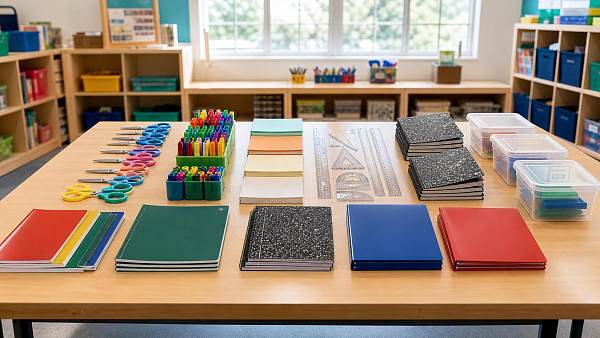
In practice, this means separating daily-consumption items from longer-life items. Pens, notebooks, tissues, and glue sticks move differently from storage bins, scissors, or classroom organizers.
A useful starting framework includes four questions:
- Which items are consumed weekly or monthly?
- Which items must match safety or age standards?
- Which items are shared across classrooms or departments?
- Which items create hidden costs through breakage or overstock?
This early sorting improves sourcing accuracy. It also creates a cleaner basis for supplier negotiation and cost comparison.
Match School Supplies for Campuses to Grade-Level Reality
Grade level is one of the strongest buying filters. It affects safety requirements, product size, durability expectations, and how often items need replacement.
Early Years and Primary Grades
Younger students need simple, safe, and forgiving products. Large-grip pencils, blunt scissors, washable markers, and durable folders usually perform better than lower-cost generic alternatives.
For this group, school supplies for campuses should prioritize safety labeling, rounded edges, non-toxic materials, and easy handling. Breakage rates are often higher, so ultra-light construction may cost more over time.
Middle Grades
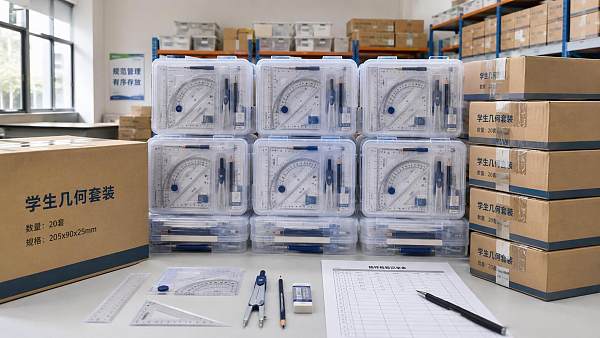
Middle-grade demand becomes more mixed. Students use higher volumes, but they also need products for subject-based learning, including geometry tools, binders, dividers, and science note formats.
At this stage, procurement decisions should focus on standardization. Too many product variations can increase ordering complexity and create uneven classroom experience.
Secondary and Senior Levels
Older students usually need more specialized school supplies for campuses. Requirements may include lab notebooks, technical drawing sets, presentation materials, calculators, and higher-capacity storage products.
Here, product functionality matters more than bright packaging or broad multipurpose claims. Supplies must fit specific classroom tasks and frequent movement across campus.
Build a Budget Model That Reflects Real Daily Use
Budget planning for school supplies for campuses should not rely only on annual spend history. Past spending often hides emergency purchases, unused stock, and poor category control.
A better method is to divide the budget into three layers: essential consumables, operational classroom tools, and contingency stock.
- Essential consumables: notebooks, pens, paper, markers, glue, tissues.
- Operational tools: scissors, staplers, storage trays, rulers, organizers.
- Contingency stock: seasonal demand spikes, new enrollments, exam periods, damaged replacements.
This structure makes cost pressure easier to manage. It also helps explain purchasing decisions internally when budget reviews become tighter.
One common mistake is cutting unit price without checking usage rate. Cheap markers that dry quickly or folders that split early often erase any apparent savings.
In other words, total cost of use matters more than purchase price alone. That is especially true for school supplies for campuses used every day by large student groups.
Use a Practical Evaluation Matrix for Supplier Selection
Once demand and budget are clear, supplier evaluation becomes more objective. A simple scorecard is usually more reliable than informal preference or price-first selection.
For school supplies for campuses, the most useful criteria often include:
- Product consistency across batches
- Compliance and safety documentation
- Lead time reliability
- Carton efficiency and storage fit
- Low minimum order flexibility
- Replacement and complaint handling
A supplier that offers broad catalog depth can reduce the number of separate purchase orders. That saves administrative time and lowers receiving complexity on campus.
Still, consolidation only works when quality remains stable. A wide assortment is useful only if the supplier performs consistently across core product lines.
Check Packaging, Storage, and Distribution Constraints
School supplies for campuses are not just bought. They must also be received, counted, stored, issued, and sometimes redistributed between buildings or grade sections.
This is where procurement and operations often disconnect. A good product can still create friction if packaging units are awkward or inventory labels are unclear.
Ask these questions during sourcing:
- Does the carton size fit available storage shelves?
- Can items be issued by classroom without repacking?
- Are labels clear enough for fast stock control?
- Do fragile items need extra handling cost?
These operational details affect labor time, shrinkage, and replenishment speed. They are easy to overlook, but they shape the real efficiency of school supplies for campuses.
Reduce Risk with Standardization and Controlled Variety
Too much variety often increases waste. Different pen types, notebook sizes, or folder formats can complicate storage and weaken volume purchasing leverage.
A better strategy is controlled variety. Standardize high-volume items, then allow limited variation for specialized subjects or age-specific needs.
For example, one campus may use a single paper size, two notebook formats, one core marker range, and separate specialty kits only for art or lab classes.
This approach improves forecasting and supports better supplier terms. It also makes school supplies for campuses easier to reorder during peak periods.
A Simple Decision Table for Faster Purchasing
Final Buying Priorities for School Supplies for Campuses
The best purchasing decisions usually come from discipline, not complexity. Start with real usage patterns, then narrow choices by grade level, safety, and operational fit.
From there, compare school supplies for campuses through total cost, supplier reliability, and ease of distribution. Those three factors tend to separate sustainable value from short-term price appeal.
In day-to-day procurement, the strongest results usually come from standardized core items, limited specialty variation, and supplier scorecards that reflect actual campus needs.
If the goal is long-term efficiency, treat school supplies for campuses as an operational system rather than a seasonal shopping list. That shift leads to better budgeting, smoother replenishment, and more dependable classroom support.
Search News
Hot Articles
- Commercial KitchenWhat Is Driving Demand for Commercial Hospitality Projects Across the GCC?Oct 06, 2026
- Hotel Room AmenitiesHow to Select Hotel Hair Dryers That Balance Guest Safety, Durability, and CostOct 05, 2026
- Restaurant FurnitureFast-Casual Restaurant Interiors: Design Choices That Improve Speed and Guest FlowOct 04, 2026
Popular Tags
Need ExpertConsultation?
Connect with our specialized leisureengineering team for procurementstrategies.
Recommended News
 Sep 21, 2026How Schools Can Cut Printing Costs When Buying Ink Cartridges in BulkSchool ink cartridges wholesale made smarter: cut printing costs with fleet planning, cost-per-page comparisons, reliable suppliers, and inventory controls.● Institutional Buyer
 Sep 17, 2026How to Source Wholesale Packing Tape Without Compromising Carton Seal StrengthWholesale packing tape sourcing guide: compare adhesive, backing, carton conditions, and real-world trials to reduce costs while maintaining reliable carton seal strength.● Institutional Buyer
 Sep 05, 2026How to Buy Geometry Sets in Bulk for Schools: A Practical Procurement ChecklistGeometry sets bulk buying guide for schools: compare safety, quality, compliance, packaging, supplier reliability, and total cost for smarter procurement.● Institutional Buyer
 Aug 31, 2026Microscope Slides Market Outlook: Demand Drivers, Segments, and Sourcing RisksExplore the microscope slides market: key demand drivers, product segments, quality risks, and sourcing strategies for reliable laboratory supply.● Institutional Buyer
 Aug 30, 2026Microscope Slides HS Code: How Importers Classify Laboratory Glass Slides CorrectlyMicroscope slides HS code guide: learn how to classify laboratory glass slides accurately, verify materials, avoid customs delays, and improve import compliance.● Institutional Buyer
 Aug 29, 2026How to Choose Graduation Tassels With Year Charms for Large School OrdersGraduation tassels with year charm: learn how to specify colors, materials, packaging, proofs, and delivery timelines for accurate large school orders.● Institutional Buyer
 Aug 11, 2026How to Choose Alphabet Educational Posters for Different Classroom Age GroupsAlphabet educational posters should match how each age group learns. Discover how to choose safer, clearer, curriculum-ready designs for preschool to primary classrooms.● Institutional Buyer
 Aug 05, 2026How to Evaluate a Marching Band Uniform Manufacturer for Quality and On-Time DeliveryMarching band uniform manufacturer selection starts with delivery risk. Learn how to compare quality, sizing, compliance, and capacity for reliable, on-time orders.● Institutional Buyer
 Jul 20, 2026How to Evaluate a Stationery Distributor for Bulk Office and School Supply PurchasingStationery distributor selection affects cost, delivery, and compliance. Learn how to evaluate suppliers for bulk office and school supply purchasing with confidence.● Institutional Buyer
 Jul 18, 2026How to Choose Custom Hotel Uniforms: Fabric, Branding, Comfort, and DurabilityCustom hotel uniforms guide: learn how to choose the right fabric, branding, comfort, and durability to improve staff performance, strengthen hotel image, and reduce long-term costs.● Institutional Buyer
 Jul 15, 2026How to Choose a Clear Pencil Cases Manufacturer for School and Retail OrdersClear pencil cases manufacturer selection made simple: learn how to compare quality, compliance, customization, pricing, and lead times for school and retail orders.● Institutional Buyer
 Jul 14, 2026How to Evaluate a Hole Punches Wholesale Supplier for Quality, MOQ, and Lead TimeHole punches wholesale supplier selection starts with quality, MOQ, and lead time. Learn practical checks, warning signs, and sourcing tips to reduce risk and buy smarter.● Institutional Buyer
 Jul 13, 2026Wholesale Erasers and Sharpeners: How to Compare Materials, Packaging, and MOQWholesale erasers and sharpeners buying guide: compare materials, packaging, and MOQ to cut risk, improve quality, and choose suppliers with better value.● Institutional Buyer
 Jul 10, 2026Custom Housekeeping Uniforms: What Fabrics and Features Hold Up in Daily Hotel Use?Custom housekeeping uniforms that last: discover the best fabrics, stretch, stain resistance, and hotel-ready features to cut replacement costs and keep staff polished daily.● Institutional Buyer
 Jul 08, 2026Fast Warm Up Laminator Buying Guide: Speed, Film Thickness, and Use Case ExplainedFast warm up laminator buying guide covering warm-up speed, film thickness, and real use cases. Compare specs, avoid buying mistakes, and choose the right model with confidence.● Institutional Buyer
 Jul 08, 2026How to Choose School Supplies for Campuses by Grade Level, Budget, and Daily UseSchool supplies for campuses made simple: learn how to choose by grade level, budget, durability, and daily use to reduce waste, improve sourcing, and support every classroom.● Institutional Buyer
 Jul 05, 2026How to Choose Branded Office Stationery for Corporate Use and Budget ControlBranded office stationery buying guide: learn how to balance quality, customization, supplier comparison, and budget control for consistent branding and smarter corporate sourcing.● Institutional Buyer
 Jul 01, 2026Paper Guillotines Buying Guide: Manual vs Electric, Cut Size, and Safety FeaturesPaper guillotines buying guide covering manual vs electric models, cut size, and safety features. Compare costs, productivity, and key specs to choose the right machine.● Institutional Buyer
 Jun 29, 2026Bingo Cages and Balls: Sizes, Materials, and What Affects Game VisibilityBingo cages and balls guide: compare sizes, materials, contrast, and durability to improve visibility, fairness, and long-term value in commercial and event play.● Institutional Buyer
 Jun 25, 2026School Uniforms in Europe: Materials, Sizing, and Compliance Points for Bulk OrdersSchool uniforms Europe sourcing guide: compare materials, sizing accuracy, and EU compliance points for bulk orders to reduce risk, improve durability, and choose suppliers with confidence.● Institutional Buyer
 Jun 23, 2026Wholesale Playing Cards Casino Buying Guide: Paper Stock, Finish, Security, and MOQWholesale playing cards casino buying guide covering paper stock, finish, security features, and MOQ. Compare suppliers smarter, reduce sourcing risk, and choose casino-grade decks with confidence.● Institutional Buyer
 Jun 22, 2026Eco Friendly Office Stationery: What to Check Before Buying for Daily Business UseEco friendly office stationery buying guide for businesses: learn how to check materials, certifications, durability, supplier reliability, and total cost before choosing daily office supplies.● Institutional Buyer
 Jun 21, 2026How to Choose Custom Promotional Pens for Trade Shows, Schools, and Corporate GiveawaysCustom promotional pens: learn how to choose the right styles for trade shows, schools, and corporate giveaways with tips on quality, branding, durability, and sourcing.● Institutional Buyer
 Jun 16, 2026Microscope Slides Wholesale Buying Guide: Glass Types, Sizes, and MOQ FactorsMicroscope slides wholesale buying guide covering glass types, standard sizes, MOQ factors, and quality risks—compare smarter, reduce waste, and choose reliable bulk supply.● Institutional Buyer