How to Choose Branded Office Stationery for Corporate Use and Budget Control
Why does branded office stationery deserve more attention than a simple logo update?
Choosing branded office stationery affects more than appearance. It shapes daily usability, internal consistency, and how a company is perceived in meetings, onboarding packs, and client-facing documents.
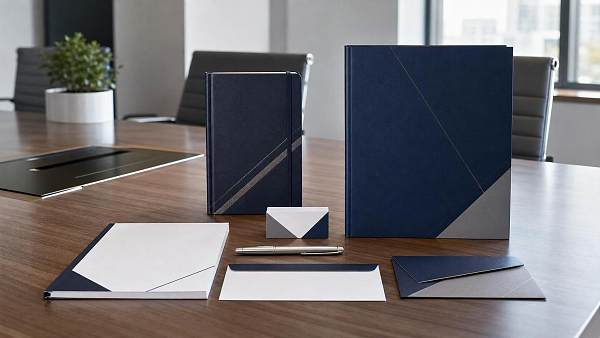
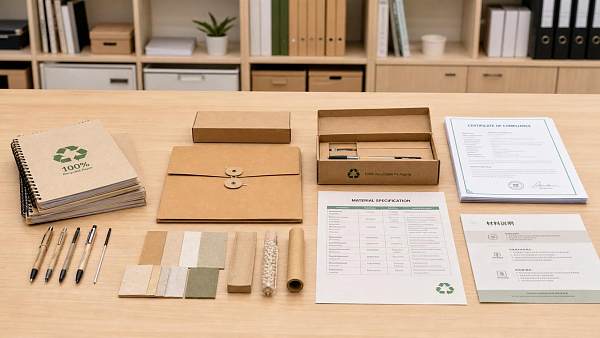
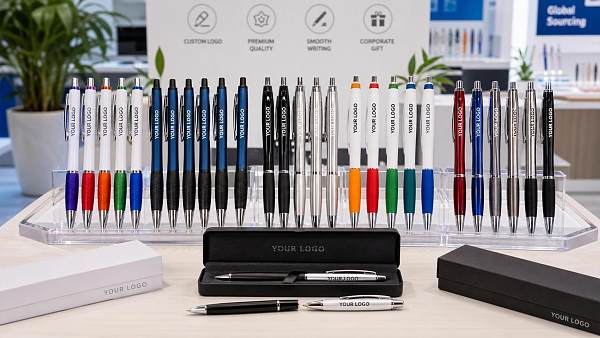
In practical terms, branded office stationery sits at the intersection of procurement control and brand management. Pens, notebooks, folders, envelopes, memo pads, and presentation materials are used repeatedly, so small specification decisions multiply across the budget.
That is why the best sourcing decisions rarely start with color alone. A stronger starting point is to ask what must stay consistent, what can be standardized, and what should vary by use case.
For companies operating across hospitality, education, retail, and other commercial environments, the answer is often layered. A five-star property, a smart campus, and a showroom may all use branded office stationery, but not at the same quality tier or replenishment cycle.
This is also where market intelligence becomes useful. Platforms such as Global Commercial Trade often frame sourcing through design consistency, compliance, and supply continuity, which mirrors how serious commercial purchasing decisions are actually made.
What should be included in a branded office stationery program?
A common mistake is treating all stationery items as one category. They are not used the same way, and they should not be specified the same way.
A more useful approach is to divide branded office stationery into functional groups. This makes budgeting and supplier comparison clearer.
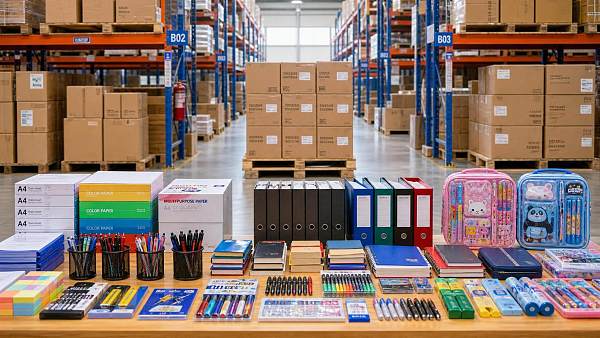
- Core daily-use items: pens, notebooks, sticky notes, memo pads, envelopes.
- Formal communication items: letterheads, presentation folders, business cards.
- Welcome and event materials: boxed sets, branded journals, premium writing tools.
- Department-specific items: training manuals, campus forms, hospitality back-office kits.
Once categories are separated, it becomes easier to decide where premium finishes matter and where a standard specification is enough. That single step often improves budget control before price negotiations even begin.
For example, embossed folders for investor meetings may justify higher unit cost. Internal memo pads usually do not. Both are branded office stationery, but they perform different commercial roles.
How do you balance quality, customization, and budget without overbuying?
The most reliable way is to define value by usage frequency and visibility. Items touched daily should meet durability standards. Items seen externally should meet visual standards. Only a small share needs both at the highest level.
This is where many branded office stationery budgets drift. Customization gets applied too broadly, and premium finishes spread to low-impact items.
A cleaner evaluation model looks like this:
In real sourcing cycles, branded office stationery works best when three cost layers are separated: base material cost, branding process cost, and logistics or replenishment cost.
That breakdown reveals hidden waste. Sometimes the item is affordable, but custom packaging, low-volume production, or split shipping makes the final landed cost much less attractive.
Which specifications matter most when comparing suppliers?
Price lists alone are not enough. Branded office stationery should be compared through manufacturing consistency, not just sample appearance.
A sample may look excellent because it was produced carefully in isolation. The real question is whether the same result can be repeated across thousands of units and multiple reorder cycles.
When reviewing options, the most practical checks include the following:
- Paper GSM and opacity for notebooks, pads, and printed sheets.
- Color matching method, especially for strict corporate palette control.
- Binding method, cover material, and corner wear performance.
- Printing technique, such as offset, screen print, foil, deboss, or UV.
- Lead time for first run and repeat orders.
- Tolerance for logo placement and trim accuracy.
- Packaging quality for international shipping and warehouse storage.
For larger commercial programs, it also helps to ask whether the supplier can support OEM or ODM adaptation without disrupting standard production. That matters when regional offices need variation within one brand system.
In sectors highlighted by GCT, such as office and educational supplies, consistency across international deployments is often more valuable than winning the lowest opening quote.
Where do branded office stationery projects usually go wrong?
The biggest problems are usually not dramatic. They come from small decisions that were never documented properly.
One recurring issue is incomplete specification language. A request may say “premium notebook” or “high-quality pen,” but those terms mean very different things to different factories.
Another issue is approving visual mockups without approving production tolerances. If exact logo placement matters, the acceptable deviation must be written into the order documentation.
Cost overruns also appear when buyers focus only on unit price. Branded office stationery often carries secondary costs in proofing rounds, freight, customs classification, replacement rates, and emergency reorders.
More subtle risks include sustainability claims that cannot be verified, inks that fade during storage, or paper stocks that jam standard office printers. These failures are expensive because they disrupt daily operations, not just brand presentation.
A practical safeguard is to request pre-production samples, confirm material references in writing, and keep a master approval file for every branded office stationery line.
How should lead time, reorder planning, and total cost be judged?
Lead time should be reviewed in two phases. The first is development time, which includes artwork setup, material confirmation, and sampling. The second is repeat-order time, which should be much shorter if specifications are stable.
This distinction matters because branded office stationery often looks slow or expensive only in the first cycle. After standards are locked, the economics can improve significantly.
A useful planning check is to compare four numbers before placing the order:
- Minimum order quantity by item.
- Expected monthly or quarterly consumption.
- Inventory holding cost and storage risk.
- Cost of stockout or urgent replacement.
If usage is irregular, a slightly higher unit price with lower minimums may be cheaper overall. If demand is stable across locations, consolidated volume usually brings better control.
The smarter view of branded office stationery is total operating value, not just landed cost. Durable items reduce replacement frequency. Better print accuracy reduces rejected stock. Stable suppliers reduce time spent managing exceptions.
What is a sensible next step before final supplier selection?
Start by narrowing the stationery range into must-have, nice-to-have, and event-specific items. That removes emotional decisions from the early stage.
Then create a short comparison sheet for each supplier covering materials, branding methods, compliance notes, lead time, reorder ability, and total delivered cost. Without that structure, branded office stationery decisions become difficult to defend later.
It also helps to pilot one standard set before rolling out a full program. A notebook, pen, folder, and envelope set can reveal most quality and logistics issues early.
For organizations sourcing across multiple commercial environments, the best results usually come from a tiered system. Keep one core brand standard, then adjust finish level by application.
That approach protects identity while keeping budget discipline intact. It is also more aligned with how experienced sourcing platforms and editorially curated trade resources evaluate supply decisions: through fit, repeatability, and long-term reliability.
In the end, branded office stationery should do three things well: represent the brand accurately, perform reliably in daily use, and remain easy to reorder without cost surprises. If those three conditions are clear, the purchase is usually on solid ground.
Search News
Hot Articles
- Outdoor RidesHow to Select Leisure Park Equipment for Safe, High-Throughput Visitor AreasOct 03, 2026
- Fashion & Gem JewelryDiamond Tester Wholesale: How to Vet Accuracy, Calibration, and MOQ Before OrderingOct 02, 2026
- Hotel Room AmenitiesHow Hotels Can Choose Amenity Bottles That Balance Brand Image and Refill CostsOct 01, 2026
Popular Tags
Need ExpertConsultation?
Connect with our specialized leisureengineering team for procurementstrategies.
Recommended News
 Sep 21, 2026How Schools Can Cut Printing Costs When Buying Ink Cartridges in BulkSchool ink cartridges wholesale made smarter: cut printing costs with fleet planning, cost-per-page comparisons, reliable suppliers, and inventory controls.● Institutional Buyer
 Sep 17, 2026How to Source Wholesale Packing Tape Without Compromising Carton Seal StrengthWholesale packing tape sourcing guide: compare adhesive, backing, carton conditions, and real-world trials to reduce costs while maintaining reliable carton seal strength.● Institutional Buyer
 Sep 05, 2026How to Buy Geometry Sets in Bulk for Schools: A Practical Procurement ChecklistGeometry sets bulk buying guide for schools: compare safety, quality, compliance, packaging, supplier reliability, and total cost for smarter procurement.● Institutional Buyer
 Aug 31, 2026Microscope Slides Market Outlook: Demand Drivers, Segments, and Sourcing RisksExplore the microscope slides market: key demand drivers, product segments, quality risks, and sourcing strategies for reliable laboratory supply.● Institutional Buyer
 Aug 30, 2026Microscope Slides HS Code: How Importers Classify Laboratory Glass Slides CorrectlyMicroscope slides HS code guide: learn how to classify laboratory glass slides accurately, verify materials, avoid customs delays, and improve import compliance.● Institutional Buyer
 Aug 29, 2026How to Choose Graduation Tassels With Year Charms for Large School OrdersGraduation tassels with year charm: learn how to specify colors, materials, packaging, proofs, and delivery timelines for accurate large school orders.● Institutional Buyer
 Aug 11, 2026How to Choose Alphabet Educational Posters for Different Classroom Age GroupsAlphabet educational posters should match how each age group learns. Discover how to choose safer, clearer, curriculum-ready designs for preschool to primary classrooms.● Institutional Buyer
 Aug 05, 2026How to Evaluate a Marching Band Uniform Manufacturer for Quality and On-Time DeliveryMarching band uniform manufacturer selection starts with delivery risk. Learn how to compare quality, sizing, compliance, and capacity for reliable, on-time orders.● Institutional Buyer
 Jul 20, 2026How to Evaluate a Stationery Distributor for Bulk Office and School Supply PurchasingStationery distributor selection affects cost, delivery, and compliance. Learn how to evaluate suppliers for bulk office and school supply purchasing with confidence.● Institutional Buyer
 Jul 18, 2026How to Choose Custom Hotel Uniforms: Fabric, Branding, Comfort, and DurabilityCustom hotel uniforms guide: learn how to choose the right fabric, branding, comfort, and durability to improve staff performance, strengthen hotel image, and reduce long-term costs.● Institutional Buyer
 Jul 15, 2026How to Choose a Clear Pencil Cases Manufacturer for School and Retail OrdersClear pencil cases manufacturer selection made simple: learn how to compare quality, compliance, customization, pricing, and lead times for school and retail orders.● Institutional Buyer
 Jul 14, 2026How to Evaluate a Hole Punches Wholesale Supplier for Quality, MOQ, and Lead TimeHole punches wholesale supplier selection starts with quality, MOQ, and lead time. Learn practical checks, warning signs, and sourcing tips to reduce risk and buy smarter.● Institutional Buyer
 Jul 13, 2026Wholesale Erasers and Sharpeners: How to Compare Materials, Packaging, and MOQWholesale erasers and sharpeners buying guide: compare materials, packaging, and MOQ to cut risk, improve quality, and choose suppliers with better value.● Institutional Buyer
 Jul 10, 2026Custom Housekeeping Uniforms: What Fabrics and Features Hold Up in Daily Hotel Use?Custom housekeeping uniforms that last: discover the best fabrics, stretch, stain resistance, and hotel-ready features to cut replacement costs and keep staff polished daily.● Institutional Buyer
 Jul 08, 2026Fast Warm Up Laminator Buying Guide: Speed, Film Thickness, and Use Case ExplainedFast warm up laminator buying guide covering warm-up speed, film thickness, and real use cases. Compare specs, avoid buying mistakes, and choose the right model with confidence.● Institutional Buyer
 Jul 08, 2026How to Choose School Supplies for Campuses by Grade Level, Budget, and Daily UseSchool supplies for campuses made simple: learn how to choose by grade level, budget, durability, and daily use to reduce waste, improve sourcing, and support every classroom.● Institutional Buyer
 Jul 05, 2026How to Choose Branded Office Stationery for Corporate Use and Budget ControlBranded office stationery buying guide: learn how to balance quality, customization, supplier comparison, and budget control for consistent branding and smarter corporate sourcing.● Institutional Buyer
 Jul 01, 2026Paper Guillotines Buying Guide: Manual vs Electric, Cut Size, and Safety FeaturesPaper guillotines buying guide covering manual vs electric models, cut size, and safety features. Compare costs, productivity, and key specs to choose the right machine.● Institutional Buyer
 Jun 29, 2026Bingo Cages and Balls: Sizes, Materials, and What Affects Game VisibilityBingo cages and balls guide: compare sizes, materials, contrast, and durability to improve visibility, fairness, and long-term value in commercial and event play.● Institutional Buyer
 Jun 25, 2026School Uniforms in Europe: Materials, Sizing, and Compliance Points for Bulk OrdersSchool uniforms Europe sourcing guide: compare materials, sizing accuracy, and EU compliance points for bulk orders to reduce risk, improve durability, and choose suppliers with confidence.● Institutional Buyer
 Jun 23, 2026Wholesale Playing Cards Casino Buying Guide: Paper Stock, Finish, Security, and MOQWholesale playing cards casino buying guide covering paper stock, finish, security features, and MOQ. Compare suppliers smarter, reduce sourcing risk, and choose casino-grade decks with confidence.● Institutional Buyer
 Jun 22, 2026Eco Friendly Office Stationery: What to Check Before Buying for Daily Business UseEco friendly office stationery buying guide for businesses: learn how to check materials, certifications, durability, supplier reliability, and total cost before choosing daily office supplies.● Institutional Buyer
 Jun 21, 2026How to Choose Custom Promotional Pens for Trade Shows, Schools, and Corporate GiveawaysCustom promotional pens: learn how to choose the right styles for trade shows, schools, and corporate giveaways with tips on quality, branding, durability, and sourcing.● Institutional Buyer
 Jun 16, 2026Microscope Slides Wholesale Buying Guide: Glass Types, Sizes, and MOQ FactorsMicroscope slides wholesale buying guide covering glass types, standard sizes, MOQ factors, and quality risks—compare smarter, reduce waste, and choose reliable bulk supply.● Institutional Buyer